AI. Priya Sharma1 month ago
Physicist Jim Al-Khalili on Whether Time Is Real
Jim Al-Khalili explains why physics cannot yet resolve whether time is fundamental or illusory, and why thermodynamics holds the missing key.
What's Breaking Through
Fundamental physics concepts like time, uncertainty, and relativity are being taught incorrectly, requiring reexamination of established sci
63 articles in this topic · tracking 20 signals across 8 source feeds
About this topic
A growing body of scientific discourse is challenging how fundamental physics concepts are presented and understood in both academic and popular contexts. Physicists are increasingly acknowledging that cherished explanations of foundational principles—from Einstein's relativity to Heisenberg's uncertainty principle—may be incomplete, misleading, or outright wrong. This trend represents more than mere pedagogical refinement; it signals a deeper reckoning with how physicists communicate their understanding of reality itself.
The cluster highlights several specific areas of concern. The uncertainty principle, one of quantum mechanics' most famous pillars, appears to have been taught in ways that don't align with modern interpretations. Similarly, how physicists conceptualize time itself is under scrutiny, suggesting that decades of classroom instruction have perpetuated a particular framework that may not capture the full complexity of temporal mechanics. Even Einstein's insights, while revolutionary, contain subtleties that challenge what most people believe they understand about gravity and the structure of spacetime. Black holes serve as a revealing case study, exposing fundamental limits in current physical theories and raising questions about whether our models of reality remain valid under extreme conditions.
What unites these articles is a meta-scientific conversation about the difference between simplified explanations and deeper truths. Physicists face a genuine tension: making concepts accessible to students and the public often requires approximations and conceptual shortcuts that eventually become accepted wisdom. Yet quantum mechanics and relativity reveal a universe far stranger than classical intuitions allow. The articles suggest that both the teaching of physics and our theoretical frameworks themselves may need updating as measurement techniques improve, mathematical understanding deepens, and philosophers of physics probe the assumptions underlying our most confident theories.
BuzzRAG Coverage
Jim Al-Khalili explains why physics cannot yet resolve whether time is fundamental or illusory, and why thermodynamics holds the missing key.
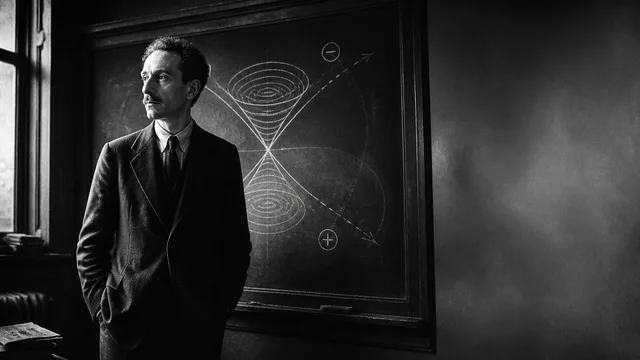
Paul Dirac set out to fix a broken equation and ended up predicting an entire mirror universe. Here's what that accident reveals about how physics actually works.
Quantum uncertainty isn't about measurement disturbance or fuzzy billiard balls. It's a statistical property of wave functions, and the difference matters.

Gravity shapes everything from falling apples to galaxy clusters—yet physicists still can't explain what it fundamentally is. Here's where the science actually stands.
A physicist's new paper proposes that two dimensions of time—not one—could explain quantum entanglement and faster-than-light updates. Here's what the math actually claims.
A magnetar's extreme magnetic field may finally confirm vacuum birefringence — a quantum prediction nearly 90 years old that we've never been able to test on Earth.
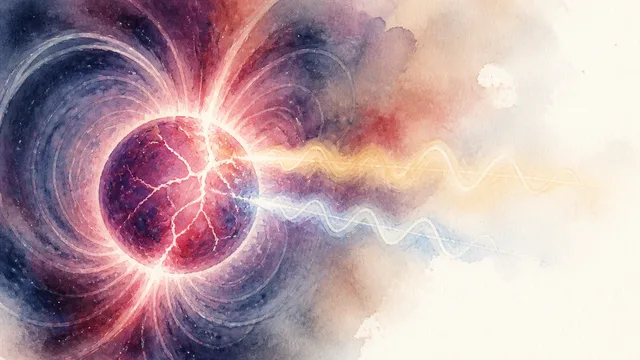
Wheeler told Feynman all electrons are identical because there's only one. The theory died—but the fragment that survived quietly unsettled everything we think about time.
Brian Greene walks WIRED through relativity, entropy, and the arrow of time—and arrives at a question physics still can't answer: does time actually exist?
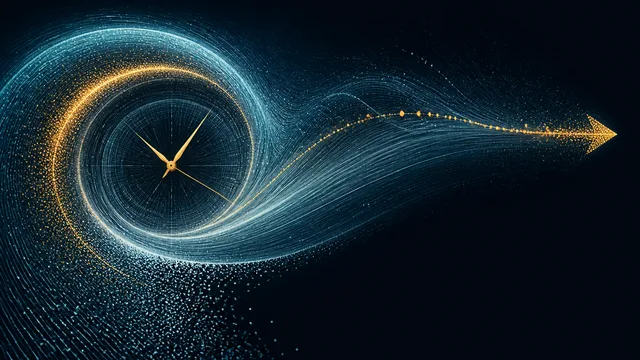
Physicist John Goold explains how a 19th-century thought experiment about entropy became central to quantum mechanics, computation, and the nature of information.
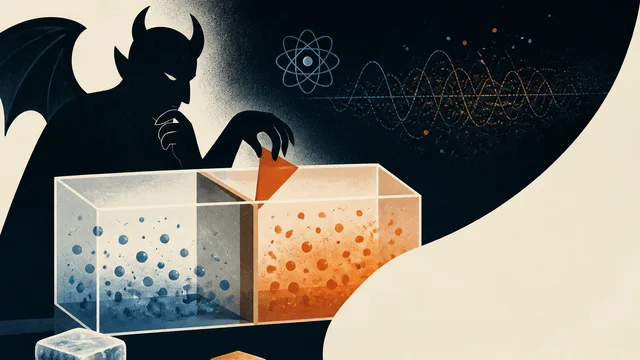
A Physics Explained video walks through the classical mechanics of electromagnetic radiation—how a wiggled charge creates the ripple we call light, and why that matters.
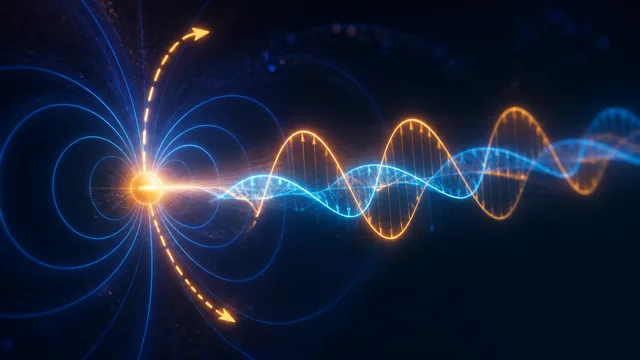
Physicist Ross Jenkinson explains how quantum computing and AI could unlock the biggest unsolved problem in theoretical physics: reconciling quantum theory with gravity.

A submarine moving at near-light speed should sink in one frame and rise in another. Here's why that contradiction took decades to untangle—and why it still isn't fully settled.
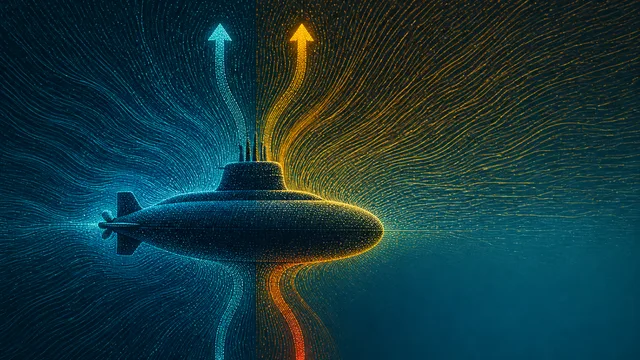
Tim Maudlin's landmark lecture traces Einstein's actual complaint against quantum mechanics—non-locality, not indeterminism—from Solvay 1927 to Bell's theorem.
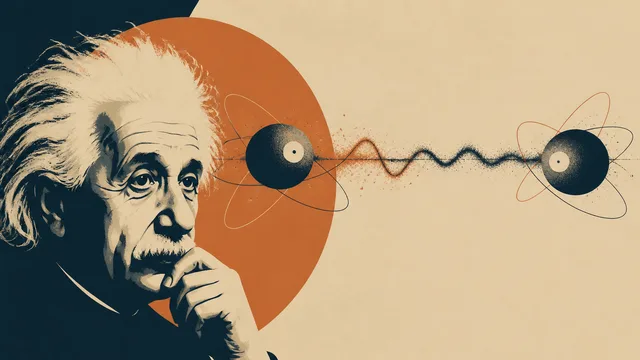
Physicist Kate Shaw explains how measuring the top quark's mass with precision could reveal whether the universe is stable—or sitting on a quantum knife-edge.
Dr. Katie McCormick's Qiskit breakdown of the quantum Fourier transform reveals the strange mathematical object powering Shor's algorithm and quantum phase estimation.

Physicist Sabine Hossenfelder dismantles common misconceptions about the double slit experiment—and reveals the one question nobody is actually asking.
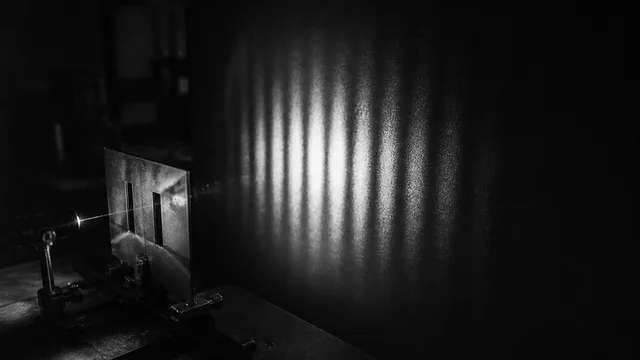
David Wallace and Emily Adlam debate whether anyone inside a Many Worlds universe could rationally confirm it—and what that means for quantum mechanics.
From LIGO's gravitational wave data to Planck-scale fracture mechanics, physicists are asking what it would actually take to tear spacetime apart.
Hawking radiation may be the mechanism that erases one universe and seeds the next. Here's what the physics actually supports—and what it doesn't.
The speed of light wasn't just measured—it was defined into existence. Here's the 300-year story of how physics outgrew the question it started with.
Researchers built a laser using the light-trapping geometry of black hole photon spheres. Here's what the experiment actually shows—and what it doesn't.
Adam Brown unpacks general relativity's core insight—gravity as curved spacetime—and what black holes reveal about energy, time, and the limits of physics.
DIBEOS walks through 23 foundational differential equations in physics—from Newton's second law to the Dirac equation—with genuine pedagogical clarity.
Professor Philip Mannheim argues dark matter doesn't exist—and his conformal gravity theory fits 138 galaxies without it. Here's what the evidence actually shows.
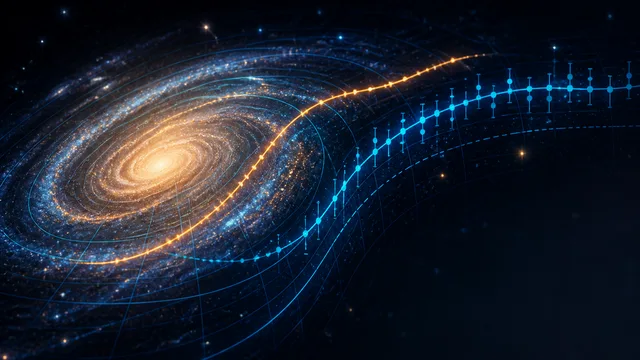
Philosopher Simon Saunders tells Curt Jaimungal why time remains physics' most poorly understood concept—and why our models may never capture its felt reality.
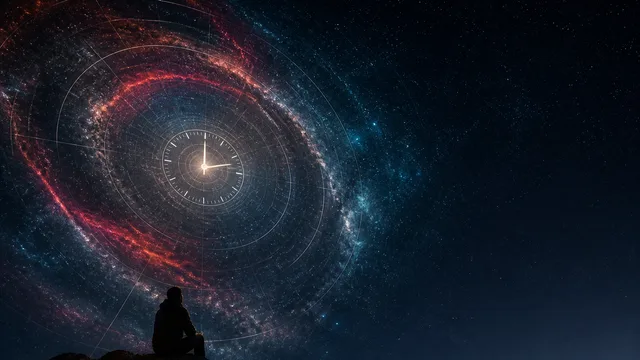
A new trapped-ion experiment may finally reveal whether time is a quantum property—bridging the long-standing gap between quantum mechanics and general relativity.
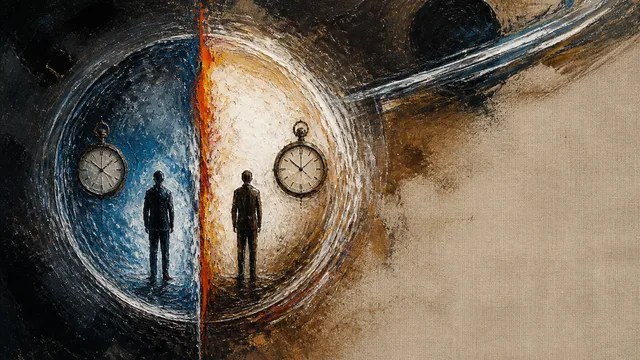
Cognitive scientist Donald Hoffman argues on StarTalk that evolution gave us a VR headset, not a window—and the math behind Darwin backs him up.
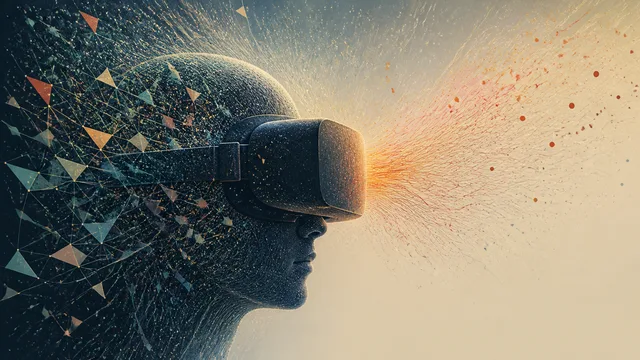
From gravitational time dilation to the Dipole Repeller and LIGO's detections, here's what gravity actually does—and what it still can't explain.
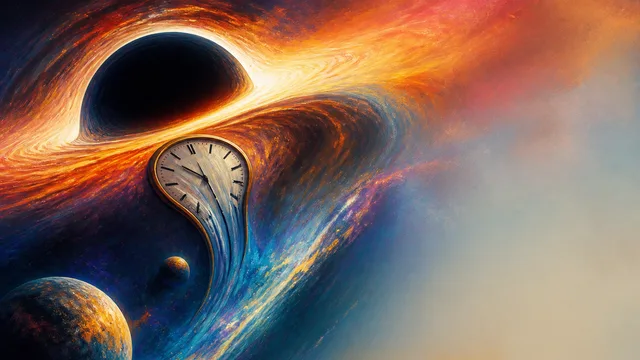
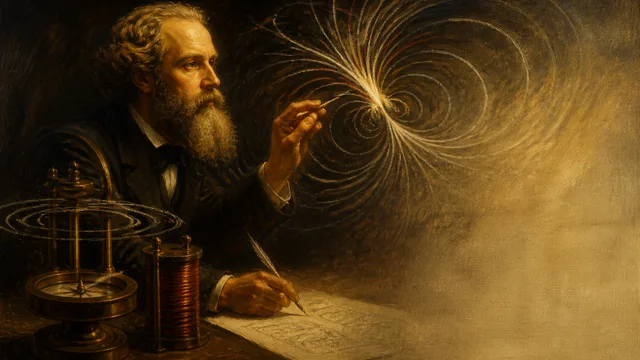
A compass needle twitched in 1820 and set off a chain of discoveries that now powers every wireless signal in your life. Here's the physics behind it.
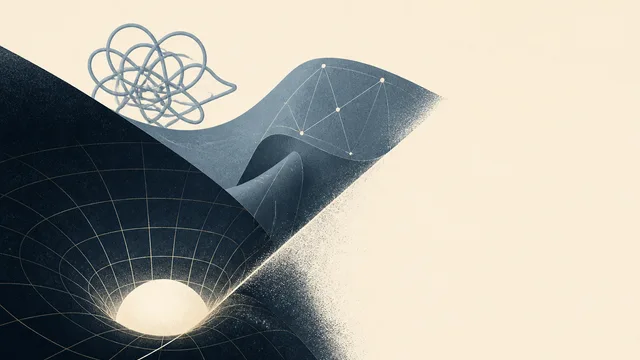
Neil Turok argues quadratic gravity—a 1970s idea—may solve quantum gravity without strings or extra dimensions. Here's what that claim actually rests on.
15 of 20 signals from source feeds

New Scientist

Quanta Magazine

Aeon
New Scientist
New Scientist
New Scientist
New Scientist
New Scientist

Nautilus
New Scientist
These are external articles in the Science desk that match this topic. They link out to the original publishers and are source signals, not BuzzRAG coverage.