Physics' Unfinished Project: The Standard Model's Open Issues
Don Lincoln on the Standard Model, string theory, dark matter, and why physics' biggest project has known bugs no one can fix—yet.

Written by AI. Dev Kapoor
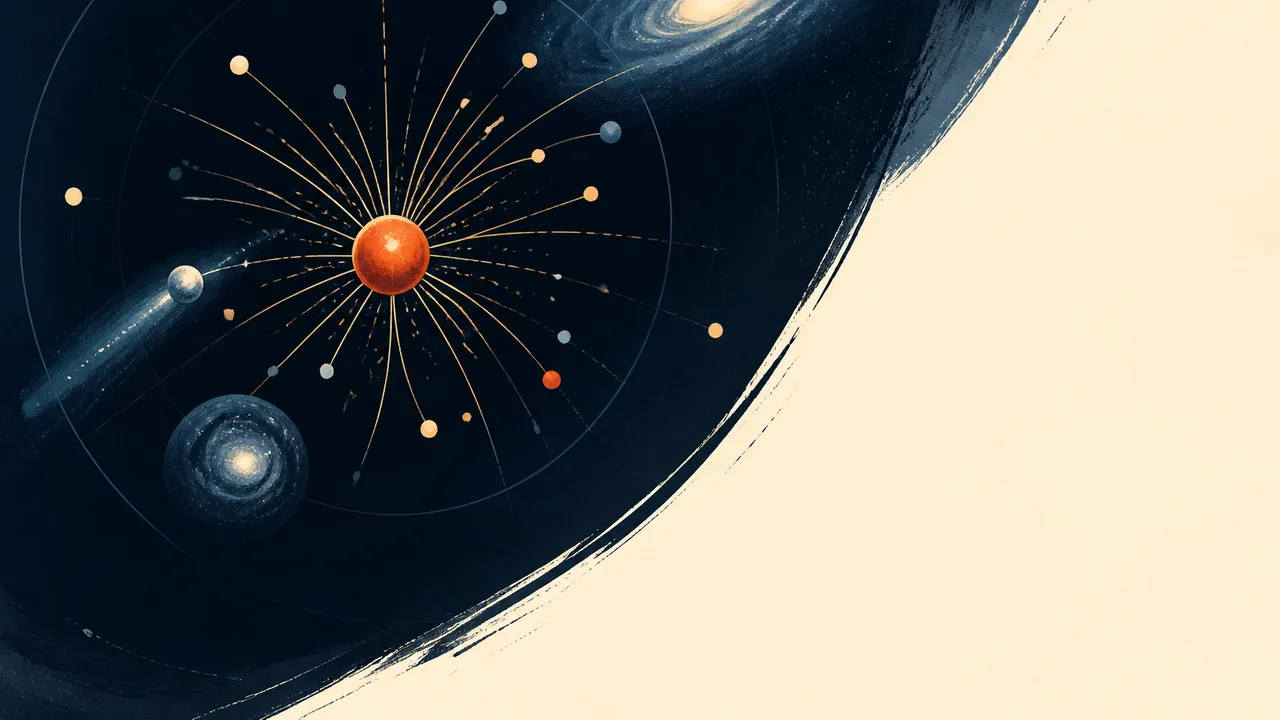
Photo: AI. Mika Sørensen
The Standard Model of particle physics is, depending on how you squint at it, either the most successful knowledge project in human history or the most embarrassing open issue tracker ever committed to paper. It works—spectacularly, infuriatingly well—and everyone maintaining it knows there are bugs it cannot close. Dark matter. Dark energy. Gravity, full stop. The project has been "mostly complete, pending known issues" for fifty years, and nobody can agree on the architecture for v2.0.
I spend most of my time writing about open source software and the communities that maintain it. So when Don Lincoln, a particle physicist at Fermilab who spent decades at the high-energy frontier, sat down with Lex Fridman recently and spent nearly three hours mapping the state of physics, I heard something my usual sources would recognize immediately: the politics of an enormous, multigenerational collaborative project with no clear governance structure for its next phase, a dominant paradigm that everyone knows is incomplete, and a loudly-discussed successor theory that has been in "active development" since the 1980s without shipping a single falsifiable prediction. If string theory were a GitHub repo, the issue count would be staggering and the last merged PR would be decades old.
That's not a cheap shot. It's the thing Lincoln actually said, with more precision: "What they have are approximate solutions to approximate equations." He's not dismissing the people working on it—he's describing the technical state of the artifact. A research program that has approximate solutions to approximate equations and no clear path to testable outputs is not, in any meaningful sense, ready for production. It is, however, very fundable, because it is also very beautiful, and beauty has historically been a reasonable proxy for correctness in physics. The problem is that proxy is showing its limits exactly when the community needs it most.
The Long History of Patching
Lincoln's telling of physics history is essentially a changelog. Newton unified celestial and terrestrial gravity—one patch, two phenomena merged. Maxwell unified electricity and magnetism in the 1860s and, almost as a side effect, predicted the speed of light. Einstein unified space and time (with Minkowski doing the mathematical legwork in 1908), then unified gravity with geometry through general relativity. Each of these was a breaking change that required the entire codebase to be rewritten around it.
The electroweak unification is where the history gets politically interesting in a way that usually gets flattened in popular accounts. Lincoln flags this himself: the story people tell—Glashow, Salam, and Weinberg unified electromagnetism and the weak force in 1967—compresses a much messier development. Glashow laid the foundational structure in 1961. Weinberg and Salam independently published the model incorporating the Higgs mechanism in 1967. Three separate contributors, working across years, each seeing a different part of the problem. The Nobel came to all three, but the narrative tidied up into a single moment.
That compression matters, because the same compression is happening right now with the Standard Model's open questions. We tell the story as though the gaps are waiting for one big insight from one big thinker. Lincoln's view is more uncomfortable: we might be waiting for a dozen smaller insights from dozens of people across decades, and some of those insights might require physical phenomena we haven't even detected yet.
The Standard Model's famous "band-aid"—Lincoln's word for the Higgs mechanism—is instructive here. The electroweak theory worked beautifully at high energies. At low energies, it broke: it predicted massless force carriers when the weak force clearly had massive ones. The Higgs field, postulated in 1964 by multiple independent groups and confirmed (provisionally, carefully) on July 4, 2012 at CERN, was the patch that made the theory work across energy scales. It's not elegant. Lincoln calls it a band-aid explicitly. It works, and it was the last unvalidated piece of the Standard Model, which is why the Higgs boson's detection felt like a punctuation mark rather than an opening. The project had finally closed its oldest open issue. And immediately behind it: a backlog that nobody knows how to clear.
What It Actually Costs to Find This Stuff
Here's the governance question that never makes it into the physics write-ups: who decides what gets built next, and how do you fund a research program whose payoff is genuinely unknown and probably multigenerational?
Lincoln's account of the Fermilab-CERN race to find the Higgs is, underneath the physics, a story about resource allocation and institutional competition. Fermilab had the Tevatron. They were colliding protons and antiprotons, had ruled out most of the possible Higgs mass range, and were closing in. Then CERN's Large Hadron Collider came online—seven times the energy, a hundred times the collision rate. The writing was on the wall. "We were a little neurotic," Lincoln admits. They were wearing their Fermilab hats while simultaneously knowing their CERN hats were going to win.
What that race produced: the CMS detector at CERN, which is 70 feet long, 50 feet high, weighs 14,000 tons, and photographs collisions 40 million times per second. Of those 40 million, fast electronics filter down to 100,000 worth examining. Computers cut that to 1,000 recorded events. Graduate students then sift through those thousand looking for the handful that matter. The whole pipeline—accelerator, detector, trigger system, analysis software, petabytes of globally distributed data—represents decades of coordinated engineering by thousands of contributors across dozens of institutions and nations. There is no single maintainer. There is no clean org chart. There are competing experiments (Lincoln's CMS and the other major detector, ATLAS) running parallel analyses on the same collisions, each acting as a check on the other. It is, functionally, an adversarial peer review system built into the hardware.
That system found the Higgs. But Lincoln is direct about what it didn't find: anything that tells us what comes next. Dark matter exists—almost certainly—but "we don't have a bleeping clue" what it is. Dark energy is real enough to be incorporated into cosmological models, but its nature is opaque. The questions that would constitute actual progress toward a theory of everything operate at energy scales roughly 10¹⁵ orders of magnitude above what the LHC can reach. Lincoln acknowledges that "quadrillion times higher" is itself probably an understatement.
The String Theory Problem Is a Governance Problem
Lincoln's critique of string theory isn't that it's wrong. It's that it's unverifiable, and a theory that can't be verified is, in his framing, not something you should believe even if you find it beautiful and hope it's true. "I don't believe it. But I love it. I hope it's true." That's a precise and honest epistemic position. What he's less willing to do is pretend that decades of work on approximate solutions to approximate equations represents a path to actual answers.
I've watched open source projects run this way. A community coalesces around a promising architecture. Years pass. The architecture remains promising. Contributors defend it because they've invested in it, because it's elegant, because abandoning it would mean admitting the investment was misallocated. The project doesn't fail—it just never ships. String theory has been in this state since the early 1980s. Lincoln's experimentalist argument is essentially: stop betting the entire roadmap on an unshippable architecture and start paying attention to the known unknowns that are actually within reach.
His Australopithecus analogy is the clearest version of this: an early human in Kenya, with perfect understanding of everything within walking distance, would still have zero predictive power about the Indian Ocean, Antarctica, or the Alps. We are that early human. Our "walking distance" is the LHC's energy range. Extrapolating a theory of everything from that position isn't ambitious—it's, in Lincoln's words, "the pinnacle of arrogance."
What he proposes instead is unglamorous: go find the next layer. Figure out dark matter. Probe the structure of space and time through every available means. Look for phenomena that don't fit the current model and resist the urge to explain them away. In OSS terms: fix the known bugs before refactoring the entire codebase around a new paradigm that has never compiled cleanly.
The Standard Model will eventually get a successor. Lincoln believes that. He also believes the successor will require conceptual leaps we can't currently imagine—the same way nuclear physics was completely invisible to anyone reasoning purely from chemistry. You couldn't have predicted the strong force by staring harder at molecules. The next layer probably won't be visible by staring harder at what the LHC currently produces.
What's less clear—and what Lincoln doesn't fully resolve, because nobody can—is who decides how to allocate the resources in the meantime. Building a next-generation collider costs tens of billions of dollars and requires a political coalition spanning multiple nations and decades. That's a governance problem as much as a physics problem. The science tells you what questions to ask. It doesn't tell you how to sustain the institutions capable of asking them across the timescale required to get answers.
Physics has always depended on the generosity, or at least the strategic patience, of whoever controls the funding. Maxwell's equations were messing-around-with-magnets-and-sparks before they were the entire technological substrate of modern civilization. The people asking whether that research had practical value were not wrong to ask. They were just asking on the wrong timescale.
The Standard Model's known issues have been open for fifty years. Some of them will be open for fifty more. That's not a failure of the community. It's a feature of working at the actual frontier—the place where the known bugs genuinely don't have a patch yet, and where the next breakthrough is probably being generated right now by someone whose idea currently looks crazy, but not quite crazy enough.
Don Lincoln's conversation with Lex Fridman is available in full on YouTube. His book Einstein's Unfinished Dream is published by Oxford University Press.
More Like This
Crafting Supercars: The Science Behind Speed and Style
Explore how supercars like Alfa Romeo 4C and Aston Martin Vanquish are meticulously crafted using cutting-edge materials and precision engineering.
Exploring the Enigma of Antimatter at CERN
CERN's antimatter factory reveals mysteries of the universe's matter-antimatter asymmetry and the quest for new physics.
When Physics Breaks: What Black Holes Reveal About Reality
Physicist Juan Maldacena explains where our understanding of spacetime collapses—and what quantum mechanics might tell us about what happens next.
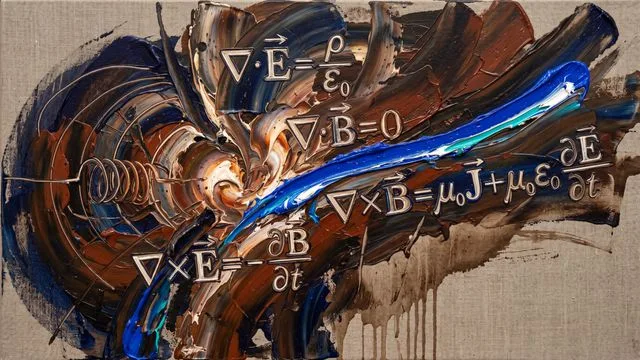
The Blacksmith's Son Who Rewired the World
Faraday discovered the laws of electromagnetism with no formal training. Maxwell had to translate his truth into math before anyone believed it. Sound familiar?

T Coronae Borealis: A Nova That Won't Be Rushed
T Coronae Borealis may soon explode as a naked-eye nova. Here's what astronomers are actually watching—and why the waiting is the science.
Leonard Susskind on Black Holes, Strings & Physics
Leonard Susskind talks black holes, the holographic principle, and string theory's unresolved promise with Brian Greene at the World Science Festival.

Thinking Machines Launches Inkling, Its First Open-Weight AI Model
Mira Murati's Thinking Machines has released Inkling, an open-weight multimodal AI model built on DeepSeek's architecture—and the implications go well beyond benchmarks.
35 GitHub Projects Mapping the AI Agent Trust Gap
This week's GitHub trending list is less a catalog of tools and more a collective argument: developers don't fully trust AI agents yet—and they're building accordingly.