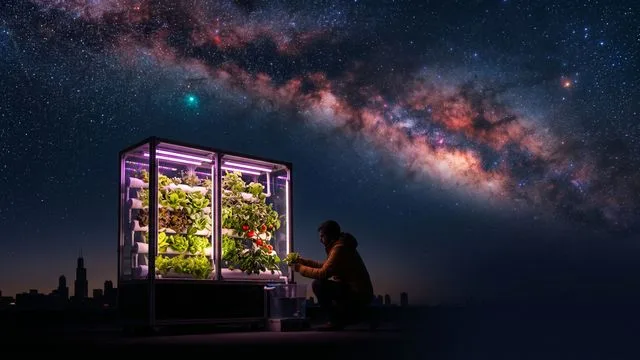
Can You Really Grow Your Own Food Anywhere?
Nadia Marchetti·4 months ago
From quantum mechanics to deep space, neuroscience to climate systems. Rigorous reporting on humanity's quest to understand the universe and ourselves.
Kevin Espiritu of Epic Gardening joins StarTalk to explore urban farming, hydroponics, gray water systems, and whether humans could grow food on the moon.
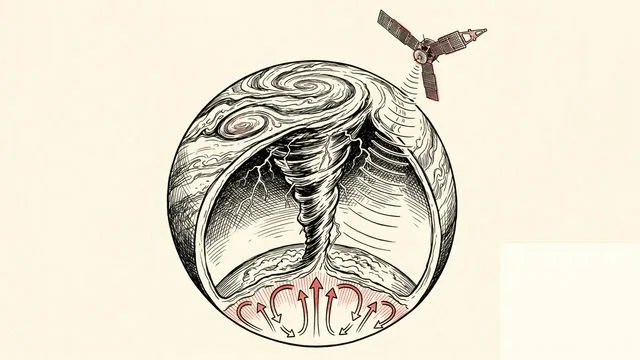
NASA's Juno probe reveals Jupiter's storms plunge 1,800 miles deep—and the sun isn't powering them. Here's what scientists think is going on inside.
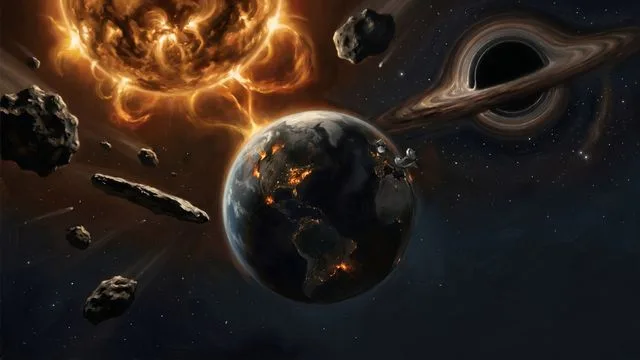
From city-destroying asteroids to solar storms that could kill the internet, scientists are mapping the universe's most destructive forces—and our readiness is uneven.
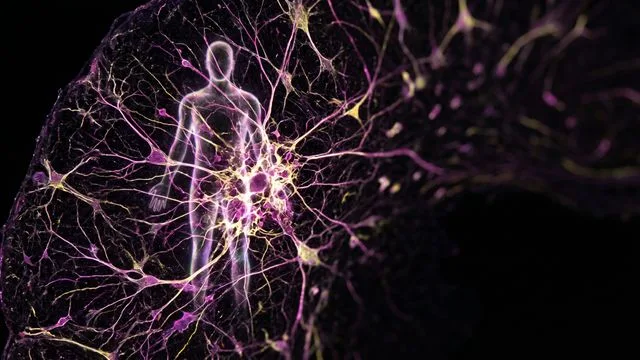
Climbers, pilots, and 9/11 survivors report the same calm presence at death's door. Neuroscience can partly replicate it—but only partly. What's left is the hard question.
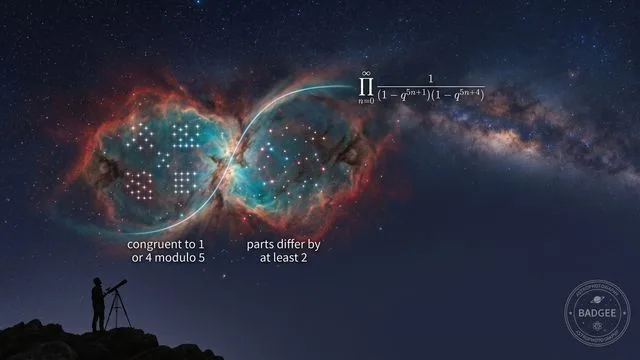
A math professor's classroom moment reveals why the Rogers-Ramanujan identity—linking partition types through generating functions—is genuinely surprising and beautiful.
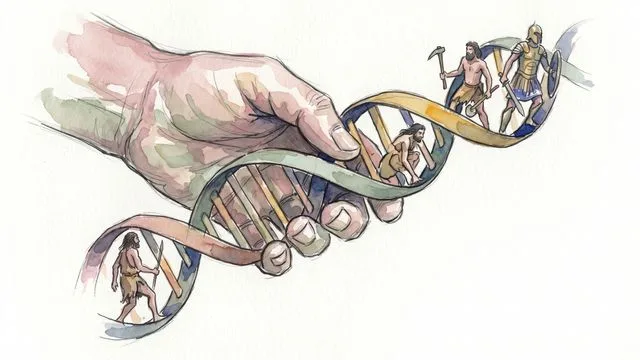
David Reich's new preprint says human evolution accelerated during the Bronze Age. Here's what that means for your immune system, metabolism, and health today.

New research finds humans worldwide average 78 minutes of daily travel—regardless of wealth, distance, or transport mode. Here's what that means for energy and climate.
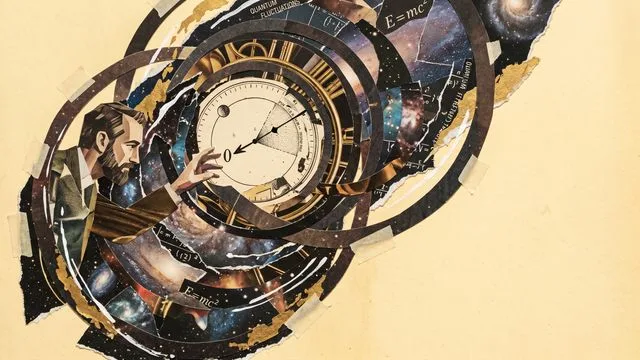
Cosmologist Dr. Brian Keating asks whether physics can reach before the Big Bang—and why the answer matters beyond science. A look at the biggest question in cosmology.
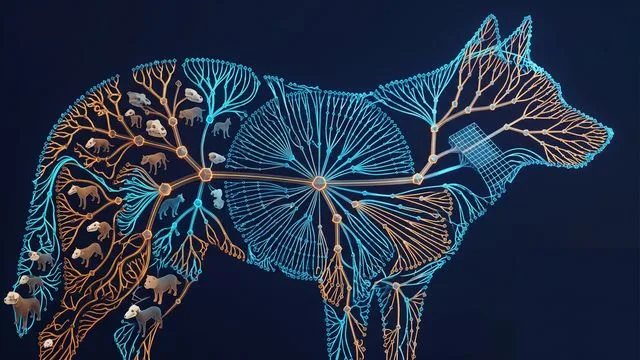
A 2025 skull study of 600+ canines upends the tidy story that Victorian breeders invented dog diversity. Ancient dogs were already strange—and varied.
Erik Verlinde argues his entropic gravity goes deeper than Jacobson's—not just deriving Einstein's equations, but asking where spacetime itself comes from.
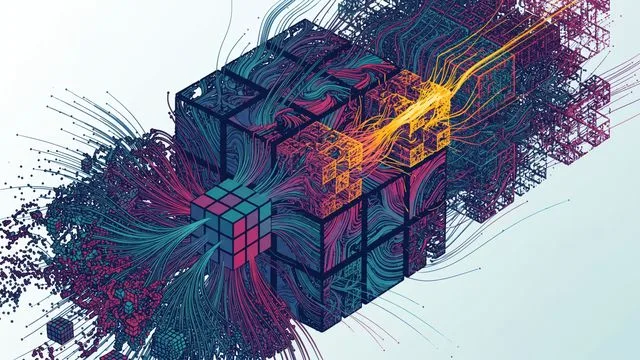
A mathematician walks through the combinatorics of Rubik's Cubes, from 43 quintillion states to 10^349—and the numbers stop feeling like numbers.
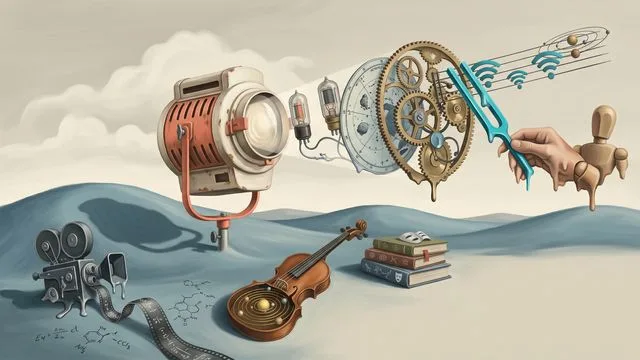
From Hedy Lamarr's frequency-hopping patent to Brian May's astronomy thesis, these celebrity scientists made contributions that still hold up under scrutiny.
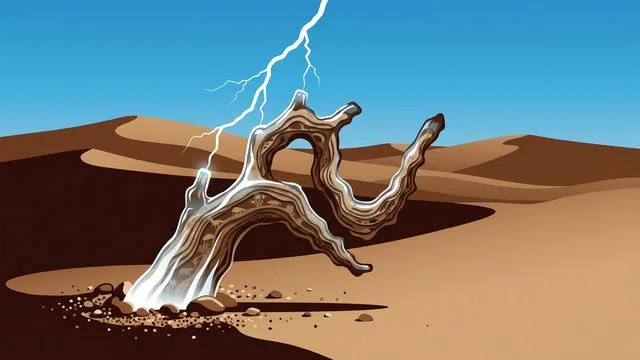
Fulgurites form in a lightning flash—but these glassy tubes hold 15,000-year-old clues about the Sahara's lost monsoons and Earth's orbital shifts.

George Ellis argues physics doesn't decide outcomes—context does. Here's why his debate with Sean Carroll's reductionism is more consequential than it sounds.
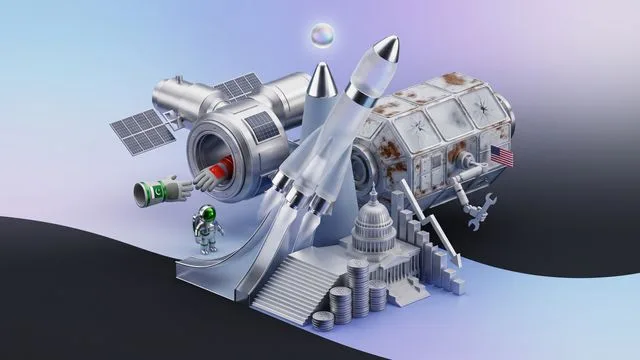
Russia's Soyuz 5 flew its first suborbital test, NASA's budget faces bipartisan pushback, and China opens Tiangong to Pakistan. A lot happened in one week.
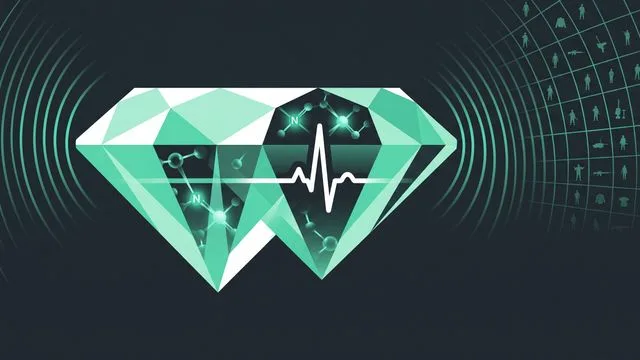
The CIA claims it detected a downed airman's heartbeat from kilometers away. The physics says otherwise. Here's what the science actually tells us.
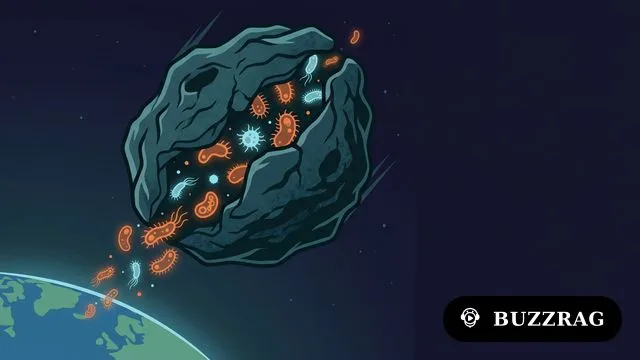
Exploring the panspermia theory: could microbes have traveled to Earth on asteroids, sparking life?
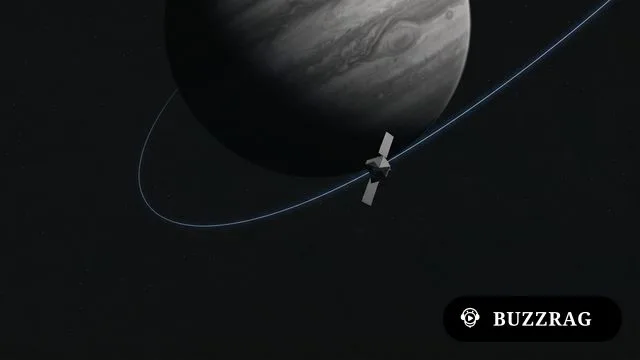
Exploring gravity assists in space travel: a technique to boost spacecraft speed by leveraging planetary motion.
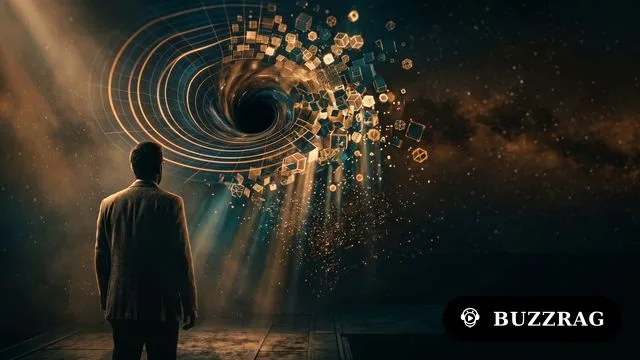
Physicist Juan Maldacena explains where our understanding of spacetime collapses—and what quantum mechanics might tell us about what happens next.
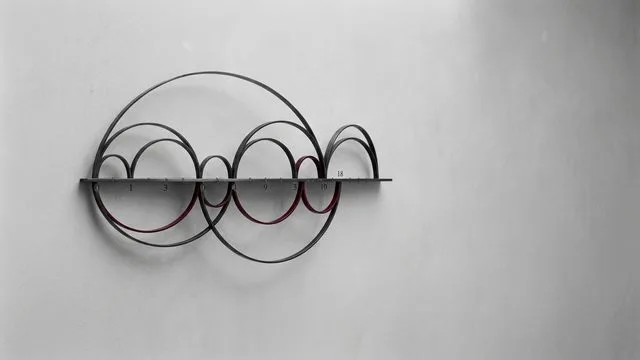
Delving into Recamán's sequence, a simple rule with complex questions. Does every integer appear?