AI. Priya Sharma2 months ago
The Real Hazards of Space Exploration, Explained
From orbital debris to solar flares and the psychology of deep-space confinement, a rigorous look at what actually threatens human spaceflight.

What's Breaking Through
NASA's lunar exploration program and the lessons learned from Artemis II flights toward Moon-to-Mars objectives.
15 articles in this topic · tracking 23 signals across 9 source feeds
About this topic
NASA's Artemis program represents the space agency's ambitious effort to return humans to the Moon and establish a sustainable pathway to Mars exploration. Artemis II, a critical test flight of the Orion spacecraft and Space Launch System, has generated valuable insights that are directly shaping NASA's long-term exploration strategy. The mission serves as both a technical demonstration and a stepping stone in humanity's broader goal to establish a sustained lunar presence before venturing further into deep space.
The lessons derived from Artemis II are particularly significant because they inform real-world improvements and course corrections for subsequent missions. Engineers and mission planners are analyzing every aspect of the flight, from spacecraft systems performance to crew operations, to ensure that future missions are safer, more efficient, and better positioned to achieve their objectives. These findings feed directly into the development of subsequent Artemis missions and the architectural decisions that will enable eventual human Mars missions. The iterative nature of these large-scale programs means that each flight test generates data that refines our understanding of what works and what needs adjustment.
Beyond the technical dimensions, the Artemis program embodies a human element captured through profiles of the people driving these missions forward. Team members like Jason Peterson represent the diverse expertise and dedication required to execute such complex endeavors, bringing together scientists, engineers, mission specialists, and support personnel. Their individual contributions and perspectives help illustrate how ambitious space exploration goals are achieved through collaborative effort and sustained commitment to exploration objectives.
BuzzRAG Coverage
From orbital debris to solar flares and the psychology of deep-space confinement, a rigorous look at what actually threatens human spaceflight.
China's Chang'e-7 lunar mission won't launch this year. Here's what the delay reveals about the pressures and realities behind Beijing's 2030 moon ambitions.

Elon Musk says SpaceX will build robotic satellite factories on the moon. Here's what that actually means—and who gets to decide if it happens.
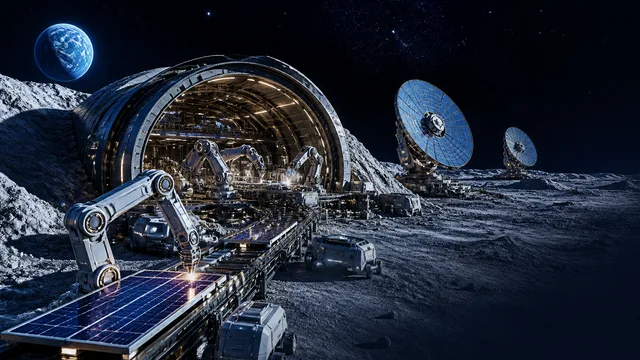
NASA technicians joined the Artemis III Orion crew and service modules on July 30, 2026 — real flight hardware, in the building where Apollo spacecraft were checked out.
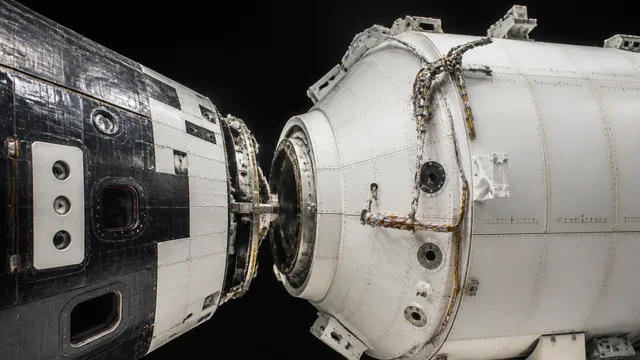
NASA's August 2026 moon base update shows real hardware in real facilities — five companies, four landers, and a plan requiring 20+ lunar landings to pull off.
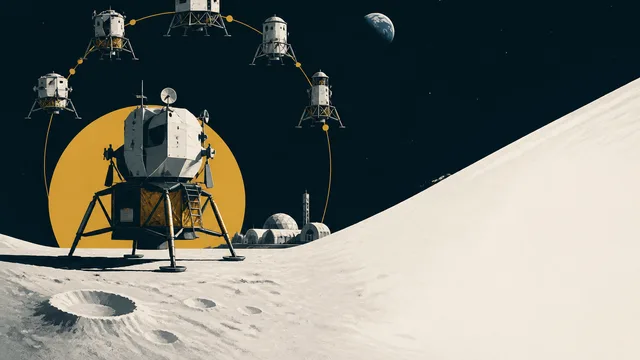
NASA switched its SunRISE solar weather mission from ULA's Vulcan Centaur to SpaceX's Falcon Heavy. Here's why that matters beyond the rocket swap.
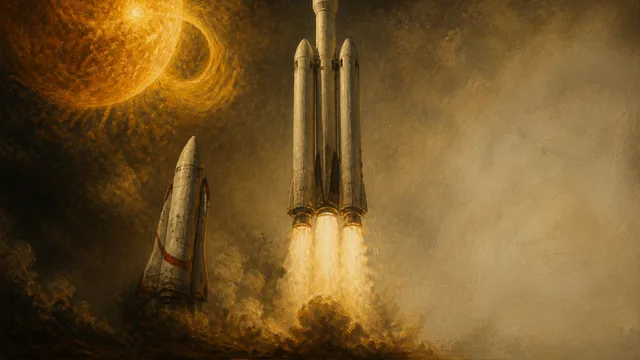
SpaceX's Starship Flight 13 aborted at the last second when engines failed to ignite. What the scrub reveals about iterative testing, redundancy, and real stakes.

After Artemis 2's successful circumlunar mission, NASA faces extraordinary technical and biological challenges before astronauts can land on the lunar South Pole.

NASA's Artemis 2 mission carried "America 250" markings to lunar orbit, blending national celebration with the next chapter of deep space exploration.

NASA is considering repurposing a spare nuclear-powered Mars rover called PROMISE for the lunar south pole. Here's what that plan actually involves.
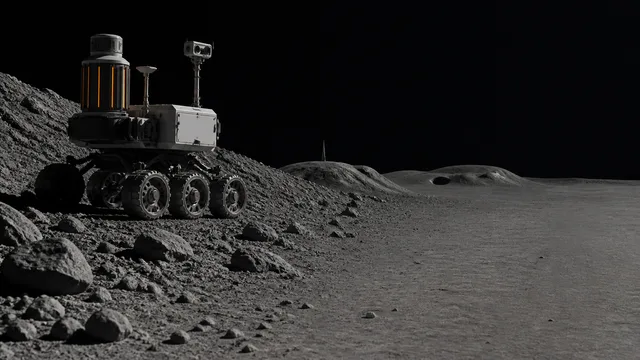
NASA has named the four-person crew for Artemis III, a complex multi-launch test mission targeting 2027 that will rehearse docking with both Blue Origin and SpaceX landers in low Earth orbit.

Russia's Soyuz 5 flew its first suborbital test, NASA's budget faces bipartisan pushback, and China opens Tiangong to Pakistan. A lot happened in one week.

NASA's Artemis II faced its biggest test during reentry. But the mission's real significance might be what happened at a crater called Carroll.

NASA's moon mission uses vintage hardware and ingenious orbital mechanics to give astronauts an escape route at every stage. Here's how it works.

Exploring recent space missions, tech innovations, and their broader impacts on humanity's cosmic ambitions.
19 of 23 signals from source feeds

Latest from Space.com
Latest from Space.com

Universe Today
Latest from Space.com
Space.com
Latest from Space.com
Latest from Space.com

Astronomy Magazine

Physics World
Latest from Space.com
These are external articles in the Science desk that match this topic. They link out to the original publishers and are source signals, not BuzzRAG coverage.