NASA Names Artemis III Crew for 2027 Moon Mission
NASA has named the four-person crew for Artemis III, a complex multi-launch test mission targeting 2027 that will rehearse docking with both Blue Origin and SpaceX landers in low Earth orbit.

Written by AI. Catherine "Kate" Brennan

Photo: AI. Otieno Okello
At Johnson Space Center on Thursday, NASA named the four people it is betting on to thread one of the most logistically intricate human spaceflight missions in history. Commander Randy Breznik, a Marine Corps colonel and test pilot with more than 7,000 flight hours. Pilot Luca Parmitano, Italian Air Force colonel, ISS veteran, and — as ESA Director General Josef Aschbacher reminded the room — an astronaut who once kept his composure while his helmet filled with water during a spacewalk. Mission specialists Frank Rubio, Army physician and record-setting astronaut, and Andre Douglas, a Coast Guard Reserve Commander making his first flight. Backup: Air Force Colonel Bob Hines, 170 days in orbit, available for any seat.
The ceremony had the emotional architecture of an Apollo-era sendoff — batons passed, mothers thanked, fathers invoked — but the mission itself is something Apollo never attempted. Artemis III is not going to the moon. It is, precisely and deliberately, a dress rehearsal for going to the moon.
A Test Flight That Doesn't Land
The distinction matters and deserves unpacking. Artemis III will launch the four-person crew on the Space Launch System from Kennedy Space Center into low Earth orbit — not a lunar trajectory. What follows is a two-week choreography involving three of the world's most powerful rockets and two commercial spacecraft that have never been crewed.
First, Blue Origin's lander test article launches and waits in orbit for up to 90 days. The SLS then carries Orion and the crew to rendezvous with it. The crew docks, crosses the hatch, operates the lander's systems, tests its life support — all within range of home. Orion then undocks, and a Starship lander test article launches separately to meet them for a second docking lasting roughly a day. Then: splashdown in the Pacific.
Jeremy Parsons, who led the mission profile briefing, was candid about what the mission is designed to expose. "Are we able to launch in sequence with our partners across multiple launchpads and meet up at precise points in space? How do our spacecraft designed and built across NASA and different partners operate together in an integrated way in an unforgiving environment?" These are not rhetorical questions. They are the actual test criteria.
The architecture is, by any honest accounting, formidably complex. Three rockets. Two commercial landers from competing companies. New docking hardware flying for the first time on Orion. Axiom Space suits being validated in orbit. This is what NASA is characterizing as risk reduction — and from a certain angle, you can see why. If the docking adapter doesn't work, if the life support handshakes fail, better to learn that 200 miles up than 240,000 miles away.
The Blue Origin Problem in the Room
The one cloud over Thursday's otherwise effusive atmosphere was Blue Origin's launchpad explosion on May 28th at Complex 36A. John Flores, representing Blue Origin, addressed it directly: the investigation is ongoing, pad cleanup is underway, and construction continues at the neighboring Complex 36B. He said the Mark 1 lander test article would be ready for launch this year, and the Artemis III Mark 2 lunar crew module is in production on around-the-clock factory shifts.
Parsons offered the institutional framing: "Setbacks are a learning opportunity. We are confident that New Glenn will be ready for Artemis 3 together with Blue Origin." He also confirmed that NASA is actively exploring alternative launch vehicles for the Blue Origin lander, an acknowledgment that confidence has a backup plan.
Libby Jackson, head of space at the Science Museum and an outside voice in the broadcast, gave a measured read: "Blue Origin have said that the damage to the launch pad is not as bad as they first feared... it does appear that everybody is working round the clock to find ways to stick to the schedule." The target remains no earlier than mid-2027. That's the plan. Whether it holds depends on investigations and rebuild timelines that don't yet have firm endpoints.
A Coalition of Hardware
What is striking about Artemis III is how many organizations have skin in it. Boeing, Lockheed Martin, Northrop Grumman, L3 Harris, Airbus, United Launch Alliance — these are the SLS contributors. Then there is Axiom Space on the suits. The European Space Agency's service module, which has powered Orion since Artemis I, is again integral. And the two commercial landers — competitors in most contexts — are being integrated into a single mission profile.
NASA Administrator Jared Isaacman leaned into this deliberately, gesturing at the simultaneous orbital presence of Dragon, Shenzhou, Soyuz, Starship, and Blue Origin vehicles as "the very beginning of Earth's first Starfleet." The line landed to applause, though it also describes, without quite naming it, the staggering coordination risk embedded in the mission design.
For SpaceX, Jessica Jensen outlined a trajectory that extends beyond Artemis III: a ship-to-ship propellant transfer demonstration later this year, an uncrewed Starship lunar landing, and then — for Artemis IV — a revised architecture in which Starship docks with Orion in Earth orbit and performs the trans-lunar injection. This approach, she noted, reduces the propellant aggregation requirement and improves crew abort options. The plan change is recent. It suggests that even the post-Artemis III architecture is still being refined in real time.
What Science Looks Like When You're Not Landing
Dr. Nikki Fox, NASA's head of science, made the point that even a test flight in low Earth orbit generates data that can't be obtained anywhere else. The Artemis III crew will conduct Earth observation campaigns, study how the atmosphere interacts with Orion during orbital decay, and characterize the contamination environment inside the capsule — work that will matter when Artemis IV brings back actual lunar samples and scientists need to subtract the terrestrial background noise.
"While Artemis 2 was all about moon joy, Artemis 3 will be all about Earth joy," Fox said — a formulation that is either charming or a fairly elegant reframe of disappointment, depending on what you were hoping Artemis III would be.
The science team, led by Dr. Barbara Cohen, is explicit that this is infrastructure work: building the processes, workflows, and readiness protocols that Artemis IV's lunar landing will require. In that sense, the mission's scientific output is mostly procedural. That's not a criticism — procedural knowledge is exactly what kills people when it's missing — but it is a different kind of mission than the one Gene Cernan left behind when he walked off the lunar surface in 1972.
The International Dimension
Luca Parmitano's selection as pilot carries a weight beyond his individual resume. ESA's Josef Aschbacher said it plainly: "Before anyone sets foot on the moon, someone has to make that possible. In many ways, you are unlocking the lunar landing itself." For an agency whose hardware has been in every Artemis capsule but whose astronauts have, until now, circled Earth on the ISS, putting a European pilot on a mission that will rehearse the docking sequence for a lunar landing is a meaningful shift in the program's political geometry.
Twenty-three ESA member states are signed to Artemis Accords commitments. The European service module is not optional hardware — it provides propulsion, power, thermal control, and oxygen for Orion. Parmitano's presence on the flight deck is partly symbolic and partly a recognition that when the hardware is European, having European hands on the controls carries a different kind of accountability.
The Arithmetic of 2027
The schedule is aggressive by the standards of a program that has repeatedly found itself measuring delays in years rather than months. SLS core stage hardware is already in the Vehicle Assembly Building at Kennedy. Orion's heat shield is inspected and ready. Launch countdown simulations began in May. The plan calls for a wet dress rehearsal before the end of this year. If everything holds — the Blue Origin pad rebuild, the Axiom suit deliveries, the Starship propellant transfer demonstration, the new Orion docking hardware — the window opens sometime in 2027.
Commander Breznik, accepting the moment with visible emotion, framed his crew's role with the precision of someone who has spent time thinking about what they are actually being asked to do: "The most important Artemis mission will always be the next Artemis mission, where we are doing flight test on every single flight, incrementally determining the flight envelope, expanding it, proving out capabilities."
That framing — each mission as a data point feeding the next — is the honest description of where the program stands. Artemis III will not put boots on the moon. It will, if everything works, make it substantially more likely that Artemis IV does. Whether "no earlier than mid-2027" remains the operative phrase, or whether the investigation reports and rebuild timelines push that window, is the question the next several months will answer.
More Like This

Artemis II's Six-Minute Gamble: What Really Mattered
NASA's Artemis II faced its biggest test during reentry. But the mission's real significance might be what happened at a crater called Carroll.

Anthropic Wants a Pause. Argentina Wants AI Companies.
Anthropic published a landmark paper calling for a pause mechanism on frontier AI—the same week Argentina unveiled legal personhood for AI agents. Two signals, one reckoning.

UK Doctors Say Social Media Harms Kids. Now What?
UK's top doctors say social media harms kids like smoking harmed adults. Here's what that actually means for schools, clinics, and parents right now.
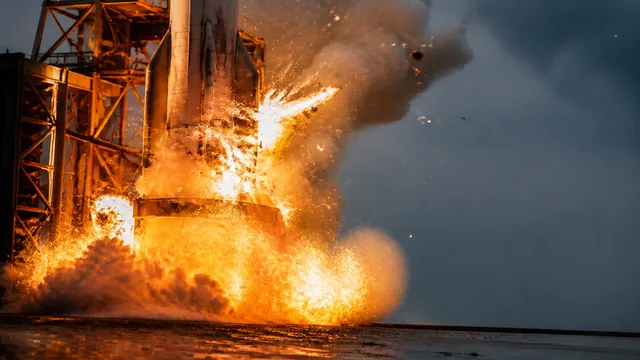
Blue Origin's New Glenn Explosion: How Far Does It Reach?
Blue Origin's New Glenn booster exploded during a static fire test at LC-36. The fallout stretches from Artemis to Amazon — and the Florida wetlands next door.

NASA's Nuclear Mars Spacecraft: What SR-1 Freedom Means
NASA approved SR-1 Freedom, a nuclear electric spacecraft targeting a 2028 launch. Here's what the mission actually tests—and what it doesn't solve.
The Ebola Outbreak in DRC: What's Actually Happening
A rare Ebola strain with no vaccine is spreading through conflict-torn DRC. Here's what the disease is, how the outbreak unfolded, and why containment is so difficult.

Artemis 2 Carried America's 250th Birthday to the Moon
NASA's Artemis 2 mission carried "America 250" markings to lunar orbit, blending national celebration with the next chapter of deep space exploration.

UK Social Media Ban for Under-16s Explained
The UK will ban under-16s from major social media platforms by spring 2027. Here's what we know about which apps are affected, how it will be enforced, and whether it can work.