Japan's Phobos Sample Mission Could Test a Moon's Origins
Japan's MMX mission aims to bring about 10 grams of Phobos to Earth. The grains could clarify the moon's origin if engineers collect them and scientists trace them.

Written by AI. Olivia Meng
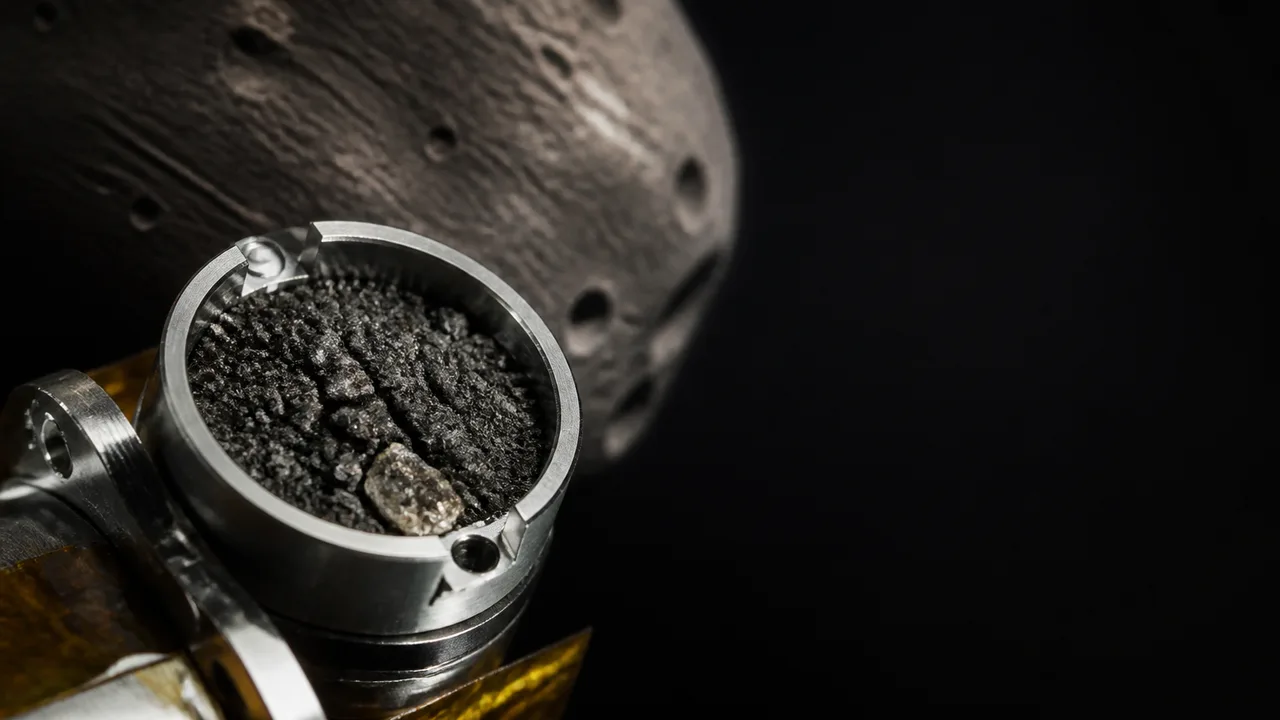
Japan’s MMX mission aims to bring about 10 grams of Phobos back to Earth. That is roughly two teaspoons of material from one of Mars’s two small moons, and potentially enough to investigate a question that observations from a distance have left open: where did Phobos come from?
The sample-return plan calls for a spacecraft to reach Phobos, collect material and deliver it to laboratories on Earth. Each verb describes a separate engineering challenge. As of October 19, the collection remains a plan, and the scientific claims depend on a successful return followed by careful analysis.
Phobos offers researchers more than one possible archive. Its own material could carry evidence about the early Solar System and the moon’s relationship to Mars. Its surface may also hold fragments thrown off Mars by impacts. Those possibilities make a small scoop unusually valuable, but they complicate the first question a laboratory must answer about any grain: what object did it originally belong to?
Two Routes to a Martian Moon
Phobos’s origin poses a problem of reconstruction. One possibility is that its building blocks accumulated near Mars. Another is that the moon began elsewhere and Mars captured it. The science behind MMX rests in part on testing those histories against the chemistry of returned material.
A captured body might retain a chemical and isotopic signature resembling material from elsewhere in the Solar System. Material assembled near Mars might show closer ties to the planet and its surroundings. Researchers can compare ratios of different forms of an element, known as isotopes, alongside minerals and textures. Those measurements offer more discriminating evidence than an image of Phobos’s dark surface, which records what light reflects from exposed material rather than the full history of the grains beneath it.
Neither candidate history can be settled by a single resemblance. Mars itself has been struck repeatedly, and impacts can move rock between worlds. Surface material can also change after its arrival through radiation, micrometeorite impacts and other exposure to space. A chemical match could point toward a shared origin, later delivery of debris or a mixture. Researchers will need patterns across many grains, and across different kinds of measurements, to separate those possibilities.
The capture idea has an additional physical hurdle: an object passing Mars must lose enough orbital energy to remain there. Identifying material that appears to have originated elsewhere would strengthen the case that such a history needs explaining; it would not, by itself, reconstruct how capture happened. Likewise, evidence of Martian material on Phobos could describe the moon’s surface without establishing how the moon formed. Chemistry and orbital history have to fit the same account.
A Surface with More than One Address
An impact on Mars can throw debris into space. If some of that debris reaches Phobos, a returned sample could contain both local material and a record of the planet below. That prospect gives the mission a second scientific route: even grains that complicate the moon-origin investigation might tell researchers something about Mars.
The complication is visible at the scale of a single fragment. Suppose a laboratory identifies a mineral consistent with Martian rock. It would then need to distinguish that fragment from the material around it and determine what happened after ejection and arrival on Phobos. A grain’s current location tells researchers where the spacecraft collected it. Mineralogy, isotopes, texture and exposure history help them infer where it came from.
Sorting those histories matters because a bulk measurement of mixed dust can obscure its ingredients. Imagine grinding two rocks from different places together and measuring the powder: the result accurately describes the mixture but may describe neither rock. The approximately 10-gram goal creates room for many measurements, yet researchers must decide how much material to devote to each test and how much to preserve for future instruments.
Some laboratory methods can examine a minute part of a grain; others consume or change the portion tested. Imaging a particle before destructive analysis helps retain a record of its structure. Keeping track of where grains sit in the returned collection could also help identify associations that disappear once material is divided among laboratories. Sample handling becomes part of the science, not merely the step between spacecraft and microscope.
What Earth Laboratories Can Ask
Spacecraft instruments have to fit within limits on mass, power and durability. Earth laboratories can use larger equipment, change methods when an unexpected result appears and let different teams test the same interpretation. That flexibility is the central advantage of bringing Phobos material home rather than measuring it only at the moon.
Researchers could examine mineral structures at fine scales, compare isotope ratios and look for signs of alteration from exposure to space. Each method asks a different question. Mineralogy can identify what a grain is made of; isotopes can help compare possible sources; microscopic textures can reveal whether it was broken, heated or otherwise changed. A date measured in a mineral would need similar care in interpretation. It might record when that mineral formed or a later event that altered it, rather than the moment Phobos became a moon.
Laboratory precision also raises the standard for contamination control. Material from the spacecraft, collection hardware or Earth could interfere with measurements aimed at identifying subtle chemical signatures. Documenting contact with hardware and checking for contaminants would help researchers decide whether an unusual result belongs to Phobos. That work may sound administrative next to a journey to Mars, but an unexplained terrestrial trace can make a rare particle harder to interpret.
A returned collection has another advantage: questions can change. If the first analyses reveal an unexpected population of grains, laboratories can revisit preserved material with new tests. Spacecraft instruments can sometimes be retasked during a mission, but they cannot acquire a new instrument after launch. MMX mission planning therefore concerns both the trip to Phobos and the condition of the material that eventually reaches Earth.
The Journey Still Has to Work
Before any of those comparisons, MMX must launch, travel to the Mars system, approach Phobos, collect material and bring a sample back. Phobos’s weak gravity and an uncertain sampling surface make contact a demanding operation: the spacecraft must reach the material and leave with it while protecting the collection. The return leg must then deliver that material in a condition scientists can study.
A failed collection would leave the principal laboratory questions unanswered even if other mission observations proved useful. A successful collection would start a different sequence of work: cataloguing grains, testing for contamination and comparing competing interpretations of their origins. The earlier MMX mission overview lays out the flight objective; the harder scientific task begins when researchers must assign a history to material gathered from a moon that may have collected pieces of another world.
Ten grams can be enough to change an origin story. First, each grain has to be allowed to tell its own.
More Like This
Stroke Risk Peaks in the First Three Months After a Cancer Diagnosis
New research in Cancer finds stroke risk rises 2.5-fold in the first three months after a cancer diagnosis, especially with pancreatic and lung cancers.

A Victorian Train Delay Exposes Space Weather Risk
A disputed Victorian train delay links geomagnetic activity to telegraph faults, showing how space weather affected systems before satellites and power grids.
Montana's JM Reef and America's Platinum Supply Problem
The JM Reef in Montana is America's only platinum and palladium source. What that means for clean energy, emissions tech, and supply chain security.
Magnetic Shielding for Space Radiation: What's Possible
A new study assesses neodymium permanent magnets as radiation shields for spacecraft. Here's what the physics allows, what it doesn't, and why this problem won't go away.
Smartphones and the Global Baby Bust
John Burn-Murdoch's data on falling global birth rates points to smartphones as a key driver—and the mechanism looks familiar to anyone who covers collective action failures.
Project Pele: The Pentagon's Portable Nuclear Reactor
The Pentagon's Project Pele aims to power remote military bases with a containerized nuclear reactor. Here's what the technology promises—and what it can't yet answer.