Montana's JM Reef and America's Platinum Supply Problem
The JM Reef in Montana is America's only platinum and palladium source. What that means for clean energy, emissions tech, and supply chain security.

Written by AI. Olivia Meng
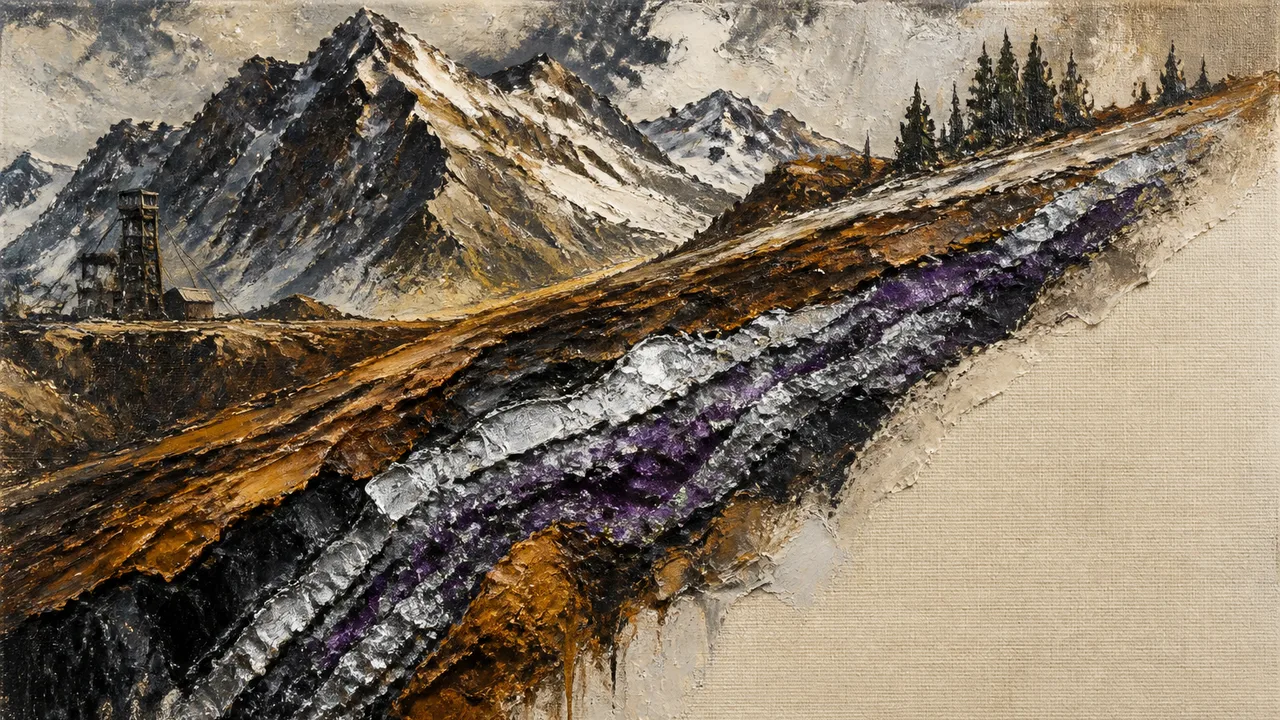
Photo: AI. Saskia Aaltonen
Take a look at this narrow band of rock in the Beartooth Mountains of southern Montana. In most places, it is barely a few feet thick, thinner than the height of a doorway, buried thousands of feet underground. And yet this single razor-thin layer of rock is the only significant source of platinum and palladium mined anywhere in the United States. Every catalytic converter built into an American car, every hydrogen fuel cell, every piece of electronics that relies on these metals: if the platinum or palladium inside it was mined domestically, there is a very good chance it came from this exact rock layer.
It's called the JM Reef, and it runs for 28 miles through the mountains, so consistent in its mineral content that geologists consider it one of the strangest and richest ore bodies on the entire planet. As the MysteryOfTheMap video covering this formation puts it: "No other site in the country comes close, which means the entire domestic supply chain for these two metals effectively runs through one narrow seam of rock most Americans have never heard of."
I cover clean energy systems for a living, and that sentence should make anyone in this space uncomfortable. Palladium and platinum are not peripheral inputs. Palladium is the metal doing the chemical work inside the three-way catalytic converters that have kept toxic tailpipe emissions in check for decades. Platinum anchors the hydrogen fuel cell stacks that the clean energy industry is betting significant portions of its future on. These are not legacy metals waiting to be replaced. They are load-bearing materials in the transition away from fossil fuel combustion, and in the United States, their domestic supply runs through a hallway-wide seam operated by a company headquartered in Johannesburg, at output rates that have been trending downward.
That is the problem worth sitting with.
A 2.7-Billion-Year Accident
The geology is genuinely extraordinary, and understanding it helps clarify why there is no easy substitute location. Roughly 2.7 billion years ago, a massive magma chamber intruded into the crust in what is now southern Montana. Rather than erupting, it cooled with exceptional slowness, allowing different minerals to crystallize and settle in distinct layers through a process called fractional crystallization. At one specific point in that cooling sequence, platinum and palladium concentrated into rare sulfide minerals and sank into an exceptionally narrow band. That band is the JM Reef.
According to the U.S. Geological Survey, the Stillwater Complex is the most significant primary source of platinum group elements in the United States, with approximately 305 metric tons of platinum and palladium extracted from the deposit. The USGS confirms what geologists have long noted: the JM Reef is the highest-grade platinum group metal deposit ever discovered, richer per ton of rock than the massive Bushveld Complex in South Africa, which holds far greater total volume but cannot match Stillwater's concentration. Most platinum group deposits mined globally grade well under 10 grams per ton. Sections of the JM Reef have been measured at multiples of that figure.
The reef's consistency across 28 miles is what makes it scientifically remarkable and economically irreplaceable. Most ore bodies this narrow pinch out or lose their grade within a few hundred meters. The JM Reef does the opposite. But that consistency is geological luck, not engineered redundancy. There is no backup.
The Mine That Emissions Regulations Built
Platinum group metals were first noted in the Beartooth Mountains in the early twentieth century, but for decades the reef was too narrow and too deep to justify the cost of reaching it. What changed was regulation. As emissions standards in the 1960s and early 1970s required catalytic converters in American automobiles, demand for platinum group metals sharpened into something resembling urgency. By the mid-1980s, according to the Billings Gazette, the Stillwater Mine was in continuous operation near Nye, Montana, and the Beartooth Mountains had quietly become central to American industrial chemistry.
The reef is so thin that miners must follow it with extreme precision, blasting and drilling within a corridor barely wider than a hallway, thousands of feet below the surface. The MysteryOfTheMap video describes it as "a level of underground precision more common in a tunneling project than a traditional open pit mine." The Stillwater Complex is currently worked at two sites: the original Stillwater Mine and the East Boulder Mine about 20 miles to the west, both operating within the Custer and Gallatin National Forest.
In 2000, the mining company signed what became known as the Good Neighbor Agreement, a voluntary contract that limited surface expansion near the Stillwater and Boulder River corridors and required ongoing environmental monitoring. It was an early model for negotiated limits on industrial footprint in ecologically sensitive areas, and it still governs how far the operation can grow.
A Bubble, a Crash, and a Lesson About Market Dependency
Stillwater's history includes one of the stranger boom-and-bust episodes in modern American mining, and it is worth dwelling on because the structure of that crisis has not gone away.
In the late 1990s, Russia's Norilsk Nickel, which produces palladium as a byproduct of nickel mining and controls a significant share of global supply, began restricting its exports. Ford Motor Company, worried about running out of a metal it needed for catalytic converters, began aggressively stockpiling palladium. That panic buying, combined with tightening supply, sent palladium prices soaring past $1,100 an ounce by 2000. Stillwater rushed to expand production, taking on debt to accelerate development.
Then the bubble collapsed. Russian exports resumed. Ford was left holding a massive stockpile of palladium it no longer needed at inflated prices, and took substantial losses on its palladium reserves. Palladium prices crashed. Stillwater, saddled with expansion debt from a boom that had already ended, came dangerously close to bankruptcy.
What the episode demonstrated is that the richest ore body in the world is only as valuable as the market conditions around it. But there is something more specific worth noting for anyone thinking about clean energy supply chains: the crash was triggered by a single foreign supplier resuming normal behavior. The vulnerability was not the mine. The vulnerability was the concentration of global supply in a single geopolitical actor who had every incentive to use it as leverage.
The Ownership Problem
Stillwater Mining Company survived the crash and spent the following decade rebuilding. Then, in 2017, South African mining giant Sibanye Gold acquired the company for $2.2 billion, creating Sibanye-Stillwater. The combined entity is now headquartered in Johannesburg.
The irony is structural, not decorative. The United States' only significant domestic source of platinum group metals, the metals central to catalytic converters, hydrogen fuel cells, and clean energy manufacturing, is owned by a company based in the heart of the Bushveld Complex, the South African formation that dominates global platinum group production by total volume. American industrial policy is now attempting to reduce dependence on foreign mineral supply through the Inflation Reduction Act's critical mineral tax credits, credits that apply to Stillwater's production, flowing to a foreign-headquartered operator.
I am not arguing that foreign ownership is automatically disqualifying. Sibanye-Stillwater has continued operating the mine and investing in it. But the IRA's underlying logic, reducing American dependence on supply chains controlled by adversarial or unreliable actors, sits in genuine tension with a domestic mineral policy that left the country's single most critical platinum group asset available for foreign acquisition in the first place. The policy created an incentive structure. The market responded to it. The result is a "domestic" supply that is domestic in location but not in control. That is worth being precise about, because precision is what these policy debates tend to lack.
The Climate Transition's Quiet Chokepoint
Here is where I want to be direct with readers, because this is the part of the story that the geopolitics framing tends to obscure.
Palladium and platinum are not simply important to legacy industry. They are central to two of the most consequential clean energy technologies currently scaling: catalytic emissions control on internal combustion vehicles (which will keep operating for decades regardless of EV adoption curves) and hydrogen fuel cell systems for heavy transport and stationary power. The clean hydrogen economy that climate policy is now actively funding depends on platinum-group-metal catalysts in electrolyzers and fuel cell stacks. There is no version of that transition that treats Stillwater as optional.
And Stillwater is not operating from a position of strength. The ore grades that made the JM Reef extraordinary are not uniformly distributed across all remaining sections of the deposit. The easier portions of the reef, closer to existing infrastructure, have already been worked. What remains requires tunneling deeper and farther at greater cost. Output has been trending downward, and the East Boulder site has faced grade and operational challenges. The mine that emissions regulations built is now being asked to anchor a clean energy supply chain at the exact moment it is becoming more expensive to run.
The Inflation Reduction Act creates tax credits. It does not create more platinum. There is no policy instrument that makes the JM Reef wider.
Adjacent to the existing mines, an exploration company called Stillwater Critical Minerals has been drilling in a zone called Stillwater West, targeting nickel, copper, and cobalt alongside platinum group metals. The same 2.7-billion-year-old magma chamber may hold additional resources, and if it does, that matters enormously for battery supply chains as well. But exploration targets are not operating mines, and the timeline from resource estimate to sustained production is measured in years, not quarters.
What Sits Beneath the Mountain
The MysteryOfTheMap video closes with a line that cuts to the point: "The hard part, now more than ever, is squeezing enough of it out fast enough to matter."
That framing is honest about the geology but undersells the policy failure it describes. The United States identified the JM Reef's strategic importance when catalytic converters became mandatory in the 1970s. It watched a foreign supply disruption nearly destroy the mine's operator in the early 2000s. It allowed the asset to pass into foreign ownership in 2017. It is now writing tax credits to incentivize production from that foreign-owned operation while the ore grades decline and the clean energy transition accelerates its demand for exactly these metals.
The JM Reef has held its concentration for 28 miles across 2.7 billion years. The institutions responsible for building a supply chain around it have had about fifty. The rock is not the problem.
More Like This
Abandoned Gold Mines Are Becoming Pumped Hydro Plants
Australia's Kidston project is converting a disused gold mine into a 250 MW pumped hydro facility. Here's what the engineering actually involves.

The Iran War's Surprise: Oil Markets Held Together
The Strait of Hormuz closed and oil didn't hit $200. Here's the layered, complicated story of why — and what it means for how energy flows next.
Mountain Pass Mine and the U.S. Rare Earth Supply Gap
The Mountain Pass mine once supplied 70–80% of global rare earths. Here's how the U.S. surrendered that dominance—and what it actually takes to rebuild it.
Arkansas Lithium: Oil Giants Bet on the Smackover
ExxonMobil, Chevron, and Standard Lithium are racing to extract lithium from southern Arkansas brine. Here's what's real, what's promised, and what's unresolved.
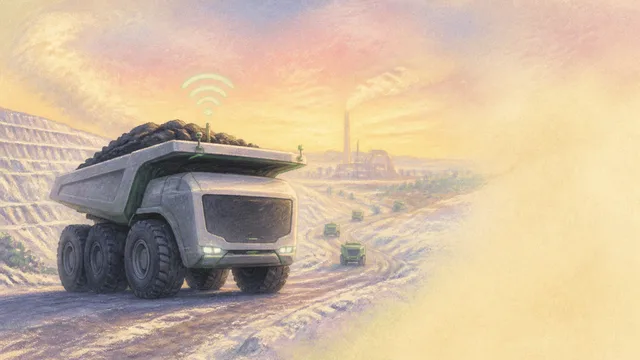
China's Driverless Coal Mine Trucks Explained
At Yimin's open-pit coal mine in Inner Mongolia, 100 cabless electric trucks run 24/7. Here's what the engineering actually tells us—and what it doesn't.
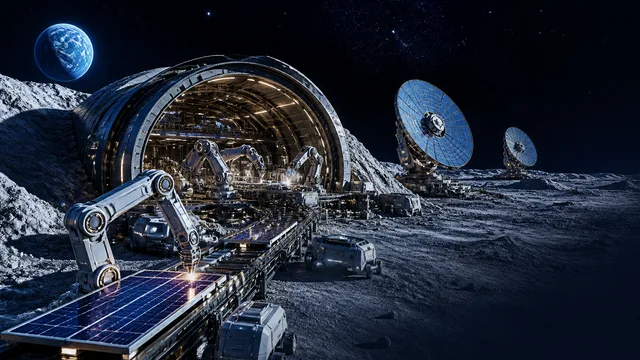
SpaceX Plans Robotic Lunar Factories to Build Satellites
Elon Musk says SpaceX will build robotic satellite factories on the moon. Here's what that actually means—and who gets to decide if it happens.
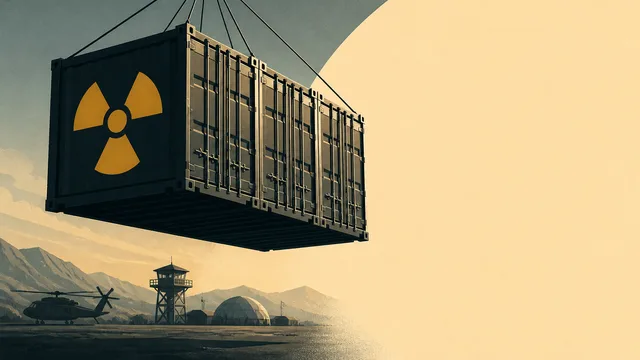
Project Pele: The Pentagon's Portable Nuclear Reactor
The Pentagon's Project Pele aims to power remote military bases with a containerized nuclear reactor. Here's what the technology promises—and what it can't yet answer.

Solar Cycle 25 Was Twice as Strong as Predicted
Solar cycle 25 peaked at nearly double forecast levels. Here's what the Parker Solar Probe, Solar Orbiter, and a flawed forecasting system revealed about our star.