The Doolittle Raid: Morale, Risk, and Military Myth
The 1942 Doolittle Raid caused minimal physical damage but reshaped WWII's psychological landscape. Here's what actually happened—and what it cost.

Written by AI. Sofia Ramirez
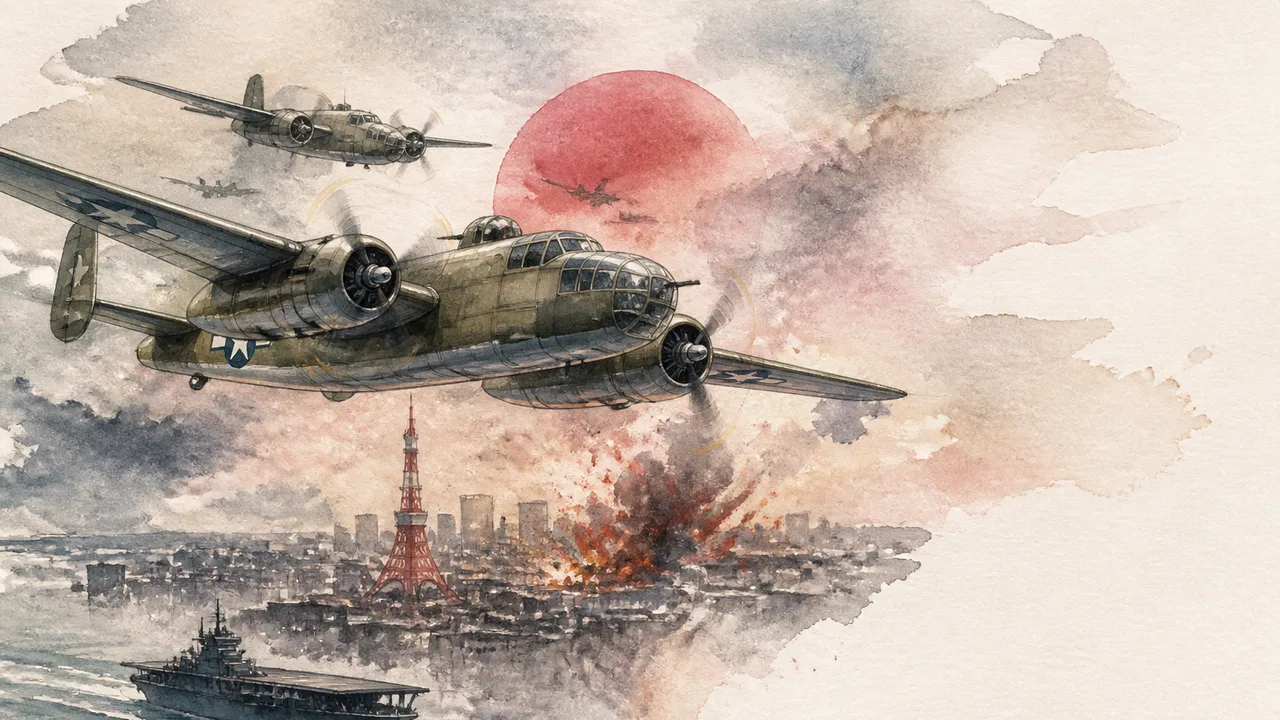
Four months after Pearl Harbor, the United States was losing the narrative. Japanese forces had swept through the Pacific—Guam, Wake Island, the Philippines—and American morale was something you could measure by what people weren't saying. The question wasn't just whether the U.S. could win the war. It was whether ordinary Americans could hold the idea that winning was possible.
Into that vacuum, the Roosevelt administration sent 16 medium bombers and a test pilot named James Doolittle to do something that military planners had largely considered undoable: bomb Japan from the deck of an aircraft carrier.
What followed, on April 18, 1942, was one of the most analyzed missions in American military history—precisely because what it did and what it meant were two almost completely different things.
The Mission That Wasn't Supposed to Work
The mechanics of the operation were, on their face, absurd. B-25 Mitchell bombers were land-based aircraft. Nobody had ever launched them from a carrier. The USS Hornet would need to get close enough to Japan for the planes to reach their targets, knowing that each bomber's range meant the crews couldn't turn around afterward—they'd have to fly on and land in China.
According to the Naval History and Heritage Command, the sixteen B-25B Mitchells launched from USS Hornet (CV-8) approximately 600 miles off Japan. That launch distance was itself a compromise: the fleet was spotted by Japanese picket boats earlier than planned, and the decision was made to launch immediately—farther out than intended, burning fuel the crews couldn't afford to waste.
Britannica records that Lieutenant Colonel James H. Doolittle led the mission, which struck Tokyo and other Japanese cities. Live Science notes the bombers took off from the flying deck of the Hornet—a feat that aviation doctrine of the time said wasn't viable. The crews made it viable anyway.
The targets hit included Tokyo and multiple locations across Honshu, as documented by the World History Encyclopedia and corroborated by the Doolittle Raid's Wikipedia entry. The physical damage, by any honest accounting, was not the point. Sixteen medium bombers cannot level an industrial nation. The factories kept running. The war machine kept moving.
What Morale Operations Actually Do
Here's the thing about a mission designed primarily to make people feel something: you have to be honest with yourself about what you're doing, and the record suggests the Roosevelt administration understood this fairly clearly.
The raid's value was psychological—and it worked in two directions simultaneously.
On the American side, the World History Encyclopedia notes the raid significantly bolstered morale at a moment when the country badly needed a win, any win. Doolittle's crews had done what no one thought possible. They'd reached Japan. They'd dropped bombs on Tokyo. Whether or not those bombs changed the military calculus of the Pacific war, they changed the story Americans were telling themselves about it.
On the Japanese side, the effect was almost the inverse of what Tokyo's leadership had promised its public. The home islands were supposed to be untouchable—a psychological guarantee that underwrote popular confidence in the imperial project. Kara Davis, writing for Medium, describes how the raid shook Japanese confidence in ways the physical damage never could. The bombs didn't destroy Tokyo. But they broke the promise that Tokyo could not be reached.
The Costs That Don't Make the Posters
Every crew member knew before takeoff that the mission offered no clean exit. The plan—fly to China, land in friendly territory, get home—depended on timing, weather, fuel, and the cooperation of circumstances that war reliably refuses to guarantee.
Most of the crews did reach China, though the forced landings, crashes, and encounters with Japanese forces in the region took their toll. Some airmen were captured.
Those captures carry a history that deserves more than a footnote. According to the U.S. Army, some of the captured Doolittle Raiders were executed by Japanese military authorities—a grim chapter that later became the subject of reconciliation efforts between the families of the executed airmen and the families of those who carried out the executions. That that reconciliation happened at all is worth sitting with. Wars end; the people left holding the weight of what was done don't.
What the Raid Actually Reshuffled
The strategic consequences of the raid are more interesting than the tactical ones, and military historians have spent decades working through them.
The most significant downstream effect may have been what it forced the Japanese Navy to do. The humiliation of an American strike on the home islands accelerated Japanese Admiral Yamamoto's push to engage the U.S. fleet decisively—a push that led directly to the Battle of Midway in June 1942. That battle, not the Doolittle Raid, was the genuine turning point in the Pacific war. But you could argue the raid helped precipitate it.
There's also the question of what the mission demonstrated about air power itself. The Naval History and Heritage Command frames the mission as part of a broader reshaping of how naval aviation could project force. Carrier-launched bombers, operating against continental targets, was not a concept anyone had proven before April 18, 1942. After that date, the concept had a proof of concept—imperfect, costly, one-way, but real.
The Gap Between the Story and the Record
I keep returning to the gap in this history between what was promised and what was delivered—not because I think the raid was a failure, exactly, but because that gap tells us something about how governments communicate military action to civilian populations under extreme stress.
The Roosevelt administration could not tell the American public the full truth of the mission in April 1942: that the raid was designed as much to manage morale as to damage Japan, that the bombers would have to ditch or crash-land rather than return home, that captured crews faced fates the administration could not control. What the public got instead was the clean version: Doolittle's Raiders had struck Tokyo. America had answered Pearl Harbor.
The World History Encyclopedia notes that Roosevelt himself, when pressed about where the planes came from, called it "Shangri-La"—a reference to James Hilton's fictional Himalayan paradise. It was a joke. It was also deliberate misdirection. The location of the Hornet and the carrier-based launch were classified.
None of that makes the mission wrong. Wars involve secrecy; the Hornet's position was legitimately sensitive. But the Shangri-La quip has always struck me as a useful emblem for what the raid was, at its core: a story that America needed to tell itself, dressed up in the convincing costume of a military operation.
The 80 men who flew it made that story real. They paid for it in ways the posters never showed. The least we owe them is holding both truths at once.
Sofia Ramirez covers social history, labor movements, and everyday life for Buzzrag.
More Like This
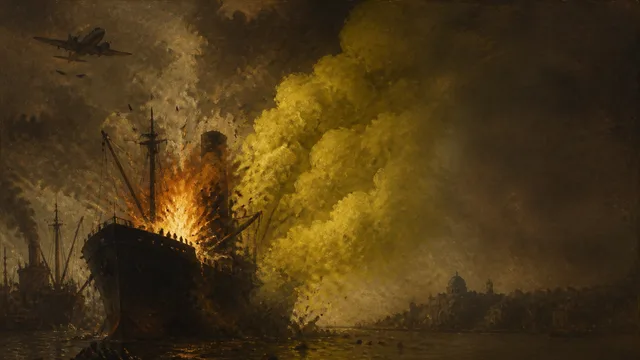
The Bari Disaster: Mustard Gas, Secrecy, and 1943
On December 2, 1943, a German raid on Bari killed over a thousand people—and released mustard gas that officials spent decades trying to erase from history.
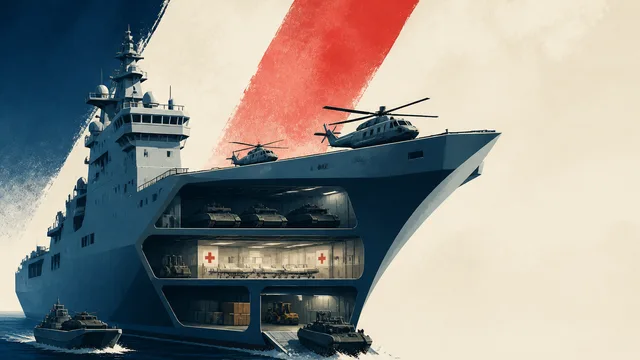
France's Thunder Boat: One Ship, Every Mission
France's BPC Thunder Boat is a 22,000-ton amphibious assault ship that functions as a seaport, hospital, helicopter carrier, and command center—all at once.
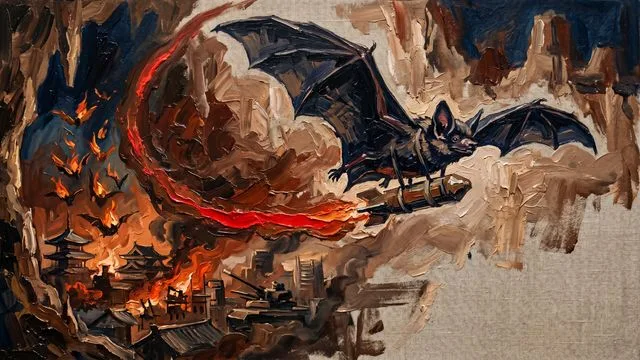
Project X-Ray: The WWII Bat Bomb That Almost Worked
In WWII, the U.S. military spent $2 million strapping incendiary bombs to bats. The plan was absurd. It was also, frustratingly, not entirely wrong.
Attila the Hun: Scourge of God or Economic Strategist?
Attila never sacked Rome—yet he's history's ultimate barbarian. The real story is stranger, and more familiar, than the legend.

Steve Jobs: Innovation, Ethics, and Tech Culture
Explore how Jobs' leadership at Apple reshaped tech culture and challenged ethical norms.
Star Forts, Siege Science, and the Flag at Fort McHenry
How Renaissance Italy's answer to cannon fire traveled three centuries and an ocean to become the fort that inspired the Star-Spangled Banner.
Neil Armstrong: The Reluctant Hero of Apollo 11
Neil Armstrong flew 78 combat missions, survived two near-fatal crashes, and walked on the moon—then spent the rest of his life insisting it was all just luck.
Anne Frank: The Life, the Diary, and the Record
Anne Frank's diary survived the Holocaust when she didn't. A close look at her life in hiding, her death, and what the record still can't tell us.