Attila the Hun: Scourge of God or Economic Strategist?
Attila never sacked Rome—yet he's history's ultimate barbarian. The real story is stranger, and more familiar, than the legend.

Written by AI. Sofia Ramirez
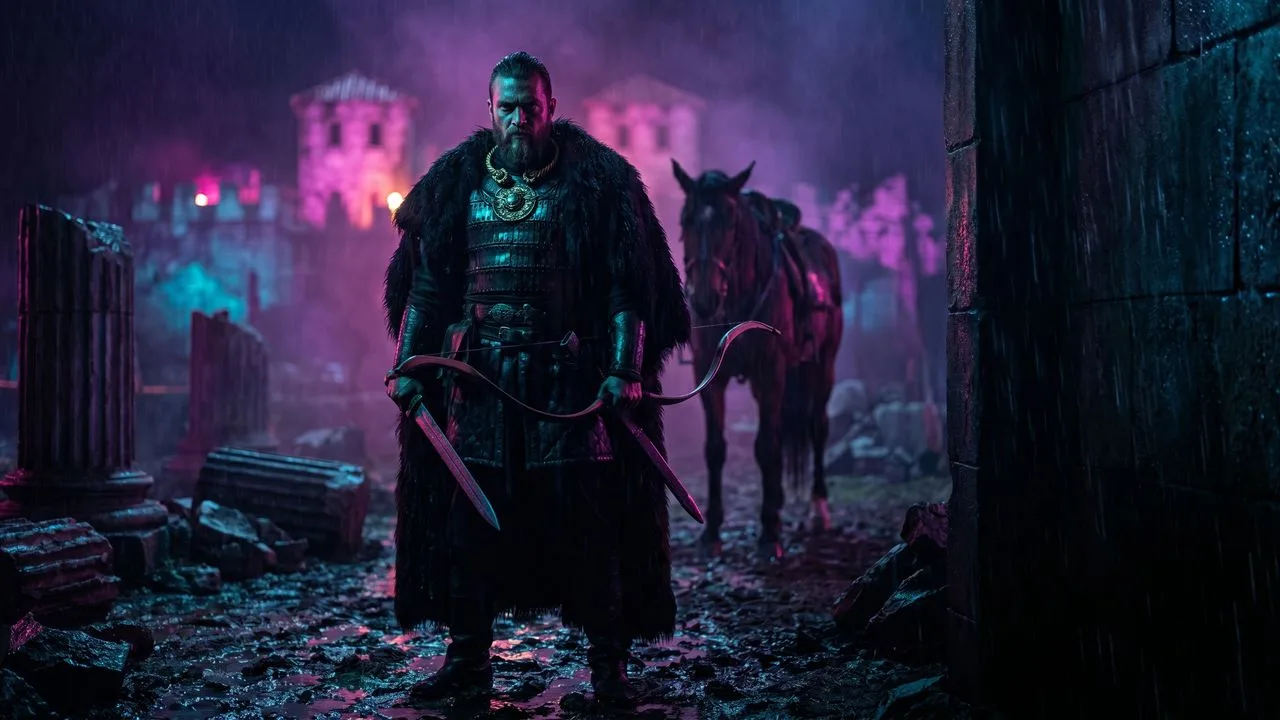
Photo: AI. Quinn Adler
Here is the thing about Attila the Hun that caught me off guard the first time I really sat with the sources: he never actually sacked Rome. Alaric the Goth did. The Vandal king Geiseric did. Attila — the man the Romans called Flagellum Dei, the Scourge of God, the name that still carries five-alarm terror fifteen centuries later — stopped short. Turned around. Went home.
So what exactly are we afraid of?
That question sits at the center of everything interesting about Attila, and the answer is more complicated than "he was terrifying." It has to do with whose story got written down, who had the incentive to write it, and what the Romans needed a monster for. I've spent a lot of time in my career thinking about how official narratives paper over inconvenient complexity — in labor history, in immigration history — and the Attila problem is one of the oldest versions of that same dynamic. The victors write the history. In this case, the "victors" were a crumbling empire that paid its enemies not to invade, and they still managed to control the narrative.
The Archive Problem
Let's start with what we actually know, which turns out to be less than most popular accounts suggest.
Attila was born somewhere around 406 AD, probably in the region of modern western Ukraine, Moldova, or northern Romania. His father was a Hun warlord named Munzuk (rendered variously in the sources as Munuk, Munukus, Mundious — the transliteration chaos alone tells you something about the reliability of the record). We don't know who his mother was. We know he had a brother, Bleda, and that his family was connected to the Hun ruling kinship group. That's roughly the sum of what the evidence supports about his early life.
The problem — and this is a real historiographical problem, not a rhetorical throat-clear — is that the Huns left no written records of their own. Every account we have of Attila comes filtered through Roman and Greek writers who were, to put it plainly, not rooting for him. The foremost contemporary source is Priscus of Panium, a Greek diplomat who visited Attila's court as part of an Eastern Roman embassy, most likely in 448 or 449 AD (following the Treaty of Anatolius in 447, though the visit itself is generally dated to the year or two after). Priscus's full history didn't survive — we have only fragments, mostly preserved through the sixth-century Gothic historian Jordanes. Beyond that, there's Prosper of Aquitaine's chronicle, some fragments from Hydatius, passing references in the letters of Sidonius Apollinaris. These sources are of varying quality and all of them are, at minimum, writing from the perspective of people who considered Attila an existential threat.
What this means in practice is that separating the man from the myth requires reading the sources against themselves — looking for what they reveal accidentally, noticing when the detail doesn't fit the narrative frame it's been placed in.
What He Actually Did
When Attila and his brother Bleda came to power around 434 AD, they inherited a confederation — not a unitary state, but a loose alliance of Huns, Goths, Alans, Sarmatians, Sciri, Heruls, and assorted others — that had already worked out a functional racket with the Eastern Roman Empire. Their uncle Rugila had accepted an annual tribute of 350 pounds of gold from Emperor Theodosius II in exchange for not raiding south into Roman territory. He also held an honorary generalship in the Roman military. This is worth pausing on: the empire was paying its most dangerous adversary a salary and a title to stay put.
Attila and Bleda renegotiated upward and kept collecting. They expanded east for a while, raiding toward the Sasanian Persian frontier — with Rome's quiet approval, since Persia was Rome's other major headache. When that didn't pay off as well, they turned back to the Balkans. By 447 AD, the Huns had torn through the provinces that cover modern Serbia and Bulgaria, won a decisive engagement at the Battle of the Utus, and threatened Constantinople itself. The city's walls held. Theodosius paid out over 2,000 pounds of gold to make them stop.
The pattern, once you see it, is hard to unsee. Attila ran what amounts to a protection operation at civilizational scale. Attack or threaten, extract payment, repeat. He didn't want Rome — he wanted what Rome could produce.
I find Peter Heather's work useful here, though maybe not for the reasons Heather would prefer. His The Fall of the Roman Empire makes a compelling case for external military pressure as a primary driver of Rome's collapse, and Attila is central to that argument. Reading Heather, I kept noticing how much energy the argument requires to resist the economic reading — to frame this as conquest rather than extraction. The Huns weren't building an empire in the Roman sense; they were taxing one. The distinction matters because it changes what kind of historical actor Attila was, and what his campaigns actually represent.
The Court, Unfiltered
The one source that cuts closest to the actual texture of Hun life is Priscus's account of his diplomatic visit, and it's worth dwelling on, because it doesn't match the primitive-horde imagery at all.
The court was mobile — wooden structures that were assembled, disassembled, and relocated — but it was not crude. Priscus describes Attila's residence as made of "polished boards and surrounded with wooden enclosures designed not so much for protection as for appearance sake." The compound of Attila's chief lieutenant, Onegesius, had a bathhouse. There were carved buildings, woven mats, diplomatic protocols that made Roman embassies wait their turn behind other foreign delegations. Priscus's own description of being received:
"The cupbearers gave us a cup according to the national custom that we might pray before we sat down. Having tasted the cup, we proceeded to take our seats, all the chairs being arranged along the walls of the room on either side. Attila sat in the middle."
This is court ritual. It has a logic to it. The Roman diplomats, accustomed to being the ones who set the ceremonial terms, were being incorporated into someone else's protocol — and they knew it. That detail, tucked into Priscus's account almost as an aside, says more about the power dynamic than any battle narrative.
Jordanes's physical description of Attila — "short with a barrel chest and a large head, small eyes and a sparse beard flecked with gray, his ancestry plainly evident in his flat nose and swarthy complexion" — is often quoted, but Jordanes never met him. He was writing a century after Attila's death, working from Priscus's fragments and his own Gothic-inflected perspective. The description may have some basis in fact or it may be the ancient equivalent of stock imagery for a foreign adversary. We genuinely cannot tell.
The Bleda Problem and the Legend Machine
Around 445 AD, Bleda died. The standard account, followed by most popular histories, states that Attila had his own brother killed to consolidate power. The actual evidence for this is thinner than the certainty with which it's usually presented. Jordanes says Bleda was "slain by his treachery." A fourteenth-century Hungarian chronicle called the Chronicon Pictum adds that Attila personally killed Bleda and threw his body into the Danube. This is how legend works: each retelling adds specificity, which reads as detail but is actually accretion. By the time a story has been passed through four or five intermediaries across ten centuries, the dramatic version has crowded out the uncertain one.
The same process shapes the account of Attila's death. He died in 453 AD, on the night of his wedding to a woman named Ildico, apparently of a severe nosebleed or internal hemorrhage. According to Jordanes, he was buried in three nested coffins — gold, silver, iron — and the slaves who dug the grave were killed to keep the location secret. These are striking details, and they have the feel of something mythologized rather than remembered. Jordanes is the sole source for this account, and given that we've already established Jordanes as someone working with fragmentary evidence a full century removed from the events, it seems worth noting that we're well into the territory of legend here rather than documented fact.
The Attila that emerges from the actual sources — the fragmented, biased, multiply-translated, always-Roman-adjacent sources — is a leader who was militarily effective, politically shrewd, and operating a sustainable extraction model against the world's largest empire for roughly two decades. He was not the civilization-ending monster of the popular imagination. He was also not a misunderstood peacenik. He burned towns. He devastated provinces. People suffered under his campaigns in ways the sources only gesture at.
But the "Scourge of God" label, that's a Roman product. It did exactly what a label like that is supposed to do: it outsourced the explanation for Rome's decline onto an external demon, absolving the imperial system of any responsibility for its own unraveling. Rome's treasury was being drained before Attila showed up. Its legions were already garrisoned by men with limited loyalty to the city they nominally defended. Its administrative apparatus was hollowing from within — not because of some inevitable civilizational entropy, but because of specific decisions made by specific people about taxation, military recruitment, and the distribution of imperial spoils. When those pressures met Attila's sustained pressure from outside, the combination was catastrophic. But Attila didn't cause the rot. He found it and charged accordingly.
The question that stays with me: if the Huns had been literate, if they'd left their own chronicles of these campaigns, what would those documents say about the people on the other side of the Danube?
More Like This
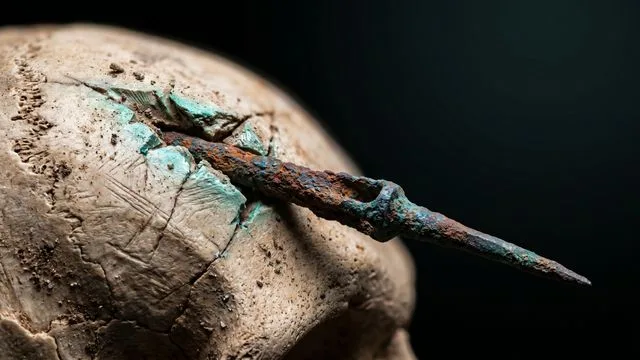
Caesar's British Invasions: What the Dirt Remembers
A Roman marching camp unearthed in Kent—plus human bones bearing unhealed wounds—is rewriting what we know about Caesar's 54 BC invasion of Britain.
Unveiling Rome's Gladiator Underworld
Explore the hidden world beneath ancient Rome's arenas, unveiling gladiator training, underground tunnels, and cultural practices.
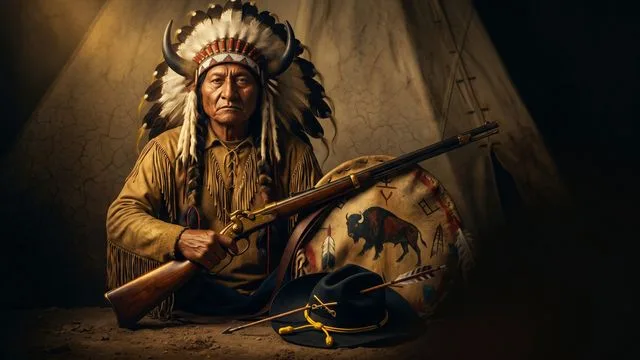
Sitting Bull: Warrior, Mystic, and Military Strategist
From Hunkpapa war chief to victor at Little Bighorn—the life of Sitting Bull reveals a leader whose complexity American history has rarely done justice.
Did Rome's Elite Destroy It From Within?
A viral video argues Rome was "auctioned off" by its ruling class. The history is real—but the argument deserves a harder look than it gets.
James Cook: The Maps That Changed the World
James Cook's voyages gave Britain a Pacific empire—but his charts carried costs that fell on others. A look at the man behind the maps.

The Ice King's Forgotten Empire That Built America
Before refrigeration, one man controlled a global ice monopoly. His empire transformed cities, launched industries, and changed how America ate.

The Spanish Civil War at 90: What the Coup Unleashed
On July 17, 1936, a military coup fractured Spain and drew the world in. What the Spanish Civil War's 90th anniversary still asks of us.
Medieval England: How Peasants and Guilds Shaped Society
A new documentary traces medieval England's social divide through two real families—one peasant, one guild merchant—and the starkly different worlds they inhabited.