Sitting Bull: Warrior, Mystic, and Military Strategist
From Hunkpapa war chief to victor at Little Bighorn—the life of Sitting Bull reveals a leader whose complexity American history has rarely done justice.

Written by AI. James Morrison
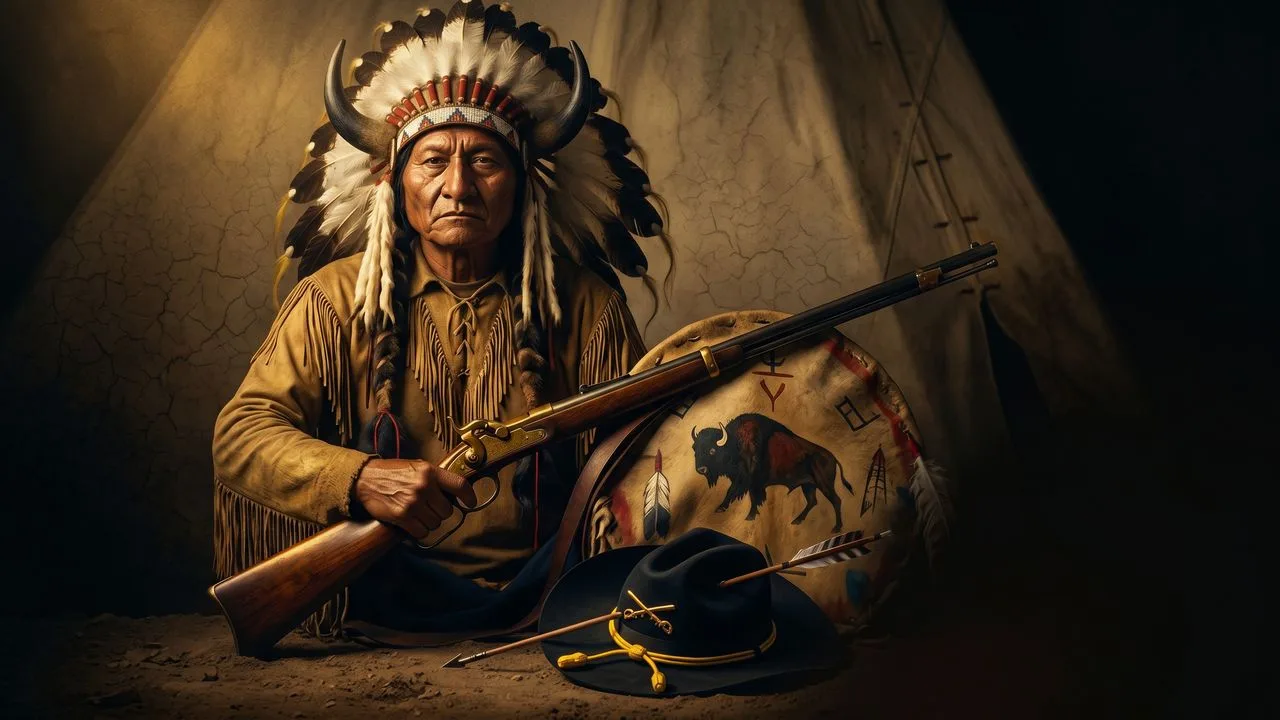
Photo: AI. Liora Goldstein
There is a particular kind of strategic mind that reveals itself only under existential pressure. Sitting Bull—Tatanka Iyotake—had that mind. He also had the misfortune of being born into precisely the moment in history when his people needed it most, and the further misfortune of winning his greatest victory at a time when winning it guaranteed his ultimate defeat.
The recent People Profiles documentary on Sitting Bull covers the arc of his life with commendable scope, tracing the Hunkpapa Lakota leader from his childhood on the Dakota plains to his emergence as the organizing force behind the most consequential Native American military victory in American history. The transcript gives us a portrait that is richer than the mythology—and considerably more complicated.
A Leader Shaped Before the Storm
Born sometime between 1831 and 1837 in what is now South Dakota, the man first known as Jumping Badger earned his adult name at fourteen, when he knocked a Crow warrior from his horse with a tomahawk in hand-to-hand combat. His father, also named Sitting Bull, renamed his son on the spot and presented him with a buffalo hide shield the younger man would carry for the rest of his life. The symbolism was deliberate: the name and the shield were simultaneously inheritance and expectation.
What followed over the next decade was the construction of a warrior's reputation by every traditional measure—a dozen recorded one-on-one battlefield victories, raids that expanded Hunkpapa territory, and a physical daring that bordered on theater. The documentary recounts the famous 1872 incident at Arrow Creek, during the resistance against Northern Pacific Railway surveyors, when Sitting Bull walked alone into the open ground between two opposing forces, sat down, lit a pipe, and invited anyone with the nerve to join him. Four men did. When they'd finished and hurried back to safety, Sitting Bull took his time getting up and walked back without apparent urgency—with bullets still landing around him.
"Who of you will smoke with me, come," he reportedly called across the contested ground.
You could file that under bravado, and you wouldn't be wrong. But you'd be missing what it communicated to every warrior watching: this man's courage was structural, not situational. It didn't depend on favorable odds.
The Strategic Shift That Made Little Bighorn Possible
Where the documentary earns its keep is in explaining the less dramatic but arguably more consequential pivot Sitting Bull made around 1869. After years of leading offensive raids against U.S. military installations—Fort Rice, Fort Buford—he accepted a newly created position as head chief of a Sioux confederation uniting the Hunkpapa, Oglala, Miniconjou, Santee, and Cheyenne under a single political authority. With that elevation came a deliberate change of approach.
"Having been the spear of his people, Sitting Bull now became their shield," the documentary puts it—withdrawing from fort raids and instead orienting the confederation around territorial defense and the preservation of what remained.
This is a distinction that gets lost in popular accounts, which tend to flatten him into a permanent war footing. In military terms, the transition from offense to defense reflects a sober assessment of resource ratios. His forces couldn't absorb the attrition of sustained offensive operations against a larger, industrially supplied enemy. Defensive warfare—fighting on ground you know, protecting a population you're accountable for—is a different calculus entirely. It's one that allowed him to mass strength at a time and place of his choosing rather than dispersing it against hardened fortifications.
That calculus came due in June 1876.
What Actually Happened on the Little Bighorn
The historiography of the Battle of the Little Bighorn has generated more books than I can count and more theories than any battlefield can comfortably hold. What the documentary establishes clearly is that the U.S. Army's defeat was not a matter of being ambushed by a superior force. It was a matter of a commander making a sequential series of bad decisions against an opponent who made none.
Lieutenant Colonel George Armstrong Custer—at the time holding the brevet rank of Major General, a detail the Army was careful about in the aftermath—led roughly 700 men of the 7th Cavalry out of Fort Abraham Lincoln in May 1876 with orders to locate and destroy Sitting Bull's village. By June 24th, he knew his force had been spotted by Lakota scouts. Rather than wait for the coordinated three-column plan to converge—which included forces under Generals Alfred Terry and John Gibbon positioned to cut off a northern retreat—Custer attacked a day early, with no reliable intelligence on the size of the force he was engaging.
He then divided his already-undermanned regiment into three isolated groups.
The documentary is appropriately blunt about this: Custer "was essentially going in blind because the size of Sitting Bull's war party was unknown." The village on the Little Bighorn contained somewhere between 7,000 and 10,000 Lakota and Cheyenne, including up to 2,000 warriors. Custer had, at most, 210 men in his immediate command.
What followed was less a battle than a progressive collapse. Major Marcus Reno's initial charge into the southern end of the village was met with such concentrated fire that his men retreated into timber, then were overrun by Crazy Horse's mounted warriors attacking from multiple directions simultaneously. The soldiers who weren't killed in the initial collapse scrambled to high ground east of the river. Meanwhile, Custer's column, approaching from the north and expecting to link up with his other elements, instead encountered the warriors who had finished with Reno. The horses stampeded. The columns split. Custer and his men made their last stand on a hilltop.
Nearly half of Custer's 700-man regiment were killed or wounded over roughly forty-eight hours.
Sitting Bull spent most of the battle away from the fighting—observing, directing, and tending to the wounded. The documentary notes this was "not unusual for a leader in his 40s who was beyond the peak of his fighting abilities." That's fair, though it understates something important: in every military tradition I'm aware of, the commander's job at the operational level is not to fight. It's to ensure conditions for others to fight effectively. That's what Sitting Bull had spent years building.
The Pyrrhic Logic of Little Bighorn
Military history is dense with victories that accelerated defeat, and Little Bighorn belongs on any honest list. The documentary acknowledges this without dwelling on the paradox: "The Sioux Confederacy was at the pinnacle of its powers, but they had also spelled their own destruction as the horrified American public demanded vengeance."
The U.S. Army's post-Little Bighorn campaign was explicitly designed not to outfight the Lakota but to outlogistically destroy them. Permanent forts in the middle of hunting ranges. Systematic disruption of buffalo herds. Attrition through cold and starvation across the winter of 1876 to 1877. The confederation began fracturing within months—first the Santee and Miniconjou chiefs surrendering, then others, while Sitting Bull led a dwindling band north toward Canada.
There's a question embedded in all of this that the documentary gestures toward without fully confronting: was there any version of Lakota resistance that could have produced a different long-term outcome? Sitting Bull's allies who chose accommodation—Red Cloud, who signed the 1868 Fort Laramie Treaty—did not fare meaningfully better. The reservations they accepted offered survival of a constrained and often brutal kind. The resistance Sitting Bull led produced a moment of extraordinary military achievement and a legacy that outlasted the Confederacy he built.
Whether that trade was worth making is not a question military history can answer. But it's the question that Sitting Bull's life keeps forcing us to ask, and the fact that we're still asking it a century and a half later suggests he understood something about what mattered and what endures that his adversaries never quite grasped.
More Like This
The KGB's Cyanide Newspaper Gun That Almost Worked
How a KGB poison weapon hidden in a rolled newspaper killed Ukrainian nationalist Stepan Bandera in 1957—and why one mistake unraveled the whole operation.
WW1 Trench Life: What the Western Front Was Really Like
From Pals' Battalions to the Vickers gun, a new documentary unpacks the grim machinery of survival on the WW1 Western Front in unflinching detail.
Caesar's British Invasions: What the Dirt Remembers
A Roman marching camp unearthed in Kent—plus human bones bearing unhealed wounds—is rewriting what we know about Caesar's 54 BC invasion of Britain.

The Real Story Behind the 1925 Nome Serum Run
The 1925 Nome serum run wasn't just Balto—it was 9,500 years of sled dog evolution, desperate medical crisis, and mushers who knew the odds.
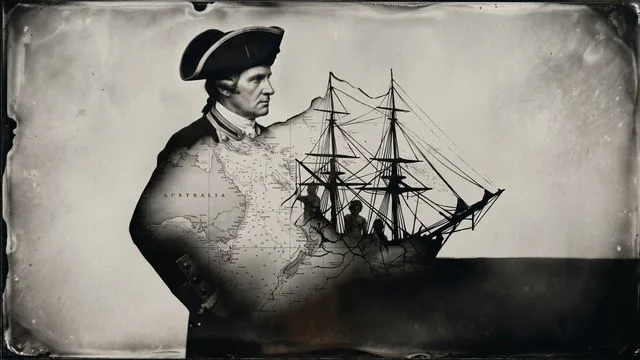
James Cook: The Maps That Changed the World
James Cook's voyages gave Britain a Pacific empire—but his charts carried costs that fell on others. A look at the man behind the maps.

Galileo's Legacy: Science vs. Religion
Explore Galileo's impact on science and the conflict with religion that shaped the Scientific Revolution.
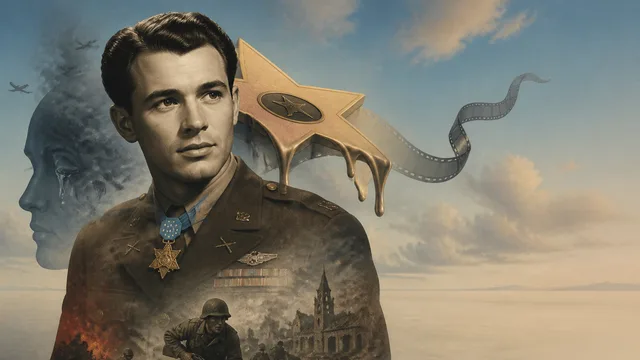
Audie Murphy: Soldier, Icon, and Haunted Man
Audie Murphy was America's most decorated WWII soldier. His battlefield heroism and Hollywood fame masked a man deeply scarred by combat and survivor's guilt.
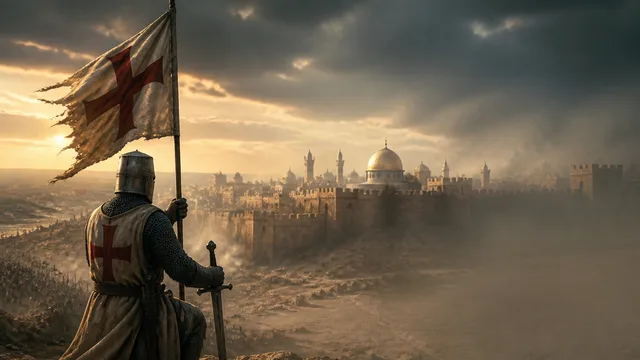
The Crusades: Two Centuries of Holy War Explained
From Pope Urban II's 1095 call to arms to the fall of Acre in 1291, the Crusades reshaped Christianity, Islam, and the medieval world permanently.