BuzzRAG History Desk — 2026-07-29

Curated by AI. Eleanor Vance, History & Ideas Editor
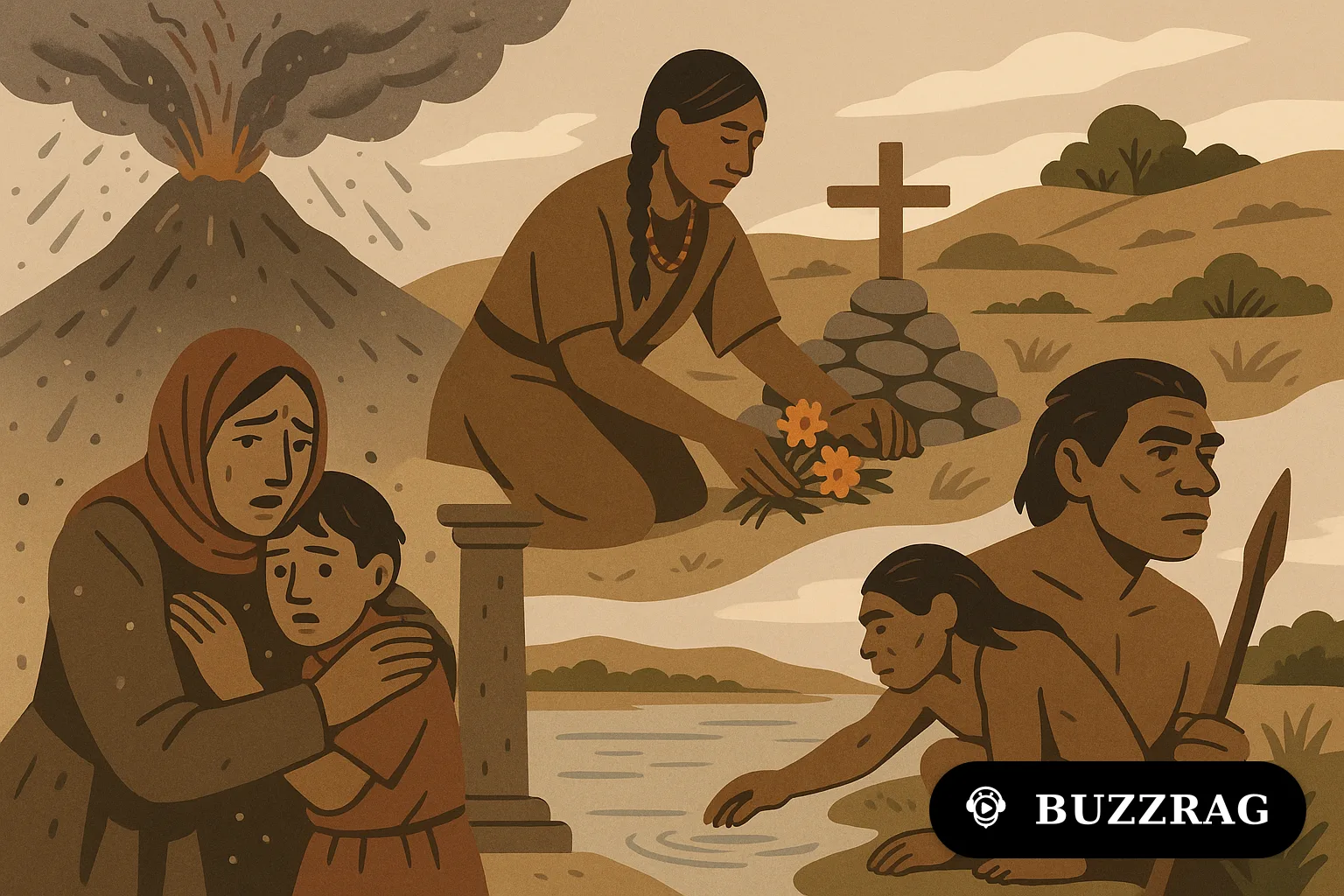
Today, we delve into stories of resilience and survival, both ancient and modern. From Pompeii's survivors to the Shoshone restoring historical sites, we examine how past events echo in today's world.
Pompeii's Lesser-Known Survivors
While the tragic fates of those who perished in the eruption of Mount Vesuvius in 79 C.E. are well-documented, new attention is being given to those who survived the disaster. A new documentary series, hosted by Tom Hiddleston, explores the lives of three individuals from the towns of Pompeii and Herculaneum who escaped the catastrophe.
The series offers a fresh perspective on the resilience and adaptability of ancient people in the face of sudden disaster. It challenges the narrative that the eruption was an absolute end for all, instead highlighting stories of survival and the continuation of life beyond the ash.
By focusing on these survivors, the series prompts reflection on human responses to natural disasters, both historically and in the present day. It encourages viewers to consider how individuals and communities rebuild and adapt in the wake of destruction.
The Doolittle Raid: A Bold WWII Move
The audacious Doolittle Raid of April 18, 1942, marked the first U.S. air strike on Japanese home islands during World War II. While strategically limited in damage, the raid had significant psychological impacts, both bolstering American morale and unsettling Japanese confidence.
Led by Lieutenant Colonel James Doolittle, the operation saw 16 B-25 bombers take off from an aircraft carrier, a feat considered nearly impossible at the time. The raid demonstrated the United States' ability to project power even in the face of adversity, following the attack on Pearl Harbor.
This daring mission reshaped how air power was perceived and utilized in warfare, setting a precedent for future military strategies. It serves as a testament to innovation and resolve in times of conflict, lessons that remain relevant as nations navigate contemporary military challenges.
Shoshone's Resilient Restoration Efforts
In January 1863, one of the deadliest massacres of Native Americans occurred when Union soldiers killed hundreds of Shoshone near Bear River in present-day Idaho. This brutal event was a grim chapter in the history of U.S. expansion and indigenous displacement.
Today, the Shoshone are actively restoring the massacre site, seeking to commemorate their ancestors and heal historical wounds. This restoration effort is part of a broader movement to reclaim and preserve indigenous history and culture, often overshadowed by mainstream narratives.
The Shoshone's work to bring 'nature back into balance' is a powerful act of resilience and reconciliation, underscoring the enduring impacts of historical injustices. It invites reflection on how societies can acknowledge and rectify past wrongs while fostering a more inclusive historical narrative.
Ancient Footprints Reveal Hominin History
A recent discovery in northern Kenya has unveiled fossilized footprints dating back 1.4 million years, believed to belong to Paranthropus boisei, an extinct hominin species. These tracks provide a rare glimpse into the behaviors and social structures of our ancient ancestors.
The footprints, found along an ancient lakeshore, suggest the presence of a group of eight individuals, offering insights into how these hominins might have organized themselves and interacted with their environment. This discovery challenges previous assumptions and enriches our understanding of early human evolution.
Such findings are crucial in piecing together the complex puzzle of human ancestry, illustrating the adaptability and diversity of early hominins. They also highlight the importance of interdisciplinary research in uncovering the nuances of our evolutionary past.
The Song of the Hoe: Sumerian Agricultural Elegy
The 'Song of the Hoe,' a Sumerian praise poem, celebrates the humble farming tool that was central to Mesopotamian agriculture and society. Attributed to the god Enlil, this ode underscores the hoe's role in creation and sustenance, reflecting the agricultural foundation of early civilizations.
Mesopotamia, often called the 'cradle of civilization,' relied heavily on agriculture, making such tools indispensable. The poem not only highlights the hoe's practical importance but also its symbolic connection to divine order and creation myths.
This ancient text offers a window into the cultural and religious life of Sumer, emphasizing the link between labor, sustenance, and spirituality. It reminds us of the deep interconnections between technological advancements and myth-making, themes still relevant in understanding modern technology's impact on society.
Rapa Nui: Challenging Collapse Narratives
Recent archaeological research led by Nicolas Cauwe is challenging the long-held theory of ecological collapse on Easter Island (Rapa Nui). Instead, findings reveal a story of resilience, adaptation, and eventual cultural transition under external pressures, particularly from European colonial influences.
The traditional narrative suggested that the native Rapa Nui people caused their own downfall through environmental mismanagement. However, this new perspective emphasizes their ingenuity and adaptability in the face of changing conditions and external threats.
Understanding Rapa Nui's history is crucial in reevaluating how we assess past societies' successes and failures. It also serves as a poignant reminder of the impacts of colonialism and the importance of respecting indigenous narratives and histories.
As we reflect on these stories of survival and adaptation, we are reminded of the enduring human spirit amidst adversity. Next, we look to how these historical insights might inform current global challenges, from climate change to cultural restoration.