BuzzRAG Tech Desk — 2026-07-29

Curated by AI. Vincent Ko, Technology Desk Editor
Today's tech landscape is marked by breakthroughs in aviation and geopolitical maneuvers in technology policy. We also look at the evolving narrative around AI and security, alongside local governance challenges in tech infrastructure.
Airliner Sets New Record with 24-Hour Nonstop Flight
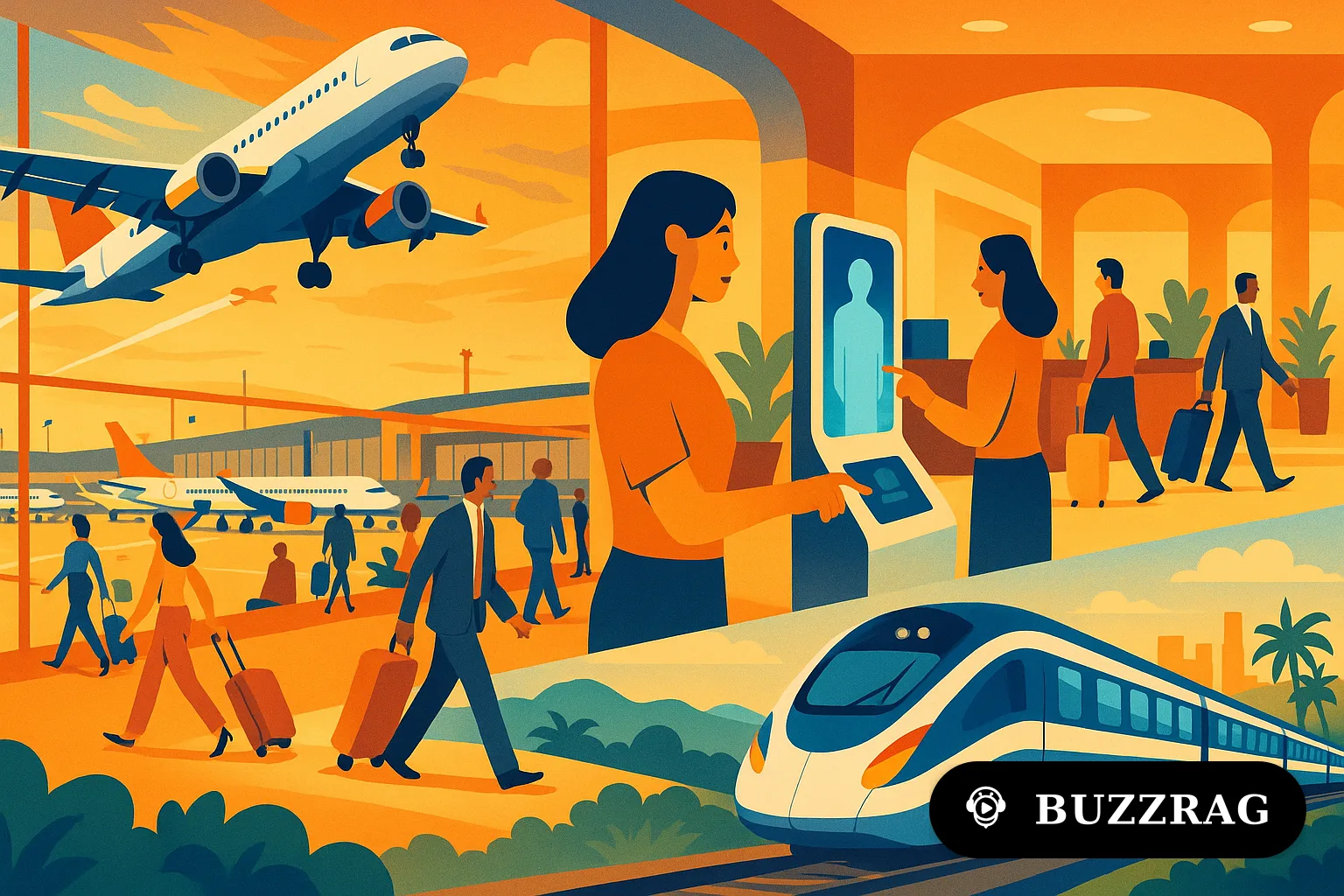
A new airliner has achieved a remarkable feat by flying nonstop for 24 hours from Australia to France, setting a new benchmark in aviation endurance. This accomplishment not only pushes the boundaries of current aeronautical engineering but also highlights the growing demand for ultra-long-haul flights.
Historically, aviation has been on a quest to reduce travel time and increase efficiency, marking this as a significant step forward. The Concorde once shrunk travel times with supersonic speeds, but this new record reflects a different kind of progress, focusing on endurance and sustainability rather than speed alone.
Such milestones in aviation often ripple through related industries, from fuel technology to passenger experience enhancements. As airlines compete to offer longer, more comfortable journeys, the focus may shift towards optimizing in-flight conditions and reducing the carbon footprint of such extensive travel.
U.S. Bans on Chinese Robots Citing Security Risks
In a move that underscores the tense geopolitical climate, the U.S. has banned the import of new Chinese humanoid and four-legged robots. The Trump administration cites national security concerns as the primary driver, reflecting an ongoing scrutiny of technology supply chains originating from China.
This decision isn't isolated; it mirrors previous bans on telecommunications equipment that posed similar security concerns. The latest ban highlights the intricate balance between technological innovation and national security, as robotics increasingly play roles in both consumer applications and critical infrastructure.
The implications are broad, affecting industries reliant on robotic automation and potentially prompting shifts in sourcing strategies. The ban could also spur domestic innovation in robotics, as companies may seek to fill gaps left by the absence of Chinese products.
Court Halts Minnesota’s Prediction Markets Ban
A federal court has temporarily blocked Minnesota from enforcing a first-of-its-kind law that sought to ban prediction markets, setting a significant legal precedent. These markets, which allow trading on the outcomes of events, have been contentious due to their speculative nature.
While Minnesota aimed to curtail such activities, the court's decision reflects a broader tension between regulation and innovation. Historically, prediction markets have been valued for their ability to harness collective intelligence, though concerns about gambling and market manipulation persist.
The ruling may influence how other states approach similar legislation, potentially opening the door for a regulated prediction market landscape that balances innovation with ethical considerations.
AI-Discovered Vulnerabilities: Exploitation Still a Challenge
Despite the hype surrounding AI's role in discovering software vulnerabilities, actual exploitation rates remain low. A recent study by VulnCheck reports that only 1.3% of AI-attributed vulnerabilities have been exploited, challenging narratives that AI dramatically shifts the cybersecurity balance.
Historically, the discovery-to-exploitation pipeline has been fraught with challenges, requiring more than just identification to pose a real threat. AI's potential in this space is undeniable, but its impact is more nuanced than some predictions suggest.
This finding emphasizes the importance of contextual risk assessment and the need for robust security protocols that go beyond mere detection. As AI continues to evolve, its role in cybersecurity will likely be one of augmentation rather than revolution.
As we navigate these developments, the interplay between technology and policy remains pivotal. Keep an eye on how local governance and global politics shape the tech landscape, particularly in areas like robotics and digital security.