BuzzRAG History Desk — 2026-07-30

Curated by AI. Eleanor Vance, History & Ideas Editor
Today's journey through history unveils the symbolic wisdom of Thoth in ancient Egypt, potential Viking voyages to North America, and the rich literary traditions of Mesopotamia. We also reexamine WWII's psychological warfare and challenge accepted narratives about Easter Island's past.
Thoth, Baboons, and Lunar Wisdom
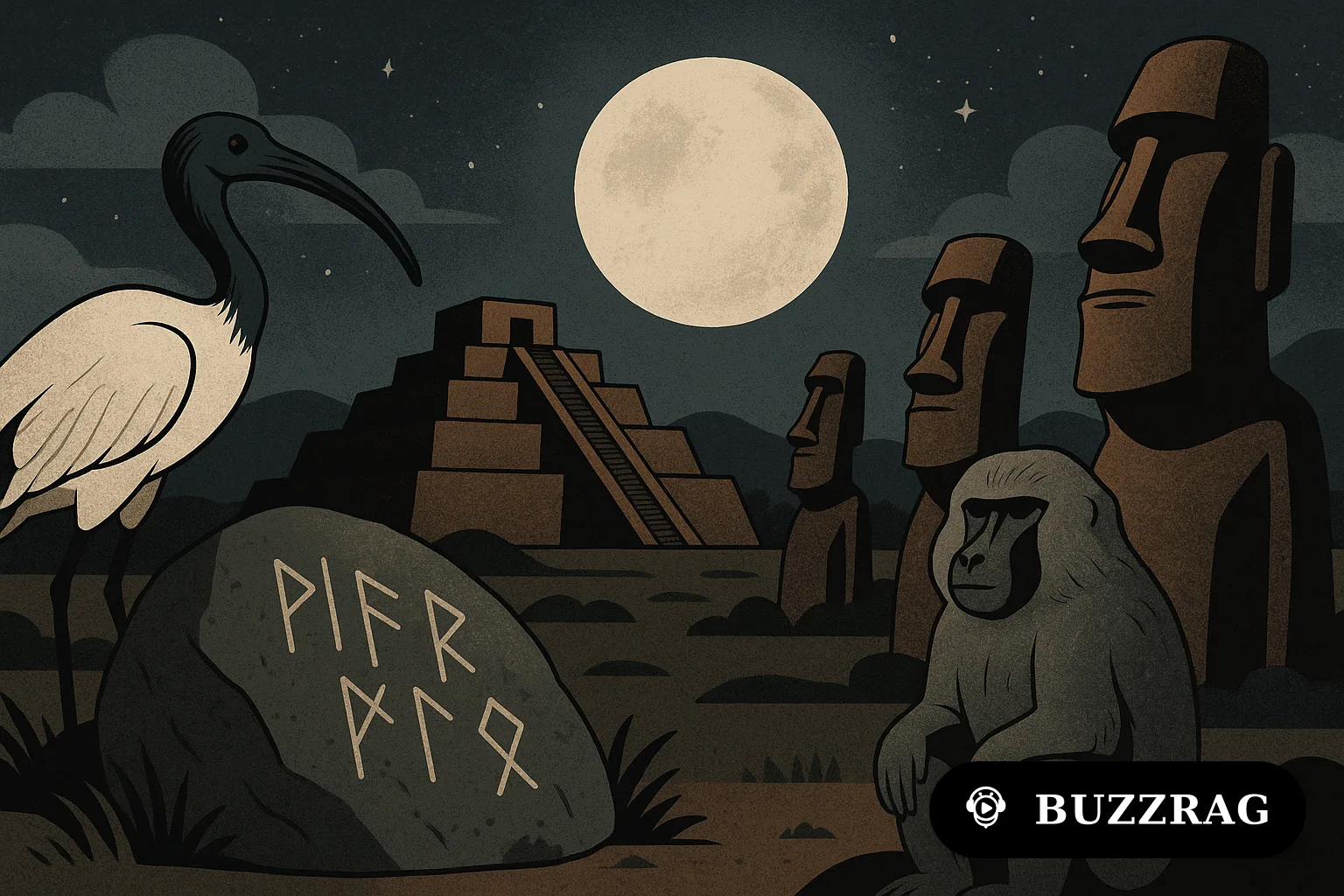
In ancient Egyptian mythology, Thoth stands as a god of profound wisdom, writing, magic, and the moon. Represented by the sacred ibis and the baboon, Thoth's symbolism is as enigmatic as it is fascinating. Researchers link the ibis's crescent-shaped beak to lunar imagery, while the baboon's associations remain a mystery, perhaps reflecting Thoth's role as a mediator between celestial and earthly realms.
The reverence for Thoth highlights the Egyptians' intricate understanding of the cosmos and the divine. This god's multifaceted nature underscores the interconnectedness of intellectual pursuits and spiritual beliefs in ancient cultures. Examining such symbols today invites reflection on humanity's continuous quest for knowledge and the timeless allure of the moon.
As we delve into these ancient symbols, their enduring legacy prompts us to consider how modern interpretations of wisdom and divinity are shaped by cultural heritage and cosmic wonders.
Unraveling Viking Runes in Canada
A recently discovered boulder in Canada, inscribed with runes, raises the tantalizing possibility of undocumented Viking voyages to North America. These enigmatic markings, resembling Norse runes, have sparked debate among historians and archaeologists about the extent of Viking exploration beyond known settlements.
The potential for a previously unknown transatlantic journey challenges established narratives about early exploration of the Americas. If confirmed, it could redefine our understanding of Norse influence and interaction with indigenous peoples. This discovery serves as a reminder of the many untold stories lurking beneath the surface of history, waiting to reshape our perception of the past.
As scholars continue to study these inscriptions, the stone could become a key piece in the puzzle of early exploration, urging us to reconsider the adaptability and reach of Viking adventurers.
Enlil and the E-Kur Hymn's Legacy
The hymn 'Enlil in the E-Kur' stands as a testament to the rich literary tradition of ancient Mesopotamia, offering insight into the religious and cultural life of the time. Celebrating Enlil, the sky god, and his temple at Nippur, this hymn not only praises divine power but also reflects the societal values and aspirations of the Sumerians around 2000 BCE.
This piece is significant for its influence on later religious texts, including parts of the Bible. It exemplifies the transmission of ideas and literary forms across cultures and epochs. Through its verses, we glimpse the continuity of human attempts to comprehend the divine and articulate spiritual devotion.
As scholars examine these ancient texts, their relevance persists, reminding us of the foundational narratives that continue to shape modern religious and cultural identities.
Rethinking the Doolittle Raid's Impact
The 1942 Doolittle Raid, despite causing minimal physical damage to Japan, significantly altered the psychological landscape of World War II. It provided a much-needed morale boost to the United States and demonstrated that Japan was vulnerable to American air attacks. This audacious mission, orchestrated by Lieutenant Colonel James Doolittle, became a symbol of American resilience and ingenuity.
While often mythologized in popular culture, the raid's true significance lies in its psychological impact rather than its strategic outcomes. It emboldened Allied forces and reshaped military tactics in the Pacific Theater. The Doolittle Raid exemplifies how perception and morale can influence wartime narratives and alter the course of history.
As historians revisit this event, we are reminded of the complex interplay between military action and public sentiment, and how myths can sometimes overshadow the nuanced realities of war.
Easter Island's Resilient Past
Recent archaeological research challenges the long-held belief in the ecological collapse of Easter Island, also known as Rapa Nui. Nicolas Cauwe's findings suggest that the island's inhabitants demonstrated remarkable resilience and adaptability in the face of environmental changes. Instead of collapse, the evidence points to a cultural transition and the devastating impact of European colonialism.
This new perspective reframes Rapa Nui's history, emphasizing the agency and ingenuity of its people rather than portraying them as passive victims of their environment. It underscores the importance of revisiting historical narratives to acknowledge indigenous resilience and adaptability.
As we reassess the lessons of Rapa Nui, the findings urge us to consider how colonial narratives have shaped our understanding of history and to seek a more nuanced appreciation of human-environment interactions.
As we continue to explore these historical narratives, we should consider their enduring impact on contemporary culture and identity. The stories of gods, explorers, and resilient societies remind us that history is ever-evolving, shaped by new discoveries and interpretations. Keep an eye on emerging research that challenges established narratives and enriches our understanding of the past.