Broadcom's Valuation Debate Comes Down to AI Economics
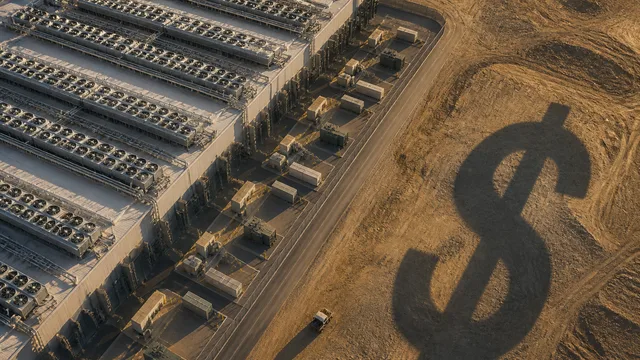
Broadcom bulls and skeptics split on whether AI revenue is durable. We break down the 68% EBITDA margin, the $115B FCF consensus, and who foots the bill.
What's Breaking Through
Analysis of Meta's financial performance, valuation, and growth prospects across its advertising and messaging platforms.
21 articles in this topic · tracking 16 signals across 8 source feeds
About this topic
Meta Platforms has become the subject of renewed investor interest following recent earnings reports that reveal a company positioned for significant growth despite macroeconomic headwinds. The cluster of articles reflects a broader reassessment of Meta's investment case, with analysts highlighting compelling valuations and strong fundamental momentum that suggest the stock may have been oversold in recent market corrections. This optimistic view is grounded in Meta's demonstrated ability to execute on its core advertising business while simultaneously expanding revenue streams across its portfolio of applications.
Central to the current investment narrative is Meta's focus on serving advertisers more effectively, which remains the primary engine driving profitability and cash generation. The company's Q1 earnings highlighted continued strength in this area, even as the broader advertising market faces uncertainty. Beyond traditional display advertising, Meta has been quietly monetizing WhatsApp, its massive messaging platform with billions of users worldwide. This move mirrors similar strategies employed by competitors like Telegram and Snapchat, who have sought to unlock the commercial potential of their user bases. WhatsApp monetization represents a significant untapped opportunity, as the platform has historically operated as a free service without meaningful revenue generation.
Investment analysts view Meta as particularly attractive for those concerned about economic recession, as the company appears to be trading at prices that reflect pessimistic scenarios while maintaining strong competitive positioning and growth optionality. The combination of a mature, highly profitable core business with emerging monetization opportunities across WhatsApp and other properties creates what many see as a favorable risk-reward dynamic. As Meta continues to demonstrate operational discipline and revenue diversification, the investment thesis centers on the gap between current market valuation and the company's intrinsic value, especially if economic conditions stabilize or improve.
BuzzRAG Coverage
Broadcom bulls and skeptics split on whether AI revenue is durable. We break down the 68% EBITDA margin, the $115B FCF consensus, and who foots the bill.
Crypto treasury stocks promise Bitcoin exposure through regulated equity. But when the thesis shifts, retail investors learn who the structure was built for.
AI data centers are redirecting chip production away from consumer electronics, driving up prices for laptops, cameras, gaming consoles, and professional storage gear.
Nvidia has told its biggest customers to expect AI server price hikes above 15%, driven by soaring memory costs. Here's what's moving, and who absorbs the bill.
Anthropic is rewriting Claude's ethical constitution in private sessions, under IPO pressure. But the workers who build the system aren't in the room.
China's public is broadly optimistic about AI while Americans grow wary. The Economist's editors ask how long that gap can hold—and what breaks first.
Stripe called January 1, 2026 "the beginning of the singularity." Their evidence is a payments chart. Their spending tells a more specific story.
Europe wants AI independence from US tech giants. But structural dependence runs deeper than any frontier model can fix. Here's the real terrain.
Stripe's Will Gaybrick lays out a future of AI agents, disappearing checkouts, and stablecoins. What it means for businesses that write real checks.
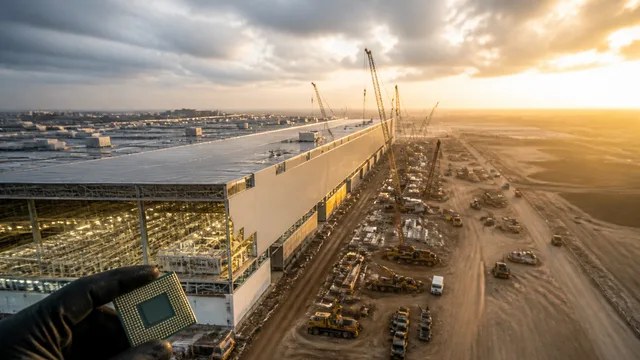
Tesla and SpaceX plan the largest factory ever built in Texas — a $119B chip fab targeting 1 terawatt of AI compute annually. Here's what the numbers actually mean.
Visaible.ai raised ~A$1M to help hotels stay visible as AI chatbots reshape travel discovery. Here's what the bet reveals about hospitality's next distribution war.
Fastly data shows AI traffic growing 6.5x faster than human traffic. The infrastructure story is real—but so is what it erases from the ledger.
From hyperscaler capex to sovereign GPU deals, the AI investment cycle is more structurally complex—and globally uneven—than most coverage admits.
Universities are selling campuses to Amazon and proposing billion-dollar data center deals. The financial logic is real—but so are the costs to academic research independence.
Chevron's West Texas data center deal with Microsoft reframes the company as an AI infrastructure play. What it means for Big Oil—and who bears the cost.
Federal Reserve officials are watching AI's debt-fueled investment boom for financial stability risks. For workers, the real exposure runs through pension funds they can't audit.
Canva reduced its 2026 revenue growth forecast from 30% to 20% after AI integration costs ran higher than expected, delaying product launches and triggering a rare miss.
MIT economist Robert Townsend's new blockchain course asks what distributed ledgers actually solve—a question the startup world has largely avoided answering.
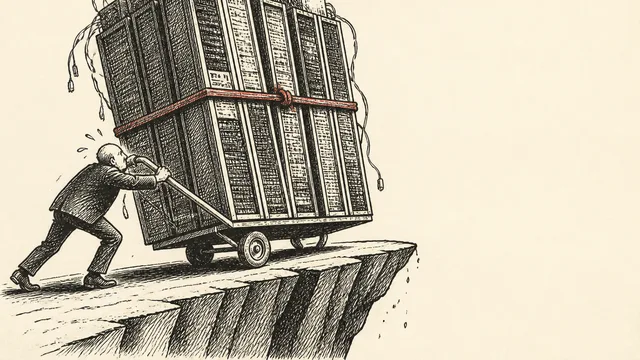
Amazon, Alphabet, Meta, and Microsoft burned $416B on AI infrastructure in 2025. Now the bond market is nervous, free cash flow is shrinking, and the bills are arriving.
Dr. Ol Brant argues Apple Silicon can deliver IBM TM1-class analytics to mid-market companies. Here's what that claim actually means—and what it leaves open.
The OpenAI and Anthropic S-1s will be financial documents, yes — but first they're SEC filings with disclosure obligations no AI lab has faced before.
15 of 16 signals from source feeds
Fortune
The Diff
Fortune
Fortune
Knowledge at Wharton
Seeking Alpha
International Business Times
Fortune
CNBC Top News
CNBC Top News
These are external articles in the Business desk that match this topic. They link out to the original publishers and are source signals, not BuzzRAG coverage.