Chevron's Microsoft Deal: Big Oil Bets on AI Power
Chevron's West Texas data center deal with Microsoft reframes the company as an AI infrastructure play. What it means for Big Oil—and who bears the cost.

Written by AI. Jonathan Park
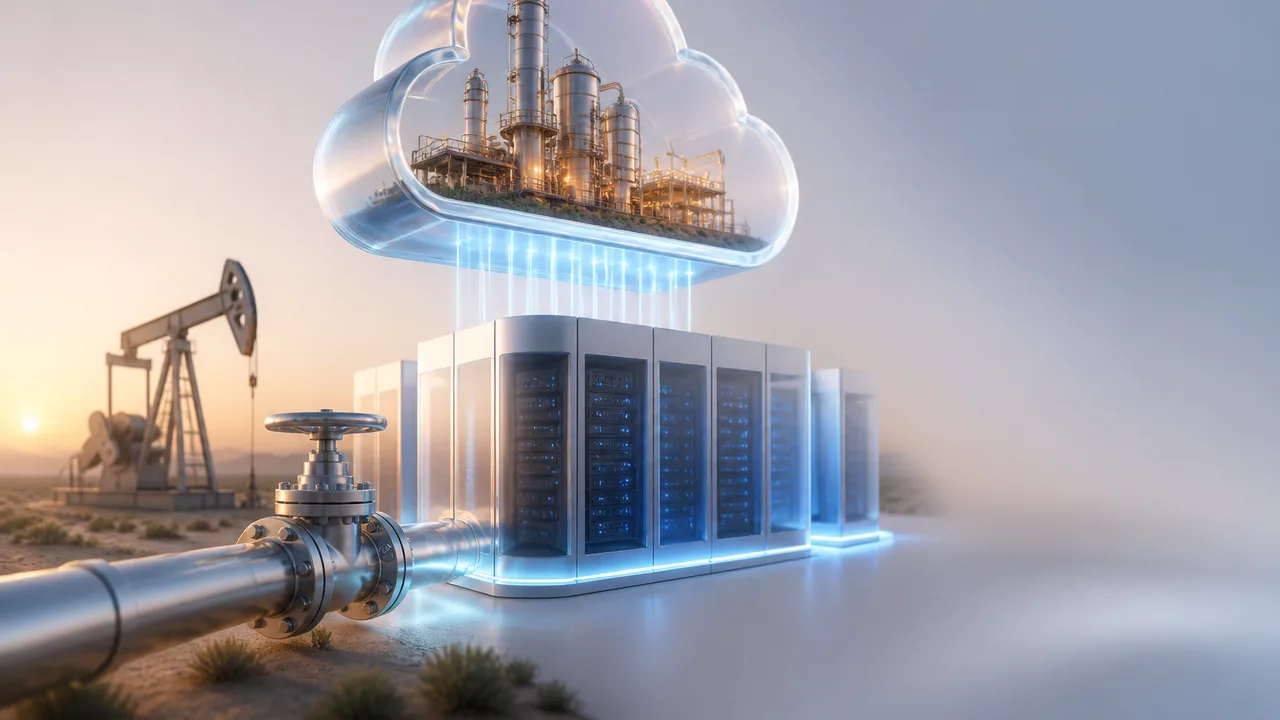
There's a version of this story where Chevron is a visionary. An oil major, facing structural headwinds from the energy transition and volatile commodity prices, threads a needle by becoming indispensable to the AI infrastructure boom. It sells its land, its natural gas, its grid proximity—and walks away with a long-term cash flow stream that Wall Street actually believes in. That version is not implausible. It's also not complete.
The deal itself: Chevron and Microsoft are building a data center in West Texas, co-located with Chevron's natural gas operations. The logic is straightforward and, if you squint at it long enough, genuinely clever. AI data centers are power-hungry in ways that strain public grids. Chevron has stranded natural gas assets in the Permian Basin—gas that's a byproduct of oil extraction and has historically been flared or sold at a discount. Put the data center next to the gas supply, build out power generation infrastructure on site, and Microsoft gets reliable electricity while Chevron monetizes a resource it was already sitting on. As Investing.com notes, "the data-center strategy is the differentiator that separates Chevron from Exxon and the other majors, and it's the reason CVX is more than a commodity bet. The Microsoft deal changes the story, and the story is now oil plus AI."
That's investor-speak, but it's pointing at something real: Chevron has found a way to attach a tech narrative to an energy balance sheet. In a market where AI adjacency moves stock prices, that matters.
Why Now, and Why Chevron
The timing isn't accidental. Fortune describes the West Texas deal as potentially jumpstarting "a new Big Oil and AI trend"—suggesting Chevron is establishing a playbook others will follow, not just executing an isolated transaction. And the backdrop matters: geopolitical turbulence in the Gulf has elevated risk premiums across the energy sector, which paradoxically makes domestically-anchored, diversified operators more attractive to certain classes of investors.
CNBC frames the Chevron trade explicitly through this lens, noting that Chevron is trading for less than 14 times earnings while posting record free cash flow—a characterization CNBC uses to argue that the options market currently offers favorable risk-reward for investors willing to hold energy exposure through the uncertainty. That framing is worth noting: it's a trading thesis layered on top of a strategic one, and the two aren't always telling the same story.
The question that framing sidesteps is what "record free cash flow" is actually doing work here. Free cash flow is a real metric, but it's also a number that depends heavily on capital expenditure decisions. When a company reduces spending on exploration or defers maintenance, FCF rises. Whether that represents genuine efficiency or deferred cost is exactly the kind of question that doesn't make it into the bullish read.
The Structural Bet
Strip away the AI gloss and the core of the deal is this: Chevron is betting that the demand for electricity from data centers will be durable, predictable, and large enough to justify treating it as a primary revenue line rather than a side business. Yahoo Finance describes the deal as highlighting "CVX's strategy to capitalize on rising electricity demand from AI data centers while creating a new source of long-term cash flows."
That's a reasonable bet. The AI infrastructure buildout—data centers, power generation, transmission—represents, as Porter & Co. has characterized it, one of the great capital pivots in recent American economic history, with hundreds of billions flowing into physical infrastructure over a compressed timeline. Chevron is positioning to capture a slice of that spend by supplying what AI actually runs on: not code, not chips, but electrons.
The West Texas geography is load-bearing here. The Permian Basin already has dense natural gas infrastructure. It has land. It has water, though that's increasingly contested in a drought-stressed region. And it has proximity to data centers that tech companies are building in the Southwest partly because land is cheap and partly because power is available—or was, before demand started outpacing supply. Chevron's offer to Microsoft is essentially: we'll handle your power problem at the source.
What This Does and Doesn't Solve
The investor enthusiasm is real and trackable. The strategic logic has genuine coherence. What's less clear is whether the AI pivot actually changes Chevron's relationship to the structural pressures it's navigating—or just reframes them.
Chevron is still an oil company. Its core revenue still tracks crude prices. The Microsoft deal creates a new cash flow stream, but the size of that stream relative to Chevron's overall operations matters enormously, and the sources available don't give us those figures. If the data center revenue amounts to a rounding error against Chevron's upstream business, the narrative has gotten ahead of the numbers.
There's also the question of what Chevron is not doing. Every dollar of capital committed to West Texas data center infrastructure is a dollar not going somewhere else—whether that's upstream exploration, LNG terminal development, or low-carbon transition investments. Capital allocation decisions are, at their core, bets on what the future looks like. Chevron's bet here is that the fossil fuel era extends long enough, and AI demand grows fast enough, to make this the right deployment of resources. That may prove correct. It may not.
And then there's the labor and community dimension, which the financial coverage largely ignores. West Texas communities have lived through boom-bust energy cycles for generations. A data center co-location changes the local economy in ways that are distinct from a drilling program—different jobs, different timelines, different environmental footprint. The power generation side of this deal will produce emissions. How those emissions are accounted for, disclosed, and ultimately regulated is not a settled question, and the deal's structure will matter when that accounting comes due.
The Trend Question
Fortune and Investing.com both gesture toward the possibility that Chevron is establishing a template—that if this works, ExxonMobil, BP, and others will replicate it. That's a meaningful if. The Permian Basin has specific geographic and infrastructure characteristics that make this deal viable. Not every oil major sits on equivalent assets. The deals that follow, if they come, will face different constraints and different terms.
What Chevron has demonstrated, at minimum, is that Big Oil can credibly engage Big Tech on infrastructure deals—that there's a convergence point between fossil fuel production and digital compute demand that neither sector had fully mapped before. Whether that convergence represents a genuine transformation or a clever capital markets story will depend on what the deal's actual economics look like once they're disclosed, and whether the electricity supply it generates holds up as the data center comes online.
CNBC's framing—record free cash flow, sub-14x earnings, a "win, win" in a volatile macro environment—is a trading thesis. It may be a good one. But trading theses and strategic theses are different things with different time horizons, and right now they're being sold as the same argument.
The deal is real. The opportunity is real. Whether Chevron has actually figured out what comes after oil, or whether it's found a sophisticated way to extend the current chapter—that's still an open question, and the West Texas data center doesn't close it.
More Like This
USMCA Won't Be Renewed: What Annual Reviews Mean
The Trump administration has blocked USMCA's 16-year renewal, opting for annual reviews. Here's what that means for trade, business, and North America.
Bill Ackman's Art of Finding Invisible Money
Explore Bill Ackman's strategy of finding hidden value in companies, beyond standard metrics.

Applied Computing Bets $20M on AI for Oil and Gas
Applied Computing raised $20M to build a foundation AI model for oil, gas, and petrochemical plants. Here's why that's more complicated than it sounds.

How APL Turned an NBA Ban Into a Brand Identity
APL's NJ Falk breaks down the six storytelling threads behind one of e-commerce's most unlikely brand-building moves—starting with an NBA ban.

Big Tech's $1.65 Trillion Off-Balance-Sheet AI Debt
Nikkei finds Alphabet, Microsoft, Amazon, Meta, and Oracle carry $1.65T in off-balance-sheet AI debt—more than their actual reported debt combined.

Smarter AI Models May Push Compute Prices Far Higher
Dwarkesh Patel argues that AI revenue growth is outpacing compute supply—and something has to give. That something is probably the price of compute.

Youth Economic Inactivity Is a Structural Problem
262 million young people are NEET worldwide. Unemployment figures miss most of them. Here's what the data actually shows about youth economic disengagement.

Blackstone's Career Ladder, From Analyst to Partner
From a $90K analyst seat to Schwarzman's billion-dollar paycheck: how Blackstone's career ladder works—and why private credit is quietly rewriting it.