Applied Computing Bets $20M on AI for Oil and Gas
Applied Computing raised $20M to build a foundation AI model for oil, gas, and petrochemical plants. Here's why that's more complicated than it sounds.

Written by AI. Zara Chen
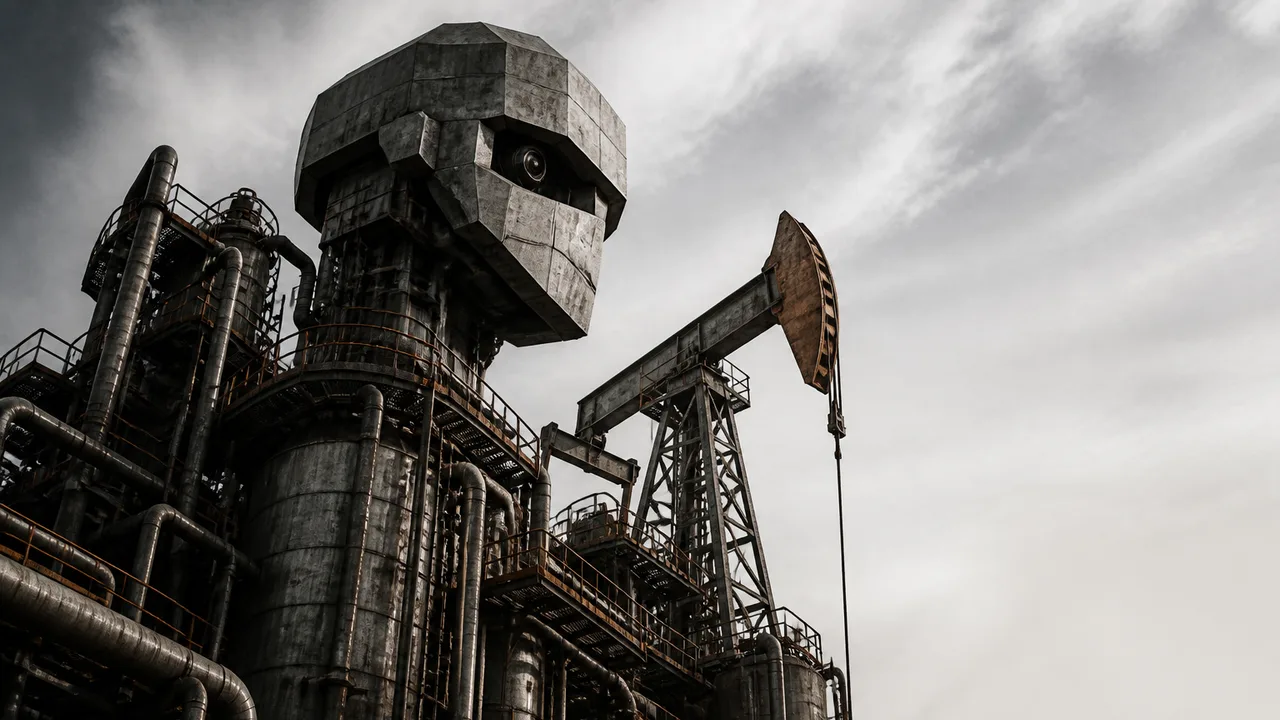
Okay so I saw this headline and my first thought was genuinely wait, what? — an AI foundation model built specifically for oil refineries. Like, not a general-purpose chatbot someone bolted onto a pipeline dashboard, but a model designed from the ground up for the operational logic of petrochemical plants. That's a weird and specific and actually kind of fascinating swing to take in 2026.
I get it if your instinct is to scroll past. If you grew up watching climate anxiety dominate your feed and also grew up knowing full well that the economy still runs on fossil fuels — that tension is real, and it's yours, not just some abstract policy debate. I'm not going to pretend this story is simple. What I am going to tell you is that the AI angle here is legitimately interesting in ways that go beyond the industry it's serving. So let's actually look at what Applied Computing is trying to do. 🏭
Okay, so what did they actually raise?
Applied Computing raised a $20M Series A to build a foundation AI model for the oil, gas, and petrochemical industry — not a tool for one part of a plant, not a niche sensor-monitoring widget, but something that's supposed to reason about an entire facility. That's the scope that makes this notable. The ambition isn't "AI for this valve" or "AI for this quarterly report." It's: what if the whole plant had a brain?
The thing is, $20M sounds like real money until you stack it against what it actually costs to train frontier AI systems. Research from Mental Momentum shows that building at the frontier of AI capability costs significantly more — we're talking hundreds of millions to billions when you factor in compute, data, and talent at scale. So Applied Computing isn't racing OpenAI. They're doing something different: building a domain-specific foundation model, pre-loaded with the operational vocabulary, failure modes, and regulatory logic of a specific industrial sector. That's a narrower bet, but it might also be a smarter one.
Why oil and gas, and why now?
Here's the part I keep coming back to: these industries are genuinely hard to digitize. A refinery isn't a SaaS company. The sensor data is messy, the engineering documentation is ancient, the stakes when something goes wrong are catastrophic. That combination — complex, high-stakes, data-rich but insight-poor — is actually a classic setup for AI to add real value, which is probably why the investment thesis landed.
A 2026 ScienceDirect paper on AI in oil and gas systematically maps the core application scenarios for AI in the industry, classifying business use cases across two dimensions — business difficulty and value creation — and analyzing how AI is opening up new solutions to challenges the sector has struggled with for decades. That framing lands differently when you read it alongside what Applied Computing is pitching: not point solutions, but a model that can reason across the whole operational picture.
Oliver Wyman's analysis of how AI is reshaping upstream oil and gas gets at what "whole plant" AI actually looks like in practice — multimodal systems that pull in live video, sensor data, and engineering schematics simultaneously to give operators real-time contextual awareness. Not "here's a graph of your pressure readings." More like: "here's what's happening, here's why it's unusual, here's what you should probably do about it." That's a qualitatively different product than anything built on a dashboard with some trend lines.
The context nobody wants to talk about
Let's name the thing. This startup is explicitly betting that oil, gas, and petrochemical operations will keep running — and keep investing in getting more efficient — for long enough that a domain-specific AI platform becomes a durable business. That's not a climate position, it's a business model assumption. And honestly, it's probably a safe one in the near term. The global energy transition is real and it is happening, and it's also slow, uneven, and deeply entangled with geopolitics. Plants that exist today will be operating for years. The question of whether making them more efficient accelerates or decelerates the transition is genuinely open — economists disagree, and I'm not going to pretend otherwise.
What I will say is that the AI efficiency story in industrial settings isn't hypothetical. The Journal of Petroleum Technology has covered real deployments where AI-driven approaches demonstrate clear advantages over traditional spreadsheet-based analytic methods. The Society of Petroleum Engineers' Journal of Petroleum Technology documents cases where AI models outperformed legacy forecasting workflows in meaningful ways. And on the safety side, Avathon's industrial AI work shows what this looks like in practice: computer vision applied to existing camera feeds, proactively flagging hazards, checking for PPE compliance, flagging conditions before they become incidents. That's not marketing copy — that's a real use case with real consequences for real workers.
So: AI that makes a refinery run more safely and with less waste is genuinely good for the people who work there. Whether it's good for the climate is a harder question that depends on what happens to that saved margin and how fast alternatives scale. Both things can be true.
What's actually hard about this
The "foundation model for an entire plant" pitch is technically ambitious in ways that aren't immediately obvious. Industrial facilities don't have clean, standardized data. Every plant has different equipment vintages, different documentation systems, different failure histories. The kind of domain-specific model Applied Computing is building has to either generalize across that messiness or help operators bring their specific context in — probably both. That's a real engineering challenge, and $20M buys you a serious team and a runway, not a finished product.
There's also the trust problem. Operators in high-stakes environments don't just hand the keys to a new system. Oliver Wyman's research points to this directly — the shift is from AI as a reporting tool to AI as something embedded in operational decision-making. That's a cultural shift as much as a technical one, and it doesn't happen because a startup raised a Series A.
The domain-specific model strategy is smart precisely because it sidesteps the "why would I trust this over my own engineers" problem — if the model already speaks the language of pressure differentials and heat exchanger fouling and regulatory compliance checklists, it starts from a different place than a general-purpose system someone has to teach from scratch.
My honest read? Applied Computing is making a focused, defensible bet on a sector that has the resources to pay for AI that actually works and the operational complexity to need it. Whether $20M is enough to build a model that actually earns operator trust — in an industry where a bad recommendation can mean a very bad day — is the real question. I think the answer is: it's enough to find out.
More Like This

This Creator Got Shadowbanned on YouTube in 25 Days—On Purpose
A vidIQ creator deliberately shadowbanned their channel with AI-generated content to expose how YouTube's algorithm actually works. The results are wild.
Master Remote Access with Comet Pro KVM
Explore the Comet Pro KVM for seamless remote PC access: Wi-Fi 6, out-of-band management, and Tailscale security.
AI's Energy Problem Is a Main Street Problem Too
Naveen Rao says AI will hit an energy wall in years, not decades. Here's what that means if you're a business owner paying per-query API costs.

Big Tech's AI Spending Has a Free Cash Flow Problem
Big Tech's AI investment boom is straining free cash flow, raising questions about circular financing, inflated valuations, and whether the returns ever materialize.
![Man in Laravel cap looking thoughtful beside phone displaying "Debounce for [301]" hashtag on pink background](https://static.buzzrag.com/articles/laravel-13-6-drops-debounceable-jobs-and-json-health-checks/thumb-5e646253.webp)
Laravel 13.6 Drops Debounceable Jobs and JSON Health Checks
Laravel 13.6 introduces debounceable jobs, JSON health check responses, and Cloudflare email support. Here's what developers need to know.

Structured Data Is AI's Overlooked Engine
Jeremy Fraenkel of Fundamental argues enterprises are missing AI's biggest opportunity: the structured, tabular data already sitting in their systems.

Apple Sues OpenAI Over Alleged Trade Secret Theft
Apple filed a federal lawsuit accusing OpenAI of orchestrating a systematic theft of hardware trade secrets via former employees. Here's what we know.

Ben Bernanke Joins Anthropic's AI Oversight Trust
Former Fed Chair Ben Bernanke joins Anthropic's Long-Term Benefit Trust. Here's what his economic expertise actually means for AI governance—and what it doesn't.