How APL Turned an NBA Ban Into a Brand Identity
APL's NJ Falk breaks down the six storytelling threads behind one of e-commerce's most unlikely brand-building moves—starting with an NBA ban.

Written by AI. Jonathan Park

Photo: AI. Rio Sanchez
In 2010, a shoe startup with no athlete endorsements, no retail footprint, and no name recognition did something that would normally read as a catastrophe: they got their product banned by the NBA.
The league's ruling was that APL's Concept One basketball shoe—built around a patented "load and launch" device embedded in the forefoot—provided an undue competitive advantage. It could make you jump up to 3.5 inches higher. The NBA said: not in our house.
Most brands, especially new ones operating without a safety net, would have quietly pivoted. Athletic Propulsion Labs did something different. They kept the ban. They leaned into it. They turned a regulatory rejection into the founding myth of an entire brand.
Fourteen years later, APL has made Oprah's Favorite Things list four times, sits comfortably at the intersection of luxury and performance footwear, and is routinely cited as a case study in DTC brand-building. The question worth asking isn't just what they did—it's whether the lesson generalizes, or whether APL got lucky with a story too good to be manufactured.
The Ban as Brand Infrastructure
NJ Falk, APL's managing partner, joined The Checkout Podcast recently to unpack the storytelling architecture behind the brand. Her framing is worth sitting with: the NBA ban wasn't just a good PR moment. It was, she argues, a performance credibility story—and performance credibility became one of the six or seven recurring narrative threads that APL deploys across every product launch, campaign, and piece of content.
"Never waste a crisis," Falk says, half-laughing—and she means it structurally, not just tactically.
The ban delivered something that startups typically spend millions trying to manufacture: third-party validation that the product actually does what it claims. Nobody had to take APL's word for it. The NBA—arguably the most authoritative body in basketball—had essentially certified the shoe's effectiveness by banning it. That's not marketing. That's an external institution confirming your claim for you.
The honest complexity here is that this kind of windfall isn't replicable on demand. The Concept One worked because the underlying technology was genuinely novel, the timing was right, and the NBA's decision made news. Falk acknowledges this openly. The question she was pressed on—how do you tell good stories when you don't have an NBA ban dropped in your lap?—is precisely the one most e-commerce founders are actually grappling with.
The Six (or Seven) Threads
Falk's answer to that question is systematic in a way that's easy to underestimate when you're watching an hour-long conversation about it. APL doesn't reinvent its narrative with each product. Instead, the brand maintains a set of storytelling categories—performance credibility, technology, versatility, founder origin, sensory experience, community proof, aspirational identity—and each new product plugs into one or more of them.
This isn't a content calendar strategy. It's closer to brand architecture: you know what your brand means, and every product has to earn its place within that meaning.
The technology thread is where this gets interesting, because it's also where Falk draws the sharpest distinction from how most brands communicate. "A lot of times people just tell technology as specs," she says. "We don't talk in that language. We're really talking about a felt experience."
The contrast is concrete. APL doesn't describe a "foam midsole with reactive compression properties." They call it the Heavenly Ride. One of their midsole concepts was inspired by co-founders Adam and Ryan Goldston walking 13 miles through Japan in search of fluffy pancakes—and when they launched the shoe, they served Japanese pancakes in-store. The Euphoria running shoe, built with a weightless net upper, got the campaign name Run Naked. You feel the lightness before you read a single spec.
This approach is sometimes called sensory branding in academic literature, though Falk doesn't use the term. The underlying logic is behavioral: people don't buy specifications, they buy anticipated experiences. Telling a consumer that a midsole has a certain density rating requires them to do cognitive translation work. Telling them it feels like a cloud skips that step entirely.
What This Leaves Out
The APL framework, presented as Falk describes it, is genuinely coherent—but a few tensions are worth naming.
First, there's a selection bias problem with storytelling advice that comes from brands that already have a great story. The NBA ban is exceptional because it contains all the elements of a compelling narrative: underdog, external authority, conflict, validation. Most founders don't have that. They have a product they worked hard on and believe in, which is not the same thing as a story. Falk's advice—look for what inspired the idea, find the personal detail, make it sensory—is sound, but it doesn't fully close the gap between "we have a decent origin story" and "the NBA banned us."
Second, the line between storytelling and spin is worth examining. "Run Naked" is a clever two-word brand gesture for a lightweight shoe. It's also marketing that, if the shoe doesn't actually deliver a notably airy feel, becomes the kind of promise that erodes trust. The framework Falk describes only works if the product earns it. Sensory language applied to a mediocre product is just deceptive advertising with better aesthetics.
Third, and this is the one I find most interesting: Falk is describing a methodology that APL developed organically over time, retrofitting language to what they learned worked. She's presenting it as a framework, but frameworks derived from success stories often look tidier in retrospect than they were in practice. The Propelium midsole pancake story is charming—but it's worth asking how many product stories APL has tried to tell that didn't land, and how the framework accounts for that.
The Scale Ceiling Question
The deeper argument Falk is making—the one that runs underneath all the specific storytelling examples—is about what separates brands that plateau from brands that keep growing.
Her diagnosis: most e-commerce brands treat storytelling as a feature of marketing rather than a function of brand identity. They optimize conversion rates, run better ads to better product pages, and wonder why customer retention is soft and word-of-mouth is minimal. The problem, in her framing, is that a story consumers connect to and repeat back to each other isn't something you can generate by improving your ROAS. It requires the brand to mean something specific and consistent enough that customers can articulate it.
"We want people to understand the impetus for a product," Falk says, "and where what inspired the idea."
This is ultimately a bet on the durability of brand identity over performance marketing optimization—and it's a bet that has significant evidence behind it, though the evidence is unevenly distributed. Legacy brands like Nike and Patagonia have demonstrated it at scale. Brands like APL demonstrate it in the mid-market. Whether it holds for the average DTC founder working without APL's product innovation or design budget is a different question, and one Falk doesn't directly address.
What she does establish, fairly convincingly, is that the brands hitting the scale ceiling she describes tend to share one characteristic: they don't have a story their customers can tell someone else at dinner. That's not a marketing metric. It's something harder to build and harder to steal.
Whether APL's specific approach—the six threads, the sensory language, the product origin stories—is what does that work, or whether it's the underlying product quality and brand consistency that the storytelling reflects, is probably the more honest version of the question.
More Like This

Brand Authority Is Pricing Power—and Finance Knows It
Ryan Deiss's five brand "authority triggers" map onto real financial metrics. A global markets reporter translates what that actually means for valuations and beyond.
Bill Ackman's Art of Finding Invisible Money
Explore Bill Ackman's strategy of finding hidden value in companies, beyond standard metrics.
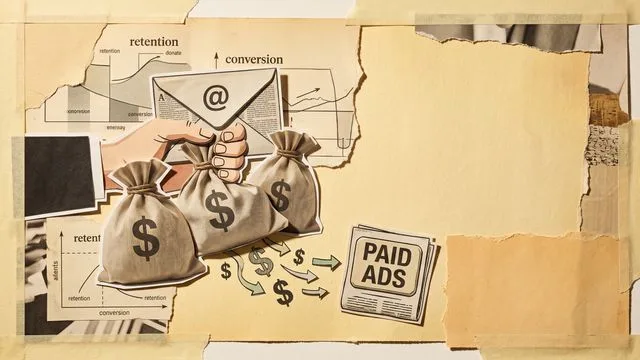
Email Isn't a Revenue Channel—It's an Ad Cost Problem
Sammy Tran argues e-commerce brands are measuring email all wrong. The real job? Making your paid ads cheaper. Here's what that actually looks like.
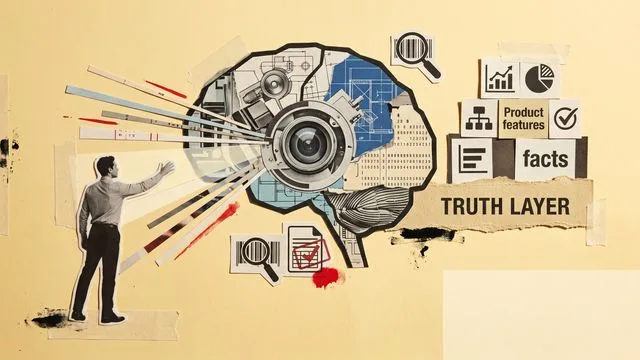
The Prove-It Economy Cuts Both Ways
AI agents are reshaping how brands get found — but the prove-it economy has a privacy shadow most marketers haven't noticed yet.
Why Rushing Ads Can Sabotage Your Brand
Explore the pitfalls of early ad spending and the power of organic growth for brand success.
The $401M App Built by One Guy Who Can't Code
AI coding tools are enabling non-developers to build million-dollar apps. Here's what's actually working—and what the success stories aren't telling you.

ENGO Raises €5.1M to Scale AR Sports Glasses
Grenoble startup ENGO has raised €5.1M to expand its lightweight AR glasses for athletes. Here's what the funding tells us about the wearable tech race.
China's Economy Grew 4.3% in Q2, Its Slowest Since 2022
China's Q2 2026 GDP grew just 4.3%, its weakest since the COVID lockdowns of late 2022. Here's what the numbers reveal about the structural cracks underneath.