Why Product-Market Fit is the Entrepreneur's True North
Explore why product-market fit is vital for business success and how to achieve it.

Written by AI. Jonathan Park
In the bustling marketplace of entrepreneurial ideas, achieving product-market fit (PMF) is not just a milestone—it's the North Star guiding fledgling ventures to sustainable success. Daniel Priestley's recent video lays out a compelling roadmap for entrepreneurs striving to bridge the chasm between what customers desire and what businesses deliver. But beyond his framework, why is PMF so pivotal, and how can it transform the entrepreneurial journey?
The Unforgiving Terrain of Product-Market Fit
Priestley asserts, "Before you do anything else, achieving product-market fit is one of your top priorities." This isn't just hyperbole. PMF is the fulcrum that turns a precarious startup into a stable business. It's the point where your product and your market's needs lock in a symbiotic embrace, ensuring that what you offer is not just wanted but needed.
Consider Airbnb's early days, when its co-founder Brian Chesky personally visited homes to photograph them for listings. This unscalable, hands-on approach was essential in understanding and meeting user expectations—a classic case of "doing things that don't scale" as Priestley highlights. It's a reminder that PMF often requires grit and granular customer engagement before the comfort of scalability.
The Journey to Product-Market Fit
Priestley describes the entrepreneurial path as a series of phases, with PMF sitting squarely before scalability. This sequence is critical. Imagine trying to scale a product that doesn't fundamentally resonate with its intended audience. It's akin to building a skyscraper on a shaky foundation.
PMF depends heavily on understanding your Ideal Customer Persona (ICP). Priestley suggests a trio of surveys to decode customer desires: the Waiting List Campaign, the Product-Market Fit survey, and the Experience Score survey. These tools aren't just about data collection—they're about listening to your market's heartbeat.
Bridging the Customer-Business Divide
A recurring theme in Priestley's framework is the gap between customer expectations and business offerings. Customers dream of transformative outcomes, while businesses often seek simplicity and scalability. This misalignment can derail even the most promising ventures. The solution? Bringing these two visions closer until they align perfectly—a process that demands empathy, iteration, and sometimes, compromise.
Priestley's technique of offering tiered packages—gold, silver, and bronze—demonstrates how businesses can cater to varying customer needs while optimizing for engagement and profitability. This approach not only broadens your market appeal but also tactfully addresses different price sensitivities. However, the claim that "the price objections melt away" with PMF needs scrutiny. While a well-matched product and market can diminish price resistance, competitive analysis and market conditions still play crucial roles.
The Real-World Implications of Product-Market Fit
Companies that truly understand their market can pivot and adapt with agility, often outpacing larger, less nimble competitors. The lesson? PMF isn't a one-time achievement—it's an ongoing dialogue between business and customer.
For entrepreneurs, the pursuit of PMF is as much about mindset as it is about strategy. It requires humility to accept feedback, courage to make changes, and persistence to keep refining until the market responds with enthusiasm.
The Accountability Angle
In the end, PMF is about accountability—a theme that resonates deeply in entrepreneurship. It's about owning the responsibility to meet your customers where they are, not just where you hope they'll be. Achieving PMF is a commitment to staying relevant, responsive, and real in a world that's always changing.
For those embarking on this journey, remember: the road to PMF is less about finding the perfect idea and more about relentlessly tuning into your market's needs. It's the kind of work that doesn't just build businesses—it builds trust.
More Like This
Demystifying Claude Code: Planning and Execution
Explore Claude Code's tools for precise AI coding with insights from Greg Isenberg's interview with Professor Ras Mic.
Understanding the 7 Levels of Business Growth
Explore the 7 levels of business growth, from dreamer to industry leader, with insights for each stage.
iGaming Retention: Loyalty in a Shifting Landscape
Explore how iGaming retention strategies adapt to shifting player behaviors and tighter regulations.
Alibaba's Accio: E-Commerce Game Changer
Explore Alibaba's AI Accio—simplifying e-commerce with trend spotting, product design, and supplier sourcing.
Navigating Business Growth: From Launch to Scale
Explore the stages of business growth with insights from my 30 years of running a bookstore.
AI's Transformative Role in Modern Workplaces
Discover AI's potential as a strategic partner in today's evolving workplace dynamics, as discussed by Relay.app CEO Jacob Bank.

ENGO Raises €5.1M to Scale AR Sports Glasses
Grenoble startup ENGO has raised €5.1M to expand its lightweight AR glasses for athletes. Here's what the funding tells us about the wearable tech race.
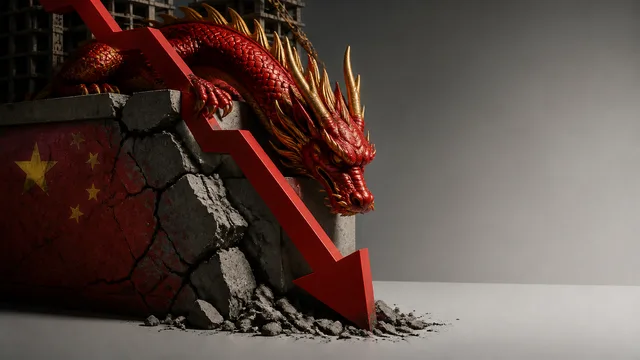
China's Economy Grew 4.3% in Q2, Its Slowest Since 2022
China's Q2 2026 GDP grew just 4.3%, its weakest since the COVID lockdowns of late 2022. Here's what the numbers reveal about the structural cracks underneath.