Blackstone's Career Ladder, From Analyst to Partner
From a $90K analyst seat to Schwarzman's billion-dollar paycheck: how Blackstone's career ladder works—and why private credit is quietly rewriting it.

Written by AI. Jonathan Park

Photo: AI. Soraya Hadid
The offer letter looks like a dream. That's how a recent Biz Life POV video opens its walk through every rank at Blackstone, the first private markets firm to cross $1 trillion in assets under management. "It's really a sorting machine," the narrator says. "And it starts sorting you on day one."
That framing—the career ladder as selection mechanism rather than meritocratic escalator—turns out to be a useful lens for understanding not just how Blackstone pays its people, but how the firm itself actually makes money. The two questions are related in ways that most coverage of Wall Street compensation never quite reaches.
The Stack You're Actually Working Inside
At the analyst level—you're 23, base salary around $90,000, all-in closer to $150–170K once the bonus clears—the job is the model. Specifically, the leveraged buyout model: a spreadsheet mapping out how much debt a target company can carry, how thin the equity slice can get while still generating a return, and at what point everything breaks.
The mechanics are worth unpacking because they matter beyond the spreadsheet. In a typical Blackstone buyout, the firm might contribute 30 to 40 cents of equity for every dollar of deal value and borrow the rest. That borrowed money gets loaded onto the acquired company's balance sheet, not Blackstone's. So if the company flourishes, the equity return amplifies enormously against that thin base. If it stumbles, the lenders—who sit lower in the capital stack and get paid first—come out whole, and the equity gets burned.
This is leverage: a tool that magnifies both wins and losses, and whose costs fall primarily on the company being bought rather than on the firm doing the buying. The warehouse workers in the model, the ones the narrator pointedly notes the analyst doesn't know by name, are employed by the company that now carries the debt. Blackstone's equity sits above that reality, thinly exposed and highly leveraged against it.
The associate level (age 26, $250–350K) is where a second mechanism enters the picture: the dividend recapitalization. The video's description of this is precise enough to be worth sitting with. A year or two after acquisition, the purchased company borrows a fresh tranche of money and pays it directly to Blackstone as a dividend. The firm recoups part of its original investment while retaining full ownership. "The risk stays on the company's balance sheet," the narrator observes. "The reward walks out the door to the owners."
The Fee Is the Business. The Carry Is the Story.
By the vice president level—age 30 or 31, somewhere between $500K and $800K—carried interest makes its first appearance in the compensation package. This is the moment the video uses to deliver its most important structural insight: the difference between what private equity says is the point and what actually keeps the lights on.
Carried interest—the 20% of profits the general partner takes after investors get their money back plus a preferred return—is the mythology of the industry. It's performance-aligned, theoretically, in that it only materializes if the fund works. It's also the basis for the favorable tax treatment that makes carried interest politically controversial: much of it gets taxed at long-term capital gains rates rather than as ordinary income, a benefit worth real money at the compensation levels involved.
But the video is most useful when it shifts attention to the management fee—the 1.5 to 2% charged annually on committed capital, the money investors have pledged, not necessarily deployed. That fee hits every year. Good year, bad year, year where nothing got done. "The carry is the dream," the narrator says. "The fee is the salary the firm pays itself."
On a flagship fund of the size Blackstone routinely raises, that fee can generate hundreds of millions of dollars annually before a single deal closes. Applied across $1 trillion in AUM, the math on the fee business becomes strikingly stable—which is exactly what Blackstone's public shareholders, the ones who bought BX stock, are actually paying for. Not the upside of any particular buyout. The predictability of the toll.
The Point Where Most Careers End
The principal level (age 34, seven-figure compensation in a good year) is where the video identifies the ladder's first genuine filter. Everything before this is execution—modeling, running deals, managing up and down. A talented grinder can make it to VP. Principal is different because it requires origination: finding companies nobody else has flagged, building a conviction thesis around them, and persuading an investment committee to put a billion dollars behind your judgment.
"Execution is a skill you can grind your way into," the narrator notes. "Origination is relationships, instinct, and a network you spent a decade building without realizing it was the actual job."
The film uses the Hilton Hotels acquisition—taken private in 2007 before the financial crisis, held through the crash, eventually taken public at what Bloomberg called the best leveraged buyout ever—as the defining example of what origination wisdom actually looks like. The lesson the video draws isn't about Hilton specifically; it's structural. The firm survived the crisis because it had patient capital, money that wasn't subject to forced selling. Whoever controls capital that can wait holds the dominant position. That's as true now as it was in 2008.
The Quiet Floor That Gets Paid First
Here's where the video earns its most genuinely interesting observation, and where it opens questions rather than closing them.
Blackstone built a credit and insurance business—formally consolidated as BXCI—that has grown into one of the largest private lending operations on earth. According to a Blackstone press release cited by the video, the firm positioned BXCI as a push "toward the next $1 trillion." The credit business isn't just a complement to the famous buyout arm. It's increasingly the faster-growing engine.
The implication for anyone thinking about the career ladder is significant. On the equity staircase, your return depends on the deal working—leverage held, company improved, exit achieved. The carried interest that represents the dream pays out years late and only if things go right. On the credit side, you're lending to those same companies, sitting above the equity in the capital stack, with a contractual return and collateral underneath you. You lose less when things go wrong. And in a higher-rate environment, where leveraged buyouts get harder to execute and refinancing becomes expensive, the lenders compound while the buyout funds slow.
"The quiet lenders down the hall, the ones who never bought a company, are increasingly the ones funding the buyouts the deal makers celebrate," the video observes. "You spent 30 years learning to own businesses. The fork you didn't take spent 30 years learning to own the debt those businesses can't live without."
This isn't an argument that the credit path is obviously superior or that private equity as a career is a bad bet. Both paths involve real risk, real sacrifice, and genuinely specialized work. Blackstone's managing directors—making $2 million to $5 million, accumulated carry across multiple funds—are not victims of a bad deal. The personal costs the video catalogs at that level (the marriage sustained on calendar scraps, the children's recitals experienced through other people's photos) are real, but they're not unique to finance, and the compensation makes them a considered trade rather than an obvious loss.
What the video usefully captures is the gap between Blackstone's narrative identity—the deals, the boardrooms, the Hilton story, Schwarzman's billion-dollar paycheck—and its increasingly important economic identity, which is a fee-generating machine with a fast-growing lending business attached to the famous buyout brand. Stephen Schwarzman's compensation, exceeding $1 billion in a strong year according to Bloomberg, is paid in carry, firm equity, and distributions from the public stock. Which means it's paid, in part, by the steady predictability of fee income at scale—not purely by the return on any given fund.
At the very top of the building, the view is exactly that clear. The trillion has to keep compounding because the story requires it. The part doing the fastest compounding is the floor most people in the building have never been to.
That's not a verdict on whether the climb is worth it. It's a map of what the building actually contains.
More Like This
Investment Banking Interviews Demand 8-Hour Days of Prep
An investment banking recruiter breaks down the reality: 30 emails a night, 2% response rates, and behavioral questions harder than technical ones.
Bill Ackman's Art of Finding Invisible Money
Explore Bill Ackman's strategy of finding hidden value in companies, beyond standard metrics.

Pawn Shop Stocks Are Booming. Read That Slowly.
FirstCash and EZCORP are outperforming the S&P 500. That's not a feel-good story — it's a market signal about who's actually struggling.

How APL Turned an NBA Ban Into a Brand Identity
APL's NJ Falk breaks down the six storytelling threads behind one of e-commerce's most unlikely brand-building moves—starting with an NBA ban.
Tucker Roy's Investment Banking Journey Unpacked
Explore Tucker Roy's path from Babson to PJT, tackling investment banking's fast-paced world.

Marc Rowan on Private Markets and Your Retirement
Apollo's Marc Rowan says private markets are reshaping retirement savings and AI is upending enterprise software. Here's what it means for Main Street.

AI Company Logos All Look Alike. Here's What That Reveals
AI companies keep designing the same circular, gradient logo. Is it groupthink, strategic mimicry, or something more revealing about the industry itself?
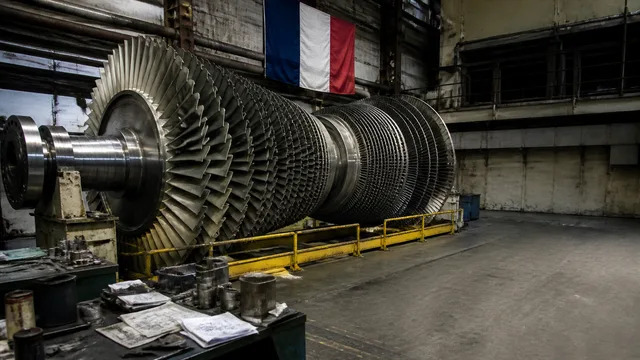
France Sold Its Nuclear Turbine Crown Jewel to GE
How France sold the world's most powerful nuclear steam turbine to GE in 2015, then spent years engineering a buyback — and what it cost everyone involved.