Who Rewrites Claude's Ethics—And Who Gets No Vote
Anthropic is rewriting Claude's ethical constitution in private sessions, under IPO pressure. But the workers who build the system aren't in the room.
Written by AI. Carmen Rodriguez
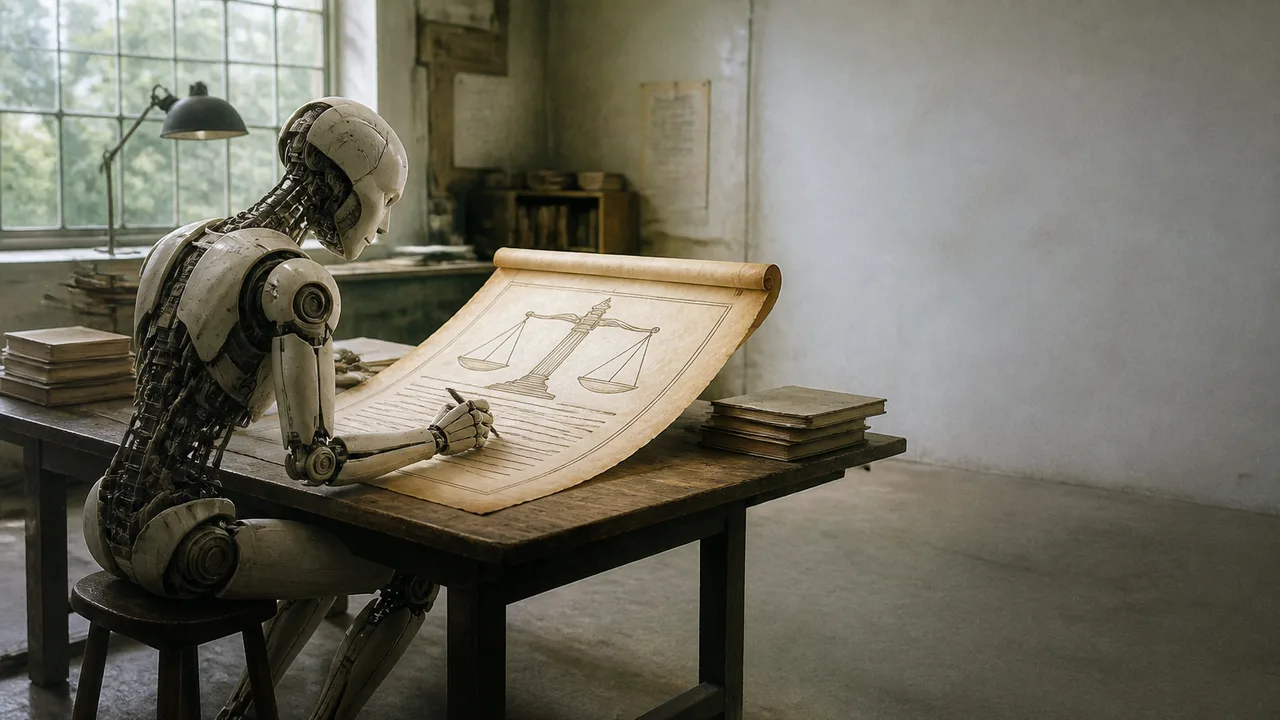
Here is a thing I notice about how corporations revise the rules that govern their most consequential work: management schedules sessions with outside experts, closes the doors, and produces a document. Workers who built the thing being governed are not in the room. The document is presented as a product of rigorous deliberation. It may well be. But "rigorous" and "inclusive" are different words.
That's not a knock on any specific company. It is a structural description of how workplace policy gets made—in almost every industry, in almost every era. Which is exactly why the news that Anthropic recently hosted a select group of experts to discuss revisions to Claude's "constitution"—the ethical framework governing how their AI reasons and responds—deserves more than a governance story. It deserves a labor story.
What's actually being revised, and why now
The Claude constitution is not a terms-of-service document. It's the foundational architecture for how Claude is trained to weigh competing values—helpfulness against harm, user autonomy against safety constraints. Getting those principles right matters enormously, not just for consumers but for the researchers, trainers, and annotators whose daily work operationalizes those principles into actual model behavior. The people doing that work are not, as far as the public record shows, represented in Anthropic's constitution revision sessions.
The timing of this revision process is not incidental. Anthropic is heading toward an IPO, and according to CNBC, its filing will explicitly list "AI backlash" as a risk factor. That sentence should land with some weight. A company is preparing to tell investors that public concern about its AI's behavior is a financial threat—and simultaneously revising the document that governs that behavior. These are not unrelated activities.
When safety constraints become line items in risk disclosures, the question of who controls those constraints stops being abstract. It becomes a power question. And power questions are labor questions.
The competitive squeeze
The pressure on Anthropic's ethical framework is not coming only from Washington. Yahoo Finance reports that Meta is actively undercutting Anthropic and OpenAI on price with a new coding agent, competing directly in the enterprise market where Anthropic has staked significant territory. Price competition in AI has a gravitational pull toward capability and away from constraint—because constraints, by definition, limit what the product will do.
When a company revises its ethical framework under competitive pressure, someone decides which principles are load-bearing and which are negotiable. That decision has downstream effects on the people whose job it is to implement those principles in practice. Do the annotators and trainers who operationalize Claude's values get told when the goalposts shift? Do they have any formal mechanism to flag when revised guidelines create problems they see at ground level? These are not rhetorical questions. They're the questions any labor reporter asks when management announces a policy change.
The government relationship, and what it tells us
Anthropic's relationship with the federal government has gotten complicated in ways that illuminate exactly who holds power over the AI's ethical constraints. The U.S. Treasury terminated all use of Anthropic products, including Claude, following a White House directive that has prompted other agencies to phase out Anthropic tools as well. Earlier, when Anthropic released its Claude Mythos model, Jerome Powell was reportedly among officials gathered at Treasury to discuss cybersecurity concerns—The Guardian reported separately that Anthropic had withheld the tool from public release out of concern it could enable widespread hacking.
The Pentagon conflict adds another layer: the Defense Department threatened to blacklist Anthropic as a supply chain risk over usage restrictions on Claude. Here, fascinatingly, the government was pressuring the company to loosen its safety guardrails, not tighten them.
Reuters' Breakingviews put it plainly: as Anthropic heads toward an IPO, it must explain to investors that the White House can effectively quarantine models the company spends billions to train—without an independent regulator or explicit legal framework governing that authority. The ethical framework being revised in those private sessions exists in a political environment where the government can unilaterally decide whether Claude's guardrails are too tight or too loose, with no formal process and no worker input anywhere in the chain.
The process problem
There's a structural parallel here that should make anyone who follows workplace governance uncomfortable. The revision process Marginal Revolution describes—external experts, private sessions with key decision-makers, no public disclosure of outcomes—is precisely how corporations revise workplace policies that materially affect workers. The consultants come in. The executives deliberate. The new policy is announced. The workers implement it.
This pattern produces documents that may be thoughtful, well-intentioned, and even wise. It also produces documents that have no accountability to the people whose labor gives those documents operational reality. When the constitution gets revised and the guidelines shift, who bears the cost of that adjustment? Rarely the executives in the session. More often the people doing the work.
Anthropic has simultaneously been pushing an aggressive state-by-state regulatory strategy. According to Business Insider, the company endorsed regulations under development in Massachusetts for an economic development bond bill that Anthropic calls the nation's strongest state AI safety proposal. The company is lobbying for external constraints on AI while revising its internal ethical framework without external transparency. That's not a contradiction exactly—external regulation and internal governance serve different functions—but the asymmetry is worth noting. Public laws get public scrutiny. Private constitutions get invited experts.
The IPO as inflection point
What happens to ethical frameworks when companies go public is not a hypothetical. The pattern is well-documented across industries: pre-IPO companies can afford to treat certain constraints as mission-critical; post-IPO companies face quarterly pressure to justify every cost that doesn't produce revenue. Safety measures, guardrails, ethical constraints—these get reclassified. They become "risk mitigation," then "compliance overhead," then line items to be optimized.
Anthropic is already racing into hardware, having hired a Google chip veteran as part of a push into that space. The company is scaling aggressively in multiple directions simultaneously. That's what growth-stage companies do before they go public—they expand their footprint to justify their valuation. The question is what happens to the ethical architecture when the valuation pressure becomes shareholder pressure.
The people most exposed to that shift are not the experts invited to the constitution sessions. They're the workers whose job descriptions are written around the current version of the framework, and who will be expected to adapt when the next version arrives—with whatever has been quietly renegotiated in private, under competitive pressure, with IPO risk disclosures as the backdrop.
The oversight gap in AI regulation means there's no external body requiring Anthropic to document what changed, why, or who was consulted. The company gets to define what "rigorous deliberation" looks like. That's significant power. It's the kind of power that, in other industries, workers have sometimes organized to constrain.
Nobody at Anthropic's constitution sessions is asking that question yet. But someone should be.
More Like This
Business Rules 2026: Impact on Labor and AI
Explore how emerging business rules and AI technology reshape labor dynamics and worker dignity by 2026.
Financial Crises Follow Patterns — But Not for Everyone
Kuran Francis maps four recurring patterns behind every major financial crisis. The framework is solid. What it leaves out is the story of who pays when the system breaks.
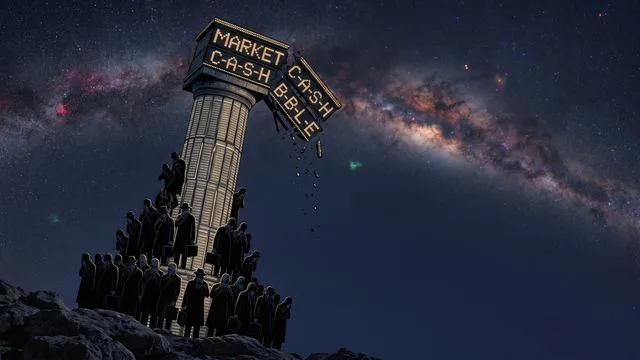
Wall Street Knew the Crash Was Coming. Saying So Got You Fired.
Jeremy Grantham's famous poll revealed 398 analysts knew the dot-com crash was guaranteed. A 2003 study shows why none of them said so publicly: accuracy cost careers.

Dubai's Crisis Has a Worker Problem No One's Covering
Dubai's economic model was built on migrant labor with almost no rights. Now, with airstrikes and a blockaded strait, those workers face the worst of the fallout.
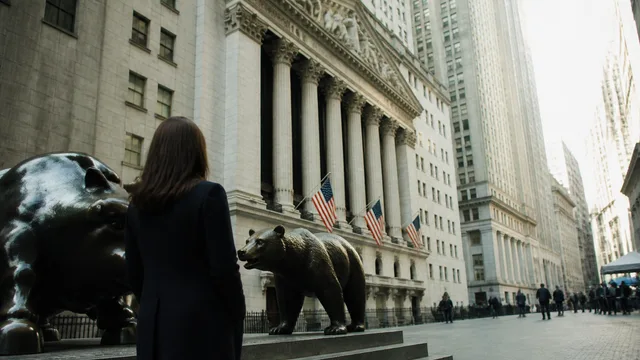
OpenAI Plans 2027 IPO as Anthropic Rivalry Intensifies
OpenAI CFO Sarah Friar confirmed a 2027 IPO target at an all-hands meeting, even as losses widen and rival Anthropic edges closer to its own public debut.
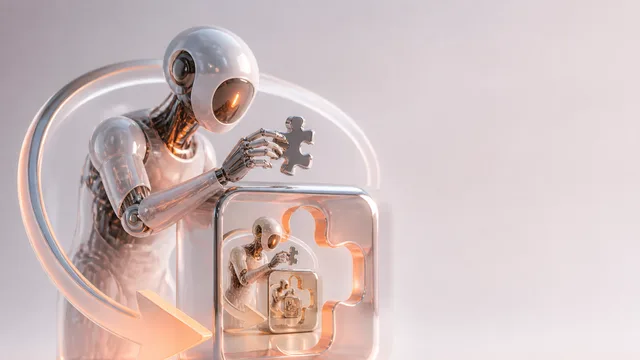
Anthropic's Self-Improving AI Paper Has a Regulator Problem
Anthropic's new paper on recursive self-improvement reveals an oversight gap that existing AI regulation—EU AI Act, executive orders—was never designed to address.
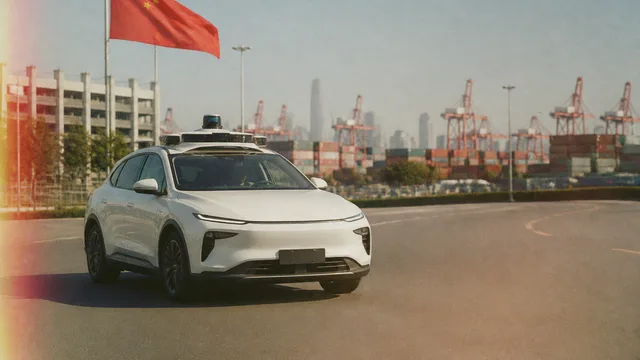
China's Robotaxi Push and the Workers in Its Path
China's robotaxi companies are expanding globally on EV supply chain strength—but what does that mean for the drivers whose livelihoods disappear in the process?
EU Entry/Exit System: Border Delays and What They Mean
The EU's new EES biometric border system is causing summer travel delays. Here's what it asks of travelers, workers, and the institutions behind both.