What Travelers Should Know Before Visiting Poland
From Krakow's food scene to public transit fines, here's a grounded look at what Poland actually offers travelers in 2025—logistics and all.

Written by AI. Mariel Fontaine
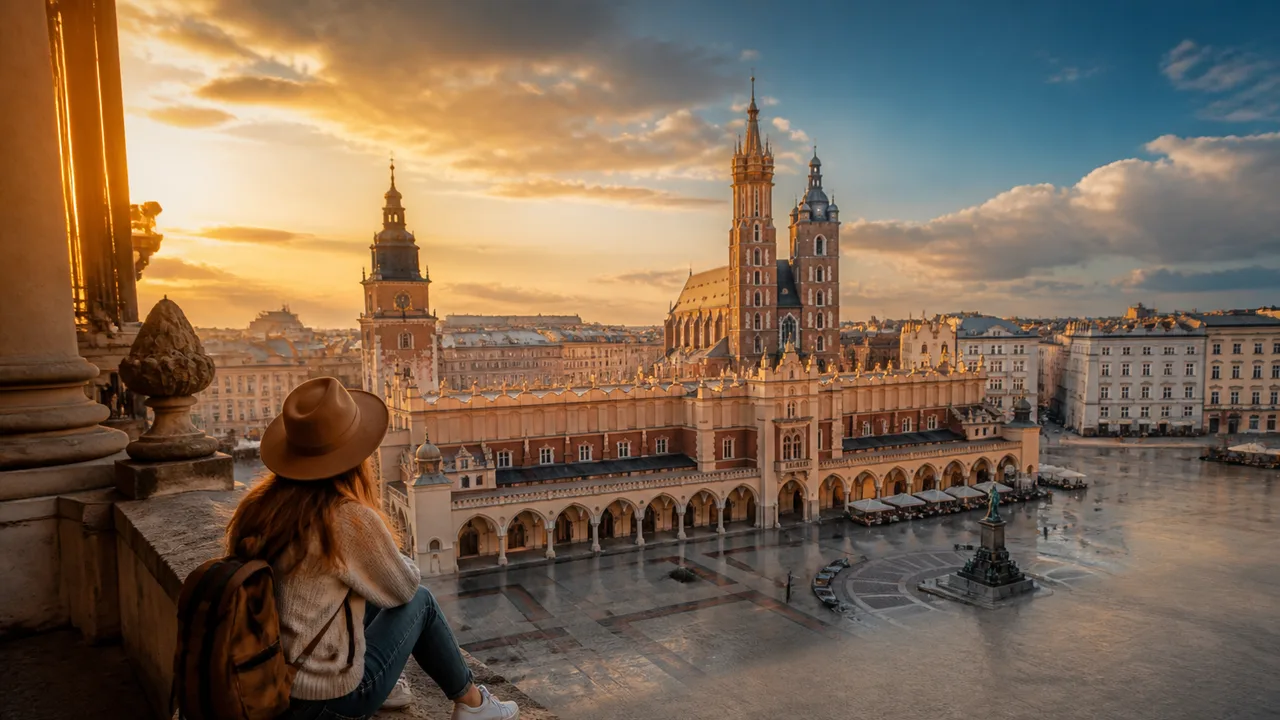
Photo: AI. Asha Kingsley
Poland has a branding problem that has nothing to do with Poland. The reflex is immediate and predictable: Eastern Europe, Cold War residue, somewhere gray and vaguely complicated. Mark Wolters, who runs the travel channel Wolters World and has been visiting Poland since the late 1990s, addresses this head-on from Krakow's main square. "Don't call it Eastern Europe," he says flatly. "This is Central Europe, and they don't appreciate it when you put it in the east."
That correction is more than a matter of geographic pride. It signals something worth sitting with before you book: Poland is a country that has been systematically misread by Western travelers, and that misreading shapes everything from how people assess its safety to how much they're willing to pay for a flight there. The gap between perception and reality is, at this point, a fairly significant travel arbitrage opportunity—if you know what you're walking into.
The Infrastructure Is Not What You Remember
Wolters' most consistent argument across nearly 17 minutes of footage is that Poland has transformed its tourism infrastructure over the past decade and a half. He has the longitudinal perspective to say so credibly. "The train system has been upgraded so much versus my first times coming," he says. "I've been coming to Poland since the late '90s. Nowadays compared to then, it is not the same country when it comes to transportation."
This matters practically. InterCity and PKP trains now connect Warsaw, Krakow, Gdansk, and other major cities with reasonable frequency and improving speed, with high-speed connections expanding. Budget carriers—easyJet, Ryanair, Wizz Air—have made Poland genuinely accessible from most European hubs without the kind of financial commitment that used to filter out everyone but the dedicated. Within cities, Warsaw has a metro, and buses and trams cover the gaps elsewhere. The one non-negotiable: always validate your ticket. Inspectors circulate, ignorance of the validation requirement is not considered a defense, and the fine is not trivial. This is one of those logistical details that separates a smooth trip from an irritating one.
For those considering renting a car, Wolters offers fair warning: Polish drivers have a reputation for aggression that he traces to the historical reality of narrow two-lane roads where passing required nerve. Highways are fine. Rural roads require more alertness than many Western European visitors anticipate.
What Poland Actually Costs
The "affordable destination" framing requires some calibration. Wolters is emphatic that the post-Soviet bargain-basement image is outdated. "It's not cheap. It is not the 1990s, not the early 2000s. Prices have come up quite a bit here." That said, compared to Western European capitals, Poland still offers meaningful value—Krakow being the most expensive Polish destination, Warsaw and Gdansk somewhat cheaper in relative terms.
Poland uses the złoty, not the euro. The exchange rate has historically hovered in a range that favors visitors paying in euros or dollars, but rates move, so check before you go. Wolters' advice on currency exchange is sound and widely applicable: use bank ATMs, decline the dynamic currency conversion offer (let your home bank handle the rate), and stay skeptical of street exchange bureaus whose rates are often quietly punishing. Cash remains useful in rural areas; cards work fine almost everywhere in cities.
Tipping convention sits at around 10 percent. One specific trap: if you're paying cash and say "thank you" before the server has counted out your change, they'll interpret that as an instruction to keep it. Let the change come to you first.
Accommodation runs a wider gamut than most travelers expect. Beyond standard hotels—largely independent rather than chain properties—Poland has a well-developed apart-hotel market, essentially serviced apartments within hotel buildings, which Wolters flags as particularly practical for families who'd rather not pay hotel breakfast prices for four people every morning. Hostels are plentiful and skew affordable, operating on the traditional dormitory model. For nature-adjacent destinations like the Mazury Lakes or the Tatra Mountains, book ahead if you're traveling during Polish public holidays—locals fill those beds first.
The Service Question
Here is where Wolters makes an observation that is both honest and worth contextualizing. Polish service culture, particularly in restaurants, does not operate on the hospitality-as-performance model that American travelers in particular are conditioned to expect. Wolters puts it plainly: "No one would accuse Poland of having overly friendly service."
He describes ordering cold borscht and receiving hot borscht with a "deal with it" energy that is, frankly, recognizable to anyone who has spent time in parts of Central and Eastern Europe where the server's job is to bring food, not to perform enthusiasm about bringing food. The bill will not appear until you ask for it. Additional drinks require initiative on your part. This is not indifference toward you specifically; it is simply not a culture where the customer-is-king transaction model has been naturalized.
Wolters is careful to draw a line between service industry affect and Polish hospitality in the personal sense. "You got a Polish friend, they're going to take care of you and make sure you have a good time here, because the Poles are very proud of their country." This distinction—between the transactional and the personal—is worth holding onto. Poland is not an unfriendly country; it is a country where warmth operates on a different register than the one many Western visitors use to measure it.
A small linguistic effort goes a long way. "Dzień dobry" (good day) and "dziękuję" (thank you) are the two phrases that Wolters recommends committing to muscle memory before arrival, and the response from locals to even a broken attempt is, by his account, generous. Polish is genuinely difficult—the orthography alone is a reasonable argument for humility—but the attempt reads as respect, and that matters.
What to Eat, and How to Eat It
Polish food is built around the idea that a meal should keep you upright through whatever comes next. Soup arrives as a starter, not a side—żurek (a fermented rye soup with sausage and potatoes, often served in a bread bowl) and barszcz (beet soup, cold in summer and a particular shade of magenta that Wolters describes, accurately, as something resembling Pepto-Bismol) are the two most likely to appear in front of you. Pierogis need no introduction but reward attention to context: the fillings vary by region and by restaurant, and a more rustic establishment will typically serve them significantly larger than tourist-facing spots. Bigos, the hunter's stew of sauerkraut and meat, is as central to Polish culinary identity as any single dish.
Wolters singles out two things worth seeking specifically. First, oscypek—smoked sheep's milk cheese from the Tatra Mountains, grilled and served with jam, which he describes with the kind of unguarded enthusiasm he otherwise keeps in check. Second, pączki, the Polish jelly doughnut, which he recommends sourcing from a local bakery rather than a hotel breakfast spread. This is good general advice for breakfast in Poland: bakeries are cheap, good, and frequented by people who actually live there.
Drinking culture has its own grammar. You wait until everyone has a drink. You make eye contact during the toast. Vodka is culturally significant and locally produced. Beer (piwo) is the everyday social lubricant. Tea (herbata) is for daytime conversation, and Wolters notes that Poles tend toward genuine discussion rather than small talk—a cultural detail that a visitor might initially read as coldness and later understand as a preference for substance.
On Safety, and What "Safe" Actually Means
Wolters' opening claim—that Poland is safer than Germany, France, the US, or Canada—is bold framing that demands some scrutiny. Crime statistics across countries are notoriously difficult to compare directly due to differences in reporting methodology, definitions, and data collection. What can be said with more precision: Poland's homicide rate is low by European standards (Eurostat data consistently places it among the lower end in the EU), and violent crime against tourists in major Polish cities is not a significant documented pattern.
The practical risks Wolters identifies are the ordinary ones of any heavily touristed European city: pickpockets in crowded squares, taxi overcharging (mitigated by using Bolt or Uber), and the currency confusion that comes from handling unfamiliar banknotes. None of these are Poland-specific phenomena. None of them constitute a reason for hesitation.
What is genuinely useful about Wolters' safety framing is the way it pushes back against a persistent geographic prejudice—the assumption that "Eastern Europe" (a category Poland rejects) equals danger. That assumption has real economic consequences for destinations like Poland, depressing visitor numbers relative to what the actual risk profile would warrant. Whether it also shapes the traveler's experience on the ground—whether arriving without that anxiety changes how you engage with a place—is the more interesting question.
More Like This
American Tourists in Europe: The Etiquette Gap
From date formats to tipping culture, the everyday customs that trip up American travelers in Europe—and what they reveal about deeper cultural differences.
Grocery Tourism Is One of Travel's Fastest-Growing Trends
Travelers are flocking to foreign supermarkets as a cultural experience. Here's what the grocery tourism trend reveals about how we understand place and food.
What Poles Actually Want Tourists to Know
From geography to drinking etiquette, here's what Polish locals wish visitors understood before arriving—and why it matters more than you think.
Hotel Check-In Safety Checks Worth Doing
From bed bugs to hidden cameras, a former hotel worker's check-in routine covers safety, hygiene, and avoiding surprise charges—here's what actually holds up.
What to Expect When Staying in European Hotels
European hotels operate by different rules than North American ones. Here's what actually differs—room size, beds, breakfast pricing, accessibility, and more.
U.S. Travel Advisories for Europe: What They Mean
The State Department updated advisories for Belgium, Ireland, and Albania. Here's what the tier system actually signals—and what it doesn't—for travelers planning a trip.
Bosnia Travel Tips: What to Know Before You Go
From Mostar's slick cobblestones to Balkan time, here's what seasoned travelers wish they'd known before visiting Bosnia and Herzegovina.
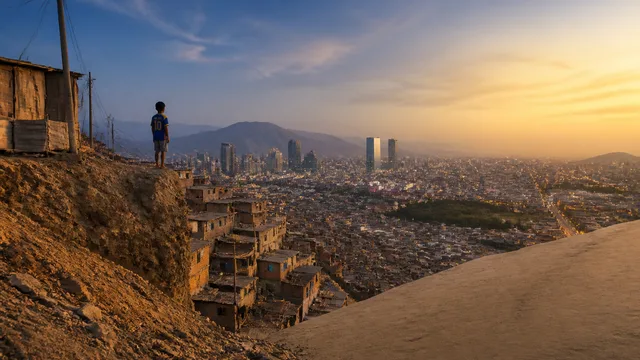
Lima's Neighborhoods and the Inequality Dividing Them
A street-level look at Lima, Peru's capital, where gang-controlled districts and wealthy enclaves exist just blocks apart—and government neglect connects them both.