Bosnia Travel Tips: What to Know Before You Go
From Mostar's slick cobblestones to Balkan time, here's what seasoned travelers wish they'd known before visiting Bosnia and Herzegovina.

Written by AI. Mariel Fontaine
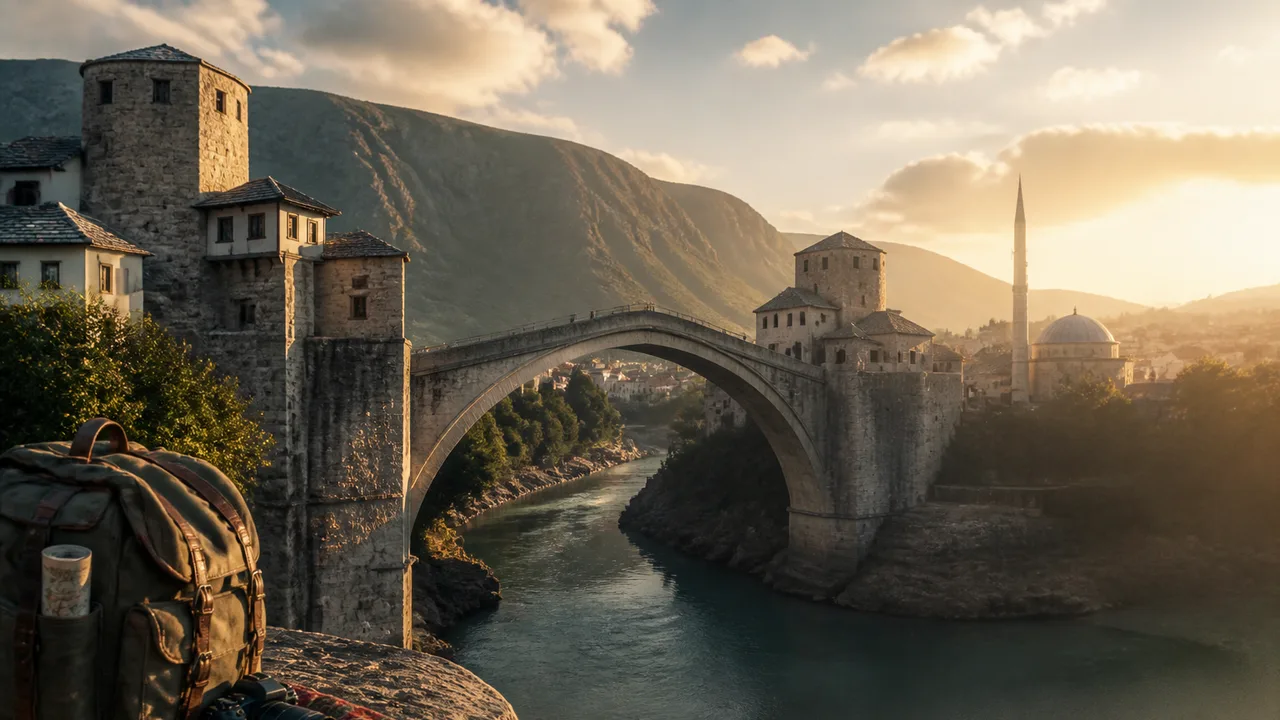
Photo: AI. Astrid Lehmann
The Stari Most — Mostar's famous Ottoman-era bridge — was destroyed by Croatian forces in November 1993 and rebuilt from the original limestone in 2004. UNESCO designation followed the reconstruction, cementing the bridge's status not merely as an architectural landmark but as a deliberate act of cultural restoration. That history sits inside every photograph tourists take from its crown, whether they know it or not.
Travel creator Mark Wolters of Wolters World filmed his recent "don'ts" guide standing in Mostar's old bazaar, and the video is more useful than its format suggests. The "don'ts" frame is a content genre unto itself — brisk, shareable, mildly cautionary — but Wolters uses it to surface things that genuinely escape first-time visitors to the Western Balkans. What emerges, stripped of the YouTube scaffolding, is a portrait of a country that has not yet organized itself around the tourist gaze, and is better for it.
The infrastructure gap is real, and it's the point
Wolters is direct about what Bosnia is not: "Don't expect that tourism infrastructure and the overall infrastructure to be really as much as you expect like if you've been in Croatia or Montenegro." He doesn't frame this as a warning so much as a recalibration. The train between Mostar and Sarajevo is slow because the mountains it passes through are genuinely dramatic. The service at restaurants unfolds at its own pace. The roads through mountain passes will unsettle drivers accustomed to German autobahns. None of this is dysfunction — it's texture.
The practical corollary for visitors is patience, applied consistently. This extends to border crossings: most arrivals come by bus or car rather than direct flight, and morning crossings move significantly faster than afternoon ones. It extends to restaurant bills, which can carry line items — bread, covers, small accompaniments — that visitors from Western Europe or North America might assume are included. Ask before you accept. The country's price levels for tourists still make it among the more accessible destinations in the Balkans even with the Mostar premium that comes from day-tripper volume, but that's no reason to absorb unnecessary charges.
Cash remains more important the further you travel from tourist centers. In Mostar's old city, card payments are widely accepted. An hour inland, that changes. The official currency is the Bosnian Convertible Mark (BAM), though euros are accepted informally in many tourist-facing businesses, at roughly a two-to-one rate. ATMs are your friend; street currency exchange is not.
What you are eating, and why it matters
The food in Bosnia is honest in the way that food is honest when it hasn't been redesigned for export. Burek — flaky pastry filled with cheese, spinach, or meat — is breakfast, fast food, and comfort simultaneously. Ćevapi, the grilled minced-meat fingers served with flatbread, are everywhere and genuinely worth the repetition. Sarma, stuffed cabbage leaves with meat and rice, earns its place on any table.
Ajvar deserves particular attention. According to Serious Eats, traditional ajvar is made primarily from roasted red peppers and eggplant — the resulting spread is smoky, rich, and transforms bread into something you didn't know you needed. If a restaurant brings it to your table, the bread is suddenly essential. Check whether both items are complimentary before you commit.
Vegetarians will find Bosnia somewhat demanding. Salads are available, grilled vegetables exist, but the culinary identity here is built around meat. That's not a flaw to be corrected; it's context to plan around.
On the pastry end: baklava in Bosnia is taken seriously. Do not leave without visiting a bakery.
The geography of identity
Bosnia and Herzegovina is not a country most Westerners have a working mental map of, politically or ethnically. According to Wikipedia's documentation of Bosnian census data, the country's population comprises three main groups — Bosniaks, Serbs, and Croats — with Bosniaks forming the largest share, followed by Serbs and then Croats, alongside smaller communities. The governance structure reflects this complexity: three presidents rotating among representatives of each of the three constituent peoples. Wolters's advice to avoid assuming everyone is "Bosnian" in the same sense is not political overcaution — it's basic orientation.
The architectural landscape makes this plurality visible. Mosques, Catholic churches, and Orthodox churches occupy the same towns. Mostar itself is a city whose western and eastern sides carry different ethnic and religious identities, a geography shaped directly by the 1990s war. Sarajevo layers Ottoman, Austro-Hungarian, and Yugoslav modernist architecture in a way that reads as chaotic only until you understand it as accumulation.
Wolters's advice on the war is, in my read, the most consequential in the video: "I really think it's a good idea not to bring up the war unless someone else does." This isn't squeamishness. The Bosnian War ended in 1995. The people who lived through it — who fought in it, who lost family in it — are still very much present. Bullet holes remain on buildings in Sarajevo. The wounds that are invisible are, by definition, the ones you cannot see coming. War museums and photography exhibitions exist precisely because Bosnians have chosen specific, curated contexts for that conversation. Respect those containers.
The hospitality, taken seriously
Wolters is effusive about Bosnian hospitality, and I'm inclined to take it at face value rather than treat it as promotional filler. He recounts a restaurant worker in Mostar telling him not to buy water from their establishment — that the vendor next door was cheaper — and frames this as genuinely disorienting: "I've never had a restaurant tell us don't buy stuff here to save money."
That story matters because it runs counter to the transactional logic that governs tourism in heavily visited destinations. It suggests a relationship with visitors that hasn't yet been fully monetized, which is either a function of Bosnia's earlier stage in the tourist development cycle or something more durable about local culture. Probably both.
The ritual expression of that hospitality involves two things: Bosnian coffee and rakija. The coffee arrives in small copper vessels and is strong enough to require the sugar that accompanies it — don't wave it off. Rakija, a fruit brandy common across the Balkans, arrives as an invitation to linger. Wolters is emphatic: "Don't shoot the rakija. You sip that." It is a conversation, not a shot.
Learning a handful of words in Bosnian — dobar dan (good day), hvala (thank you), zdravo (hello) — yields disproportionate returns. Wolters describes the reaction he gets in shops and restaurants when he uses them: a kind of delighted surprise. Few tourists bother. The ones who do are remembered differently.
Mostar beyond the bridge
The Stari Most is not the only bridge in Mostar. The Kriva Cuprija, or Crooked Bridge, sits a short walk away and draws a fraction of the foot traffic. It is, by all accounts, still beautiful.
The bridge divers are a legitimate spectacle and a minor lesson in patience. They collect tips before they jump, building anticipation as a professional technique. Wolters, standing on the bridge waiting, uses the interlude to make his point about "Balkan time" — the understanding that schedules here are relational rather than mechanical. The diver will jump when the moment is right. The restaurant will bring your menu when they're ready. Adjusting your expectations to the rhythm of the place is not resignation; it's competence.
Mostar's old bazaar is legitimately crowded with souvenir stalls, many selling the same items. But local artisans — producing handmade leather goods, jewelry, metalwork — are present if you look. Wolters puts it plainly: "You can get anything that's been hand stamped in China by a machine, or you can get something that someone actually made with their hands." The distinction matters economically for the community and experientially for you.
The city's museums extend well beyond the war: the Hamam Museum occupies a restored Ottoman bathhouse; period homes from the Ottoman era are open to visitors and provide context that the bridge alone cannot.
Beyond Mostar and Sarajevo, the country opens into Una and Tara national parks, Kravica waterfalls, and villages that have seen almost no tourism infrastructure investment. That is either an adventure or an inconvenience, depending entirely on what you came for.
Bosnia is, at this moment, a country that rewards travelers willing to meet it on its own terms. The question worth sitting with is how long that window stays open.
More Like This
American Tourists in Europe: The Etiquette Gap
From date formats to tipping culture, the everyday customs that trip up American travelers in Europe—and what they reveal about deeper cultural differences.
Casa del Desierto: Barstow's Forgotten Harvey House
Barstow's Casa del Desierto is a stunning 1911 Harvey House in the Mojave Desert—and one of America's least-visited Amtrak stations. Here's why it still matters.
Turkey's Olive Oil Soap Maker Bets on Patience
Doktoroğlu Soaps makes 8 million bars a year the old way. The real story is what a year-long production cycle does to your cash flow—and your nerve.
California's Ghost Towns Google Maps Can't Find
13 hidden California ghost towns erased by floods, fraud, and water wars—each with a stranger story than anything Bodie ever offered.
What Poles Actually Want Tourists to Know
From geography to drinking etiquette, here's what Polish locals wish visitors understood before arriving—and why it matters more than you think.
What to Expect When Staying in European Hotels
European hotels operate by different rules than North American ones. Here's what actually differs—room size, beds, breakfast pricing, accessibility, and more.
Lima's Neighborhoods and the Inequality Dividing Them
A street-level look at Lima, Peru's capital, where gang-controlled districts and wealthy enclaves exist just blocks apart—and government neglect connects them both.
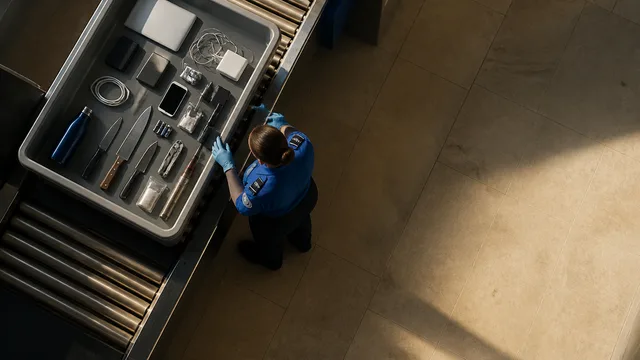
What TSA Confiscates at Airport Security in 2025
From dead electronics to cordless hair tools, TSA confiscates over a million items a year. Here's what triggers confiscation and how to keep your gear.