What Poles Actually Want Tourists to Know
From geography to drinking etiquette, here's what Polish locals wish visitors understood before arriving—and why it matters more than you think.

Written by AI. Mariel Fontaine
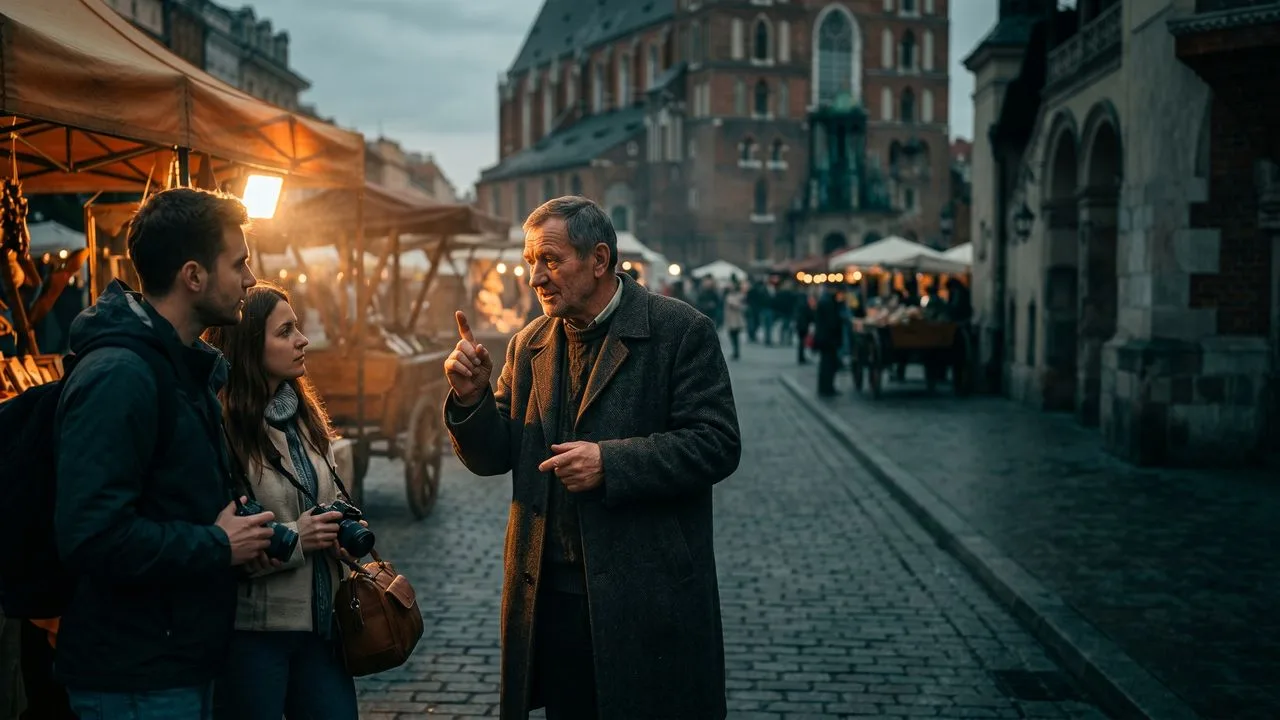
Photo: AI. Astrid Lehmann
There is a particular genre of travel content that dresses up tourism board messaging as cultural insight. You know the format: numbered lists, breathless adjectives, a closing exhortation to "embrace the local way of life." It is the literary equivalent of an airline magazine.
What Mark Wolters does in a recent Wolters World video filmed in Kraków sits closer to something more honest—a frank account, drawn from years of visiting Poland, of the specific ways tourists get it wrong and why those errors land harder than visitors typically expect. The video runs nearly fourteen minutes and covers ground from geography to soup etiquette to the correct way to make a toast. Some of it is practical. Some of it is a window into a national character that Western tourism coverage has, for decades, consistently misread.
It is worth taking seriously.
The geography problem is not trivial
Wolters leads with this, and he is right to. The insistence by many Western visitors—and much Western media—on placing Poland in "Eastern Europe" is not merely imprecise. For Poles, it carries the weight of a historical argument they have been making, and largely winning, for the better part of thirty years.
Poland is geographically Central European. More importantly, it is a country that spent the Cold War subsumed into a Soviet sphere it did not choose, and that has spent the post-1989 period actively building democratic institutions, joining NATO, integrating into the EU, and developing a tech and manufacturing economy that bears no resemblance to the stereotype the "Eastern Europe" label conjures. Warsaw's skyline and Kraków's restaurant scene are not approximations of Western European equivalents—they are the genuine article.
"Poles want you to know we're not Eastern Europe. We're not Russia. We're not communist. We are Central Europe. We are Polish. We're a democracy. And we're very proud of it," Wolters says in the video.
That pride is not nationalism in the belligerent sense. It is the reasonable insistence of a people who have survived partition, occupation, and ideological subjugation that they be understood on their own terms. Calling Poland "Eastern European" in casual conversation is not a hanging offense, but it signals to your Polish host that you haven't done the basic work of understanding where you are. That registers.
Directness is a cultural value, not a social failure
The "resting Polish face"—Wolters' phrase, and one that apparently generated more comments than almost anything else he has ever posted—is a useful entry point into a broader truth about Polish social culture. Poles do not perform warmth for strangers. They do not do small talk, at least not as an end in itself. A shopkeeper who does not smile at you is not hostile. A stranger on a tram who does not make eye contact is not rude. They are simply going about their day without the performative friendliness that Northern American visitors, in particular, have been conditioned to read as baseline cordiality.
This matters because misreading directness as coldness leads to the kind of offended tourist behavior that locals find genuinely baffling: complaining that "people here aren't friendly," or worse, performing exaggerated cheerfulness in an attempt to thaw what was never frozen in the first place.
The corollary is that Polish friendship, once actually established, operates on a different register entirely. Wolters describes it as "ride or die"—perhaps colloquially, but not inaccurately. The social compact among close Polish friends involves a degree of practical loyalty—showing up, staying loyal, defending the group—that many more transactional social cultures have largely abandoned. The reserve at the beginning is not a preview of the relationship. It is the selection filter.
The etiquette of the table (and the toast)
Two pieces of behavioral guidance in the video deserve more attention than they typically receive in travel coverage.
The first: when drinking with Polish company, you do not pick up your glass until everyone has toasted, and you do not toast without eye contact. This is not decorative custom. In Polish social culture, the toast is a moment of genuine acknowledgment—you are looking at the person across from you and recognizing them. Grabbing your beer and taking a sip while someone else is still lifting their glass is, in this context, a visible statement that you don't particularly care about the people you're with. The fact that you didn't know this excuses nothing about how it lands.
The second: dzień dobry. Good day. Two words. You do not need to speak Polish to say them, and saying them when you enter a shop, restaurant, or museum signals something important—that you are aware you are a guest in someone else's linguistic world, and that awareness costs you nothing. Wolters puts it plainly: "They know you don't speak Polish. But just knowing dzień dobry, which is good day, or dziękuję, which is like thank you—that will go a very long way to ingratiate yourself with the locals."
Polish is genuinely difficult. No reasonable Polish person expects a visiting tourist to navigate its consonant clusters. But the attempt—even the minimal two-word attempt—communicates respect in a way that launching immediately into English does not.
On soup, milk bars, and the limits of the pierogi narrative
Poland's food culture has been flattened in Western consciousness into a short list: pierogi, pączki, vodka. These things are real and they are worth eating. They are also approximately as representative of Polish cuisine as a hot dog is representative of American food.
The soup tradition alone rewards more attention. Żurek (sour rye soup), barszcz (beet soup, served hot or cold depending on season), rosół (the clear chicken broth that functions as a national comfort food)—these are not supporting characters in the Polish meal. They are structurally central to it. Starting a meal without soup is, in many Polish homes and restaurants, a mild social eccentricity.
The milk bars (bary mleczne) deserve a specific note. These Soviet-era subsidized canteens have persisted in Poland as something genuinely useful: affordable, no-frills spots serving traditional Polish food in large portions at prices that make the tourist-facing restaurants on Kraków's main square look extortionate by comparison. Some travelers dismiss them as relics. That is a mistake born of aesthetic prejudice. A milk bar is where you eat kotlet schabowy and kopytka for six euros, surrounded by locals who are doing exactly the same thing.
The places where levity ends
Two categories of site require a specific behavioral note, and Wolters raises both without excessive delicacy.
The concentration camps—Auschwitz-Birkenau is less than an hour from Kraków—attract millions of visitors annually. The vast majority conduct themselves with appropriate gravity. A visible minority do not, and the social media documentation of the latter has made this a genuine and recurring irritant for Poles, for whom the camps are not historical tourism product but unresolved national wound. The instruction here is simple and non-negotiable: these are not content locations.
Polish Catholicism is the other register in which careless behavior reads as active disrespect. Poland's relationship with the Catholic Church is layered and, among younger Poles especially, increasingly contested—but the Church's role in national identity and resistance, particularly during the communist period, gives it a weight that secular Western visitors often fail to register. John Paul II, who was Archbishop of Kraków before becoming pope in 1978, is not a historical figure here in the way he might be in other countries. He is a living point of national pride. Wolters' instruction not to joke about JP2 is, in context, not squeamishness—it's an accurate read of the temperature.
The underlying argument
What the video is really making, beneath the practical tips, is a case against the tourist who treats Poland as a backdrop—cheap beer, bachelor parties, Instagram-able medieval architecture—without engaging with the actual country those backdrops belong to.
"The Poles love Poland. They love being Polish. They love the Polish food. They love the Polish people. They love their country. They love their history. However complicated it is, they do love it and they have so much pride in their country."
That complication is worth sitting with. Polish history is genuinely complicated—the partitions, the wars, the Holocaust on Polish soil, the communist decades, the post-1989 transformation. Polish identity has been shaped by forces that most Western European visitors have never had to reckon with in their own national stories. The pride that visitors sometimes read as prickliness is inseparable from that history.
Whether a two-week tourist can meaningfully engage with that complexity is an open question. Whether they should at least not actively dismiss it seems like a more answerable one.
More Like This
Why Burned-Out Rust Devs Are Eyeing Go's Simplicity
A developer compares Rust's complexity with Go's simplicity, revealing why some programmers are reconsidering their language choices.
Navigating India's Treacherous Roads Amid Landslides
Explore the risks and resilience on India's roads as travelers face life-threatening landslides in the Himalayas.

Air New Zealand's Business Class Dilemma
Air New Zealand's new business class faces criticism for its lack of privacy and direct aisle access, raising questions about its competitive edge.
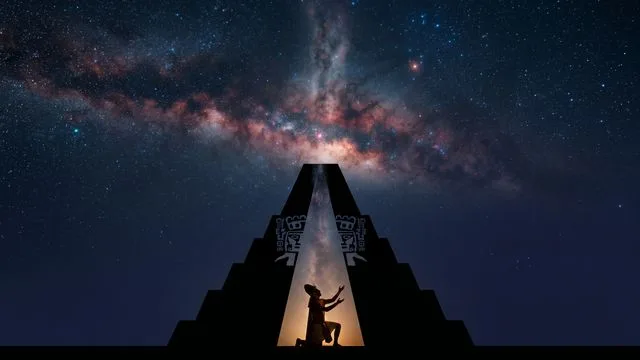
When the Dead Were Headed for the Stars
Ancient burial sites from Peru to Egypt share a striking obsession with the cosmos. What does that convergence actually mean—and for whom?
Unpacking Social Media Censorship and Squatting Laws
Explore social media's role in public discourse and the quirks of squatting laws.
Airport Secrets Frequent Flyers Already Know
From cleaner restrooms to cancellation rights, here's what airports and airlines quietly rely on you not knowing—until now.
Airport Behavior That Makes Flying Worse for Everyone
From gate lice to baggage claim crowding, Mark Wolters of Wolters World maps the airport habits that slow everyone down—and why they persist.
Basic French Phrases That Help Tourists in France
A handful of French words can shift how locals treat you in France. Here's what actually matters, and why the effort carries more weight than fluency.