How Affordable Is Bosnia for Tourists? Mostar Prices
From snacks to sit-down meals, Bosnia's prices surprise most Western visitors. Here's what the numbers in Mostar actually tell us—and what they leave out.

Written by AI. Mariel Fontaine
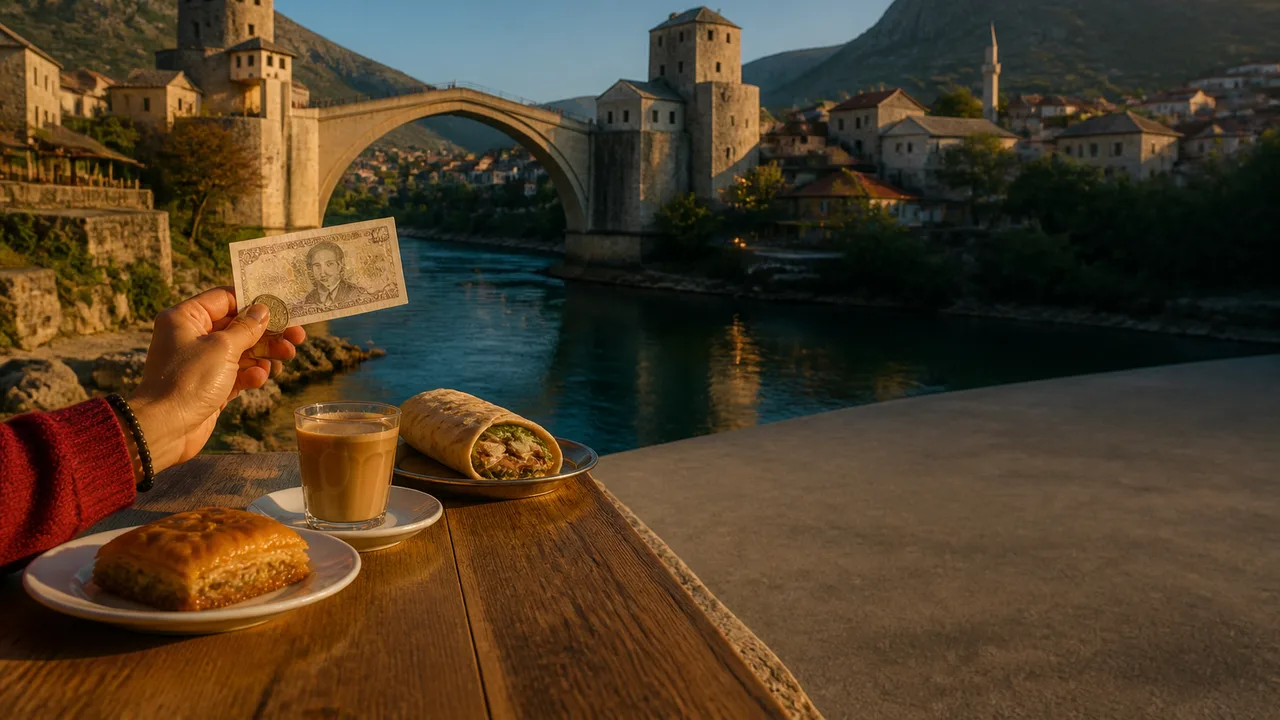
Photo: AI. Asha Kingsley
There is a particular kind of travel arithmetic that budget travelers perform before every trip: not exchange rates, not airfare, but the Snickers bar test. What does a candy bar cost here? A can of Coke? A local beer? These are not trivial questions dressed up as casual curiosity. They are, as Mark Wolters of the Wolters World YouTube channel puts it, "the things that really matter to people so you can really compare what it's like to live someplace versus those inflationary measure kind of things when they compare currencies and prices and all kinds of stuff."
That framing is worth sitting with. Wolters, filming in Mostar, Bosnia and Herzegovina, is making a methodological argument as much as a travel one: that the price of a Snickers bar in a local shop tells you something about a destination's real cost of living that GDP-per-capita comparisons and currency converter apps simply cannot. It is a defensible position, and it happens to yield flattering results for Bosnia.
The verdict from Mostar, by Wolters' account: affordable. Comfortably, clearly affordable, particularly on the grocery side. Common goods — snacks, soft drinks, beer — come in at prices that would make most Western European visitors do a quiet double-take at the register. And when conversation turns to dining out, the picture gets even more favorable: "When you go out to eat, you go out to drink and make merry, it's even more affordable than that."
What Mostar Represents — and Doesn't
The caveat Wolters volunteers almost immediately is the one worth dwelling on. Mostar is not a neutral sample. It is Bosnia's most internationally recognizable city, famous for Stari Most, the reconstructed Ottoman-era bridge that draws visitors from across Europe and beyond. Tourist infrastructure has followed that attention. Prices in Mostar, Wolters acknowledges, are "a little bit higher than usual Bosnia prices."
This is a distinction that matters. Bosnia and Herzegovina is a country of roughly 3.2 million people with a per capita GDP that sits well below the European Union average. For the country's own residents, particularly outside the tourist corridors of Mostar, Sarajevo's Baščaršija quarter, or the mountain resorts near Bjelašnica, the economics look considerably different. What registers as a bargain to a visitor from Western Europe or North America reflects a real wage gap — and it is worth being clear-eyed about what that means.
None of this invalidates the practical reality that Bosnia is, by the standards most Western travelers apply, an inexpensive destination. It simply means the affordability story has geography and context built into it. Prices in a tourist-facing shop in Mostar are not the same as prices in Bihać or Travnik, just as prices in a tourism-dependent neighborhood of any city tend to drift upward when enough visitors arrive with stronger currencies.
That drift is still modest in Bosnia relative to, say, the price stratification you encounter in Dubrovnik or Kotor — cities just across the borders that have absorbed a far heavier tourism load and adjusted accordingly. Bosnia's comparatively lower profile on international tourism circuits has, at least for now, kept that inflation in check.
The "Honest Travel" Frame
Wolters positions his channel explicitly around honest travel content, and the price-comparison approach he uses in Mostar is a reasonable implementation of that. Rather than citing averages sourced from aggregator websites — which can be unreliable, outdated, or skewed toward the lodging and dining categories most relevant to backpackers rather than families — he walks through an actual shop and documents what things cost. It is primary source journalism at a very modest scale, and it has real value.
The limitation, equally real, is that a single shop visit in a single city during a single moment in time is a snapshot, not a survey. It tells you what specific goods cost on that day in that location. It does not tell you what accommodation will run you in peak summer versus shoulder season, what the price gap looks like between tourist-facing restaurants on the Neretva riverfront and the cafes a few blocks inland where locals actually eat, or how Bosnia's price level has shifted as visitor numbers grow.
Bosnia and Herzegovina received somewhere around 1.5 million international tourist arrivals in recent pre-pandemic years, a figure that pales against its regional neighbors but has been trending upward. That trajectory matters for the affordability conversation. The Mostar that Wolters films today is already more expensive than the Mostar of a decade ago. The question of whether Bosnia remains this affordable five years from now is a live one, not a settled fact.
What "Affordable" Actually Costs
There is a quieter tension in any affordability narrative directed at Western visitors, and it runs something like this: a destination's cheapness is inseparable from its economic conditions. Bosnia has one of the higher unemployment rates in Europe. Its economy has been shaped by the lasting structural damage of the 1990s war, complex post-Dayton governance arrangements that have slowed institutional reform, and significant emigration — particularly among younger, educated Bosnians seeking better wages elsewhere in Europe.
Tourism brings money into this economy. The restaurants, hotels, souvenir shops, and transport operators that serve visitors are genuine economic contributors. But the "it's so cheap" framing, taken alone and without that context, can flatten the picture into something almost comically reductive: a country's economic struggles become a visitor's lifestyle perk.
That is not a reason to avoid Bosnia. It is a reason to spend thoughtfully when you go — and to understand that the price gap you are exploiting is a gap with a history.
The Practical Upshot
For travelers doing genuine trip planning, the Wolters World video offers what it promises: a real-world data point on grocery-level prices in Mostar, filmed in an actual shop rather than assembled from memory or averages. His conclusion — that Bosnia is "a very affordable destination" — aligns with what most independent budget travelers report, and with what the data on regional price levels supports.
Mostar, as the most-visited city in the country, represents something close to the price ceiling for day-to-day expenses. If you are spending more than the Mostar baseline suggests you should, you are likely eating in the wrong spots or have walked into one of the tourist-trap establishments that exist in every city that receives enough visitors. The good news, which Wolters underscores, is that getting away from those establishments is neither difficult nor particularly expensive in itself.
Bosnia's culinary traditions — burek, cevapi, Bosnian coffee, hearty meaty stews — are both genuinely good and genuinely cheap when consumed where locals consume them. That convergence of quality and price is rarer than travel content typically acknowledges.
The less obvious question, worth asking before you book: what does your spending actually support when you are there, and is there a way to make sure more of it reaches the people and communities rather than the intermediaries? That is not an argument against going. It is the argument for going with your eyes open.
Bosnia is affordable. It is also, by most accounts, undervisited relative to what it offers. Whether those two facts remain true simultaneously depends on choices that the tourism economy — and the people flowing into it — will make in the years ahead.
More Like This
Amazon Spring Sale Tech Deals: What's Actually Worth It
Tech reviewer Alex covers 10 Spring Sale deals, from charging stations to OLED monitors. We examine what's genuine value and what's seasonal hype.
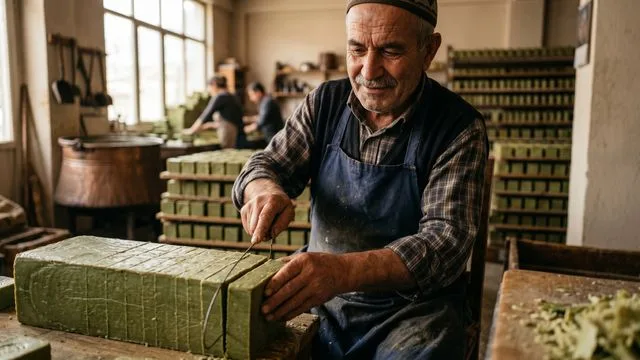
Turkey's Olive Oil Soap Maker Bets on Patience
Doktoroğlu Soaps makes 8 million bars a year the old way. The real story is what a year-long production cycle does to your cash flow—and your nerve.
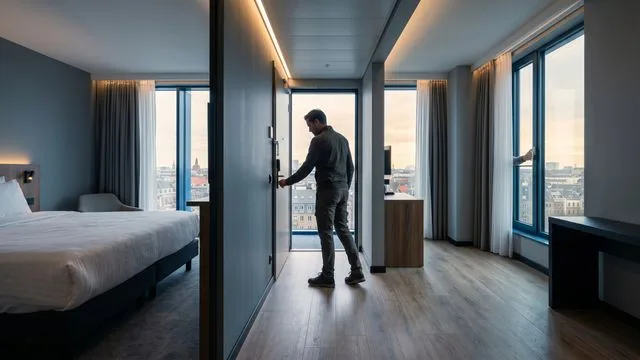
The 30-Second Hotel Safety Check You're Not Doing
A quick hotel room safety check—doors, locks, windows, exits—could prevent theft or worse. Here's what travel creator Mark Wolters says to do first.
Como 1907: Building Football's Most Ambitious Brand
The Hartono brothers didn't just buy a football club—they bought a canvas. How Como 1907's tourism-meets-football model could rewrite sports business.
21 Hidden California Places That Rewrite Deep Time
From sailing stones to fossil waterfalls, California's overlooked places hold 150,000 years of geological and human drama. Dr. Helen Papadopoulos investigates.
Why Americans Travel Differently—And Who's Really to Blame
Mark Wolters and Shebz tackle overtourism, EES border chaos, and why U.S. vacation policy shapes how Americans see the world—for better and worse.
Airport Behavior That Makes Flying Worse for Everyone
From gate lice to baggage claim crowding, Mark Wolters of Wolters World maps the airport habits that slow everyone down—and why they persist.
Basic French Phrases That Help Tourists in France
A handful of French words can shift how locals treat you in France. Here's what actually matters, and why the effort carries more weight than fluency.