Como 1907: Building Football's Most Ambitious Brand
The Hartono brothers didn't just buy a football club—they bought a canvas. How Como 1907's tourism-meets-football model could rewrite sports business.

Written by AI. Marcus Tate
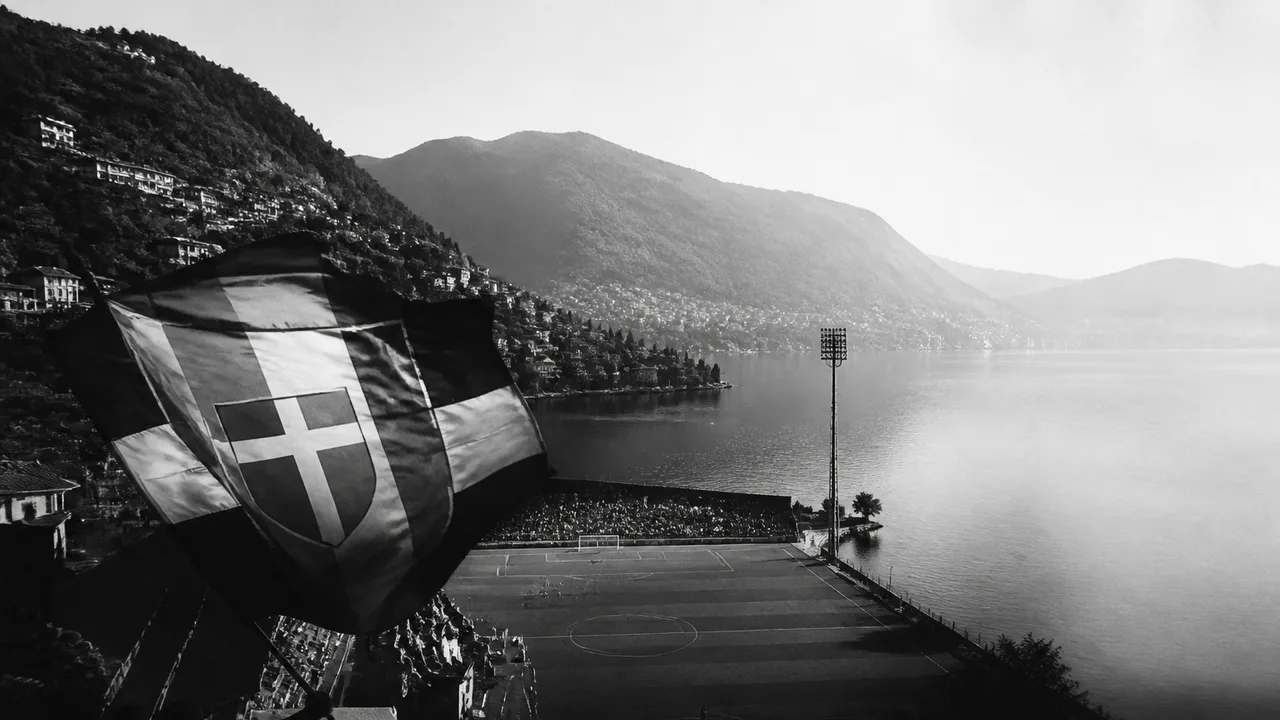
Photo: AI. Atticus Ferenczi
Most billionaire football takeovers follow a recognizable script. Acquire distressed asset, inject capital, hire a sporting director with a Rolodex, and wait for Champions League revenue to validate the thesis. The Hartono brothers, whose combined net worth sits at approximately $50 billion — more than the ownership groups behind Liverpool, Tottenham, and Manchester United combined — did not follow that script when they acquired Como 1907 in 2019. What they appear to be building instead is a more interesting and considerably more complicated proposition: a football club as the anchor tenant of a lifestyle ecosystem, using one of Europe's most photographed lakeside towns as the real product.
Whether that model holds together at scale is the genuinely open question.
From Clove Cigarettes to Lake Como
The Hartono family backstory matters here because it explains the operational disposition behind the project. Robert and Michael Hartono inherited a clove cigarette factory in central Java from their father — a facility that burned to the ground in 1963, shortly before their father died. They rebuilt it. Over the following decades, the Jarum Group expanded into banking, real estate, agriculture, technology, and hospitality. They are not passive capital allocators. They are operators who have navigated the full cycle of building, losing, and rebuilding.
That instinct for long arcs is visible in how they've approached Como. When the club was acquired, it sat in Italy's fourth division, bankrupt, with no academy, no training center, and — in a detail that tells you everything about where the value actually lived — a stadium that functioned primarily as a backdrop for Instagram content. Within five years, Como were back in Serie A, with Cesc Fabregas as player-turned-head-coach and former internationals including Raphael Varane attached to the project in various commercial capacities.
The on-pitch ascent is notable. It is not, however, the real story.
The Blank Canvas Thesis
The figure most responsible for the project's strategic architecture is Mirwan Suwarso, who leads Scent Entertainment, Jarum Group's European arm covering sports, media, and lifestyle. Suwarso was originally in Italy to develop a reality television concept around Indonesian youth players. Lake Como redirected him.
His reading of the opportunity was straightforward: five million tourists pass through Como annually. The club had brand equity attached to a genuinely spectacular piece of geography. And critically, the city's modest scale meant there was no entrenched supporter culture capable of resisting experimentation. As the Athletic Interest video frames it, Como offered "a blank canvas — a place where you could try stuff without ultras starting a riot."
The resulting strategy, which Suwarso has described as building football's equivalent of a theme park division, is built on four interlocking elements.
Performance, but specifically attractive, attacking football — a deliberate aesthetic counterpoint to Italian football's defensive traditions, and one that photographs well against the lake backdrop. Merchandise built around luxury brand crossovers and limited-edition kits, anchored by a club-brewed beer filtered through silk in a nod to Como's historic textile industry. Content production calibrated for social media reach, having grown to nearly two million Instagram followers while positioning the stadium as a celebrity destination. And hospitality packages that extend well beyond typical matchday offerings into seaplane arrivals, Vespa tours, and fine dining — with rumored infrastructure plans for a yacht harbor and a dedicated seaplane airport.
Suwarso's framing of the ambition is worth quoting directly: "For Disney, Disneyland represents its theme park division. For us, the football club and the matchday experience are our theme park division."
The long-term financial target is one billion dollars in enterprise value by 2038. Whether or not that number is achievable, the framing reveals something important about how the Hartonos are thinking about capital allocation. This is not a vanity project with a football club at the center. The football club is the hospitality hook for a destination that was already attracting wealthy tourists before anyone in Jakarta gave Como 1907 a second thought.
Where the Model Strains
The strongest version of the Como thesis is genuinely compelling. Most football clubs sit on undermonetized geographic and cultural assets. The sport's economics remain heavily concentrated in broadcast rights and player resale, with hospitality revenues largely confined to matchdays and stadium capacity. A club that can convert tourism infrastructure into year-round revenue — the Como Cup preseason tournament is designed explicitly to capture the summer tourist peak when regular-season football is dormant — is attacking a part of the market that traditional football finance largely ignores.
But the model has structural vulnerabilities worth naming.
The first is the tourist-dependency problem. A sold-out stadium populated primarily by visitors on holiday packages generates attractive per-head revenue. It does not generate what makes football clubs financially and culturally durable: a local supporter base that shows up in February, in the rain, for a Europa League qualifier. The distinction matters not just for atmosphere but for commercial leverage. Broadcasters and sponsors pay premiums for passionate, consistent audiences, not transactional ones. Como's current crowd composition — heavy with tourists, light on lifelong locals — is a feature of the early-stage model that becomes a liability if it persists.
The second is saturation. Como is a small city. Its appeal as a destination is partly a function of its intimacy. There is a non-trivial tension between "we want to dramatically increase tourism throughput via football" and "the thing people come here for is that it doesn't feel like a tourism throughput machine." The plans for yacht harbors and seaplane airports will intensify that tension. Local opposition to over-commercialization of the lakefront is not hypothetical — it is already surfacing in Italian press coverage of the project.
The third is the celebrity-and-content strategy's shelf life. Nearly two million Instagram followers built partly on celebrity stadium appearances and a picturesque setting is not the same as two million engaged supporters with purchasing intent. Content virality and brand equity are related but distinct assets, and the conversion rate between them in football is historically poor for newer clubs without deep identity roots.
None of these tensions are fatal to the project. They are the friction points that will determine whether the billion-dollar target is a business plan or a pitch deck.
What Como Is Actually Testing
The broader relevance of the Como experiment extends beyond its specific geography. The Athletic Interest video gestures at this — coal mine tours in Dortmund, Renaissance football weekends in Florence, the Titanic angle for Southampton — and the point is well-taken if slightly romantic. Most clubs do not sit on Lake Como. But most clubs do sit on something: a distinctive urban culture, an industrial history, a culinary tradition, a countercultural identity. The question is whether those assets can be programmed into durable revenue streams rather than decorative brand language.
Como is running that experiment with $50 billion in capital behind it and a management team that appears to understand the difference between storytelling and business strategy. Suwarso's background in media production is not incidental to how the club operates — it is the operating system.
What remains unresolved is whether a football club can simultaneously be a lifestyle brand, a tourism destination, a content studio, and a competitive Serie A operation without one of those functions eventually cannibalizing the others. The history of sports franchise diversification is littered with entertainment ecosystems that distracted ownership from the core product and the core product then undermined the rest.
Como 1907 is genuinely interesting because it is testing that question at a scale and with a seriousness that most similar attempts have lacked. The Hartonos have built conglomerates before. They know what a blank canvas costs to fill, and they know that the hard part is never the opening brushstroke.
More Like This
Brand Authority Is Pricing Power—and Finance Knows It
Ryan Deiss's five brand "authority triggers" map onto real financial metrics. A global markets reporter translates what that actually means for valuations and beyond.
Ted Turner, PWHL Detroit, and a Turbulent Sports Media Day
Ted Turner's death, PWHL's Detroit expansion, FanDuel's CEO ouster, and ESPN's NFL rights silence made May 7 a defining day in sports business.
Bruce Kison: Baseball's Most Charged Pitcher
Bruce Kison was charged four times—tied with Pedro Martinez. Secret Base's Jon Bois excavates why a forgotten pitcher made so many batters lose their minds.

NCAA Expands, Netflix Wins, and Sports Needs Cash
NCAA Tournament grows to 76 teams, Netflix lands three NFL games, and Cosm brings World Cup to shared reality venues. The week's sports business, mapped.

Why Karpathy Joining Anthropic Is Bigger Than the Hire
Andrej Karpathy just joined Anthropic. The real story isn't the headline—it's what his body of work reveals about where Claude is actually heading.

AJ Andrews on Building Baseball's and Softball's Future
AJ Andrews tells Bloomberg's The Deal how authenticity and storytelling can grow baseball and softball—lessons that go well beyond sports.

Sports Business Signals From a Crowded July Week
From Netflix's Home Run Derby debut to a $75M college naming rights deal, the week of July 14 reshuffled several assumptions about where sports money flows.

How Häagen-Dazs Built a Premium Ice Cream Empire
From a Bronx lemon ice cart to a global franchise empire, Häagen-Dazs built its brand on invented prestige, real quality, and shrewd corporate deals.