Why Karpathy Joining Anthropic Is Bigger Than the Hire
Andrej Karpathy just joined Anthropic. The real story isn't the headline—it's what his body of work reveals about where Claude is actually heading.

Written by AI. Marcus Chen-Ramirez

Photo: AI. Ren Takahashi
Andrej Karpathy announced on May 19th that he's joining Anthropic, and the internet did what it always does with big-name AI hires: treated it like a sports trade. Famous person moves to rival team. Insert ranking debate. Move on.
That framing misses almost everything interesting about this.
Karpathy's résumé is genuinely unusual—founding team at OpenAI in 2015, five years running AI at Tesla, back to OpenAI in 2023, out again a year later, then Eureka Labs, his AI education company. The guy has worked inside more formative AI institutions than almost anyone. So when he picks Anthropic specifically, in this particular moment, the question worth sitting with isn't who he is. It's why here, why now—and what the answer tells us about what Anthropic is actually building.
The Wrapper Argument
The loudest ongoing debate in AI goes something like this: which model wins? GPT-whatever versus Opus-whatever versus Gemini-whatever. Benchmarks, leaderboards, vibes from Twitter power users. It's the AI equivalent of arguing about engine specs when what most people care about is whether the car gets them to work on time.
Karpathy has been making a different argument in public for months, and it's the argument that makes his Anthropic hire feel less like a recruitment win and more like a philosophical alignment. He's been pushing the idea of context engineering—not prompt engineering, which implies the skill is in crafting the perfect sentence, but context engineering, which means building the right environment so the model can actually be useful over time.
The distinction matters more than it sounds. Open a fresh chat window and ask Claude to help run your business. It knows nothing about you. It's stateless. Useful in the way that a very smart intern who just walked in off the street is useful—which is to say, less useful than you need. But give that same model your SOPs, your meeting notes, your naming conventions, your style guides, your success criteria for what "good" actually looks like—and you're running a different experiment entirely. Same model. Radically different output.
As Nate Herk points out in his breakdown of the hire, "the real skill is not writing the perfect prompt. The real skill is building the right environment and folder structure and documents so that the model can actually work and be useful over and over again and remember things."
That's the wrapper. And Anthropic has been building it aggressively—Claude Code, skills, sub-agents, hooks, MCP connectors, project memory. The question is no longer whether the model is good. The question is whether the scaffolding around it is good enough to make it yours.
A Resume That Reads Like a Roadmap
Here's what makes Karpathy's recent public work interesting: it looks, in retrospect, like a pretty coherent argument for exactly this approach.
In April, he released what he called the LLM Wiki—a system where an AI agent synthesizes raw documents into a living knowledge base, building connections between pieces of information rather than just returning keyword matches. Not a database. More like a second brain that grows. People were obsessed with it. The concept went viral partly because it solved a real frustration: all your valuable institutional knowledge is scattered across Slack threads and half-finished docs and someone's head, and currently no AI tool makes it cohesive.
Before that, in March, he released AutoResearch—an autonomous loop that proposes a change, runs it against an objective metric, and keeps iterating until it hits the target. Set the goal, let it work, come back to an output. Claude Code has now shipped its own version of this pattern with /goal. So has Codex. So has Hermes. The /goal interface is becoming table stakes fast, which suggests the underlying idea was already in the air—Karpathy was just building it in public before it shipped as a product.
Herk is careful here, and rightly so: "I do want to be careful because I'm not saying that Karpathy personally invented this feature. I have no idea. Under the hood, auto research and /goal are kind of different things, but the pattern is clearly related." That's the honest framing. What matters isn't attribution; it's convergence. Karpathy's public work and Anthropic's product roadmap were heading toward the same destination from different directions.
The Education Variable Nobody's Talking About
In his announcement tweet, Karpathy included one sentence that Herk flags as the most underappreciated detail: "I remain deeply passionate about education."
That's not boilerplate. Eureka Labs, his last company, was built around the premise that the bottleneck in AI isn't capability—it's comprehension. Most people using these tools don't really understand how they work, which means they're leaving enormous value on the table. Karpathy built LLM101n, a free course that walks you through building a language model from scratch. He coined "vibe coding"—the practice of describing what you want in plain English and letting the model write the code while you steer and iterate. He has a gift, rare among people who operate at his technical level, for making hard things feel navigable without lying about the complexity.
That skill is directly relevant to Anthropic's current problem. Claude's quiet dominance in developer adoption is real—Ramp's AI Index recently showed Anthropic edging past OpenAI in business spending at 34.4% vs. 32.3% among its customer base—but adoption and effective use are very different things. IBM research on AI workplace adoption has consistently shown a gap between people who have access to these tools and people who know how to actually deploy them in ways that change outcomes. If Anthropic is building toward a context marketplace—which both the LLM Wiki pattern and the skills/plugins direction suggest—they need users who can contribute to it, not just consume from it. The accountant with twenty years of monthly close knowledge. The real estate agent who's internalized every step of property intake. That knowledge is currently trapped in heads and Slack threads.
Getting it out requires more than good tooling. It requires people understanding why the tooling works, not just how to click the buttons.
What Actually Shifts Now
Anthropic has been moving fast enough that the product feels different from what it was six months ago—developer-focused keynotes have signaled a platform ambition that goes well beyond "here's a model, good luck." The joint venture with Blackstone, Hellman & Friedman, and Goldman Sachs to help mid-size businesses integrate Claude into core operations is the clearest signal yet that Anthropic sees the services and adoption layer as load-bearing, not optional. That's a company that has decided the model alone doesn't win.
Herk's three predictions from the hire—a context app store deeper than a prompt marketplace, expanded /goal-style autonomous loop commands, and an education layer for packaging workflows—are speculative, and he says so explicitly. But they're not random speculation. They follow logically from the product direction that's already visible, filtered through what Karpathy has been building and teaching in public. The monetization pressure both Anthropic and OpenAI are navigating means the "model as moat" story has to become something stickier—and workflow lock-in, built through accumulated context and muscle memory, is the obvious answer.
The more interesting tension in all of this is one the video doesn't fully address: what does it mean for users when the moat is their own data? Lock-in built on accumulated context and memory is, from one angle, tremendous value—the system gets more useful the more you use it. From another angle, it's a very elegant trap. Switching becomes harder not because the competitor's model is worse, but because you'd be leaving behind everything you've built. That's not new—it's how every platform eventually consolidates—but it's worth naming clearly as the endgame becomes visible.
Karpathy joining Anthropic is interesting because of who he is. It's important because of what his presence signals about what Anthropic thinks the next competition is actually about. Not the model. The environment the model lives inside. Not the raw intelligence. The institutional memory wrapped around it.
The question is whether users understand that's what they're signing up for.
More Like This
Claude Can Now Edit Your Videos. Here's What That Means.
AI automation creator Nate Herk demonstrates Claude's new video editing pipeline—trimming filler words, adding motion graphics, all through natural language.
Claude Code's New Advisor Tool Hints at AI's Tiered Future
Anthropic's new /advisor command in Claude Code lets cheaper AI models consult smarter ones when stuck—a preview of how we'll actually use expensive AI.

Claude's Infinite Context and the Privacy Bill Nobody Discussed
Anthropic's "Code with Claude" conference packed in big agent announcements. Here's what the hype skipped: your session data, and who's reasoning over it.
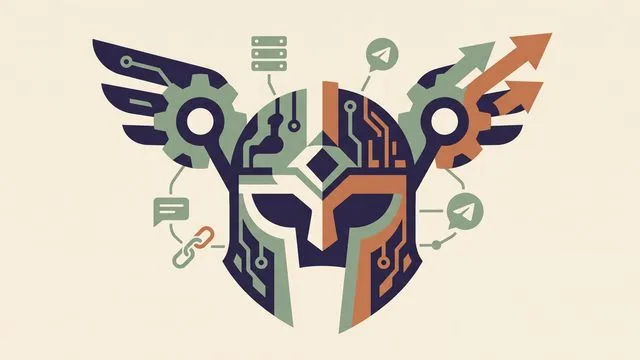
Hermes Agent: The Self-Improving AI on Your Own Server
Hermes Agent is an open-source AI assistant that runs on your own infrastructure, learns from your workflows, and automates tasks via Telegram. Here's what it actually does.

Anthropic's Claude Keynote: A New Era for Developers
Anthropic's Code with Claude London keynote revealed major platform shifts—from advisor strategies to managed agents. Here's what it means for developers building on Claude.

OpenAI's Codex Is Growing Up Fast—And Getting Weird
OpenAI's latest Codex updates add browser control, AI-reviewed approvals, and... animated pets? A look at where AI coding tools are actually heading.

Hugging Face ML Intern Automates AI Development
Hugging Face's ml-intern is an open-source agent that automates the full ML research loop. Here's what it does, what it can't, and what it signals.

Small Language Models Are Reshaping Agentic AI
Small language models are outperforming larger rivals on key AI agent benchmarks. Here's what the efficiency shift means for how AI gets built and deployed.