The 30-Second Hotel Safety Check You're Not Doing
A quick hotel room safety check—doors, locks, windows, exits—could prevent theft or worse. Here's what travel creator Mark Wolters says to do first.

Written by AI. Mariel Fontaine
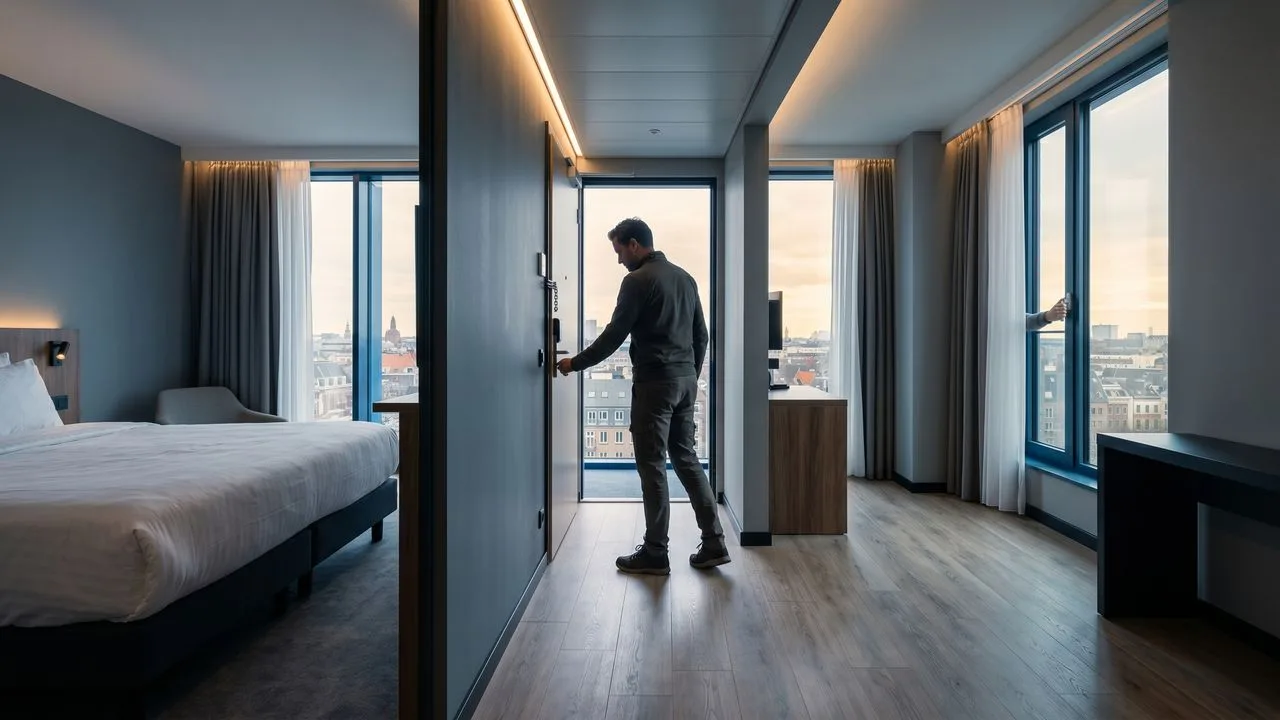
Photo: AI. Hayden Cross
Most travelers drop their bags, kick off their shoes, and reach for the minibar. The door swings shut—or doesn't—and they assume the room is fine because it has a star rating and a functioning Wi-Fi password. This is a reasonable assumption. It is also, occasionally, a wrong one.
Mark Wolters, the travel creator behind the long-running Wolters World channel, has been making this point for years, and a recent video distills his thinking into a checklist that he argues takes roughly 30 seconds to complete. The claim is slightly optimistic—more on that in a moment—but the underlying logic is sound, and the specific vulnerabilities he identifies are worth understanding rather than simply memorizing.
The Door Is Not Your Friend by Default
Wolters leads with what he considers the most important element: the door itself. Not just whether it locks, but how it locks, and whether the mechanism is actually doing the work you expect it to do.
"It is a lot easier than you think to bust into hotel rooms," he says, drawing on anecdotes involving friends who were robbed while asleep. The supplemental hardware—deadbolts and chain locks—gets particular attention. His concern with cheap deadbolts is specific: a bolt that slides rather than turns can, under repeated shaking, gradually walk itself back. If you test a deadbolt and it moves with a smooth glide rather than a firm click, that is information worth having.
The interior connecting door, the one that links adjacent rooms and is a feature of virtually every mid-range American hotel chain, is another point of emphasis. These doors are often overlooked precisely because guests are not expecting to use them. Wolters argues that the deadbolt on that interior door deserves the same attention as the exterior one—and that a connecting door with a compromised lock is sufficient reason to request a different room entirely.
Worth noting: the door-to-door salesmen and maintenance impersonators who have historically exploited hotel room access are not figments of anxious imagination. Hotel industry security consultants have documented the problem for decades. The physical check Wolters describes maps closely to what security professionals actually recommend, even if his framing is more vernacular than clinical.
What the Peephole Tells You
There is a detail in Wolters' checklist that I find more instructive than it might first appear: he recommends checking the peephole not just to confirm it works, but to verify it hasn't been reversed. A reversed peephole—turned so the wide-angle view faces inward rather than outward—allows someone in the hallway to observe the occupant inside the room. It is a known surveillance technique, and Wolters' suggestion of covering the peephole with a Post-it note when not in use is low-effort and not paranoid.
The broader point here is about the relationship between visibility and vulnerability. Hotels are semi-public spaces. The guest in room 412 shares a corridor, an elevator bank, and in many cases a physical wall with strangers. The architecture of hospitality is built around access, which is precisely what makes it worth scrutinizing.
Balconies, Windows, and the Third-Floor Fallacy
Wolters addresses windows and balcony doors with a story about friends robbed on the third floor of a Canary Islands hotel—someone climbed in through the balcony. The instinct to dismiss upper-floor entry points as impractical is, he argues, exactly the kind of complacency that creates opportunity.
The specifics matter here. Balcony sliding doors often have locking mechanisms that are easy to overlook—a small lever or tab near the floor track—and just as easy to leave unengaged. A door that appears closed is not necessarily a door that is locked. Wolters recommends verifying the lock is actually engaged rather than assuming the door's weight makes it secure.
This is where the "30 seconds" framing starts to strain. A thorough check of the main door, the connecting door, the windows, the balcony, the peephole, the emergency exit diagram, and the in-room safe—while also doing a visual scan of the room's overall condition—is not realistically a 30-second exercise if done with any real attention. Wolters knows this; the video itself runs nearly five minutes. The number is a marketing device, and an effective one. What he is actually advocating is closer to a two-minute habit, which is still a reasonable ask.
Cleanliness as a Proxy
One of the more interesting claims in the video is that a dirty room signals something about safety, not just hygiene. "If a room is dirty and not put together, that's usually a sign of the hotel might not be caring about cleanliness, but also probably not caring as much about safety," Wolters observes. He recommends checking under the bed and in the bathroom as part of this general scan.
This is a reasonable heuristic, though it deserves some unpacking. Cleanliness and security are correlated in the sense that both reflect management standards—a hotel that cuts corners on housekeeping is probably cutting corners elsewhere. But the correlation is imperfect. A room can be spotless and still have a compromised lock. A room can be slightly dingy at a family-run guesthouse in a village with essentially zero crime. Wolters is not wrong, but travelers should understand they are reading a signal, not a guarantee.
There is also a class dimension worth acknowledging. Budget travelers, backpackers, and visitors relying on hostels or low-cost accommodation are the audience most likely to encounter genuinely substandard conditions—and the least likely to have the financial flexibility to simply walk out and book elsewhere. When Wolters says "sometimes you need to ask for a different hotel," he is giving advice that carries different weight depending on the traveler's circumstances. The underlying principle is sound; the execution depends on options that not everyone has.
Emergency Exits and the Information You Might Need at 3 A.M.
The section on emergency exits is, in my view, the most practically undervalued part of the checklist. Most travelers never consult the laminated evacuation diagram on the back of the hotel room door. Wolters makes a direct argument for changing this habit: "You might think, 'Oh, I'm only on the second floor. I'll be fine. I'll figure it out.' No."
His point is that disorientation in an emergency—smoke, darkness, noise, adrenaline—makes even simple navigation unreliable. Knowing before you need to know which direction the nearest stairwell is, and roughly how far, is the kind of low-stakes preparation that has a genuine payoff in the rare circumstance where it matters. Hotel fires, though statistically uncommon, are not so rare that they belong only to the realm of anxious imagination. The U.S. Fire Administration has tracked hundreds of hotel structure fires annually in recent years, a number that becomes less abstract when you consider that most people stay in hotels multiple times per year.
Trust Your Gut, With Caveats
Wolters closes with a principle that travel safety professionals consistently endorse: trust your instincts. "If you don't feel comfortable with the people down the hall, if you don't feel comfortable how the room is set up, something feels off—maybe ask for another room or sometimes you need to ask for a different hotel."
He adds that he has personally absorbed a financial loss to leave a hotel that didn't feel right. That is a meaningful data point. It suggests the advice isn't theoretical.
The caveat worth adding is that gut instinct is not infallible and can encode bias. Discomfort with fellow guests who look unfamiliar, speak a different language, or move through a space differently than expected is not necessarily a safety signal. Wolters is not advocating for this kind of reaction, but a responsible reading of "trust your gut" has to acknowledge where that instinct can lead travelers astray.
What he is describing at its best is a form of situational awareness—a systematic rather than reactive attention to one's physical environment. The check he outlines is not about fear. It is about spending two minutes, once, on the mechanics of a space you are about to spend eight hours sleeping in. The investment seems fair.
More Like This

Air New Zealand's Business Class Dilemma
Air New Zealand's new business class faces criticism for its lack of privacy and direct aisle access, raising questions about its competitive edge.
Lloyd Blankfein's Risk Rules Work on Main Street Too
Lloyd Blankfein's frameworks on crisis management, contingency planning, and AI risk translate directly to small business — if you know where to look.

The Security Risks Hiding in Your $50,000 Desk Setup
A tech reviewer's decade-old workspace reveals what happens when premium gear outlives its security updates. The Mac Pro problem nobody wants to discuss.
Your Body Already Knows How to Break the Ice
A movement science writer digs into the viral 'social scripts' video — and finds an embodied cognition argument hiding inside a charisma sales funnel.
Why Americans Travel Differently—And Who's Really to Blame
Mark Wolters and Shebz tackle overtourism, EES border chaos, and why U.S. vacation policy shapes how Americans see the world—for better and worse.
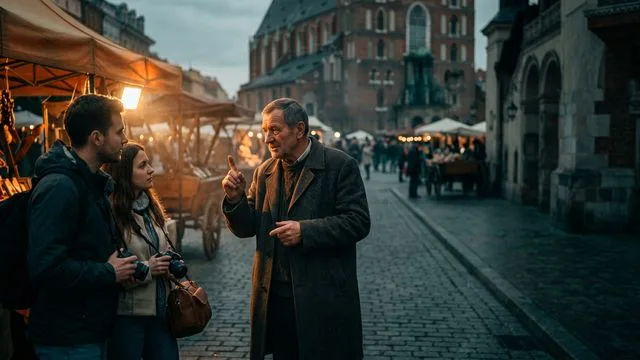
What Poles Actually Want Tourists to Know
From geography to drinking etiquette, here's what Polish locals wish visitors understood before arriving—and why it matters more than you think.
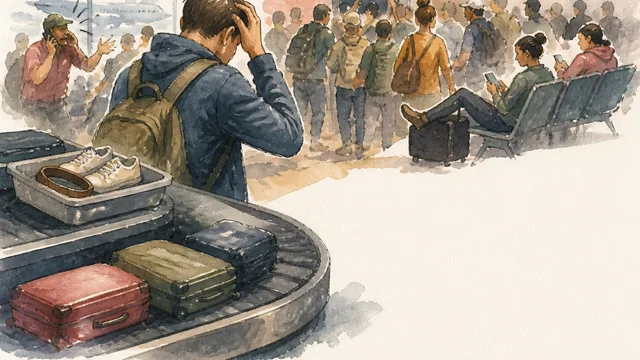
Airport Behavior That Makes Flying Worse for Everyone
From gate lice to baggage claim crowding, Mark Wolters of Wolters World maps the airport habits that slow everyone down—and why they persist.
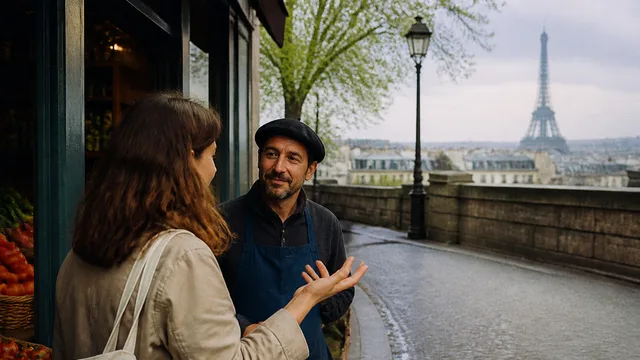
Basic French Phrases That Help Tourists in France
A handful of French words can shift how locals treat you in France. Here's what actually matters, and why the effort carries more weight than fluency.