Lloyd Blankfein's Risk Rules Work on Main Street Too
Lloyd Blankfein's frameworks on crisis management, contingency planning, and AI risk translate directly to small business — if you know where to look.

Written by AI. Dorothy "Dot" Williams

Photo: AI. Atticus Ferenczi
I've been a correspondent covering Main Street long enough to know that wisdom coming out of Goldman Sachs usually needs translation before it's useful to someone running a bakery or a plumbing company. Lloyd Blankfein's recent conversation with David Haber on the a16z podcast needed less translation than I expected.
Blankfein — who ran Goldman through the 2008 financial crisis and built a career on managing the gap between what you know and what you think you know — spent over an hour talking about risk, culture, crisis, and AI. Most of the coverage will focus on the finance and tech angles. I want to focus on what a small business owner might actually do with what he said, because a few of his frameworks are more portable than they look.
The Hire You Were Sure About
The part of the conversation that stopped me was Blankfein describing how people perform under genuine crisis conditions. During the 2008 financial crisis, he watched a colleague he would have described as steady — a serious, capable person by every visible measure — fall apart completely. And he watched someone else, someone who didn't project that same confidence, hold.
"You can't tell a book by its color," Blankfein said. "I went through the financial crisis and we had people — thinking one in particular who was a great athlete, terrific guy, real man's man, did rodeos on the weekend — and he was, you know, terrible. And then there were people who didn't look like they could walk up a whole flight of stairs, and they were really good."
I ran a bookstore for twelve years. I made exactly this mistake — more than once. I hired for presence. I hired for the confident answer in the interview. I hired someone who had run bigger operations than mine and assumed that translated. What I learned, the slow and expensive way, is that how someone performs when the distributor doesn't show up the week before a major event, or when the POS system crashes on Small Business Saturday, or when a key employee quits via text at 7 a.m. — that's information you cannot get in an interview. You only get it after the fact, and by then you've already paid for it.
Blankfein's advice for boards applies just as directly to a three-person Main Street business making its first key hire: find someone who has already been through something hard. Not someone who describes how they would handle it. Someone who has actually been on the other side of a real problem and came out functioning. That's a different screen than we usually run.
The Insurance You Buy Before You Need It
The second framework is one I wish someone had handed me as a laminated card in year two of owning the bookstore: buy the insurance when nobody else thinks you need it.
Blankfein describes contingency planning not as prediction — he's explicit that prediction isn't really the point — but as preparation. "When you go around the table for those meetings, you're not so much interested in what people think about the future, where things will go. You just want to know — forget about what you think the likelihood or probability of something happening is. What will you do if it does happen? And what can you do today to mitigate the consequences of that in advance, at a very low cost today?"
Then he makes it concrete: "Buying insurance is very expensive when everybody needs it. When the hurricane is coming and it's on its way, it's very expensive to buy insurance for your oceanfront property. But in the middle of winter, when it's the furthest thing from your mind, it's a lot cheaper."
I understand this in my bones. The supplier relationships I took for granted because they'd always been solid. The single employee who knew how the back-of-house actually ran — no documentation, no backup, just her. The lease terms I didn't push back on because things were good. Every one of those was a cheap insurance problem I treated as a non-problem until it became an expensive crisis. Blankfein is describing a management discipline, but the underlying move is the same for a business with twelve employees as for a firm with thousands: when is the cheap moment to protect against the thing that hasn't happened yet?
Small business owners live with such thin margins and such constant demand on attention that contingency planning feels like a luxury. It's not. It's the thing that determines whether a bad quarter becomes a manageable setback or an existential one.
The AI Problem Is Worse When You're Smaller
This is where Blankfein said something I've been trying to explain to small business owners for two years, and he said it more clearly than I have.
"Before this technological age, could you have had a mistake that could cost billions of dollars? Not really. But now a piece of software could go out and do 70,000 transactions. The leverage in these things is themselves a problem. Not because it's smarter than us and it's going to turn us into pets, but because we don't have the ability to test whether it's right or not."
At Goldman, there are people whose entire job is to catch that kind of error before it compounds. At a small business, that person is usually you — and you're also doing everything else.
I've talked to small business owners who've adopted AI tools for invoicing, scheduling, customer follow-up, and inventory management. Most of them have a version of the same story: the tool ran quietly in the background, seemed to be working, and then something went wrong that they only discovered when a customer called upset, or when they reconciled the books three months later, or when a vendor relationship that had been fine suddenly wasn't. The tool had been making small errors — or small decisions — that nobody noticed because nobody was checking, and because the tool gave every appearance of competence.
The scale is different from Goldman's 70,000 transactions, but the structure of the problem is identical. You've delegated something to a system you can't fully audit, and you won't know it's been wrong until the consequences are already in motion. At Goldman, they have risk management infrastructure to catch that. At most small businesses, you find out when you can't.
Blankfein isn't anti-AI — he's describing a specific, serious risk that comes with delegating to systems whose outputs you can't easily verify. For a small business owner adopting AI tools right now, the question isn't whether the technology works. It's: what's your check on whether it's working correctly? If the answer is "I'll notice if something seems off," that's not an answer. That's hope.
What Goldman Actually Built
Blankfein describes Goldman's culture as something built incrementally by generations of partners who each raised their hand and said they'd go build a new practice or market. The acquisition of J. Aron & Company — the commodity trading firm where Blankfein himself landed by accident — is the exception he names, and he frames it as a near-disaster that happened to work for reasons Goldman didn't intend. They bought a commodity firm and got an entrepreneurial culture. Columbus sailing for the Indies and finding America, as he puts it.
What's worth noting here isn't the Goldman-specific history. It's that Blankfein describes his own career as one long series of accidents that he navigated well. He applied to Goldman and didn't get in. He ended up at J. Aron, a firm he'd never heard of, as a precious metals salesperson. J. Aron was acquired by Goldman, and that's how he got in the door of the firm he'd been rejected by. Then he spent decades building.
That's not a story about elite pedigree opening doors. That's a story about what you do with the door that actually opens, which is a more common experience on Main Street than most finance journalism acknowledges.
The Risk You're Already Taking
The through-line in Blankfein's conversation is something I've watched play out in every small business I've covered and in my own: you are always doing two things simultaneously. You are trying to grow, which requires taking risk. And you are trying to protect what you've built, which requires managing it. Those two orientations are genuinely in tension, and the tension doesn't resolve. You have to hold both.
"You're trying to get out there and take risk, and you're also trying to be a risk manager, and you have to do both."
Most small business owners I know are better at one than the other. The growers who can't slow down long enough to check their exposure. The protectors who can't pull the trigger when the opportunity is real. Blankfein's self-description is useful here: he says he was wired toward risk management, toward finding the cloud around every silver lining — but that he had an appetite for risk, meaning he could sit in an uncertain situation without shutting down. Those are separable things. You can be someone who spots the downside clearly and still act.
The question is whether you've built the habits — the contingency conversations, the honest hiring screen, the insurance before the hurricane — that let you act without being reckless.
Most of us figure that out by getting burned first. The argument Blankfein is making, and the one I'd make to any business owner I know, is that you don't have to wait for the expensive lesson.
More Like This
Use As Little AI As Possible: A Framework That Works
An AI agency's counterintuitive approach: automate with simple rules first, add AI only when necessary. Here's their 7-step framework that actually delivers.

Spirit Airlines Is Gone. Your Airfare Bill Isn't.
Spirit Airlines shut down in May 2026. For millions of price-sensitive travelers, that yellow plane was the only thing keeping fares honest. Here's what that costs.
Understanding the 7 Levels of Business Growth
Explore the 7 levels of business growth, from dreamer to industry leader, with insights for each stage.
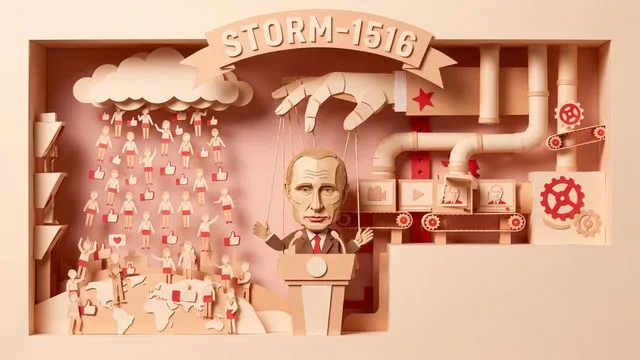
Russia's Disinformation Playbook Hits Main Street
Storm-1516's AI deepfake operation isn't just geopolitics—it's the same smear playbook that's been destroying small businesses for years. Here's what you need to know.
Consulting's Role in Disneyland's Safety Decline
Explore how McKinsey's cost-cutting at Disneyland impacted safety, leading to tragic accidents and raising questions about corporate priorities.

The McKinsey AI Hack Was a Procurement Failure
A $20 autonomous agent breached McKinsey's Lily platform. The real story isn't the SQL injection—it's how enterprise AI buying is structurally broken.

Spain's Immigration Boom: Real Gains, Real Costs
Spain's mass immigration wave is propping up its pension system — but stagnant wages and a housing crisis reveal what the government isn't building alongside it.
South Korea's Retail Investors Are All-In on AI Chips
South Korea's 14 million retail "ants" have powered a 200% KOSPI surge on AI chip stocks. A Bloomberg report maps the rally—and the risks hiding inside it.