U.S. Travel Advisories for Europe: What They Mean
The State Department updated advisories for Belgium, Ireland, and Albania. Here's what the tier system actually signals—and what it doesn't—for travelers planning a trip.

Written by AI. Kael Maddox
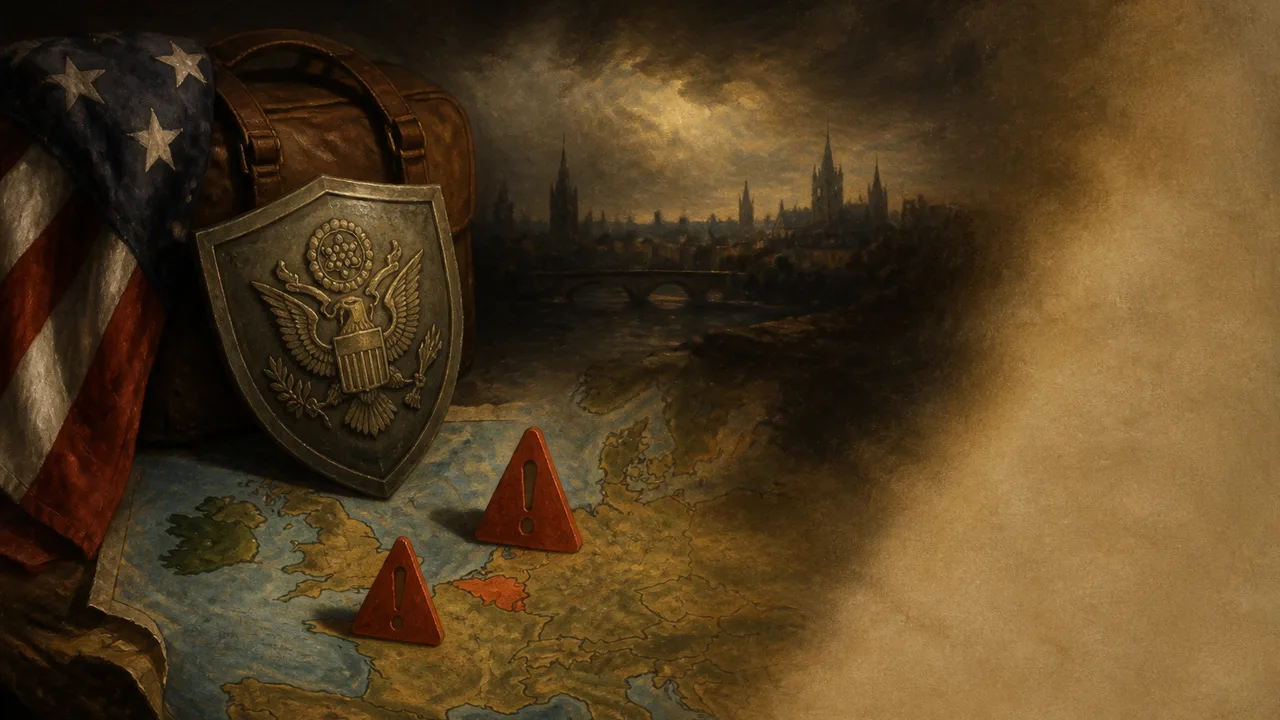
There's a particular kind of travel headline that shows up every few months, almost seasonally: the U.S. government has issued a warning for somewhere popular, somewhere that feels safe, somewhere your parents have probably been. The implication is alarm. The reality is usually more complicated.
The State Department has updated its travel advisories for several European destinations recently — Belgium, Ireland, and Albania among them — and the pattern worth examining isn't the warnings themselves, it's what those warnings actually say versus how they tend to get reported.
Brussels Is a Level 2. So Is Everywhere Else You're Probably Going.
Belgium sits at a Level 2 advisory — "Exercise Increased Caution" — citing crime, unrest, and terrorism, according to TheTravel. That's the same tier that covers the vast majority of Western Europe. It's also the same tier that covers Albania, which is a very different travel experience from Brussels by most measurable standards. The four-tier system runs from Level 1 ("Exercise Normal Precautions") up through Level 4 ("Do Not Travel") — the designation reserved for places where the State Department advises citizens to leave immediately. Northwestern University's guide to evaluating State Department advisories is useful here: it maps out how the tiers function and what they're actually designed to communicate, which is less about binary go/don't-go decisions and more about calibrating your awareness.
The problem is that Level 2 — the one most commonly updated and most frequently written about — functions as a catch-all that compresses genuinely different risk profiles into a single label. Belgium's Atomium and a post-communist-era Albanian port city are not the same conversation. Treating them identically because they share a tier number is how useful information turns into noise.
The Specific Language Is What Matters
Ireland's updated advisory, reported by Travel and Leisure, states plainly: "Ireland is generally a safe destination for travelers." The update, made most recently on March 20, flags petty crime in tourist-heavy areas — full stop. That's the advisory. The State Department's own language, also covered by Yahoo Travel, frames it as a routine reminder to watch your belongings in crowds.
This is not a warning. It's the travel equivalent of your hotel concierge telling you to keep your bag zipped on the Grafton Street tram. The fact that it gets packaged as a "travel advisory update" creates a framing problem — it implies something changed when often the only thing that changed is the review date on a document that was already Level 1 or Level 2.
The Belgium update is a degree more substantive: that advisory carries the explicit terrorism and civil unrest language that's been standard for Belgium since the mid-2010s, and crime targeting tourists is a real and ongoing concern in Brussels specifically, per TheTravel's reporting. Pick pocketing on the Grand-Place, bag snatches near the Manneken Pis — these aren't invented risks. They're the same category of opportunistic theft that operates in any place where concentrated tourists meet relaxed attention. The State Department uses identical language for Caribbean destinations, describing "crimes of opportunity" including "purse snatching and pickpocketing" in popular tourist locations, according to People. That phrase could describe a long list of major cities worldwide, including several in the United States.
Albania Is the More Interesting Case
Albania's Level 2 advisory notes crime concerns, but here's the detail that actually deserves attention: Albanian officials have pushed back, maintaining there's no concrete evidence of a real security threat for visitors. That's a government disputing the framing of a U.S. advisory about its own country — and it's not an unusual position for tourism-dependent nations to take, but it does surface a tension worth sitting with.
Albania has been one of the faster-emerging destinations in Europe over the last five years. The Albanian Riviera draws a younger, more adventurous crowd precisely because it hasn't been fully absorbed into the mainstream circuit yet. A Level 2 designation there carries different practical implications than the same designation in a city with two decades of established tourist infrastructure. The risk calculus is different; the support systems if something goes wrong are also different. The tier doesn't tell you that. You have to read the specific advisory language, then read between the lines.
How to Actually Use These Things
Treat the advisory as a starting point, not a verdict. If Belgium is Level 2 and Dublin is Level 2 and a coastal Albanian city is Level 2, your job is to look past the label at what the advisory actually describes. Is it petty theft in tourist districts? That's a preparation issue — money belt, phone security, situational awareness. Is it terrorism risk or civil unrest? That's a different conversation entirely, and you should read the specific country page on travel.state.gov carefully rather than relying on headlines.
A few things that consistently matter more than the tier number:
Where in the country you're going. Advisories cover entire countries. Ireland's advisory applies whether you're walking O'Connell Street in Dublin or cycling a headland on the Wild Atlantic Way. These are not equivalent environments for tourist crime.
Time of year. Peak tourist season concentrates both visitors and the opportunists who work them. A city in July and the same city in November are different places to move through.
Your own travel behavior. The State Department's language about "crimes of opportunity" is precise in a useful way. Opportunity requires conditions — distraction, disorientation, visible valuables. These are variables you actually control.
The gap between perception and reality. Belgium has a reputation, partly earned and partly leftover from specific incidents, that makes some American travelers more anxious there than the ground-level reality warrants for most trips. Albania has the opposite problem — a lack of reputation that leads people to underestimate the genuine infrastructure gaps that matter when things go sideways.
What the Advisory System Is and Isn't
The State Department publishes these not to tell you whether a place is good or worth visiting but to give you a baseline for planning and insurance purposes. The Level 4 designation — "Do Not Travel" — is the one the agency treats as a genuine directive, reserved for places where the department may have severely constrained ability to assist U.S. citizens in a crisis. Everything below that is graduated guidance.
The system works reasonably well for what it's designed to do. What it's not designed to do is serve as a ranking of experiential quality, cultural richness, or whether a place is worth your limited vacation days. Those are different questions, and no government document is going to answer them.
Belgium is worth the trip. Ireland has always been worth the trip. Albania — if you're comfortable with a destination still working out its infrastructure and tourist-safety kinks — might be the most interesting of the three right now, precisely because it hasn't been smoothed flat by the travel industry yet.
The advisory tells you to be careful. That's good advice in Tirana and in Dublin and in any airport, hotel lobby, or crowded square anywhere on earth. Whether you go is still entirely your call.
More Like This

What American Tourists Wear in Europe (And Why It Matters)
From athleisure to baseball caps, Mark Wolters breaks down the clothing choices that signal "tourist" across Europe—and the practical reasons to reconsider them.
EU Entry/Exit System: Border Delays and What They Mean
The EU's new EES biometric border system is causing summer travel delays. Here's what it asks of travelers, workers, and the institutions behind both.

World Cup 2026 Economic Ripple Reaches Non-Host Cities
The 2026 World Cup is lifting hotels and spending in cities nowhere near a stadium. Here's what the data shows—and what it obscures about who actually keeps the money.

The World's Longest Domestic Flights, Explained
From Boston to Honolulu to Paris to Réunion, the world's longest domestic flights reveal how borders, customs zones, and sovereignty really work.

AI Vulnerability Scanners: Hype vs. Reality in 2025
OpenAI Daybreak, Microsoft MDASH, and a reported Mistral cybersecurity model all dropped in the same week. Here's what the timing actually tells us.

Travel Spending Is Rebounding—But Read the Fine Print
Travel spending rebounded in June and agents are booking again—but the data tells a messier, more interesting story than the headlines suggest.
U.S. Customs Cash Rules: What Travelers Must Know
A $53,800 seizure at Fort Lauderdale Airport puts the $10,000 cash declaration rule back in focus. Here's what travelers actually need to know.
Madrid Metro Line 11 Extended to Valdebebas for €880M
Madrid's Comunidad has approved an €880M extension of Metro Line 11 to Valdebebas Norte—7.2 km, four new stations, and a bet on the city's northern edge.