What to Know Before Visiting Lille, France
Lille is not the France most travelers expect. Here's what the city's Flemish identity, beer culture, and local food scene mean for your visit.

Written by AI. Mariel Fontaine
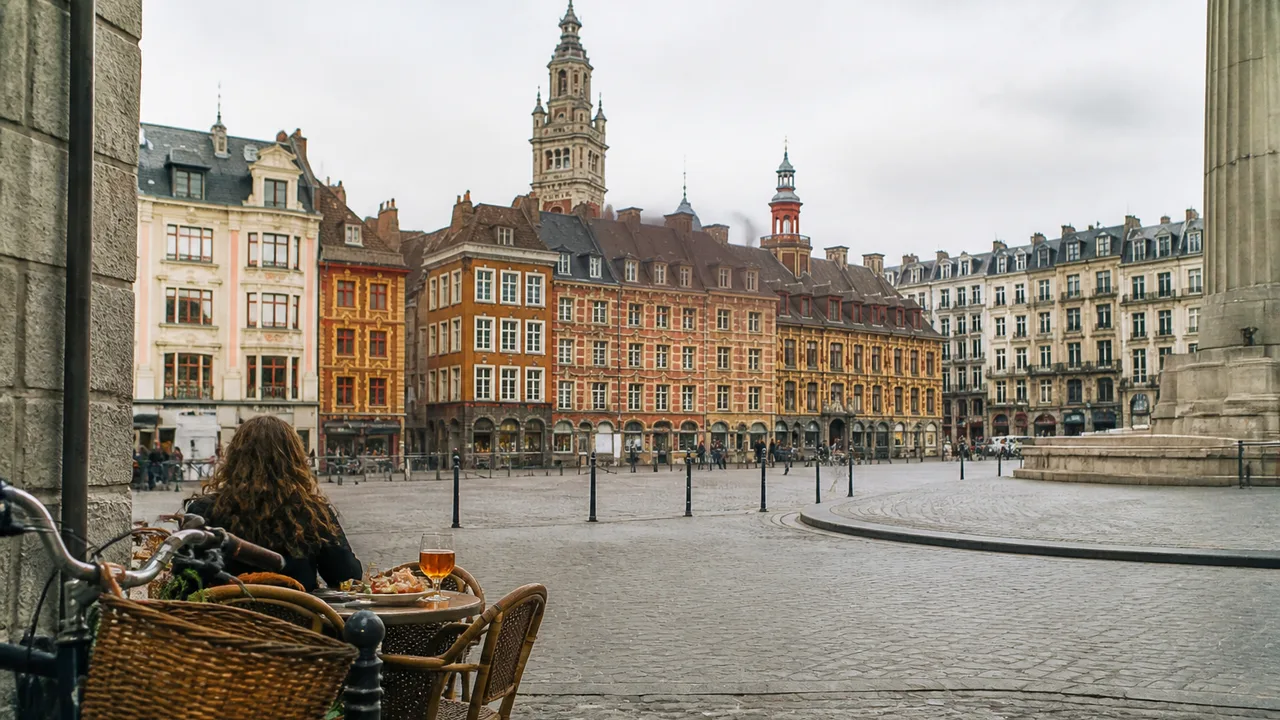
Photo: AI. Marcel Dubois
Somewhere in the itinerary planning for a France trip, Lille tends to get demoted to a line in a transit schedule — a dot between London and Paris, or a waypoint before Brussels. That is a miscalculation, and Mark Wolters of Wolters World has spent a recent stay in the city making the case against it, camera in hand, in a 21-minute dispatch that covers food, architecture, transport logistics, and the particular texture of Lillois hospitality.
The case is worth examining, partly because Wolters makes it compellingly, and partly because the city's identity complicates the usual France-trip assumptions in ways that are genuinely useful to understand before you arrive.
Not the France You're Expecting
The first thing Wolters establishes — and returns to several times — is that Lille does not deliver a conventional French experience. "Don't think French vibe," he says from the Grand-Place. "Think that Belgian vibe when you're here." The city sits against the Belgian border, and that proximity has shaped everything: the architecture, the diet, the language habits, and the drink of choice. This is emphatically not wine country. It is beer country, with a Flemish-Belgian influence that runs through the cooking as thoroughly as it runs through the streetscape.
This framing matters because travelers who arrive expecting the France of Burgundy or the Loire will spend their first hours recalibrating. Those who arrive knowing the city is a border town — historically, culturally, and gastronomically — will simply start eating sooner.
What to Eat, and in What Order
Wolters is at his most useful when cataloguing the food, which in Lille is substantial and unapologetic about it. The estaminets — small, traditional local restaurants — are where the real business happens. "You could be here on a random Monday in January and you still need reservations," Wolters notes, which is the kind of detail that saves a trip.
The dishes he flags are worth knowing by name. Carbonnade flamande is beef and onions braised in beer, served with fries cooked in beef fat. Welsh rarebit — bread, ham, and what Wolters describes as "all of the cheese ever" — is another fixture. Moules-frites round out the Flemish core of the menu. At the friteries around the Grand-Place, the fricadelle with Andalouse sauce (a mayonnaise-and-pepper-paste condiment) is the more casual option, very much a street-level Lille experience.
On the cheese front, Maroilles — a pungent, washed-rind regional variety — appears in croques, tarts, and sauces. Wolters describes it as "strong and pungent and powerful and tasty," and flags that it can be a bit much for travelers unaccustomed to assertive cheeses. There is also potjevleesch, a cold terrine of mixed meats set in jelly that Wolters diplomatically describes as an acquired taste, while conceding he found it more compelling than expected. Neither the cheese nor the terrine requires mandatory engagement; both deserve at least an encounter.
For something less bracing, the local pâtisseries — Wolters singles out one by name that he visited during the shoot — offer thin waffles filled with vanilla cream, closer to a Dutch stroopwafel than to the thick Belgian variety most visitors associate with the region.
Beer as Architecture
The beer culture here is not incidental. Wolters' waiters, when asked what to drink, reportedly responded with "beer. Beer and another beer." Ch'ti is the regional brand most visitors will encounter first, available in several styles; Wolters favors the blonde. But the broader craft and local brewing scene is substantial, and the Belgian ABV sensibility has carried over the border — these are not beers designed for inattentive drinking.
The relationship between beer and cooking in Lille is structural rather than decorative. The carbonnade flamande is braised in it. Other dishes arrive with beer-based sauces. The city's food and drink operate as a single system rather than parallel tracks, which is part of what makes the estaminets feel coherent rather than merely menu-driven.
The Architecture Problem (and Its Solution)
Lille's historic center is genuinely beautiful — rows of Flemish baroque facades, stepped gables, the grand old stock exchange at the heart of the Grand-Place. Wolters is emphatic about staying within it. His advice on accommodation is correspondingly direct: book inside the old town, because the contrast between the historic center and the areas beyond it is stark enough to feel like a different city. "Once you get out of the old town, you'll notice when it goes from architecture like this to something a little bit more soulless," he says.
This is not unusual for northern French cities shaped by post-war reconstruction and 20th-century industrial expansion, but it is worth knowing before you book the cheaper hotel two metro stops out.
Within the center, Wolters recommends the Palais des Beaux-Arts — the fine arts museum — as the single best use of an indoor afternoon. It holds a large collection, including works by El Greco, Monet, and others, and is closed on Tuesdays rather than Mondays, which is worth noting if you're planning around market days or travel schedules.
For the cathedral-curious: the Basilique Notre-Dame de la Treille is not the ancient Gothic structure it visually implies. According to Divento's architectural profile of the building, it is a 19th-century project completed in the modern era — Wolters places the first stone in 1854 and the completion in 1999, dates he attributes to his own research on site — which explains the somewhat eclectic interior decoration, including imagery that surprised Wolters on his visit. It is worth seeing precisely because it is a Gothic ambition executed across nearly 150 years, which produces an effect that is historically strange and architecturally interesting.
Getting There, and Between Stations
Lille has two train stations, and confusing them will cost you. Lille-Europe handles the Eurostar from London and TGV services from Paris; Lille-Flandres handles regional connections. The two stations are roughly a ten-minute walk apart, but they serve different networks and have different departure procedures — Lille-Europe is where passport control operates for UK-bound trains. According to Eurostar's own route listings, London to Lille-Europe is well under two hours by direct service, making it one of the more plausible same-day connections in northwestern Europe. Brussels and Paris are both under an hour by high-speed rail, though specific journey times vary by service and should be checked against current schedules before you book.
Wolters does not recommend driving in the city. The metro, tram, and bus network covers the museums and parks outside the historic center without the parking complications.
The Stopover Problem
The most persistent misreading of Lille is treating it as infrastructure rather than destination. It sits at a convenient rail junction, which means many visitors arrive intending to spend two hours in transit and end up spending two hours at the Grand-Place before moving on. Wolters' argument — and it is a reasonable one — is that this undersells the city substantially.
"Don't think that it's just a stopover city," he says. "Do give yourself a bit of time here because whether it's the architecture or the food — oh my god, the food here — you will really enjoy it."
The counter-case, which Wolters does not make but which is worth noting, is that Lille's compactness is also a feature of its geography. The historic center rewards two or three days thoroughly. Beyond that, you are either doing the estaminets at a very leisurely pace or already on a train to Ghent. Neither outcome is a failure.
What Lille offers, and what travel writing tends to undersell in favor of larger adjacencies, is a city that operates on its own terms — Flemish in temperament, French in administration, and emphatically northern in weather. Wolters closes his video standing in the gray, slightly damp Grand-Place with the observation that visitors who complain about the absence of Mediterranean sunshine have simply pointed themselves at the wrong latitude.
He is not wrong. But it is also true that a city confident enough to braise its beef in local beer and serve it with unlimited beef-fat fries has made a reasonable peace with its climate.
More Like This
American Tourists in Europe: The Etiquette Gap
From date formats to tipping culture, the everyday customs that trip up American travelers in Europe—and what they reveal about deeper cultural differences.
The Battle of Verdun: Attrition, Leadership, and 300,000 Dead
Ten months, 300,000 dead, and less than five miles of ground changed hands. Epic History's Verdun series examines what that arithmetic actually meant.
What Poles Actually Want Tourists to Know
From geography to drinking etiquette, here's what Polish locals wish visitors understood before arriving—and why it matters more than you think.
Europe's Tech Sector Is Skipping Its Summer Nap
Europe's tech scene — led by hubs like Eindhoven — is defying the summer slowdown with fresh investment, global talent, and high-stakes AI regulation on the horizon.
What to Expect When Staying in European Hotels
European hotels operate by different rules than North American ones. Here's what actually differs—room size, beds, breakfast pricing, accessibility, and more.
Tauck's Seine River Cruise: What $10,000 Actually Buys
Travel + Leisure boards Tauck's MS Serene for a nine-night Seine cruise. Here's an honest look at what luxury river cruising delivers — and what it costs.
Japan Airlines Domestic Flying: Haneda to Sapporo
JAL's Haneda–Sapporo route carries 12 million seats a year. Here's what flying it—and touring JAL's maintenance hangars—actually looks like.
How to Protect Yourself From Pickpockets in Europe
Practical, unsentimental advice on avoiding pickpockets in Europe—how thieves actually work, where they target tourists, and what you can do about it.