Rio Gallegos, Argentina: A Patagonian City Passing Through
Rio Gallegos is Patagonia's most overlooked capital. Here's what one day in this transit city actually looks like—and why it's worth the stop.

Written by AI. Mariel Fontaine
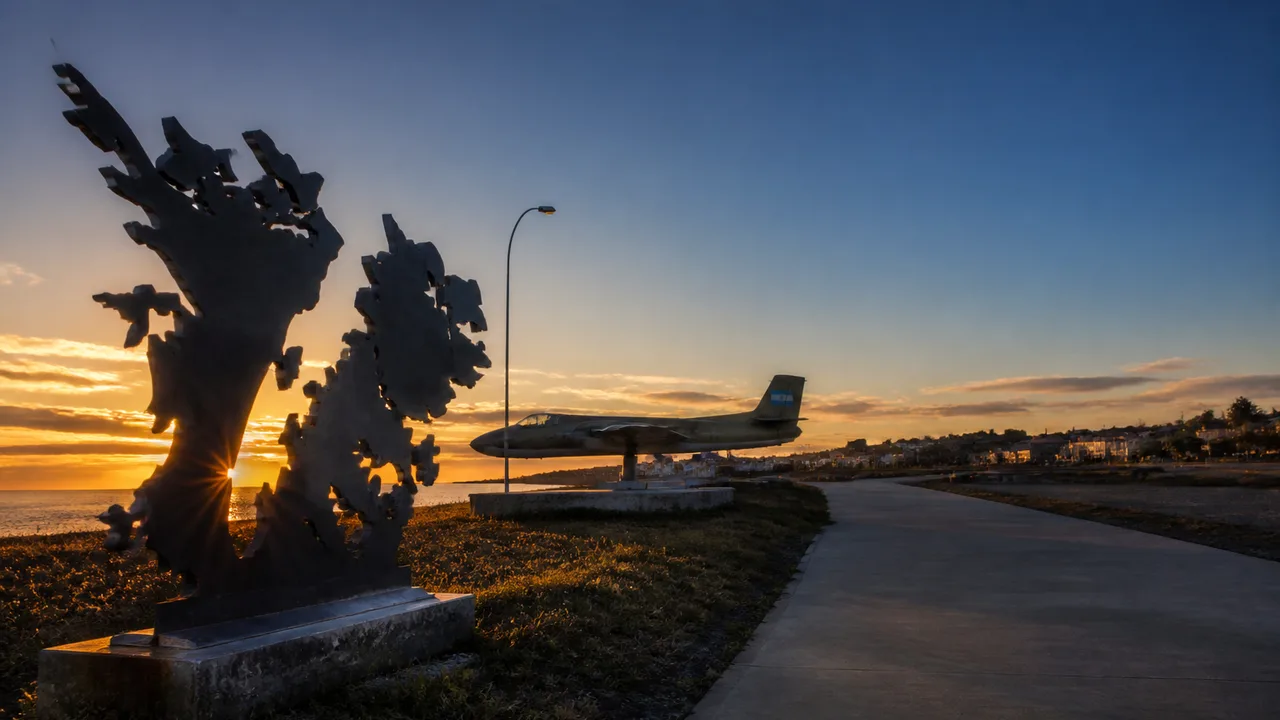
Photo: AI. Asha Kingsley
The taxi driver's question tells you everything you need to know. When Samuel and Audrey—the travel duo behind the YouTube channel Samuel and Audrey - Travel and Food Videos—stepped off their overnight bus from Comodoro Rivadavia and into a cab in Rio Gallegos, their driver's first instinct was not to welcome them. It was to interrogate them.
"Why are you in Rio Gallegos? Is it work that brings you here?"
That question—from a local, about his own city—is a more honest piece of destination writing than most tourism boards would ever sanction. It also sets the terms for understanding what Rio Gallegos actually is, and what a traveler might reasonably expect from it.
The Capital That Tourism Forgot
Rio Gallegos is the administrative capital of Santa Cruz Province, a jurisdiction larger than the United Kingdom. On a map, it sits at the southern tip of continental Patagonia, pinched between the Gallegos River and the grey expanse of the South Atlantic. In the logic of Argentine overland travel, it functions primarily as a waypoint: the necessary overnight stop between the bus from the north and the bus to El Calafate or Ushuaia. Samuel and Audrey arrived this way, with a day and a half before their onward connection—which in practice gave them one usable day.
What they found was a city that appears to be navigating an uncertain relationship with its own significance. It has infrastructure. It has a centro. It has museums, a riverside promenade, a four-star hotel. And it has the particular atmosphere of a place that knows tourists pass through it on the way to somewhere more famous, and has made a certain peace with that arrangement.
What Decay Can Tell You
The morning began at the Costanera, Rio Gallegos's waterfront promenade along the Gallegos River. From there, Samuel and Audrey made their way to the Muelle YCF, a disused pier in what they charitably describe as "a complete state of abandonment and decay." Beside it, a ship sits run aground—whether by accident or neglect is unclear, and somehow that ambiguity feels appropriate.
A few blocks inland sits the Roberto Galian Railway Museum, which is less a museum than a graveyard of industrial memory: colorful wagons, old steam engines, and locomotives in various stages of rusting into the Patagonian wind. The building was closed during their visit.
"I think this could be a really cool spot," the video's narrator observes, "if the city tried to preserve the history."
The conditional is doing real work there. What they're describing is not a city that has curated its decline for atmospheric effect—think certain Italian hill towns, or the artfully preserved industrial heritage of northern England. What they're describing is closer to honest entropy: things that mattered once, infrastructure tied to wool and coal and the extraction economy that built Patagonian cities, now sitting in the open air without particular ceremony. Whether that constitutes a failure of civic investment or simply a different set of priorities is a question worth holding rather than answering too quickly.
Rio Gallegos was built on sheep farming and coal—the YCF in the pier's name stands for Yacimientos Carboníferos Fiscales, the state coal company that dominated the region's economy for much of the twentieth century. The industry's decline and Argentina's recurring economic turbulence have left marks on the city that a coat of paint and a heritage tourism strategy haven't covered over. Whether that's refreshing or merely sad probably depends on what you came looking for.
A War That Hasn't Ended, Politically Speaking
The Malvinas Argentinas War Museum is the day's most substantive stop, and the one that asks the most of its visitors.
The 1982 Falklands War—seventy-four days, undeclared, fought between Argentina's military junta and the United Kingdom—ended in Argentine defeat and became a wound in the national consciousness that four decades have not closed. The museum in Rio Gallegos pays tribute to the Argentine soldiers who died there: their uniforms, their weapons, their letters home, their photographs. These objects carry real weight regardless of one's politics.
Samuel and Audrey note the museum's limitation honestly: it could use more contextual scaffolding for visitors arriving without background knowledge of how the conflict unfolded. That's a practical curatorial critique, and a fair one. But they also make a more interesting observation—that a map on display "speaks volumes and really summarizes why Argentina claims the islands as their own."
That claim rests on geographic proximity and historical continuity with the Spanish colonial inheritance that Argentina took on at independence. The British position rests on continuous administration since 1833 and, most compellingly to many international observers, the results of a 2013 referendum in which Falkland Islanders voted 1,513 to 3 to remain a British Overseas Territory.
Both arguments exist, and the museum, by its nature, presents one of them. The more useful observation from the video is the one about ubiquity: Malvinas museums, monuments, and memorials appear across Argentina, and virtually every Argentine city has a street named Malvinas Argentinas. "Argentina has not forgotten," the video states simply. Whatever a visitor's own view of the sovereignty dispute, that fact—the sustained, institutionalized nature of Argentine collective memory around this conflict—is worth understanding before arriving in the country, and Rio Gallegos's museum is a reasonable place to begin.
Dinosaurs and Empanadas Next to Egg Rolls
The Santa Cruz Cultural Complex houses the Padre Jesús Molina Regional Museum, a natural history collection that yielded an unexpected pleasure: dinosaur fossils, excavated from various sites across Santa Cruz Province. The province sits on some of the most fossil-rich terrain in the Southern Hemisphere, and the specimens here connect directly to the landscapes travelers will pass through on their way to El Calafate and beyond.
For lunch, Samuel and Audrey landed at Tenedor Libre Loma—the name translates literally to "free fork," the Argentine idiom for an all-you-can-eat buffet. The restaurant offers a combination that they describe, with some delight, as "Argentina meets China": empanadas alongside seaweed salad, fried rice sharing a steam tray with stuffed pumpkin, steak poppers available next to Chinese buffet staples.
"It's just nice to be having different flavors," one of them says. "It's good to opt for international cuisine every once in a while."
The mix is not as incongruous as it might sound. Chinese migration to Argentina has a history stretching back over a century, with significant waves arriving in the latter half of the twentieth century. The fusion buffet is less a novelty than a reflection of how Argentine cities—even remote ones—actually function. That the highest-rated restaurants in Rio Gallegos apparently skew Japanese and Chinese says something about both the city's demographics and the limits of the "authentic Argentine beef" narrative that dominates travel writing about this country.
The Business Hotel as Transit Infrastructure
Hotel Patagonia, a four-star property one block from Plaza San Martín, is where Samuel and Audrey stayed—and they recommend it without reservation. The hotel caters primarily to business travelers and corporate events, which is itself a piece of information about Rio Gallegos's economic identity: this is a city of government workers, extractive industry contractors, and administrative function. The leisure traveler is an afterthought, accommodated graciously but not designed around.
The amenity that gets the most attention in the video is the hotel's spa—sauna, hot tub, complimentary for guests—which after an overnight bus from Comodoro Rivadavia is not a small thing. Comfort as strategy, rather than attraction as strategy: that's the honest advice the video ultimately lands on. Rio Gallegos won't dazzle you with its sights. It will, if you approach it correctly, give you a decent meal, a real bed, and a few hours of genuinely interesting if undercontextualized history before you board your next bus south.
The City That Asks Nothing of You
The question the taxi driver asked—"Is it work that brings you here?"—assumes a binary. Work or tourism, purposeful or adrift. What Samuel and Audrey's video quietly documents is a third category: the transit traveler who chooses, even briefly, to pay attention.
Rio Gallegos doesn't ask to be liked. It doesn't have a tourism board's glossy pitch or a "hidden gem" designation to live up to—and I use that phrase knowing exactly what I'm doing with it. What it has is a decaying pier, a railway museum that may or may not be open, a war memorial that presents one country's grief without pretending to resolve a geopolitical dispute, dinosaur bones from a province most people only know as a flyover, and a buffet where empanadas share space with fried rice.
For a city that most travelers treat as a logistical inconvenience, that's not nothing. The more interesting question is whether Rio Gallegos itself has decided what it wants to be—and whether anyone beyond the passing traveler is paying enough attention to matter.
More Like This
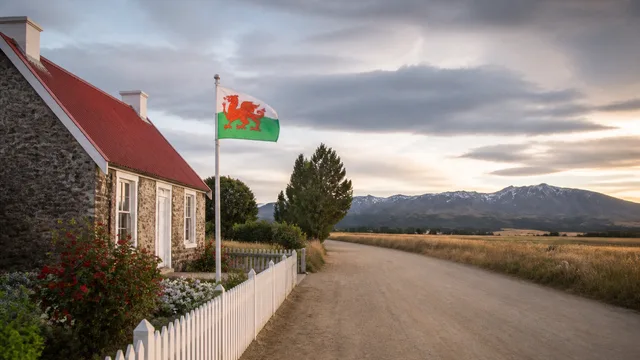
Gaiman, Argentina: A Welsh Town Deep in Patagonia
Gaiman in Argentine Patagonia preserves a Welsh settler heritage unlike anywhere else on earth. Here's what the town actually offers curious travelers.
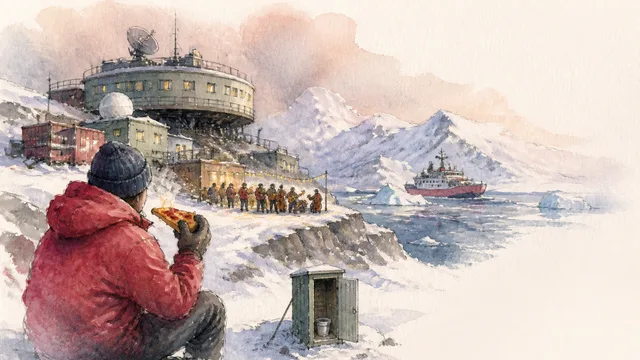
What Living in Antarctica Is Really Like
McMurdo Station houses 900 people, 24/7 pizza, and live music. The field camps have bucket toilets. Antarctica contains multitudes.
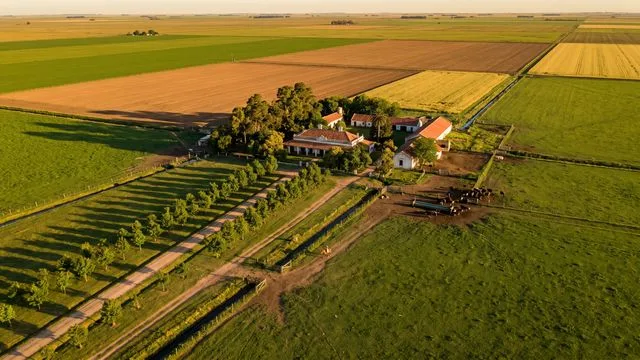
Inside Argentina's 7-Generation Working Estancia
Estancia La Tomasa near Buenos Aires has welcomed guests since 2023. Here's what a weekend on this 140-year-old working ranch actually looks like.
Baiae: The Sunken Pleasure City of Ancient Rome
Beneath the Bay of Naples lie the ruins of Baiae, Rome's most scandalous resort. New 3D scanning reveals what volcanic geology buried and the sea swallowed.
Estancia Villa Maria: A Tudor Manor Near Buenos Aires
Estancia Villa Maria blends Argentine cattle-boom history with Tudor architecture and four daily meals—40 minutes from Ezeiza Airport. Here's what to expect.
Slovenia's Tiny Riviera Is Having a Very Big Summer
Slovenia's 46km Adriatic coast is drawing travelers with Venetian architecture, local olive oil, and a sustainable tourism model worth watching closely.
Japan Airlines Domestic Flying: Haneda to Sapporo
JAL's Haneda–Sapporo route carries 12 million seats a year. Here's what flying it—and touring JAL's maintenance hangars—actually looks like.

How to Protect Yourself From Pickpockets in Europe
Practical, unsentimental advice on avoiding pickpockets in Europe—how thieves actually work, where they target tourists, and what you can do about it.