What Living in Antarctica Is Really Like
McMurdo Station houses 900 people, 24/7 pizza, and live music. The field camps have bucket toilets. Antarctica contains multitudes.

Written by AI. Amelia Nwofor
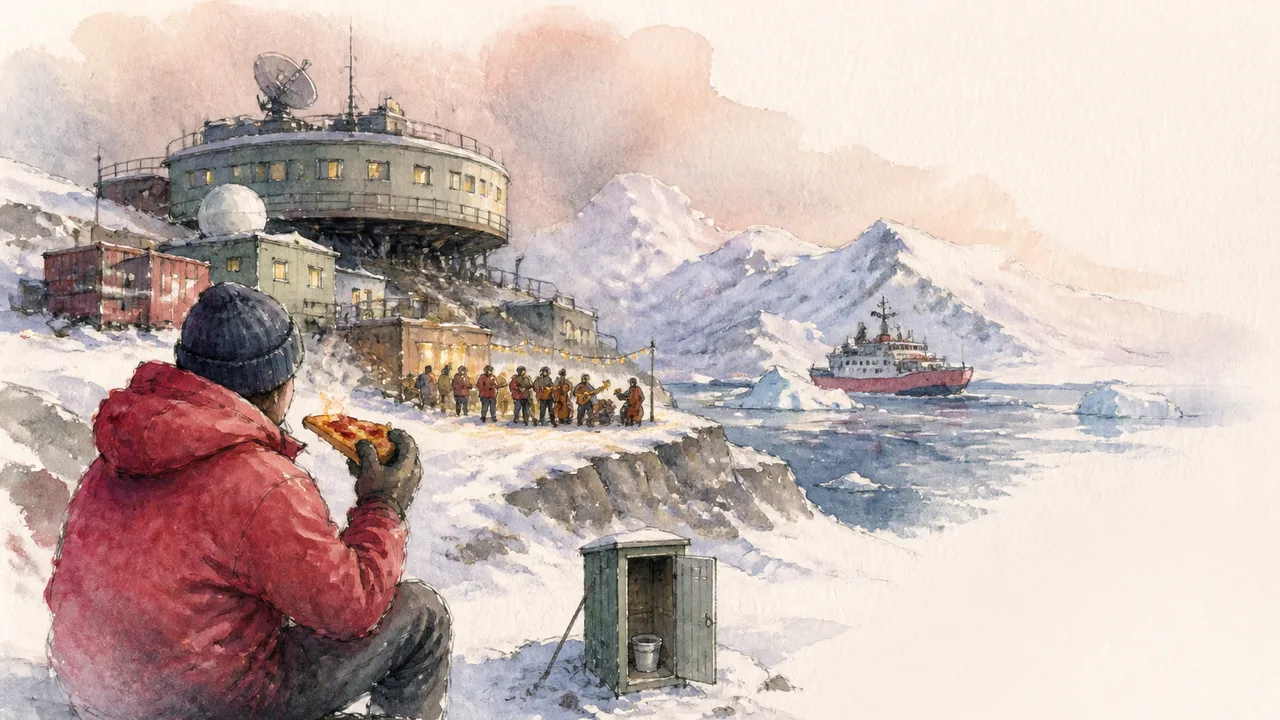
Photo: AI. Júlia Almeida
There's a 100-year-old desiccated penguin sitting in a hut at the bottom of the world, and nobody has moved it. Robert Falcon Scott's team left it there somewhere between 1911 and 1917, and it has remained, freeze-dried and undignified, ever since. This is, somehow, a perfect introduction to Antarctica: a place where the ordinary rules of decomposition, logistics, and reasonable life choices simply don't apply.
NOVA's film crew spent a month on the continent and came back with something more interesting than a nature documentary. What they documented — across McMurdo Station and the remote field camps beyond it — is less about the science (though there's plenty of that) and more about the peculiar human psychology that Antarctica selects for.
McMurdo: The Aging College Town at the End of the Earth
McMurdo Station is not what most people picture when they think "Antarctic research base." It's 105 buildings. It houses around 900 people in summer. It has a hospital, a fire station, a waste treatment plant, and — this bears repeating — 24/7 pizza. One station resident cheerfully shamed a colleague for grabbing a slice twenty minutes before dinner. This is not the frozen frontier of the imagination.
What it actually resembles, the NOVA crew found, is a college campus with the heating bills of a small nation. Basic needs — food, housing, utilities — are handled. Which frees up an unusual amount of bandwidth for, of all things, socializing. "You can do more with your social time here than anywhere else in the world," one resident explains, "because you're not buying groceries. You're not buying gas. You're not paying bills. You see more live music here than I do almost anywhere else."
This is a genuinely counterintuitive finding. Most coverage of Antarctic life leans on isolation and hardship — the psychological toll of months without sunlight, the claustrophobia of a small community in an extreme environment. And those things are real. But McMurdo's particular structure seems to produce something closer to the opposite of isolation: deep, enforced intimacy. No cell service means no retreating into your phone. No errands means no excuse to avoid the communal dining hall. "It turns out on a continent where there's no cell phone service, you get to know people on a whole different level," one of the crew observes.
The honest tension here is that this social richness is, structurally, coercive. You don't opt into Antarctic community the way you join a club. You're simply there, with the same 900 people, for the season. Whether that produces genuine connection or just the illusion of it — whether the friendships survive return to a world with cell phones and grocery runs — is a question the film leaves open.
The Support Economy Nobody Talks About
Here's the ratio that quietly reframes everything: roughly 700 to 1,000 people at McMurdo exist to support approximately 300 scientists. The cooks, mechanics, waste handlers, vehicle operators — they are the majority, and most of them never leave the station. The research McMurdo enables happens, in large part, because someone is managing the trash.
"Without us, without support people, there would be no science," as one support worker puts it. "You need this big population of 700 to 1,000 people to support maybe 300 scientists because you've got to get them where they need to go. You've got to get their equipment, their food, their water, and so forth."
This is worth sitting with. Antarctic science — climate research, glaciology, volcanology, marine biology — is among the most consequential field science being conducted anywhere on earth. It depends entirely on a supply chain of humans who signed up to live in an aging mining town at the bottom of the world, many of whom will spend their entire Antarctic career without once standing on the ice for reasons of their own. The person who left NASA's Kennedy Space Center — who worked on the space shuttle — and ended up on Antarctic snowmobiles is just one data point in this pattern of lateral life pivots that McMurdo seems to attract.
The station's logistical demands are, in this sense, the invisible architecture of modern polar science.
Out on the Ice: Where the Romance Gets Literal
Beyond McMurdo, Antarctica becomes something else entirely. The remote field camps strip away every convenience the station provides. You live in a tent. You cook your own food. You dispose of human waste in a bucket and carry it back to town, because Antarctica's preservation protocols extend even to that. The continent is so cold, so dry, so biologically minimal that nothing truly decomposes — Scott's penguin is proof — and the environmental stewardship protocols reflect that.
The physical hazards are real and specific. Hidden crevasses in the ice. Winds strong enough to take anything not actively secured. Equipment that fails constantly, because cold is engineering's enemy. "Working here is like going up the down escalator," one field researcher describes it. "You have to push a little bit harder or else it's just going to push you back down again. And so things are breaking all the time. It's cold so things snap. Things freeze up."
What's striking is how the researchers who choose this — who leave, as one puts it, "everyone you know and everything you know in the pursuit of something" — describe the hardship not as an obstacle to the work but as integral to its meaning. The satisfaction is inseparable from the difficulty. This isn't performative suffering. It's closer to a genuine psychological phenomenon: the research suggests that the harder an experience is to achieve, the more we value what it produces. Field scientists in Antarctica are, perhaps, the most extreme case study in earned meaning.
"I think you have to have the love," one researcher says, slightly inarticulate but completely precise. You can hear them searching for words that don't quite exist for what they're describing.
Who Actually Ends Up Here
The NOVA crew observed a clean sorting mechanism: people either come once, check it off, and never return, or they keep coming back season after season in a pattern that starts to look less like a career decision and more like a calling. The bucket-list visitors and the lifers coexist at McMurdo, but they're having fundamentally different experiences of the same place.
What the film doesn't quite resolve — and probably can't — is what distinguishes the two groups in advance. Is it temperament? Circumstance? Whether they happened to land during a good season with good tentmates? The continent seems to act as a kind of sorting hat, but the criteria remain opaque.
There's also a question the film gestures toward without fully answering: what does Antarctica do to people when they leave? The intimacy of McMurdo, the intensity of field work, the enforced simplicity of a life without bills or errands — these aren't conditions that persist back home. Whether returning to ordinary life after multiple Antarctic seasons is straightforwardly fine, quietly difficult, or something more complicated is a human story that exists entirely off-camera.
"It was the hardest thing I'd ever done and the most beautiful place I could imagine," one person says. That pairing — hardest and most beautiful, inseparable — might be the most honest sentence anyone has said about this place.
Antarctica has been described, with the kind of poetry that scientists occasionally permit themselves, this way: "They say that when you shake the planet, all the weird stuff falls to the bottom."
The weird stuff, it turns out, is doing some of the most important science on earth. And eating a lot of communal pizza.
More Like This
Luxury Icebreaker Cruise: A Journey to the North Pole
Explore the Arctic on a 14-day luxury cruise. Discover polar bears, stunning views, and life on board a state-of-the-art icebreaker.
Air New Zealand's Business Class Dilemma
Air New Zealand's new business class faces criticism for its lack of privacy and direct aisle access, raising questions about its competitive edge.
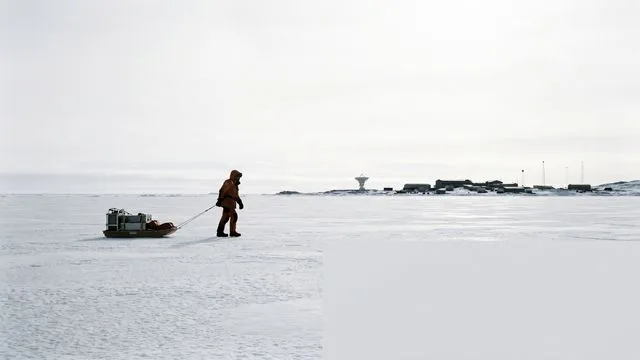
What It Actually Takes to Work in Antarctica
NOVA's Caitlin Saks and Arlo Pérez travel to McMurdo Station and find that Antarctica's hardest lessons have nothing to do with science.
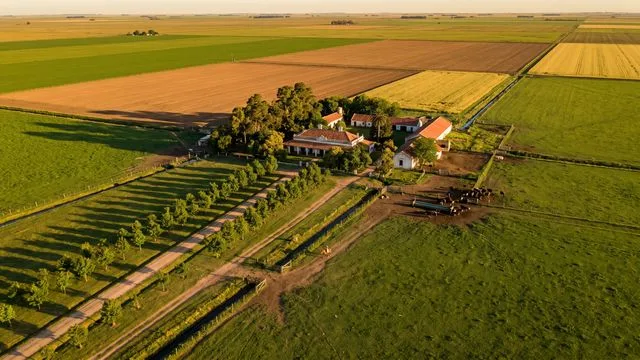
Inside Argentina's 7-Generation Working Estancia
Estancia La Tomasa near Buenos Aires has welcomed guests since 2023. Here's what a weekend on this 140-year-old working ranch actually looks like.
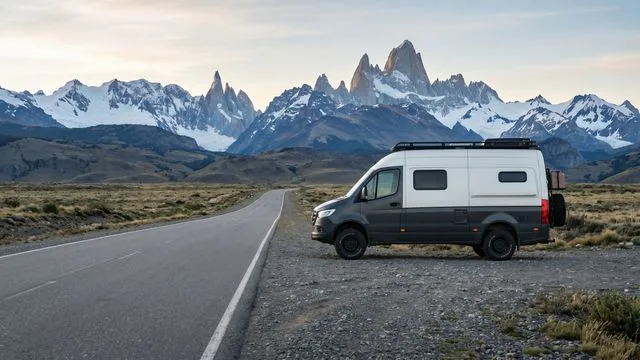
Driving Patagonia's Route 40: What Van Life Actually Looks Like
Kara and Nate drove 2,000 miles across Patagonia in 8 days. What they found reveals the gap between van life mythology and Patagonian reality.
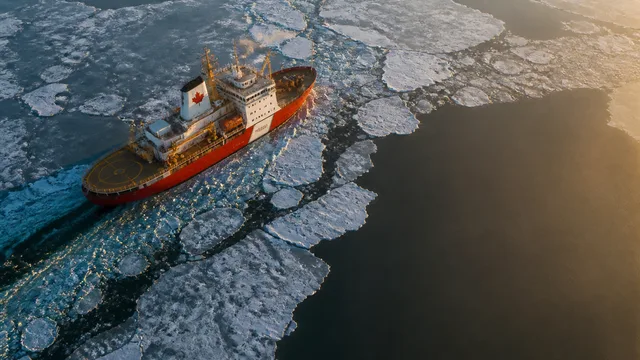
Inside the Ship That Keeps Newfoundland Alive
The Canadian Coast Guard icebreaker Henry Larson doesn't just rescue trapped ships—it's the lifeline holding remote Newfoundland communities together.
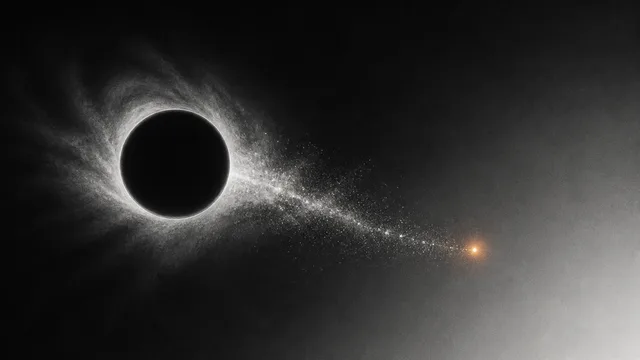
Hawking Radiation and the Ghost Light of Dead Universes
Hawking radiation may be the mechanism that erases one universe and seeds the next. Here's what the physics actually supports—and what it doesn't.
How Astroparticle Physics Built Itself From Borrowed Parts
A new arXiv review traces how astroparticle physics didn't emerge from a single discovery—it assembled itself from three fields that kept bumping into the same cosmic questions.