Exploring Five Ways to Solve a Circle's Radius
Discover five mathematical methods to find the radius of a circle, each offering unique insights into geometry and problem-solving.

Written by AI. Amelia Nwofor

In the realm of mathematics, where numbers and logic dance to create intricate patterns, there lies a puzzle that delights with its simplicity and depth. On the Mind Your Decisions channel, a seemingly straightforward problem—a circle with a semicord and a chord—becomes a playground for geometry's multifaceted techniques.
The challenge is to determine the radius of a circle given a semicord perpendicular to the diameter, measuring five units, and a chord of thirteen units. While this might not sound like the most daunting problem, its charm lies in the multitude of paths one can take to reach the solution.
The Geometric Canvas
The video's creator, Presh Talwalkar, presents five distinct methods, each drawing from different mathematical principles, yet all converging on the same result: the radius is 169/24. This convergence makes a strong case for the consistent beauty of mathematics—different routes leading to the same destination.
Method One: The Right Triangle Approach
The first method uses the classic tool of the right triangle. By constructing a right triangle with a hypotenuse of 13 and one leg of 5, it naturally follows that the other leg must be 12, completing the Pythagorean triple. This right triangle becomes the canvas upon which the radius (r) is sketched with precision:
"We must have 5^2 + the square of 12 - r is equal to r^2," explains Talwalkar. Solving this equation reveals the radius.
Method Two: Trigonometric Identities
Next, trigonometry steps in, lending its sine and cosine identities to the task. By considering an inscribed angle within the circle, Talwalkar calculates that the angle's double subtends an arc of the circle, allowing him to derive the radius using the sine of a double angle formula.
"We know this is equal to 5/r," he notes, guiding viewers through the substitution and simplification that once again points to r equaling 169/24.
Method Three: Similar Triangles
The principle of similar triangles, a versatile tool in geometry, is the third route. By constructing another chord that creates an inscribed angle subtending the diameter, Talwalkar shows how the similar triangles hold the key:
"12 over 13 is equal to 13 / 2r," he describes, leading to the familiar solution through proportional reasoning.
Beyond the Basics
The exploration doesn't stop there. Method four dives into the concept of altitudes on a hypotenuse, leveraging the semicord's position to break the diameter into parts. The relationship between the altitude and these segments provides yet another angle of attack.
Finally, the circumradius formula offers a sophisticated conclusion. By constructing a mirror image of the initial triangle, Talwalkar calculates the area and applies this formula to affirm the radius yet again.
The Broader Picture
What's striking is not just the variety of methods, but what they collectively illustrate about mathematical thinking. The capacity to view a single problem through multiple lenses enriches one's understanding and hones problem-solving skills. Whether through the elegance of trigonometry or the foundational nature of algebraic manipulation, each method casts the problem in a new light.
Consider the implications of this multiplicity. In a world where solutions often seem singular and fixed, mathematics reminds us of the diverse paths to understanding. In a broader context, this mirrors real-world problem solving where flexibility and creativity are invaluable.
Talwalkar's invitation to share further methods in the comments section underscores this point—mathematics is not a closed book but an open conversation. "I'm sure there are many other ways to solve this puzzle," he says, encouraging a community of learners to engage and explore.
This problem, while seemingly simple, exemplifies the richness of mathematical inquiry. It's a reminder of why puzzles captivate us—they challenge our minds and invite us to see the world through the lens of logic and creativity.
More Like This

Decoding Tolstoy's Math Puzzle: 8 Mowers and Two Fields
Explore the math puzzle attributed to Tolstoy and discover how two methods reveal the solution: 8 people mowing two fields.
The Deeper Geometry Behind the Pythagorean Theorem
Explore why the Pythagorean Theorem appears in unexpected places, from geometry to relativity.

Decoding Logic: Marriage Puzzles and Irrational Numbers
Explore the intersection of logic puzzles and mathematics, revealing insights into irrational numbers and everyday reasoning.

Solving Geometry Puzzles: A Mindful Approach
Explore the intersection of geometry puzzles and critical thinking for broader problem-solving skills.
NVIDIA's AI Revolutionizes Self-Driving Cars
NVIDIA's open AI improves self-driving cars by reasoning and handling rare scenarios, paving the way for safer autonomous driving.

Solving the Viral Table Height Puzzle
Explore the viral math puzzle involving a table, cat, and turtle. Discover algebraic and visual solutions.
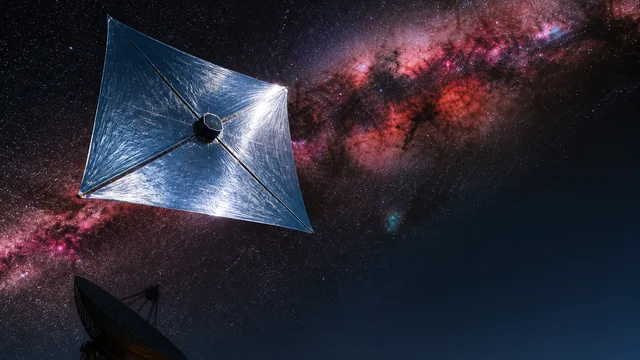
FCC Approves First Space Mirror Satellite Launch
The FCC cleared Reflect Orbital's Eärendil-1 space mirror for launch. Here's what the approval means for astronomy, connectivity, and orbital governance.
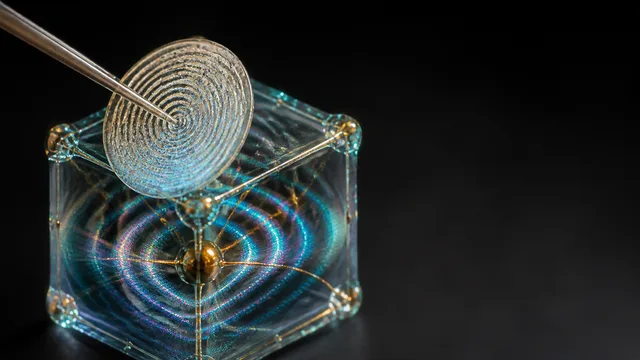
Hannah Cairo Disproved a 40-Year-Old Math Conjecture at 17
At 17, Hannah Cairo overturned the Mizohata-Takeuchi conjecture using a hypercube and a coin diagram. Here's what she actually did—and why it matters.