Inside Argentina's 7-Generation Working Estancia
Estancia La Tomasa near Buenos Aires has welcomed guests since 2023. Here's what a weekend on this 140-year-old working ranch actually looks like.

Written by AI. Mariel Fontaine
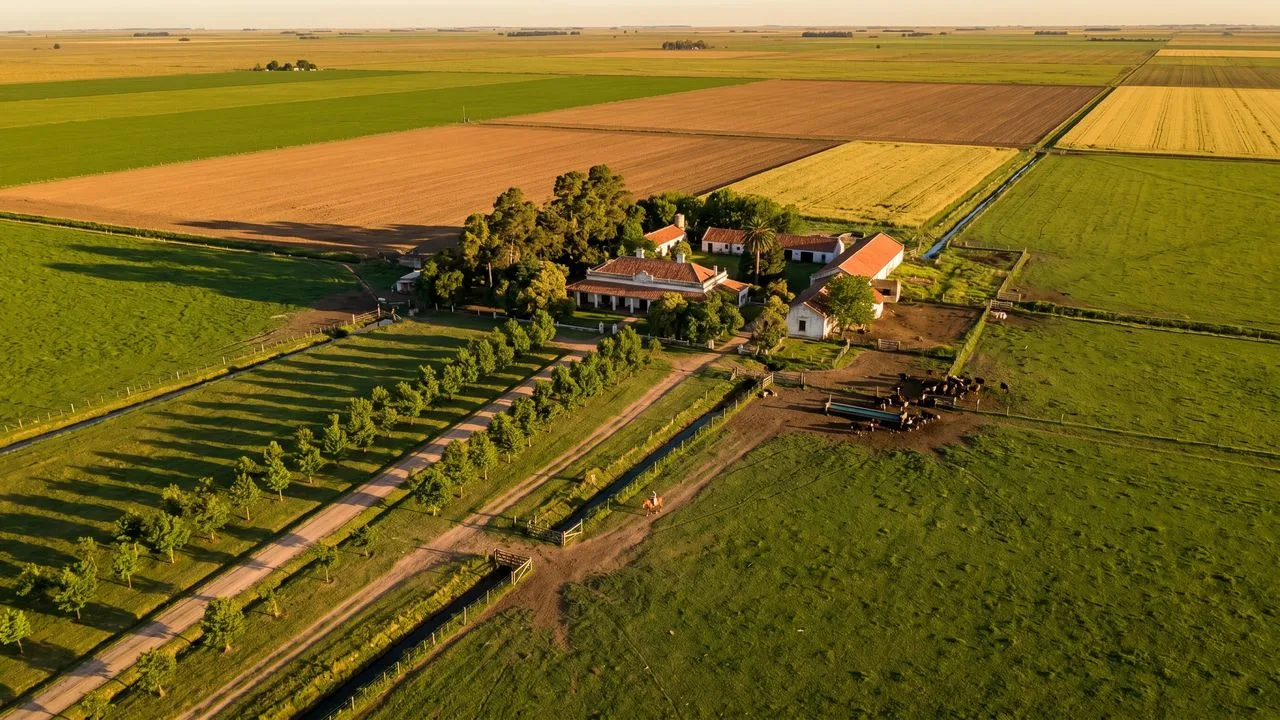
Photo: AI. Rio Sanchez
The name La Tomasa was never supposed to change. When a Scottish immigrant named Thomas Gibson purchased this stretch of Buenos Aires Province in 1885, the outgoing owner had one condition: the estancia would carry the name of his deceased daughter indefinitely. Gibson agreed, and 140 years later, the name still stands — which is either a testament to the durability of grief, or to how seriously this particular family takes a promise. Probably both.
It is now Luisa Mackern, Gibson's great-great-granddaughter, who runs the place. That lineage — seven generations of continuous family ownership on a single piece of Argentine land — is the kind of fact that lands differently depending on where you're standing. From a European or North American perspective, it sounds almost mythological. From the vantage point of Argentine rural history, it reflects something particular about the estancia system: land concentrations that persisted through the country's economic turbulences precisely because they were diversified, adaptive, and, in many cases, deeply personal.
La Tomasa only began accepting overnight guests in 2023. What Samuel and Audrey, the travel video duo who documented a recent weekend stay there, encountered was a property in the early stages of that transition — a working cattle ranch that is still figuring out what hospitality means without abandoning what it already is.
What "Intimate" Actually Means at Five Rooms
The property has five rooms. That number matters more than it might seem. In the agritourism world, scale is almost always in tension with authenticity. The estancias that have fully optimized for tourism — bus tours from Buenos Aires, choreographed asado demonstrations, gauchos performing for cameras — have their market, but they are fundamentally in the entertainment business. A five-room operation with shared bathrooms and a living room basket of borrowed ponchos is doing something structurally different.
Samuel and Audrey noted that the bathroom arrangement — one en suite for a single double room, shared facilities for the remaining four — comes with an important social guarantee: "our host pointed out that strangers will never have to share a bathroom. This is only for friends and family who stay together." That's not a minor logistical detail. It's a statement about the kind of guest experience La Tomasa is building — one premised on groups who already know each other, which nudges the property toward a specific market: family reunions, small friend groups, couples traveling together. Solo travelers or pairs looking for anonymity would need to think carefully about the fit.
The rooms themselves are described as comfortable and well-heated, which matters given that the pampas in autumn are considerably windier and cooler than Buenos Aires city dwellers tend to pack for.
The Working Ranch Question
Here is where the proposition gets genuinely interesting, and where travelers should think with some care.
La Tomasa markets itself, implicitly, on the authenticity of its working-ranch status. The activities on offer — moving cattle, branding, assisting with calving — are not staged for guests. They happen when they need to happen, on agricultural time. As the hosts explained to their visitors: "because this is a working farm, it's important to remember the jobs get done when they need to get done. Nature is on her own schedule, and we're just here to witness it."
That framing is honest, which is more than can be said for many agritourism operations that create pseudo-working experiences that are fundamentally theatrical. But it also sets an expectation that deserves scrutiny: if you visit on a weekend in autumn, as Samuel and Audrey did, the gauchos may be off-duty and the dramatic ranch activities may be absent. What you get instead is a guided property tour with the owner herself, which is arguably a better deal — access to living institutional memory rather than a performance of labor — but it is a different deal than the marketing might suggest.
The seasonal variability is real. Guests visiting during calving season will have a substantially different experience from those arriving in winter. La Tomasa's website is the right place to press for specifics before booking.
Food as Throughline
The meals documented across Samuel and Audrey's stay form an argument of their own. Breakfast ran to eggs, bacon, granola with fresh comb honey, handmade bread, and squeezed juice. Lunch was a green bean and egg salad followed by handmade pasta with tomato and meat sauce, finished with flan. Dinner was oven-roasted chicken with potatoes and carrots alongside a bottle of Malbec, dessert a caramelized pear with walnuts and cream.
None of that is elaborate in the fine-dining sense. All of it is grounded in what the land and season can provide — they harvest basil from the organic garden before the autumn frost takes it, they keep chickens, they grow their own vegetables. The logic is farm-to-table before that phrase became a marketing category.
What makes it worth noting is the context. Argentina's restaurant scene in Buenos Aires is genuinely exceptional, and travelers spending time in the capital will eat very well by any international standard. The food at La Tomasa isn't competing with that. It's offering something the city explicitly cannot: a meal that began as a plant in a garden you walked through that morning, prepared in a kitchen that has fed the same family for generations, eaten at a table where more family members may arrive mid-meal because that's simply how lunch works here.
The Agritourism Calculus
Argentina's estancia tourism sector has existed in some form since at least the 1990s, when properties near Buenos Aires recognized that international visitors — particularly Europeans with romantic notions of the pampas — would pay to experience gaucho culture. The better-known estancias within a two-hour radius of Buenos Aires have been running day-trip programs for decades.
La Tomasa is entering this market at a moment when the sector is maturing and differentiating. The day-trip model serves the cruise ship and Buenos Aires city-break visitor. The overnight and multi-night model — which La Tomasa is pursuing — serves a different traveler: someone with enough time to slow down, curious about how an agricultural family actually lives rather than how it performs for cameras.
The five-room cap is both a constraint and a feature. It limits revenue ceiling significantly. It also means that Luisa Mackern can, as Samuel and Audrey experienced, personally lead the property tour, personally invite guests into the vegetable garden harvest, and personally bring her granddaughter's books to the sitting room so a visiting toddler has something to read by the fire. That level of owner involvement does not scale. It is, by design, the whole point.
What Remains Unseen
A property like La Tomasa raises questions that a weekend visit — and a 17-minute travel video — cannot fully answer. The estancia tourism model has faced scrutiny in various parts of Latin America for how it romanticizes agricultural labor while the actual laborers, gauchos and farmhands, remain background figures in someone else's experience economy. The gauchos at La Tomasa were off on a weekend when Samuel and Audrey visited. Their working conditions, compensation, and relationship to the property's tourism pivot go unexamined in the video, as they typically do in content of this genre.
That's not a criticism specific to La Tomasa, which may well be an excellent employer. It is a standing gap in most agritourism coverage, and travelers who care about these questions would be right to ask them directly before booking.
What the video does capture is something genuine: a place in early transition, still finding the balance between family home and guest accommodation, run by a woman who can trace her presence on this land back five generations, on property that carries a dead girl's name because a grieving father asked and a Scottish immigrant said yes.
"You're essentially invited to hang out at the family home with the family," as one of the travelers put it. That is an accurate description. Whether it is what you are looking for in a weekend outside Buenos Aires is a question worth sitting with before you drive the three hours southwest to find out.
More Like This

AI Can Build Luxury Websites Now. Should We Care?
AI tools like Claude Code and Seedance 2.0 can generate professional websites in minutes. What does this mean for web design and the people who do it?
Navigating India's Treacherous Roads Amid Landslides
Explore the risks and resilience on India's roads as travelers face life-threatening landslides in the Himalayas.

Air New Zealand's Business Class Dilemma
Air New Zealand's new business class faces criticism for its lack of privacy and direct aisle access, raising questions about its competitive edge.

Driving Patagonia's Route 40: What Van Life Actually Looks Like
Kara and Nate drove 2,000 miles across Patagonia in 8 days. What they found reveals the gap between van life mythology and Patagonian reality.
When Trending Foods Leave Producers Behind
Oxtail now costs $14/lb. Acai farmers earn 20 cents/lb. A look at who actually profits when food goes viral—and who gets left out.
What Poles Actually Want Tourists to Know
From geography to drinking etiquette, here's what Polish locals wish visitors understood before arriving—and why it matters more than you think.
Airport Behavior That Makes Flying Worse for Everyone
From gate lice to baggage claim crowding, Mark Wolters of Wolters World maps the airport habits that slow everyone down—and why they persist.
Basic French Phrases That Help Tourists in France
A handful of French words can shift how locals treat you in France. Here's what actually matters, and why the effort carries more weight than fluency.