Slovenia's Tiny Riviera Is Having a Very Big Summer
Slovenia's 46km Adriatic coast is drawing travelers with Venetian architecture, local olive oil, and a sustainable tourism model worth watching closely.

Written by AI. Priya Chandrasekaran
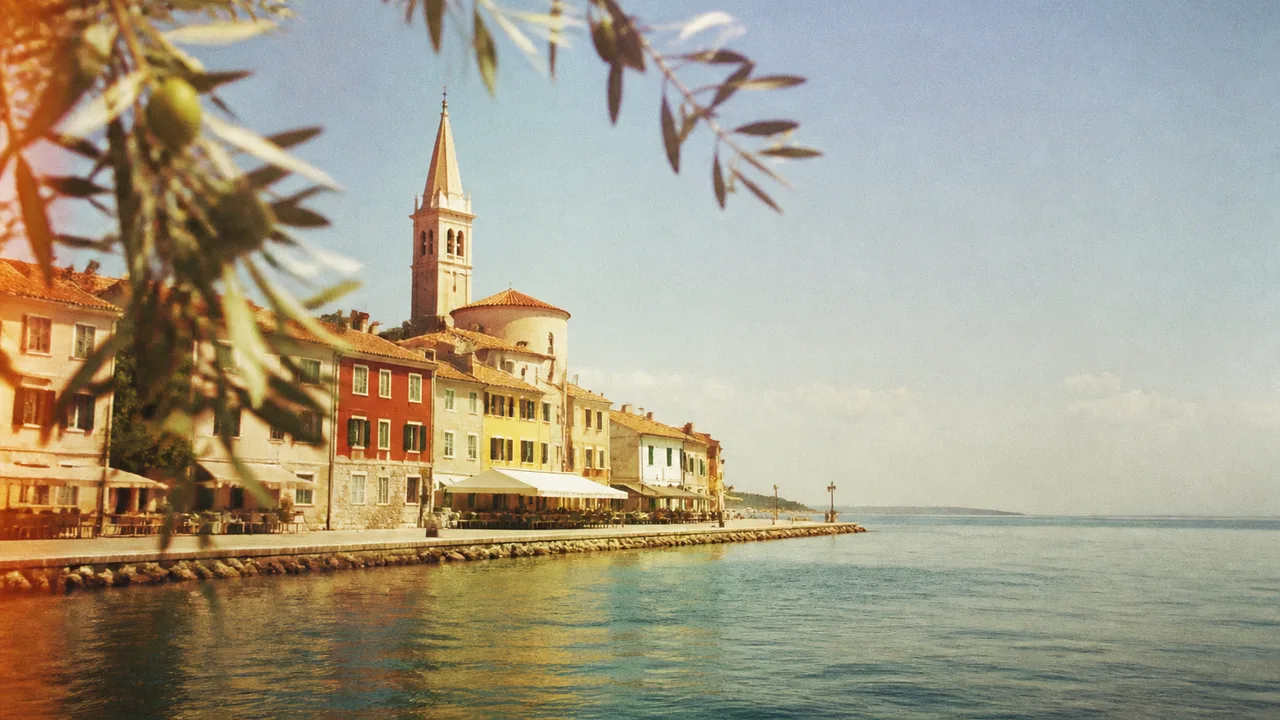
The Adriatic is not short of coastline. Italy has been selling its stretch for centuries. Croatia figured out the influencer economy before most countries figured out Instagram. Montenegro is currently pitching itself as the next luxury frontier. And yet, sandwiched between all of this, Slovenia has exactly 46 kilometers of sea — less than a long training run — and it is having a moment that feels genuinely earned rather than manufactured.
The Slovenian Riviera's three main towns — Koper, Izola, and Piran — sit on the Istrian peninsula, a corner of the Adriatic that passed through Venetian hands for several centuries before becoming contested territory in the post-World War II reorganization of borders. That history is not decorative. It is load-bearing. The limestone campaniles, the loggias, the medieval street plans that narrow toward the water — these are not restoration projects or heritage tourism props. They are the actual, accumulated texture of a place that was genuinely important to a Mediterranean trading empire and then, through the fractures of the twentieth century, found itself in a small central European nation that most air passengers fly over on their way somewhere else.
That last part is changing.
The Scale Is the Point
There is a version of this story that celebrates the Slovenian Riviera primarily because it is not Dubrovnik. That framing is lazy, and it also undersells what is actually here. But scale does matter — and the Riviera's compactness shapes everything about the experience it offers.
The Guardian's travel correspondent ends a piece on the region with a morning swim off Izola — slipping into warm sea water before sunrise, past a lighthouse, as the town wakes up around her. "It may not be big," she writes, "but it hits the spot for a different kind of seaside break." That is not faint praise. It is a precise description of the value proposition: not spectacle, not scale, but fit. The Riviera delivers something that the mega-destinations have structurally compromised — the feeling that you are in a place rather than passing through an attraction.
The food is where this becomes most legible. The region sits at one of those fortunate intersections where Venetian, Austro-Hungarian, and Slavic culinary traditions have been layering for generations. Local olive oil from the Istrian groves has a documented peppery finish that comes from the Bianchera variety — one of the oldest cultivated olives in the region — and the wines from the Karst plateau just inland have an austerity and minerality that reflects their limestone soils. These are not novelties assembled for the tourist market. They predate the tourist market by centuries.
Horseback riding through the Dragonja valley — a river corridor that traces the border between Slovenia and Croatia — offers something rarer still: agricultural landscape that has not been rationalized into monoculture. The valley retains a patchwork of vineyards, olive groves, and scrubland that reads as a living record of small-scale, diversified farming. It is worth noting that this kind of landscape is increasingly the exception in European agriculture, not the rule.
What Sustainable Tourism Actually Looks Like Here
Slovenia has been deliberate about its tourism identity in a way that few countries have managed without it tipping into branding exercise. The country holds a Global Sustainable Tourism Council designation and has built its national tourism strategy around the "Slovenia Green" label, which certifies destinations, accommodation providers, and agencies against environmental criteria. The Riviera sits within this framework, and the question — which is genuine, not rhetorical — is whether the framework holds as visitor numbers grow.
The honest answer is: we don't fully know yet. The sources available for this piece don't include visitor volume data or ecological impact assessments for the Riviera specifically, and I'm not going to paper over that gap with optimism. What the record does support is that Slovenia has structured its tourism infrastructure to make sustainable choices the default rather than the premium option — which is a more sophisticated intervention than most destinations manage. Offering eco-certified accommodation across price points, rather than only at the luxury end, changes the behavior of a broader segment of visitors.
The comparison that comes to mind is not another Mediterranean coast. It is Switzerland's alpine towns — destinations like Klosters and Davos, which TTG's travel trade coverage describes as having found a summer identity built around landscape intimacy rather than spectacle. Both the Swiss alpine towns and the Slovenian Riviera are navigating the same fundamental tension: how do you communicate "come here" while also meaning "not too many of you, and not all at once"? It is a tension that does not resolve neatly, and any destination that claims to have solved it should be read with some skepticism.
The Culinary Archive
It would be a mistake to read the Riviera's food scene purely through a tourism lens. The olive oil tradition here is connected to specific groves that have been in continuous cultivation for documented periods. Piran, the westernmost of the three towns, still has its salt pans — the Sečovlje Salina — which have been producing salt by solar evaporation since the medieval period and which are now protected as a nature reserve. The salt from Sečovlje is a distinct product, harvested using traditional methods, and it ends up in the cooking of the region in ways that are genuinely different from industrially-produced salt. This is not culinary theater. It is what food sovereignty looks like in practice at a very local scale.
The Istrian kitchen more broadly is a lesson in how geography creates flavor. The Adriatic provides bream, sea bass, and squid. The inland hills provide game, truffles (the Istrian peninsula is one of Europe's significant truffle territories), and the herbs that grow in thin limestone soil. What reaches the table is a compression of a particular landscape's resources — the kind of cooking that is sometimes called "peasant food" in a way that obscures the considerable skill and ecological knowledge it encodes.
Getting There Is Its Own Calculus
There is an irony worth naming: the summer of 2026 is also a summer in which air travel disruptions have been significant, particularly out of North American hubs. Simple Flying reports that JetBlue canceled roughly one in twenty flights as summer storms hit Northeast hubs, with Frontier seeing 2% cancellations and 29% of operations delayed. Travelers routing through chaotic hub airports to reach quieter European destinations are navigating a system that is, at the moment, struggling to deliver the smooth experience the booking confirmation implied.
The Slovenian Riviera is most practically accessed via Trieste or Venice, both within driving distance — or via Ljubljana's Jože Pučnik Airport, which handles connections from major European hubs. It is not, in other words, a place you accidentally end up. Getting here requires a degree of intentionality that probably self-selects for a particular kind of traveler: one who has already decided that "different kind of seaside break" is what they're after, rather than stumbling into it.
That self-selection is worth thinking about. The Riviera's current character — unhurried, local-facing, ecologically attentive — is partly a function of who has been coming, and why. The question that the destination's managers and the communities who live there will have to keep asking is whether growth in visibility changes that composition, and whether the "Slovenia Green" infrastructure is robust enough to absorb the difference.
The sea at Izola at sunrise is warm and clear. The lighthouse is there. The question is who gets to swim past it, under what conditions, and what they leave behind.
More Like This
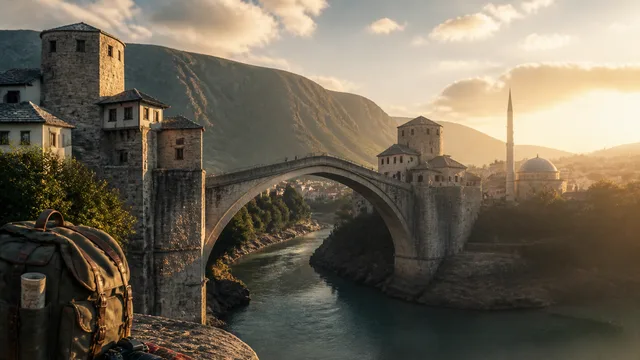
Bosnia Travel Tips: What to Know Before You Go
From Mostar's slick cobblestones to Balkan time, here's what seasoned travelers wish they'd known before visiting Bosnia and Herzegovina.
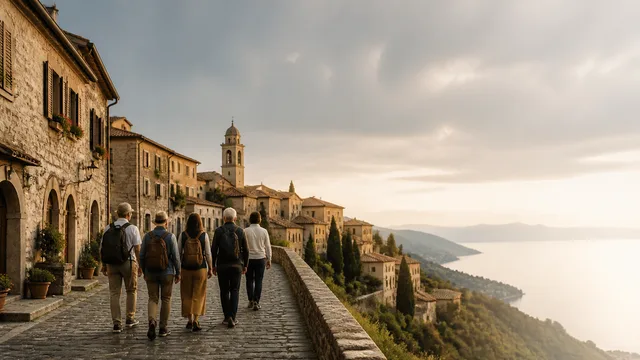
Small Group Italy Tours Are Reshaping Travel
Small group Italy tours promise authenticity over crowds. But do they deliver — and at what cost to the communities they claim to honor?
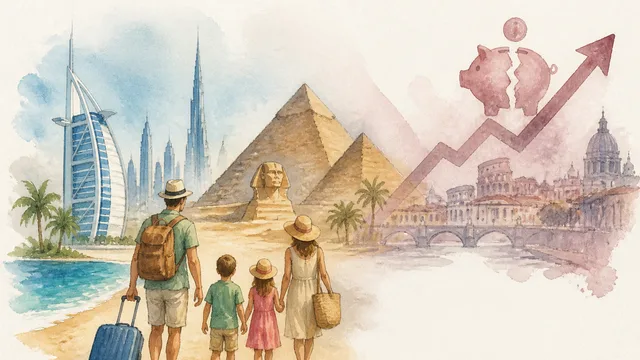
Dubai and Egypt Holidays Undercut Europe on Price
Package holidays to Dubai and Egypt are cheaper this summer than European alternatives, as geopolitical jitters and rising costs reshape where British families travel.
What Living in Antarctica Is Really Like
McMurdo Station houses 900 people, 24/7 pizza, and live music. The field camps have bucket toilets. Antarctica contains multitudes.
A New Object in the Sky: The JetBlue Drone Strike
A JetBlue pilot reported hitting a drone on approach to JFK. What the incident reveals about airspace rules built before drones existed.
France Tests Low-Cost Rail Signalling for Rural Lines
France's NS2F consortium is trialling digital signalling tech to cut rural rail costs by 30%. Here's what's at stake for the towns trains forgot.

Which "Untranslatable" Words Are Real?
From hygge to mamihlapinatapai, RobWords fact-checks the internet's favourite "untranslatable" words — and finds gems, exaggerations, and outright fiction.
What to Expect When Staying in European Hotels
European hotels operate by different rules than North American ones. Here's what actually differs—room size, beds, breakfast pricing, accessibility, and more.