The Battle of Verdun: Attrition, Leadership, and 300,000 Dead
Ten months, 300,000 dead, and less than five miles of ground changed hands. Epic History's Verdun series examines what that arithmetic actually meant.

Written by AI. James Morrison
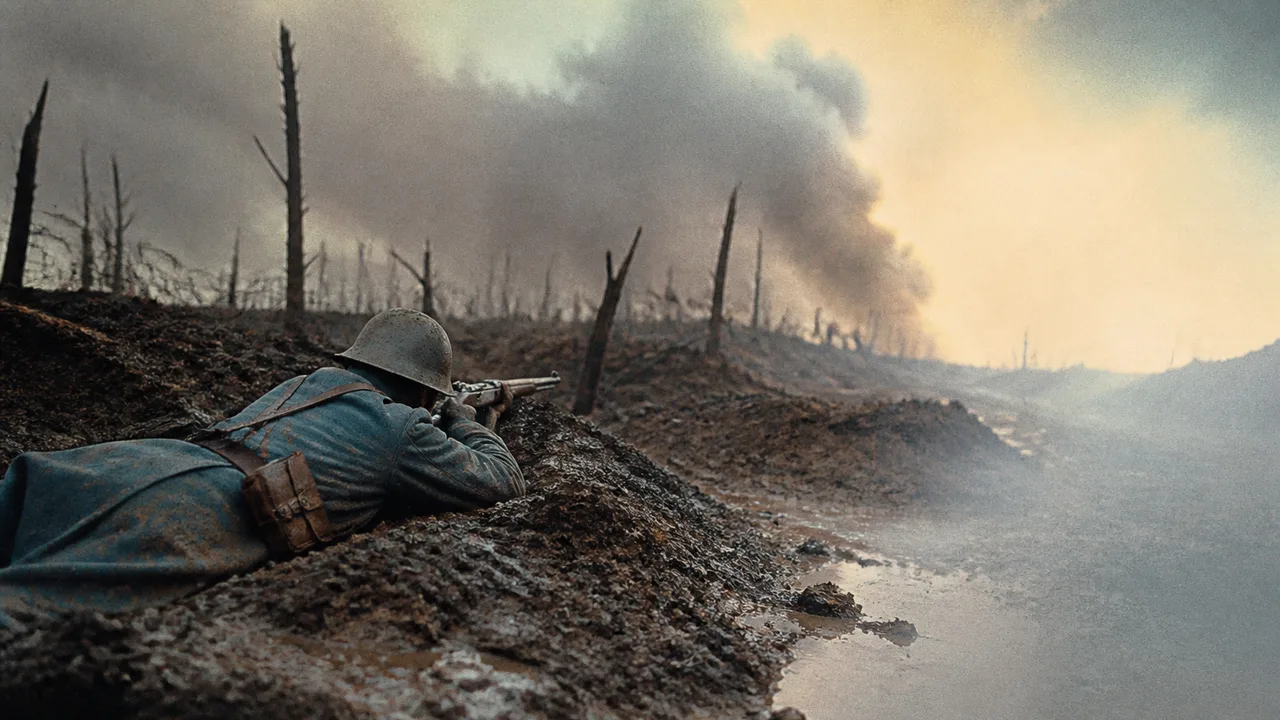
Photo: AI. Nikolai Brandt
Three hundred thousand dead. Neither side advances more than five miles. Ten months of industrialized killing that accomplishes, in territorial terms, essentially nothing.
That arithmetic sits at the center of Epic History TV's latest installment on the Battle of Verdun — a well-constructed examination of the battle's second half, from the grinding spring and summer of 1916 through France's methodical recapture of the lost forts that autumn. The channel deploys 3D graphics to get inside the hardware — the monstrous German 420mm howitzers, the surprisingly capable French de Bange 155mm cannon — but the more interesting work happens when the narration turns from ordnance specifications to the decisions, and misjudgments, that shaped the battle's outcome.
What strikes me about Verdun, having spent time with the scholarship, is how thoroughly it scrambles the categories we reach for when we try to make sense of battles. Victory. Defeat. Strategy. The video is admirably honest about this discomfort.
The Machinery of Annihilation
Start with the artillery, because at Verdun there is essentially nothing else. The video estimates that up to 37 million shells were fired in the first six months alone, with a final total approaching 100 million. The numbers are so large they become almost meaningless — until you reduce them to the human scale of what those shells required to operate.
The German Big Bertha — formally the 420mm Minenwerfer Gerät — weighed 43 metric tons, needed a crew of 240 men, and managed a rate of fire of eight shells per hour. Its shells weighed more than a ton each and could penetrate 40 feet of concrete and earth before detonating. Thirteen of the 22 ever built were sent to Verdun. The concussive shockwave from a single firing could shatter windows two miles distant.
Against this, France fielded the de Bange 155mm cannon, a design from the 1870s that had been considered obsolete before the war began. What the video usefully surfaces is the irony in that assessment: the de Bange's lighter shells gave it a range of nearly eight miles — superior to the Big Bertha's six — and an experienced five-man crew could fire a shell per minute with exceptional accuracy. Counter-battery work, silencing German guns rather than destroying fortifications, became the de Bange's specialty. Obsolete is a word that gets a lot of people killed when applied incorrectly.
The technological arms race at Verdun didn't stop at conventional artillery. By late June, German forces fired 100,000 phosgene and diphosgene gas shells into French-held positions in a single operation, targeting artillery batteries. "Artillery crews choke despite their masks," the narration notes flatly. "French guns in the gas field fall silent." Chemical weapons at Verdun weren't a sideshow — they were integrated into combined-arms doctrine in ways that prefigure much of what would follow in subsequent conflicts.
The Noria and the Cost of Ignoring It
The battle's human dimension is where the video earns its keep. Conditions at Verdun were, by any measure, extraordinary in their horror. Trenches had been obliterated by bombardment; men sheltered in linked shell craters. Streams were contaminated, wells destroyed, the dead left where they fell across a landscape that smelled accordingly. The enemy, the narration observes, was rarely even seen — just the endless incoming fire.
What separated the French from the German experience of this shared hell was a single policy decision by General Philippe Pétain: the noria, or water wheel, a systematic rotation of units in and out of the front line. The effect was that roughly three-quarters of the entire French Army cycled through Verdun at some point — which is how J'ai fait Verdun, "I did Verdun," became a common expression among French veterans, almost a credential. German units, by contrast, were left in the line far longer, grinding down their numbers and, more consequentially, their morale.
It's a lesson in the difference between managing an army and expending one. German Chief of Staff Erich von Falkenhayn had constructed an explicitly attritional theory of the battle — bleed France white, break her will — but appears to have given considerably less thought to what prolonged exposure would do to his own troops. By April, German losses already exceeded 100,000 men and Falkenhayn was privately considering breaking off the offensive. He did not.
Pétain also understood, in a way his German counterparts did not match, that men require supply lines as much as ammunition does. La voie sacrée — the Sacred Way — the single viable road into Verdun from the south, moved up to 15,000 tons of supplies and 15,000 troops daily. Trucks ran night and day; vehicles that broke down were shoved off the road without ceremony to maintain flow. Ten thousand laborers worked continuously on the road surface. It was logistics as military doctrine, and it kept Verdun alive.
The Question of What Falkenhayn Actually Intended
The video touches on a historical controversy worth noting. Falkenhayn later claimed, in his memoirs, that bleeding France white had been his deliberate strategic objective from the start — that the territorial objective was secondary, almost irrelevant. This became known as the "Blutmühle" or blood mill thesis: Germany would lure France into defending Verdun at ruinous cost, regardless of whether Germany actually held the ground.
Historians have contested this interpretation for decades. The video accepts Falkenhayn's framing somewhat at face value — noting that "by April, the fighting has escalated into the grim battle of attrition that Falkenhayn claims he'd always planned." That "claims" is doing work. The scholarly consensus has shifted toward skepticism about whether the attrition strategy was truly premeditated or was instead retroactive justification for a conventional offensive that stalled. The distinction matters, because a general who planned to exchange lives at a one-to-one ratio with the enemy is a different kind of failure from a general who stumbled into that exchange and then invented a theory to explain it.
What the video makes clear, regardless of Falkenhayn's original intent, is that his intelligence picture was catastrophically wrong. By summer, he was receiving estimates that France had lost 500,000 men and was absorbing casualties at three or four to one in Germany's favor. The actual ratio was far closer to even. Decision-making based on that level of intelligence failure was not strategy — it was institutionalized wishful thinking.
October and the Reckoning
Falkenhayn was replaced in August by Field Marshal Paul von Hindenburg, who immediately halted offensive operations at Verdun. By then, the Somme offensive had opened to the northwest, drawing resources from both sides. The battle's intensity dropped — briefly.
When General Robert Nivelle launched the French counteroffensive in October, he did so with characteristic aggression. Six divisions, 650 guns, and two 400mm rail guns — pointedly named Alsace and Lorraine for the provinces Germany had seized in 1871 — opened a two-day bombardment before the assault. French and Senegalese colonial infantry, specifically trained for the operation, retook Fort Douaumont on October 24th. Fort Vaux followed on November 2nd, abandoned by the Germans. A final push in December recovered another two miles and thousands of prisoners.
"German soldiers, exhausted and demoralized by long periods at the front, surrender in droves," the narration observes. It is a sentence that could have been lifted from any assessment of what the noria policy — and its absence on the German side — had accomplished.
By December, the front lines in the east sat roughly where they had been in February. Ten months. Three hundred thousand dead. Five miles or less of net movement.
What the Ground Still Holds
The postwar designation of much of the Verdun battlefield as Zone Rouge — Red Zone, officially unfit for agriculture or human settlement due to unexploded ordnance, unrecovered remains, and chemical contamination — is perhaps the most honest accounting the battle ever received. Not a memorial. Not a museum. Simply: this ground is too broken to use. Scientists still detect the war's ecological signature there today.
The Douaumont Ossuary holds the unidentified remains of 130,000 French and German soldiers. The video describes it as "a symbol of reconciliation and shared history between France and Germany." That framing is accurate, and it is also worth sitting with for a moment. Two nations built a common monument to men they could not identify, for a battle that settled nothing in the short term and everything in the long run — because it was Verdun and the Somme together that began the irreversible erosion of Germany's capacity to sustain the war.
"Ils ne passeront pas." They shall not pass. Nivelle's phrase endured. Whether it captured what the battle actually meant is a question the Zone Rouge answers more honestly than any monument.
More Like This
Unraveling Rome's Dodecahedron Mystery
Exploring the enigmatic Roman dodecahedron, its theories, and historical significance in modern archaeology.
FBI's Struggle Against Omega 7: A Tale of Terrorism and Intrigue
Explore the FBI's complex investigation of Omega 7, a Cuban exile terrorist group, amid community challenges and evolving tactics.
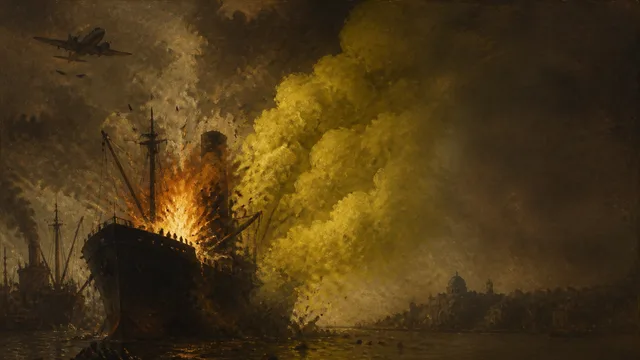
The Bari Disaster: Mustard Gas, Secrecy, and 1943
On December 2, 1943, a German raid on Bari killed over a thousand people—and released mustard gas that officials spent decades trying to erase from history.

Sitting Bull: Warrior, Mystic, and Military Strategist
From Hunkpapa war chief to victor at Little Bighorn—the life of Sitting Bull reveals a leader whose complexity American history has rarely done justice.
1938: The Year the World Chose Not to See
From Munich to the Yellow River, 1938 was the year crisis became catastrophe. What the decisions of that year still ask us to reckon with.
How Medieval Castles Were Built to Signal Power
Medieval castles were never just fortresses. A look at how 500 years of castle design reveals architecture as political propaganda, arms race, and identity myth.
Seine-Nord Europe Canal: Building Through the Somme
France's €7.3bn Seine-Nord Europe Canal will link its waterways to Rotterdam and Antwerp—but it's being dug through ground that never finished burying its dead.

Mapping the Universe: Discovery, Hierarchy, and Dark Energy
How cosmology's greatest breakthroughs were shaped by institutional power, anonymous labor, and the recurring human failure to act on what the evidence clearly shows.