Tauck's Seine River Cruise: What $10,000 Actually Buys
Travel + Leisure boards Tauck's MS Serene for a nine-night Seine cruise. Here's an honest look at what luxury river cruising delivers — and what it costs.

Written by AI. Priya Chandrasekaran
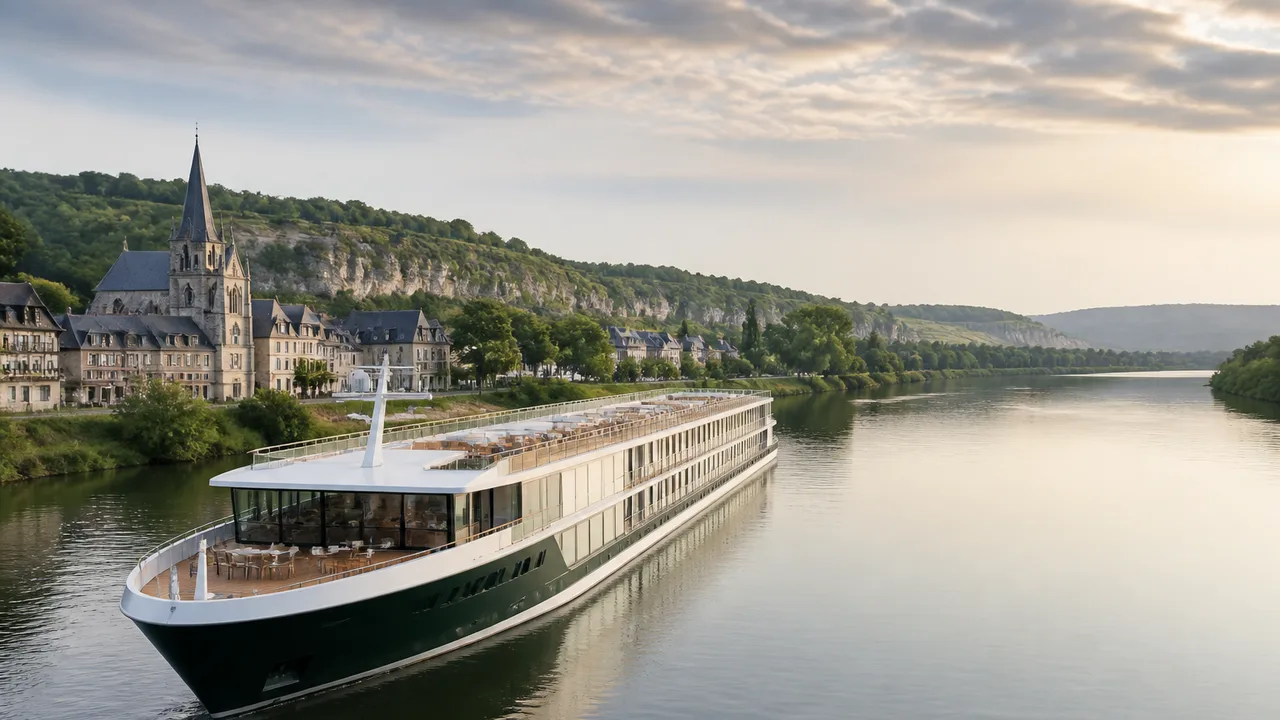
Photo: AI. Hayden Cross
There is a particular cruelty baked into popular European travel: the places most worth seeing are also the places most aggressively seen. Giverny is a perfect example. Monet built his garden as a living canvas, a place of reflection and deliberate looking — and on a summer day, looking is exactly what the crowds make impossible. The water lilies are still there. So is the famous bridge. And so, usually, are the elbows.
Travel + Leisure's recent video about Tauck's MS Serene opens on that exact premise, and the contrast it sets up is genuinely instructive. The T+L team visited the garden before it opened to the public — paths quiet, bridge nearly empty, enough stillness to actually see the thing. Their observation lands cleanly: "We weren't waiting our turn for a clear photo or being pushed along with the crowd. We could slow down and really look at the place. It looked like the paintings."
That sentence is doing a lot of work. It's not just a nice detail. It's the thesis of the entire $10,000-per-person proposition.
What the Ship Is Actually Doing
The MS Serene is Tauck's newest riverboat, deployed on a nine-night round trip from Paris through Normandy — the company's "Rendezvous on the Seine" itinerary. River cruising has a physics problem that ocean cruising doesn't: the boat cannot simply grow to accommodate ambition. Bridge clearance, lock dimensions, and river depth enforce a strict envelope. Every design decision happens inside that constraint.
The T+L video is at its most interesting when it sits with this tension. As the narrator puts it: "Riverboats don't get to be bigger. They have to be smarter, and sometimes that means making the right things smaller." That's a genuine engineering story, not marketing copy. The question is what a company chooses to do with those constraints — whether to maximize cabin count or to deliberately leave space per guest.
Tauck chose the latter. According to Travel Market Report, which covers the cruise industry trade, eighty percent of all cabins on the MS Serene measure 225 square feet or larger — a notable proportion given the inherent spatial limits of river vessel design. The ship's 20 Tauck suites run 300 square feet each. The T+L crew quote a Tauck spokesperson describing the suite layout: "Half the room is just a living room. Like you've got a sofa, you've got a table, and you've got the bed on the other half. You've got these gigantic windows, sliding glass doors... you also have a huge walk-in bathroom with a walk-in shower, and you have a walk-in closet."
A walk-in closet on a riverboat is, as the video correctly notes, a deliberate choice. Square footage that becomes a closet cannot become another revenue-generating cabin. Tauck is betting that guests will pay for the decision not to squeeze them.
The wellness space, called The Retreat, sits at the stern with river-facing windows — another choice that trades premium real estate for guest experience. A Tauck representative explains it plainly: "We've taken the gym, which was on the bottom floor, we've put it at the back of the ship with windows, so you can be exercising while looking out and enjoying the river." On the sun deck, a heated pool, outdoor bar, and lounge space are all oriented toward the river rather than inward. The logic is consistent throughout the ship: the destination is the point, and the boat's job is to keep it visible.
The Food Question
This is where my interest sharpens, because the dining approach on the MS Serene represents the most intellectually honest version of what "locally sourced" can mean on a moving vessel.
A river cruise has a structural advantage over a resort or a fixed restaurant: its supply chain moves with it. The Seine itinerary passes through some of France's most distinctive food regions — the apple orchards and dairy farms of Normandy, the fishing ports of the Seine estuary, the markets of Rouen and Vernon. A kitchen that ignores all of that in favor of a standardized international menu is making a choice. A kitchen that treats the itinerary as a sourcing route is making a different one.
Tauck's onboard chef, according to the T+L crew, takes the second approach. A Tauck spokesperson describes it this way: "The chef will go to the local market, he'll get some fresh foods, some fruits, some vegetables, local fish, and he'll use that when he cooks in the evening. Full menu, so you're not like getting the same thing every night." The T+L team reports being served Normandy cider, Vernon fish, and Rouen market produce over the course of the trip — regional specificity that goes beyond a wine-pairing label.
This matters beyond aesthetics. When a ship's kitchen buys from local vendors at each port, it's participating in the local food economy rather than bypassing it. It's a small thing in the context of a luxury cruise, but it's the right small thing, and worth naming.
The Access Problem
The more complicated part of what Tauck is selling is the access — and it's worth being precise about what that means and how it works.
The T+L team was taken to Château du Tailly, a private Normandy estate not open to the general public. They ate a five-course dinner inside the house, surrounded by furniture from the 13th through the 16th centuries, while the château's owner — whose name the video does not provide — explained the family's decades-long restoration project. The video captures his words directly: "I dedicated my life to saving the chateau. I hope to be able to pass the passion for the chateau to my children."
That is a different category of experience than a museum visit. The château owner is not a docent performing history for strangers; he is a person explaining his life's work inside his home. The distinction between sightseeing and that kind of encounter is real, and hard to manufacture through advance booking alone.
The video is careful about how this access happens: "Some of the unique access in these itineraries comes from relationships Tauck has built over decades. We didn't see the relationships, but what we saw was what they made possible." That's honest framing. Tauck has been operating for over a century, and institutional longevity produces the kind of trust that opens doors — literally, in this case. Whether a newer operator could replicate it is genuinely uncertain.
The Giverny visit operates on a similar logic. Early-hour access before public opening is the kind of arrangement that requires sustained relationships with site management, not just a premium booking. What it produces, per the T+L account, is the experience of actually seeing a famous place — which sounds like a low bar until you've stood at the wrong end of a selfie stick at a UNESCO site.
What the Price Is Really Buying
At $10,000 per person for nine nights, the MS Serene is not an impulse purchase. The T+L team's honest accounting of value is worth taking seriously, because it identifies something the luxury travel industry usually buries in adjectives.
The value proposition has two sides: addition and subtraction. On the addition side, more space per guest, regional cuisine shaped by the route, access that standard tours don't include. On the subtraction side — and this is the part that I find more interesting — the elimination of the small frictions that quietly drain travel of pleasure.
On a typical multi-destination European trip, the cognitive load is constant: which excursions are worth the upgrade fee, whether gratuities are included, how to get from port to site without a taxi negotiation, which timed-entry tickets to book six weeks in advance. Meals, drinks, gratuities, transfers, and experiences are bundled into the upfront price on the MS Serene. Logistics are handled. Decisions are pre-made.
There is a real argument that this kind of frictionlessness is its own form of luxury — possibly the defining form for a particular traveler at a particular life stage. There is also a real counterargument: that the friction of independent travel is part of how you actually encounter a place, that stumbling into the wrong café in Vernon is sometimes exactly the right thing to happen.
Both things are true, and which one applies depends entirely on what you're looking for. What the MS Serene is selling is clarity of experience — a guarantee that the space between you and the places you've come to see will be managed, not improvised. Whether that guarantee is worth $10,000 is a question only the buyer can answer. But the question itself is sharper than it might first appear.
More Like This
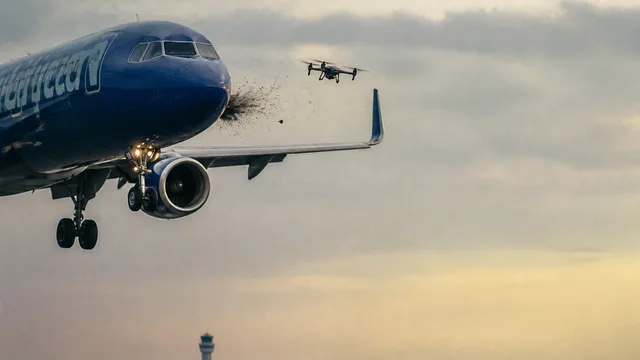
A New Object in the Sky: The JetBlue Drone Strike
A JetBlue pilot reported hitting a drone on approach to JFK. What the incident reveals about airspace rules built before drones existed.
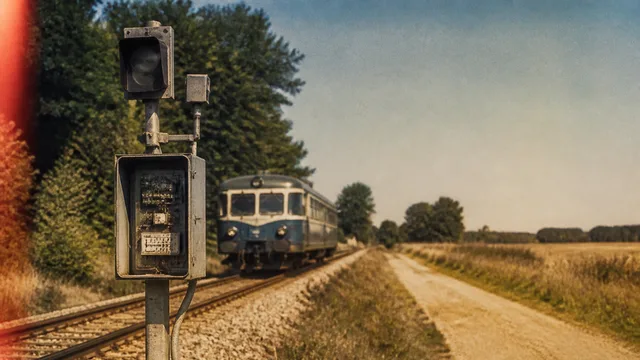
France Tests Low-Cost Rail Signalling for Rural Lines
France's NS2F consortium is trialling digital signalling tech to cut rural rail costs by 30%. Here's what's at stake for the towns trains forgot.

Travel Spending Is Rebounding—But Read the Fine Print
Travel spending rebounded in June and agents are booking again—but the data tells a messier, more interesting story than the headlines suggest.
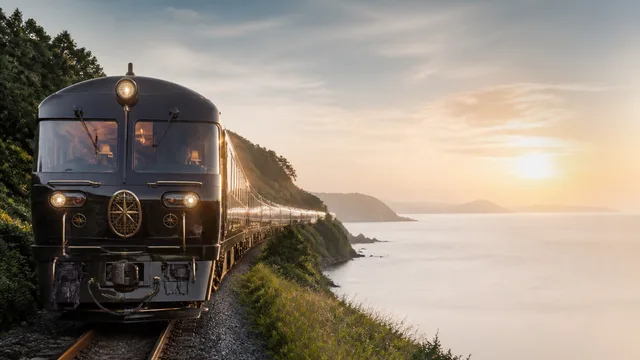
Japan's Seven Stars Train: What Riding It Actually Takes
A review of Japan's Seven Stars cruise train through Kyushu: the lottery, the cost, the food, and whether $4,300 per person holds up to scrutiny.
Small Group Italy Tours Are Reshaping Travel
Small group Italy tours promise authenticity over crowds. But do they deliver — and at what cost to the communities they claim to honor?
How Cruise Ships Stay Upright in Rough Seas
Cruise ships look impossibly top-heavy. The engineering that keeps them upright is layered, counterintuitive, and more fragile than the brochure suggests.

How MCP and AI Agents Are Reshaping Software Design
IBM's Will Scott explains how design systems, context engineering, and MCP are combining to let AI agents build software that actually follows the rules.

DiffusionGemma Generates Text Like an Image Model
Google DeepMind's DiffusionGemma borrows from image diffusion to generate 700–1,000+ tokens/sec. Here's how the architecture works—and where it falls short.