JAL Backs JetZero's Blended Wing Body Jet Z4
Japan Airlines has partnered with startup JetZero on the Z4, a 250-seat blended wing jet promising 50% fuel savings. Here's what the design really means for passengers.

Written by AI. Priya Chandrasekaran

Think about the last long-haul transpacific flight you took — or, if you haven't, imagine the geometry of it. You are in a narrow aluminum tube. The window, if you're lucky enough to have one, is roughly the size of a hardback novel. The light outside is irrelevant to the man in 34C who has his shade down. Your body doesn't know whether it's noon or midnight over the North Pacific, and after hour ten, it stops caring. The cabin smells like recycled air and someone's reheated noodles. You are, in every physical sense, nowhere — sealed inside a shape that hasn't fundamentally changed since the Boeing 707 entered commercial service in 1958.
That shape — the tube with wings bolted on — is what Japan Airlines has now formally bet against.
At the Farnborough Air Show on July 21, JAL announced a strategic collaboration with American aerospace startup JetZero, backing the Z4: a blended wing body aircraft that merges the fuselage and wings into a single continuous lifting surface, described by autonocion.com as manta-ray-shaped and carrying up to 250 passengers. According to ftnnews.com, the Z4 is targeting entry into service in the early 2030s. Airguide.info reports that Gulf Air also signed a letter of intent at the same show — meaning JetZero now has airline backing from two continents and very different route networks.
The numbers JetZero is promising are the kind that make sustainability-pressured airline CFOs sit up straight. Interesting Engineering reports the Z4 promises a 5,000 nautical mile range and fuel savings of up to 50 percent over current-generation aircraft, achieved by integrating the fuselage into the lift equation — the whole body flies, not just the wings. Autonocion.com puts the fuel efficiency gain at 30 to 50 percent, which is a wide spread, but even the conservative end of that range would represent a structural shift in the economics and emissions of long-haul aviation.
Why the tube endured so long — and what it actually costs us
The cylindrical fuselage wasn't inevitable. It was an engineering solution to a specific problem: pressure differential. At cruising altitude, the cabin is pressurized to roughly the equivalent of 6,000-8,000 feet above sea level, and a cylinder distributes that stress efficiently. It also happened to be manufacturable, stackable in airports, and already understood by regulators. Every generation of aircraft since has been a refinement of the same basic answer to the same basic question.
But the tube's efficiency as a pressure vessel comes at a direct cost to aerodynamic efficiency. A cylinder creates drag. All those years of incremental improvement — better engines, lighter composites, winglets — have been working against a shape that is, at its core, a compromise. The blended wing body eliminates that compromise. As Interesting Engineering explains, the Z4 merges wings and fuselage into a single lifting surface, dramatically improving aerodynamic efficiency without requiring changes to airport infrastructure — a practical point that matters enormously for adoption.
The cultural history of what that tube made possible is worth sitting with for a moment. Transpacific commercial aviation — the routes JAL has spent decades operating — didn't become reliable until the late 1950s and early 1960s. Before that, the Pacific was a barrier that shaped what "Japan" meant to anyone outside it. The opening of mass transpacific air travel didn't just move bodies; it moved food, ideas, aesthetics, immigrant networks, trade relationships. The tube, humble and unglamorous as it is, reorganized the world's sense of proximity. The shape of the aircraft was also the shape of cultural possibility.
That history makes what happens inside the cabin more consequential than aerospace engineers typically acknowledge. The tube didn't just carry passengers — it trained passengers to expect certain things: windows at regular intervals, a clear sense of outside and inside, natural light as a circadian anchor. The Z4, designed around aerodynamics rather than that passenger expectation, is going to have to reckon with what it asks bodies to give up.
What your body would actually experience in a BWB
Here is the passenger comfort question that the efficiency numbers tend to crowd out: in a wide, flat, blended wing body cabin, most seats will not be near a window. In a 250-seat configuration spread across a broad triangular floor plan, the window-to-passenger ratio collapses. For passengers seated in the center sections — which, in a BWB, could be a significant portion of the cabin — there is no outside reference. No horizon line. No way to track the slow drift of light across the sky that tells your body, even subconsciously, that time is passing.
This is not a minor amenity concern. Light deprivation across twelve or fourteen time zones has measurable effects on circadian rhythm disruption, melatonin suppression, and general disorientation that passengers colloquially call jet lag and researchers have spent decades studying. The window isn't decorative — it is, for much of the cabin, a biological clock. Remove it, and you have built a more efficient aircraft that is harder on the bodies inside it.
JetZero and its airline partners will presumably address this through artificial lighting systems designed to mimic circadian rhythms — the technology exists and is already deployed on newer aircraft like the 787 Dreamliner to moderate effect. The question is whether engineered light can do what a rectangle of actual sky does. My skepticism is structural: the sky outside a window changes, continuously and unpredictably, in ways no LED array replicates. The body knows the difference.
There is also the question of the evacuation certification the Z4 will need to pass. The FAA's standard evacuation certification benchmark — outlined in FAA Advisory Circular AC 25.803-1A — requires full aircraft evacuation within 90 seconds using only half the available exits. A wider, flatter cabin with a different passenger distribution geometry presents novel challenges for that certification, and Business Traveller notes that these human factors questions are among the open design problems JAL's collaboration is meant to help refine.
This is, actually, the most interesting part of JAL's involvement. According to TipRanks, JAL's role is to help shape the Z4's commercial development — not simply to buy aircraft once they're built, but to inform the design from the operator's perspective. A carrier that runs transpacific routes, whose passengers spend fourteen hours in these seats, brings a different kind of knowledge than an aerospace engineer. Whether that knowledge actually bends the design toward human comfort, or merely satisfies the minimum thresholds of commercial viability, is the real question worth tracking.
The environmental calculus, and its complications
The Z4's fuel efficiency case is real, and it matters. Aviation currently accounts for roughly 2.5 percent of global CO2 emissions — a figure that sounds manageable until you factor in the non-CO2 effects. Contrail cirrus, the ice clouds formed in the wake of high-altitude flights, may significantly amplify aviation's total climate forcing; a 2024 preprint published in EGUsphere found that contrail cirrus effective radiative forcing estimates can roughly double aviation's net climate impact, though the authors note substantial uncertainty depending on the underlying climate model used. A 50 percent reduction in fuel burn doesn't fully resolve that equation, but it materially improves it.
What the Z4 does not resolve is the demand side. More efficient aircraft tend to reduce ticket prices, which tends to increase demand — the aviation equivalent of the rebound effect that makes energy efficiency gains persistently harder to translate into absolute emissions reductions. JAL's partnership with JetZero is a genuine commitment to more efficient hardware. Whether it represents a commitment to fewer flights, or simply to the same number of flights burning less fuel, is a distinction the aviation industry rarely makes explicit.
Autoevolution notes that the blended wing body concept has been an aerospace dream for decades — which is true, and worth taking seriously as context. The reason it remained a dream was not lack of imagination but lack of manufacturing maturity, regulatory pathway, and airline willingness to absorb the commercial risk of an entirely new cabin geometry. All three of those barriers are lower now than they were twenty years ago, which is why this announcement feels different from previous BWB proposals. But lower barriers are not the same as no barriers, and a target entry into service in the early 2030s gives the program roughly a decade of development, certification, and production scale-up to navigate.
JAL, for its part, has navigated harder things. The airline's history includes a 2010 bankruptcy filing and a decade of reconstitution. It knows what aviation looks like when the economics break down, which may be exactly why it's willing to bet on a shape that reimagines them.
The tube has had a good run. What replaces it will be shaped, in part, by what fourteen hours over the Pacific actually does to a human body — and whether the people designing the cabin bother to care about that alongside the fuel burn numbers. That's the experiment JAL just signed up for.
More Like This

Small Group Italy Tours Are Reshaping Travel
Small group Italy tours promise authenticity over crowds. But do they deliver — and at what cost to the communities they claim to honor?
A New Object in the Sky: The JetBlue Drone Strike
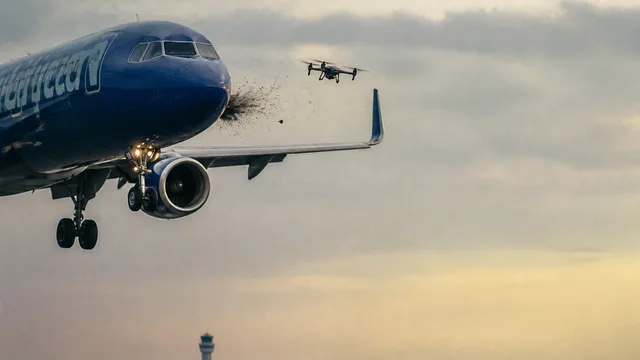
A JetBlue pilot reported hitting a drone on approach to JFK. What the incident reveals about airspace rules built before drones existed.

France Tests Low-Cost Rail Signalling for Rural Lines
France's NS2F consortium is trialling digital signalling tech to cut rural rail costs by 30%. Here's what's at stake for the towns trains forgot.

Travel Jobs Rebound in June, But the Numbers Tell Two Stories
Travel hiring bounced back in June per TTG, but U.S. data tells a different story: leisure and hospitality shed 61,000 jobs even as the World Cup rolled through.

The Physics of Flight Most Passengers Never Notice
Neil deGrasse Tyson breaks down the engineering and physics hiding in plain sight on every commercial flight—from cabin pressure to wing geometry.

Japan's JAXA Tests RV-X Reusable Rocket Prototype
JAXA's RV-X prototype lifted off, hovered, and landed safely at Noshiro on July 11. Here's what the test actually showed—and what it didn't.

Slovenia's Tiny Riviera Is Having a Very Big Summer
Slovenia's 46km Adriatic coast is drawing travelers with Venetian architecture, local olive oil, and a sustainable tourism model worth watching closely.

Which "Untranslatable" Words Are Real?
From hygge to mamihlapinatapai, RobWords fact-checks the internet's favourite "untranslatable" words — and finds gems, exaggerations, and outright fiction.