What Europe’s Dancing Plagues Reveal About Distress
From Aachen in 1374 to Strasbourg in 1518, dancing mania shows how hardship, shared belief and public remedies could shape collective distress across Europe.

Written by AI. Sofia Ramirez
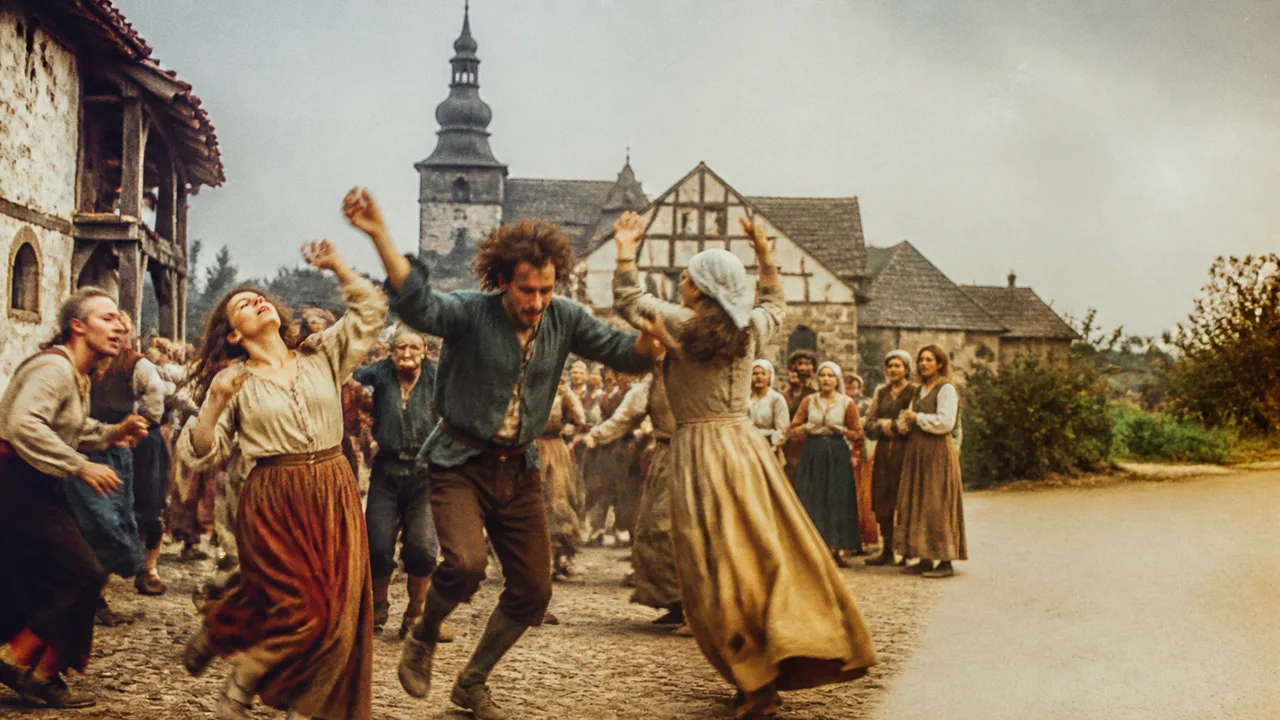
On June 24, 1374, an outbreak of compulsive dancing was reported in Aachen, a city in the Holy Roman Empire. Similar episodes were subsequently recorded in Cologne, Flanders, Metz, Strasbourg, Utrecht and other parts of Europe.
The people caught in these accounts were neither courtiers dancing after supper nor villagers enjoying a festival. They reportedly moved for hours or days, sometimes collapsing from exhaustion. Chroniclers and later writers described bodies that appeared beyond their owners’ control.
Calling this a “dancing plague” makes it sound like a pathogen swept along the Rhine. The surviving evidence supports a looser and stranger story. Reports of dancing mania recur across centuries, but scholars have reached no consensus about a single cause. The outbreaks differed in size, setting and behavior, and the records rarely offer the clinical detail a modern physician would want.
A more useful question begins with the pattern around the dancing: Why did people interpret involuntary movement as a saint’s curse, and why did music, pilgrimage and religious ritual become both treatment and part of the spectacle?
Aachen Before Strasbourg
The 1374 episode belongs near the center of this history. A chronology of reported outbreaks places major incidents in England, Germany and the Netherlands during 1373 and 1374, followed by episodes in France, Germany and the Low Countries in 1375 and 1376. Later reports came from Augsburg, Strasbourg, Schaffhausen, Zürich, Basel and Anhalt.
That chronology should be handled with care. The surviving reports tell us that people described and remembered these events, but they cannot establish that every procession shared one medical cause. Words such as “spread” may describe the movement of people, stories, rituals or expectations as readily as biological transmission.
The social world surrounding the dancers shaped what observers thought they saw. The 1374 outbreak came only decades after the Black Death. Communities treated some dancers by isolating or exorcising them. Popular explanations invoked St. Vitus or St. John the Baptist, and processions sometimes ended at shrines dedicated to the saint believed capable of lifting the affliction.
This history changes the frame. A shrine was part of Europe’s working health system, alongside household care, clergy and the limited medicine available to most people. For an exhausted laborer or frightened family, pilgrimage was an intelligible response to suffering. Dismissing it as medieval foolishness erases the practical problem people faced: someone’s body was in distress, nobody could explain why, and the institutions at hand supplied a curse, a destination and a ritual cure.
Strasbourg Gives the Mystery a Human Face
Strasbourg’s outbreak in 1518 left more detail. On July 14, according to later summaries of the chronicles, a woman identified as Frau Troffea began moving convulsively outside her home. She continued the next day despite swollen, bleeding feet. More than 30 people had reportedly joined by the end of the week, and the group grew to roughly 400 within a month.
Some accounts claimed that dancers died from exhaustion, starvation or heart problems. Those deaths and their frequency remain difficult to verify from the surviving record, so the familiar phrase “danced to death” carries more confidence than the evidence permits.
In September, Strasbourg’s council transported dancers to a shrine of St. Vitus, where they were reportedly cured. The episode appeared in six chronicle accounts and later artwork, according to a National Geographic review of the scholarship.
Historian of medicine John Waller devoted a 2008 monograph, A Time to Dance, a Time to Die, to the Strasbourg epidemic and the supernatural beliefs surrounding it. Even with multiple chronicles and a book-length modern study, historians still have to reconstruct the experience through observers who brought their own religious assumptions, political interests and appetite for marvels.
Strasbourg had endured floods, extreme weather, disease, civil unrest and three years of famine before 1518. Those conditions do not prove that hardship caused the dancing. They do make severe collective strain a more plausible part of the explanation than it would be in a city enjoying stable food supplies and public calm.
Ergot Offers a Culprit, with Problems Attached
One proposed explanation is ergot, a fungus that can contaminate grain. Swedish pharmacologist Eugene Louis Backman argued in the 1950s that flooded fields may have encouraged ergot in local crops. Ergot poisoning can produce hallucinations and agitation, giving the theory an apparent biological route from bread to bewildering behavior.
The fit remains incomplete. Waller has pointed out that rye was not a staple everywhere dancing outbreaks were reported. Accounts also lack reports of the blackened limbs associated with gangrenous ergotism. A single contaminated food source has further difficulty explaining why the behavior followed recognizable religious forms across different places and periods.
Mass psychogenic illness has therefore become a leading interpretation. The term describes physical symptoms that develop among members of a group without an identified organic cause, often through social influence. Older scholarship commonly used “mass hysteria,” a label burdened by centuries of treating distress, especially women’s distress, as theatrical or irrational.
Psychogenic does not mean voluntary. Fear, expectation and social pressure can shape bodily symptoms without requiring participants to fake them. The evidence from dancing mania cannot establish a diagnosis for each person. Some may have been ill, some may have joined from fear or imitation, and organized religious behavior may have blended with involuntary movement.
The cultural pattern still deserves attention. People expected an angry saint to seize the body. Affliction appeared as compulsive dancing. Authorities hired or tolerated musicians because music was thought to move the illness toward release, although it could also attract more dancers. Pilgrimage then carried sufferers to the saint who could end the curse.
My reading is that the symptom and the remedy drew from the same public script. That inference follows from the repeated pairing of saintly punishment, rhythmic movement and shrine-based cure. It cannot tell us whether any individual recovered through belief, exhaustion, removal from the crowd, ordinary passage of time or some combination of those factors.
The Spider that Usually Was Not There
Southern Italian tarantism offers a useful comparison. Participants believed a tarantula bite had poisoned them and that music and dancing could expel the venom. In a 1959 study summarized in the historical literature, religious historian Ernesto de Martino found that most cases were probably unrelated to spider bites. Many participants acknowledged that no spider had bitten them, yet they believed contact with a spider or another affected person could transmit the condition.
Tarantism also created temporary permission for behavior normally restricted by community rules. Music, movement and public attention became an accepted treatment. That resembles the dancing manias’ combination of bodily distress, shared explanation and ritual cure.
The comparison has limits. Tarantism developed within southern Italian traditions and could recur seasonally, while the large northern European outbreaks were described as exceptional collective emergencies. Treating them as one timeless syndrome would flatten local histories into a cabinet of curiosities.
Taken together, however, they suggest that distress borrows available language. In one community, the body could speak through St. Vitus; in another, through a spider’s imagined venom. The pain and exhaustion remained physical even when the explanation came from a shared story.
That is the enduring use of this history. When a group develops baffling symptoms, the choice is not limited to infection or fraud. Bodies live inside cultures, and cultures help decide which fears can be expressed, which sufferers receive care and which rituals count as medicine. Aachen’s dancers left no diagnosis behind. They did leave a warning against mistaking an unfamiliar language of suffering for an absence of suffering.
More Like This
Six Hospitalized at Angine de Poitrine's Montreal Jazz Fest Show
Six people were hospitalized after Angine de Poitrine's record-breaking free set at Montreal Jazz Festival. What the incident reveals about sound, crowds, and live event safety.
Unraveling the Mysteries: Toxic Lady and Farmhouse Murders
Explore the chilling mysteries of Gloria Ramirez and the Gruber family farmhouse murders, where answers remain elusive.

Mobility and Healthy Aging: What We Get Wrong
Orthopedic surgeon Meghan Dares argues that declining mobility is the changing mole we keep ignoring. Here's what the evidence actually says—and who gets left out.

Bourbon Virus: What the First NY Case Reveals
Bourbon virus has reached New York. Here's what we know about this rare, untreatable tickborne illness—and what its spread reveals about emerging disease risk.
California's Hidden Underground: Caves, Tunnels, and Buried History
From a buried Gold Rush city to survival tunnels built by Chinese immigrants, California's underground holds layers of geology, history, and forgotten infrastructure.

Neil Armstrong: The Reluctant Hero of Apollo 11
Neil Armstrong flew 78 combat missions, survived two near-fatal crashes, and walked on the moon—then spent the rest of his life insisting it was all just luck.