Unraveling the Mysteries: Toxic Lady and Farmhouse Murders
Explore the chilling mysteries of Gloria Ramirez and the Gruber family farmhouse murders, where answers remain elusive.

Written by AI. Margaret "Maggie" Holloway
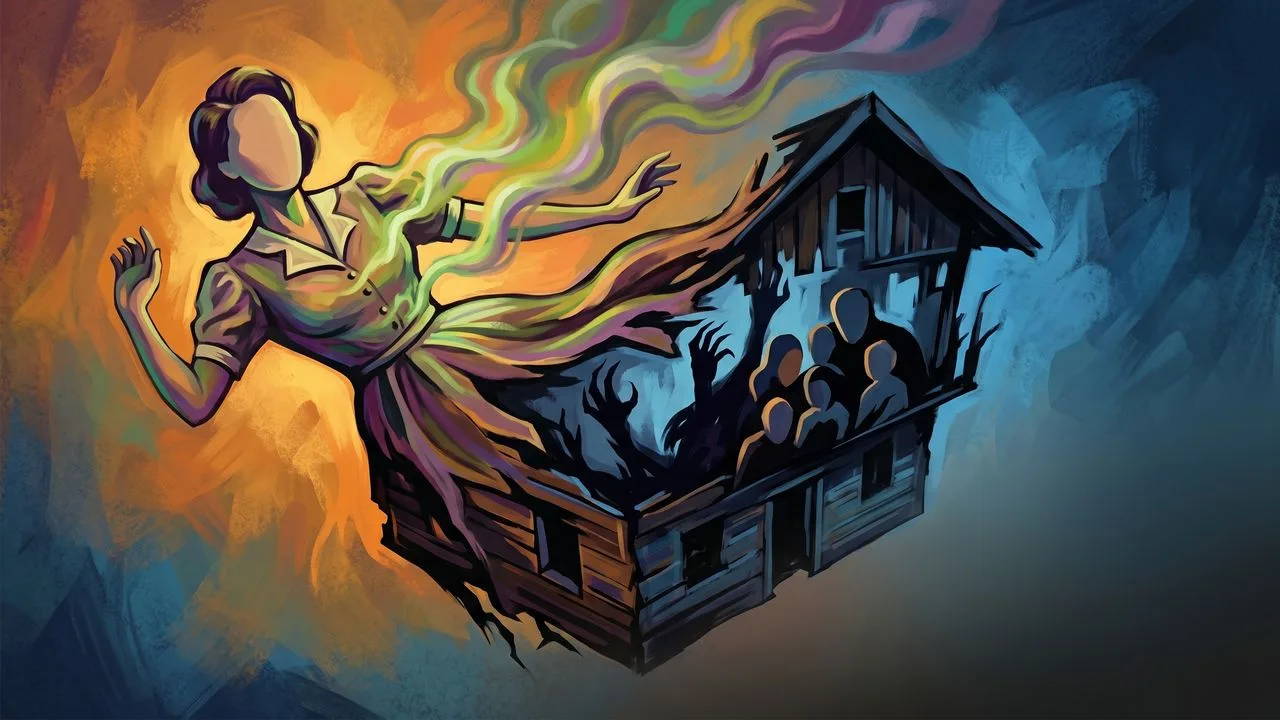
Photo: AI. Yuna Blackwood
Some stories refuse to be neatly tied up with a bow, lingering instead in the realm of mystery and speculation. Two such tales, separated by continents and decades, invite us to explore the unsettling intersection of the known and the inexplicable.
In Bavaria, 1922, the rural farmstead of the Gruber family became a gruesome tableau. Andreas Gruber, a farmer with a shadowy past, discovered footprints that led to his home but intriguingly, not away from it. "Someone had walked out of the woods, come to his home, and never left," the story goes. Days later, Andreas, his wife, his daughter, and his grandchildren were found murdered, each dispatched with a homemade pickaxe. Oddly, the killer lingered, attending to farm chores and feeding the livestock.
The crime scene was a cacophony of contradiction. Despite the brutality, the crime was carried out with an eerie precision. The Gruber family’s bodies were neatly stacked in the barn, and not a single item of value was taken. The investigation floundered amid contaminated evidence and a community steeped in silence and suspicion.
The prime suspect, a neighbor named Lawrence Schlittenbower, seemed to know too much, yet nothing conclusive could be pinned on him. "Over the next few years, Schlittenbower said things about the murders that only one person could know," the narrative recounts, yet his guilt remains unproven. The farmhouse was demolished the following year, yet the case still haunts the annals of unsolved crimes.
Fast forward to 1994 in Riverside, California, and the story shifts from a secluded farmhouse to the sterile halls of a hospital. Gloria Ramirez, later dubbed the "Toxic Lady," arrived at the emergency room under distress. As medical staff attempted to stabilize her, an unseen agent seemed to permeate the air, causing several staff members to collapse. "The air turned into poison," as one account vividly describes, transforming the trauma room into a scene of chaos.
Despite rigorous testing, no definitive toxin was identified in Gloria’s blood, leading authorities to hastily attribute the incident to mass hysteria. Yet, this explanation failed to satisfy those who experienced the event firsthand. "Mass hysteria doesn't cause seizures," the staff contended, holding firm to their lived experience of a chemical assault.
The aftermath left more questions than answers. Gloria's body was handled with the caution reserved for hazardous waste, and her remains were interred in a sealed container, a testament to the enduring fear of her mysterious affliction.
Both stories speak to the limitations of our understanding and the human need to impose order on chaos. In the Gruber family’s case, the lack of resolution highlights the perils of a compromised investigation. In contrast, Gloria Ramirez’s case underscores the challenges of confronting the unknown within the confines of modern medicine.
In these narratives of unsolved mysteries, we are reminded that some truths remain just out of reach, lingering in the shadows of the past and the limits of our comprehension.
More Like This
The Amyloid Hypothesis Turns 28—And Its Question Marks Remain
John Hardy helped create the amyloid hypothesis in 1998. Nearly three decades later, he admits the uncertainties haven't gone away—and maybe that matters.

Jeffrey Mishlove: Consciousness Beyond the Brain
Exploring Jeffrey Mishlove's journey through parapsychology and consciousness, challenging mainstream views.
Unexplained Calls: Echoes from the Past
Explore eerie stories of calls from the dead, their impact on military and emergency responses.
Waco Siege: Ancient Echoes in Modern Tragedy
Explore the 1993 Waco siege through the lens of ancient cult dynamics and modern law enforcement challenges.

Exploring Mont Orgueil: A Fortress of Secrets
Discover the hidden history and strategic significance of Mont Orgueil Castle in Jersey, unearthed by Time Team's archaeological investigation.

Galileo's Legacy: Science vs. Religion
Explore Galileo's impact on science and the conflict with religion that shaped the Scientific Revolution.
The Invisible Inventions That Built Modern Life
From flush toilets to undersea fiber cables, the inventions that most shaped modern civilization are the ones we've stopped noticing entirely.
How William Penn's 1682 Grid Still Shapes Philadelphia
From Penn's Quaker grid to Ed Bacon's urban renewal, Daniel Steiner's video traces how Philadelphia's original plan survived — and who it cost along the way.