Waco Siege: Ancient Echoes in Modern Tragedy
Explore the 1993 Waco siege through the lens of ancient cult dynamics and modern law enforcement challenges.

Written by AI. Helen Papadopoulos
In the annals of American history, the 1993 Waco siege unfolds like a modern-day Greek tragedy, where hubris, prophecy, and the inexorable march of fate collide. At the heart of this drama stands David Koresh, a self-styled messiah whose life and death parallel ancient tales of charismatic leaders who both inspired and destroyed.
Koresh, born Vernon Wayne Howell, carved his path through a landscape of religious fervor and personal ambition. Much like the ancient prophets who claimed divine mandate, Koresh wielded scripture as a tool for both enlightenment and control. He was a master of psychological manipulation, reminiscent of the oracles of Delphi, whose cryptic pronouncements could sway kings and commoners alike. Similarly, Koresh convinced his followers that he alone had deciphered the apocalyptic secrets of the Book of Revelation, elevating himself to a status akin to the God-Kings of antiquity.
The Branch Davidians, Koresh's devoted followers, mirrored the communal sects of ancient times, where loyalty to the leader often superseded personal autonomy. The group's isolation and adherence to Koresh's 'new light doctrine' created a microcosm detached from the outside world, reminiscent of the Pythagorean communities that prized esoteric knowledge over societal norms. Within the walls of the Mount Carmel compound, Koresh's word was law, and his followers accepted his reinterpretations of biblical texts as divine truth.
The siege itself, a 51-day standoff between the Branch Davidians and federal authorities, offers a poignant study in the delicate balance between authority and rebellion—a balance as precarious now as it was in the days of Caesar and his Senate. The initial ATF raid, intended to serve search warrants for illegal firearms, quickly devolved into a chaotic gunfight. Here, we see echoes of ancient skirmishes where miscommunication and mistrust led to unintended bloodshed.
As the siege dragged on, the FBI's negotiation tactics revealed a tension between coercion and diplomacy that has persisted throughout history. The decision to broadcast Koresh's sermon as a negotiation tactic is reminiscent of ancient political maneuvers, where public proclamations were used to sway opinion and buy time. Yet, much like the Roman generals who learned the hard lessons of overreach, the FBI's strategies highlighted the perils of underestimating an opponent's resolve.
The eventual assault, culminating in a devastating fire, invites comparisons to the catastrophic endings of ancient uprisings, where the destruction of a city or the death of a leader left indelible marks on the historical record. The tragic loss of life at Waco, including many children, recalls the ancient sieges where civilians often paid the highest price for the ambitions of the few.
In the aftermath, the Waco siege prompted a reevaluation of law enforcement tactics—a reflection akin to the Roman Senate's deliberations after the fall of Carthage. The FBI's integration of negotiation and tactical teams post-Waco represents a modern parallel to the ancient recalibrations of statecraft in the wake of military and moral failures.
As we examine the Waco siege through the lens of history, the story of David Koresh and the Branch Davidians becomes not just a tale of modern extremism, but a chapter in the timeless narrative of power, faith, and the human condition. The lessons learned—or perhaps, relearned—serve as a reminder that while the actors and settings may change, the fundamental dynamics of authority and belief remain as potent as ever.
"This is my family and no one's going to come in on top of my family and start pushing my family around," Koresh declared, echoing the timeless defiance of leaders who saw themselves as both protector and provocateur.
In contemplating the Waco siege, we are left with questions that transcend time: How do we balance the rights of the individual with the safety of the many? What happens when charismatic authority meets institutional power? And, most poignantly, how do we prevent the fires of extremism from consuming us all?
More Like This
FBI's Struggle Against Omega 7: A Tale of Terrorism and Intrigue
Explore the FBI's complex investigation of Omega 7, a Cuban exile terrorist group, amid community challenges and evolving tactics.
MLK: The Ancient Echoes of Justice and Leadership
Explore MLK's legacy through ancient lenses of justice and leadership. Discover unexpected connections.
Exploring Conspiracies and Wolves: Reality vs. Belief
Dive into conspiracy theories and the impact of reintroducing wolves, with insights from Joe Rogan and Andrew Wilson.
The Ingenious Simplicity of the Ancient Pulser Pump
Explore the ancient, efficient pulser pump with no moving parts, inspiring modern engineering solutions.
When AI Safety Instructions Failed 37% of the Time
Anthropic tested 16 AI models with explicit safety rules. More than a third ignored them. The problem isn't the instructions—it's the assumption they'll work.
Decoding Halo's MAC Platforms: Past Meets Future
Explore Halo's MAC platforms and their ancient military parallels, revealing the timeless art of warfare.
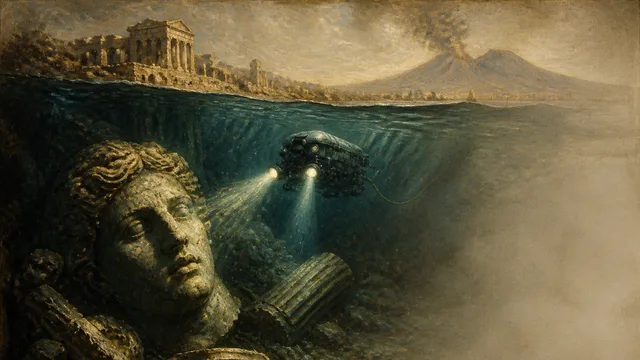
Baiae: The Sunken Pleasure City of Ancient Rome
Beneath the Bay of Naples lie the ruins of Baiae, Rome's most scandalous resort. New 3D scanning reveals what volcanic geology buried and the sea swallowed.
Alexandria's Library Was More Than a Library
Dr. Roy Casagranda's lecture on the Great Library of Alexandria reveals a research institute, innovation hub, and the ancient world's most powerful idea engine.