Hedy Lamarr, Inventor of Frequency-Hopping Technology
Hedy Lamarr wasn't just Hollywood's biggest star — she co-invented frequency-hopping, the technology underpinning Wi-Fi, Bluetooth, and GPS. Her story is overdue.

Written by AI. Sofia Ramirez

Photo: AI. Yuna Blackwood
At five years old, Hedwig Eva Maria Kiesler took apart her music box, studied the gears and springs inside it, and put it back together again. Not because someone asked her to. Because she needed to know how it worked.
That instinct — to look past the surface of a thing and understand its mechanics — never left her. It just got buried, repeatedly and deliberately, under everything the world decided she was more useful for: her face, her accent, her willingness to stand still and look beautiful. What's remarkable about Hedy Lamarr's story isn't that she was secretly a genius while everyone thought she was just glamorous. It's that the systems designed to contain her — a fascist arms dealer's estate, the MGM studio machine, the U.S. Navy's gatekeeping — kept failing, and she kept inventing anyway.
Vienna, Then Everything
Lamarr was born in 1914 in Vienna, during the last stretch of the Austro-Hungarian Empire, into a family that took both culture and curiosity seriously. Her mother was a concert pianist. Her father, a bank director, took her on long walks through the city and explained exactly how everything worked — how printing presses operated, how streetcars moved along their tracks. "He taught her that nothing was magical," as the Turing documentary puts it, "and that everything could be understood by looking closely."
This is a particular kind of education that doesn't show up on any transcript. It's the education of a child who is treated as someone worth explaining things to. That her father extended it to a daughter, in early-20th-century Vienna, is worth sitting with for a moment.
By 16, she was already moving through European film and theater circles, discovered by director Max Reinhardt. Her 1933 film Ecstasy — in which she appeared nude and which featured what's described as the first on-screen female orgasm — made her internationally famous and, almost immediately, internationally reduced. What followed was one of history's more consequential bad decisions: at 18, looking for stability after the Ecstasy scandal, she married Friedrich Mandl, described as the third richest man in Austria and one of its most controlling.
Mandl made her give up acting. He used her as a silent hostess at exclusive dinner parties attended by fascist generals and military engineers — Mussolini was a regular; Hitler was known to attend. Lamarr later wrote that Mandl treated her as "a mindless work of art to be guarded." But while she was sitting quietly at those dinner tables, she was listening. The men around her talked openly about the vulnerabilities of radio-guided torpedoes. She absorbed all of it.
In 1937, she managed a daring escape from Mandl's estate and made her way to London. How exactly she pulled it off has been told different ways across different sources, and the specific methods are disputed enough that I'm not going to plant a flag on any one version. The point is: she got out.
MGM's Product
Louis B. Mayer happened to be in Europe at the time, scouting talent for Metro-Goldwyn-Mayer. He offered her a low-paying contract; she turned it down. Then she booked passage on the same ship — the SS Normandie — that Mayer was taking back to New York. By the time they docked, she had negotiated $500 a week. Call it $8,200 in today's money. Call it leverage.
The studio's side of the deal was total image control. The name Hedwig Kiesler was erased. According to Wikipedia, Mayer reportedly renamed her Hedy Lamarr as a nod to silent film star Barbara La Marr — though the etymology has been disputed and the full story of how the name came about isn't as settled as it's sometimes presented. What isn't disputed is that the new name came with a new persona: exotic, mysterious, untouchable. Her American debut in Algiers (1938), opposite Charles Boyer, was a hit, and the studio machinery kicked fully into gear.
She knew exactly what was happening to her. "Any girl can be glamorous," she said. "All you have to do is stand still and look stupid." The studio expected her to do precisely that — stand still, look beautiful, and definitely not redesign airplane wings in her trailer between takes, which is apparently what she actually did. When she noticed that Howard Hughes's planes had blocky, inefficient wings, she studied the body shapes of the fastest fish and the wing angles of the fastest birds and drew up a new streamlined design. Hughes, one of the few people in her orbit who took her mind seriously, was reportedly floored.
"Improving things comes naturally to me," she said. That's not a brag. That's just a person describing themselves accurately.
The Frequency Problem
By the early 1940s, Lamarr's attention had fixed on a problem she understood better than most: the radio-guided torpedo. The concept was theoretically powerful — steer a weapon toward a target via remote radio signal, drastically increasing precision and lethality. The practical problem was that enemy forces could jam the controlling frequency with electromagnetic interference, essentially drowning out the signal the way a loud noise drowns out a quiet conversation. A jammed torpedo went off course. The weapon became useless.
Lamarr's proposed solution was, in retrospect, almost elegant in its simplicity: don't stay on one frequency. Have the signal jump rapidly between frequencies in a synchronized, unpredictable pattern. If the enemy tries to jam one channel, the signal has already moved to another. They'd have to jam all possible frequencies simultaneously — a far harder problem.
What she needed was a mechanism to synchronize both ends of the transmission — the ship and the torpedo — so they were always on the same frequency at the same moment without anyone being able to predict the sequence. That's where George Antheil came in.
The Composer's Technical Problem
Antheil was, by any generous description, an unusual figure. An avant-garde composer from Trenton, New Jersey, known as the "bad boy of music," he had spent years working out how to synchronize multiple mechanical instruments playing simultaneously at precise intervals. His piece Ballet Mécanique, which received its Carnegie Hall premiere in 1927, required a battery of synchronized mechanical instruments — player pianos, propellers, electric bells — all operating in perfect coordination through coded paper rolls.
That's not the same thing as writing a symphony. That's an engineering problem. And it's exactly the engineering problem Lamarr needed solved.
At a Hollywood dinner party in late summer 1940 hosted by actress Janet Gaynor, the two of them met. The partnership that followed is, in hindsight, one of those moments where you can see the destination and the road at the same time: a film star who spent years absorbing weapons-technology conversations at fascist dinner parties, and a composer who had spent years figuring out how to synchronize mechanical systems at scale. Of course they invented frequency-hopping spread spectrum communication together in a living room.
Their design used miniaturized paper rolls — one for the transmitter, one for the receiver — to synchronize the frequency jumps across 88 distinct radio channels. The 88 was a deliberate nod to the keys on a piano keyboard. They filed their design with the government on June 10, 1941. The U.S. patent was granted on August 11, 1942.
The Navy Said No
The U.S. Navy reviewed the patent and declined to use it. The official explanation, such as it was, amounted to: a movie star and a weird musician don't change how militaries communicate. Lamarr was redirected to the war bond circuit, where the military used her looks to draw crowds — staging her in flirtatious routines with sailors, promising kisses if enough bonds were sold. The same institution that dismissed her technical patent was perfectly happy to deploy her body as a fundraising tool.
The frequency-hopping technology sat dormant through the war years. In the late 1950s, as solid-state transistors replaced older mechanical systems, the military quietly revisited the concept. During the 1962 Cuban Missile Crisis, updated versions of the frequency-hopping approach were reportedly used on naval ships to secure communications.
The patent had long since expired by the time the wireless communications industry built spread-spectrum technology into the architecture of Wi-Fi, Bluetooth, and GPS systems. Lamarr and Antheil received no royalties.
"It's About Time"
In 1997, the Electronic Frontier Foundation gave Lamarr and Antheil its Pioneer Award for contributions to computing technology. By then, Lamarr was 82, largely reclusive, having spent years retreating from a public life that had grown hostile — a ghostwritten autobiography she fiercely disputed, shoplifting arrests that became media circuses, six marriages and divorces that the tabloids had chronicled as entertainment. She'd spent decades having her actual self replaced by whatever version of her was most useful to whoever was watching.
When she heard about the EFF award, her response was three words: "It's about time."
In 1998, a Canadian company called Wi-LAN Inc. purchased a stake in her expired patent in exchange for company stock — a gesture of financial recognition that arrived half a century late. After her death in 2000, she was inducted into the National Inventors Hall of Fame in 2014.
The music box she took apart at age five worked the same way after she put it back together. That's the point. She wasn't breaking things to break them. She was learning so she could make them work better. The question the historical record leaves open — and it's not a comfortable one — is how many other people with that same impulse never got even a delayed, posthumous reckoning.
More Like This
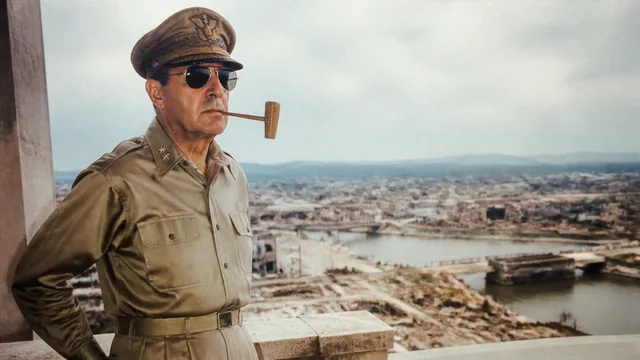
Douglas MacArthur and the People He Left Behind
MacArthur is remembered as a military legend. But what about the veterans he gassed, the soldiers he abandoned, and the Japanese citizens who built a new democracy?

The Bari Disaster: Mustard Gas, Secrecy, and 1943
On December 2, 1943, a German raid on Bari killed over a thousand people—and released mustard gas that officials spent decades trying to erase from history.
Inside the Smartphone: 120 Years of Hidden Engineering
Professor Hannah Fry tears apart a modern smartphone to trace 120 years of engineering history — from Marconi's radio waves to a 200-million-pixel camera sensor.

Attila the Hun: Scourge of God or Economic Strategist?
Attila never sacked Rome—yet he's history's ultimate barbarian. The real story is stranger, and more familiar, than the legend.

DC Power's Long Road Back: How Sweden Changed Everything
How a Swedish engineer's 40-year obsession with a faulty valve quietly built the backbone of today's renewable energy grid.

A Brief History of the Internet, From ARPANET to AI
From packet switching born in Cold War panic to AI models renting us our own data back, the internet's history is stranger than most people realize.

California's Hidden Underground: Caves, Tunnels, and Buried History
From a buried Gold Rush city to survival tunnels built by Chinese immigrants, California's underground holds layers of geology, history, and forgotten infrastructure.
Neil Armstrong: The Reluctant Hero of Apollo 11
Neil Armstrong flew 78 combat missions, survived two near-fatal crashes, and walked on the moon—then spent the rest of his life insisting it was all just luck.