Six Hospitalized at Angine de Poitrine's Montreal Jazz Fest Show
Six people were hospitalized after Angine de Poitrine's record-breaking free set at Montreal Jazz Festival. What the incident reveals about sound, crowds, and live event safety.

Written by AI. Amara Osei
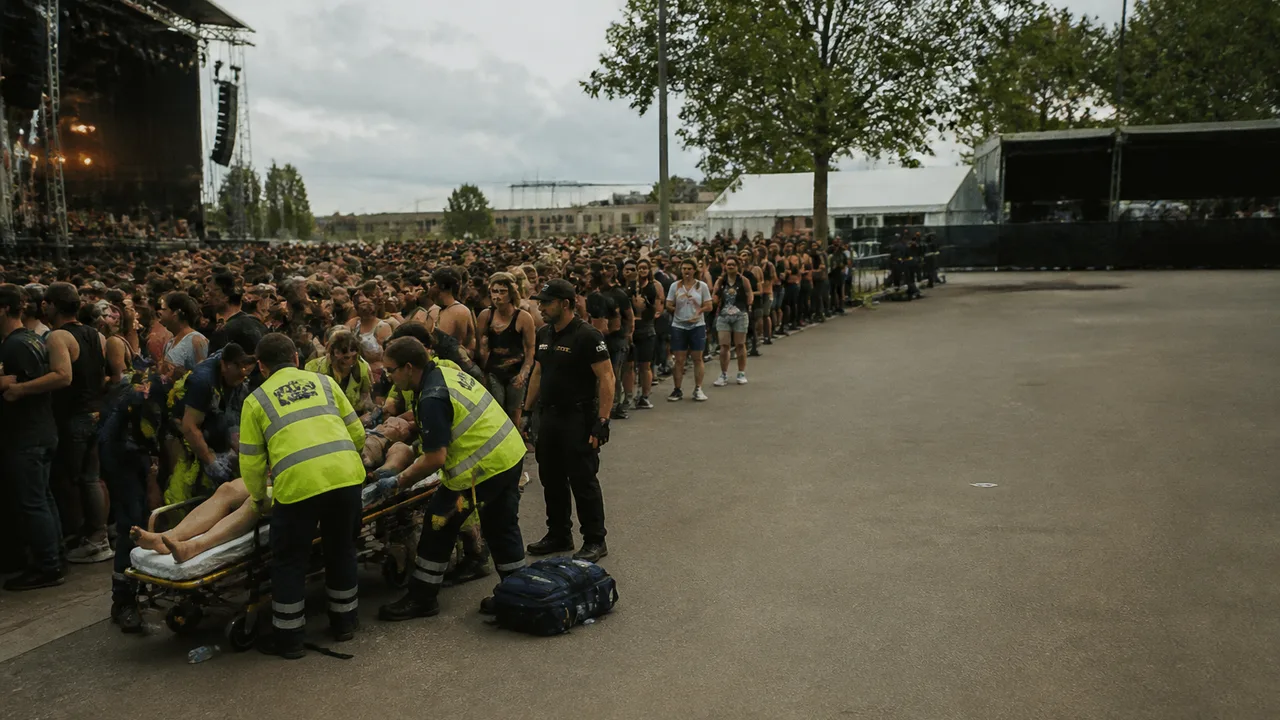
Think about what it feels like to stand at the front of a massive outdoor free show. Not the part you remember afterward — not the melody you hum on the Metro home — but the physical fact of it: the low-end frequencies you feel in your sternum before you consciously hear them, the compression of bodies pressing in from every side, the way sound at high volume stops being something you listen to and starts being something that happens to you. Now imagine that experience at record-breaking density, at the intersection of Jean-Mance Street and Sainte-Catherine Street in downtown Montreal, on a warm Saturday night.
That's where Angine de Poitrine played on June 27. And that's where six people ended up being taken to hospital.
Exclaim! reports that the Montreal Jazz Festival received a record-breaking turnout for what was Angine de Poitrine's biggest show to date. CTV News puts the medical numbers at ten people treated by paramedics on-site, with six of them transported to hospital. Montreal Citynews describes those as "medical incidents during the show" — a phrase that is both precise and frustratingly vague. The specific causes haven't been publicly detailed in any of the reporting, which means the dominant media frame has so far been crowd size as culprit. That may well be right. But it's worth slowing down there, because "too many people" is a category of problem, not an explanation.
The band, the space, the sound
Here's the question I find myself unable to get past: what does Angine de Poitrine actually sound like at scale?
The Saguenay band, per Montreal Citynews, is described as "popular" — which at a festival of this caliber means something, but tells us almost nothing about their sonic character. A record-breaking turnout for a free outdoor set suggests they carry real cultural momentum in Quebec. Whether that momentum is built on dense, high-SPL rock, on electro-influenced low-end, or on something more traditionally jazz-adjacent matters enormously when you're thinking about bodies in a crowd.
Because sound is not neutral. Loud, bass-heavy sound at close range is a physical force — it changes how people breathe, how tightly they can pack, how aware they are of their own discomfort signals. Anyone who has stood in a dense crowd at a low-end-heavy show knows that the music doesn't just fill the air around you; it reorganizes your body's sense of its own boundaries. The Jean-Mance and Sainte-Catherine intersection, a sprawling but ultimately street-bounded space, would have its own acoustic properties — hard building surfaces reflecting and stacking frequencies, the natural bowl effect of a street grid, potentially amplifying the felt intensity well beyond what the stage's measured output would suggest.
I'm not asserting that Angine de Poitrine's sound design caused the hospitalizations. The reporting doesn't support that, and I'm not going to reach for causation the record doesn't offer. But it's the question a general reporter wouldn't think to ask, and I think it's the right one: in understanding what happened in that space that night, the acoustic environment is not a side note. It is the environment.
The structural problem with free shows
The Montreal Jazz Festival has built a significant part of its identity around its free outdoor programming — a genuine public good, and one that genuinely complicates crowd management in ways that ticketed events don't face.
When a show is free and outdoors in a central urban location, the organizer's core crowd-control mechanism — ticket limits — doesn't exist. You can communicate a show, but you cannot reliably cap attendance at the point of entry when there is no entry point. What you get instead is an organic flood that peaks unpredictably, and by the time the crowd has reached a density that demands intervention, the music has already been playing for a while and the people near the front are already committed.
Far Out Magazine confirmed that local authorities verified six fans were hospitalized following what was described as a record-breaking free show. Happy Mag characterizes the night as one where "chaos erupted" — language that implies a relatively sudden shift in the crowd's character, which tracks with the dynamic of free outdoor shows: things feel manageable until they don't, and the transition can be fast.
The record-breaking attendance qualifier matters here too. When a show draws more people than any previous edition of a similar event, the safety infrastructure is, by definition, sized for the previous record — not the new one. This isn't negligence in any simple sense; it's a structural forecasting problem. You plan for what you know, and what you know is always the past.
What the reporting leaves open
NME covered the hospitalizations but, like other outlets, stops short of detailing the specific medical causes, the exact crowd conditions at the time incidents occurred, or whether the festival has formally announced any safety review. That last point is worth flagging clearly: as of the reporting available, no named source or official statement from the festival confirming a safety protocol review has been published. That claim is circulating — but sourcing it requires caution, and I won't dress it up as confirmed fact.
What we have instead is a pattern the reporting collectively describes: unprecedented attendance, a string of medical incidents, paramedics responding to ten people, six transported. The shape of the event is legible even if the interior causation isn't fully public yet.
Why this keeps happening, and why it will keep happening
The Montreal Jazz Festival is one of the most storied music events in North America — a festival that has, over decades, shaped what a city-as-venue can look like, with free outdoor stages functioning as democratic extensions of a paid-ticketed program. That model is genuinely valuable. It's also inherently tension-filled.
The festivals that lean hardest into immersive, high-energy, no-barrier experiences are the same ones where the gap between "memorable" and "dangerous" is smallest. This is not a reason to eliminate free shows. It is a reason to think seriously about what safety infrastructure looks like when you're managing a crowd that has no ceiling because you never sold a ceiling.
The deeper design question — and it is a design question as much as a logistics one — is how you build a sonic environment that can hold a large, energized crowd without that environment itself becoming a hazard. Stage placement, speaker array design, crowd flow architecture, sightlines, the acoustic reflectivity of surrounding structures: these are not afterthoughts. They are, in the most literal sense, what shapes the experience of being in that crowd.
Somewhere in Montreal on the night of June 27, ten people needed medical attention at a free show that set attendance records. Six of them went to hospital. The band was playing the biggest set of their career. The crowd was the biggest the festival had seen for this stage. Everything was, by conventional measures, a success — right up until it wasn't.
That gap between "record-breaking" and "safe" is exactly where the interesting questions live. And right now, the record doesn't tell us enough to close it.
More Like This
Reassessing the Queens of Numenor
Explore the nuanced reigns of Numenor's queens and their impact.

What Camera Sensors Can Teach You About Sound
StudioBinder's sensor explainer is solid filmmaking education — but it reveals something bigger about how creators misunderstand the infrastructure beneath their craft.

Is Nature Good? Harari and Žižek Say No
Yuval Noah Harari and Slavoj Žižek agree: nature isn't inherently good. Their debate reveals why "natural" is almost always a political argument in disguise.
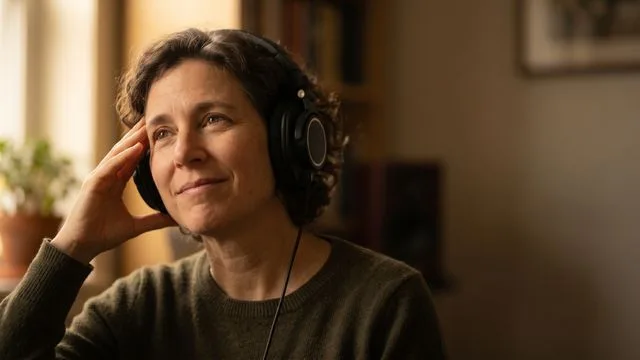
Music Shapes Your Daydreams More Than You Know
Princeton researcher Elizabeth Margulis explains how music hijacks your spontaneous thoughts—and what that means for your mental and emotional life.
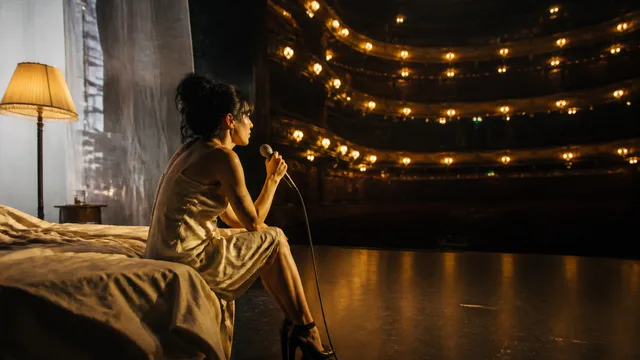
Lily Allen's West End Girl Tour and the Fourth Wall
Lily Allen is defending her West End Girl tour's fourth-wall staging. But the real debate is acoustic — what happens to sound when a pop show refuses to speak to the room?
How Technology Is Reshaping the Live Sports Venue
From AI-driven personalization to AR glasses and sensory rooms, sports venues are in the middle of a tech arms race—and the fan is both the beneficiary and the product.

How the Rams' Playbook Lives in Ty Simpson's Ears
Rob Havenstein on McVay's 13-personnel evolution, Ty Simpson's audio playbook prep, and what a podcast reveals that film study never could.
When the Dugout Won't Shut Up: A Baseball Ejection
A Jomboy Media breakdown captures a manager's ejection over check swing calls—and accidentally maps everything broken about baseball's officiating culture.