Lily Allen's West End Girl Tour and the Fourth Wall
Lily Allen is defending her West End Girl tour's fourth-wall staging. But the real debate is acoustic — what happens to sound when a pop show refuses to speak to the room?

Written by AI. Amara Osei
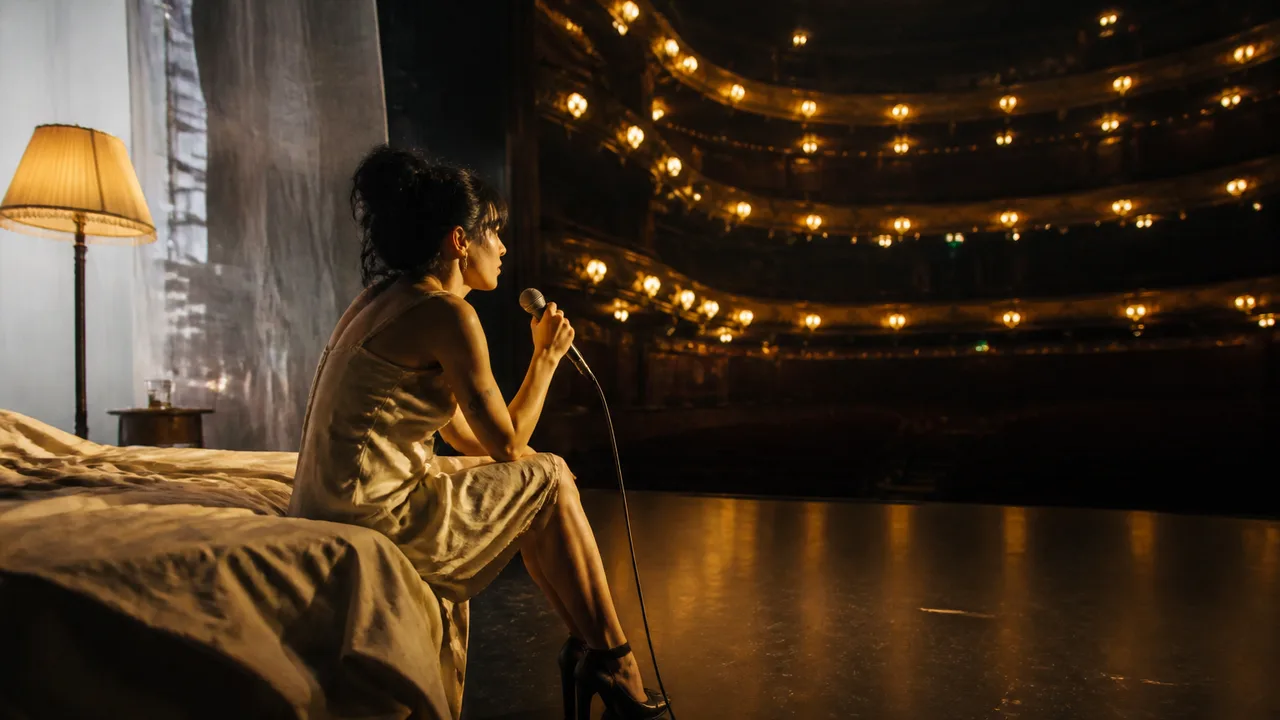
Picture the sonic grammar of a standard pop concert. The performer says the city's name and the room erupts. They lean the microphone toward the crowd and ten thousand people finish a lyric they wrote alone in a room. The applause comes in and the performer rides it, shaping the next moment around its energy. The feedback loop is so fundamental to the form that we rarely notice it as a formal choice — it just sounds like a concert.
Now sever that loop deliberately. Keep the songs, the lights, the staging. Remove the banter, the addresses to the room, the moments where the performer acknowledges that thousands of people are breathing in the same space. What's left isn't silence, exactly. It's a different acoustic texture: the crowd's ambient murmur fills a gap that's usually managed by the performer; the space between songs takes on a held-breath quality that pop venues — designed for reverberation and release — don't quite know what to do with. This is the sound of Lily Allen's West End Girl tour, and it's the actual subject of the controversy currently circulating around it.
Allen has been direct about what she's doing and why. According to The Independent, she wrote: "It's my artistic choice not to talk to the audience, the fourth wall helps with the storytelling. Most people find it to be effective. I don't want anyone to feel ripped off." The BBC and NME both covered her fuller statement, which concluded: "Everyone on this tour is really working very hard to give people the best show we possibly can, and I'm extremely proud of it."
The discourse ignited partly from a social media post by someone named Hawksley, which pedestrian.tv reproduced in its coverage — and it's worth being precise about that chain: what follows is pedestrian.tv's reproduction of Hawksley's post, not language I accessed independently. According to pedestrian.tv, Hawksley later added a clarification: "To be clear because this is obviously framed in a negative way (my fault). The performance was brilli[ant]" — the truncation is pedestrian.tv's, not mine. Whatever the original complaint's tone, it was already being walked back before Allen responded. Stereogum framed her response as addressing "complaints," though the texture of the original discourse appears to have been messier and more ambivalent than that framing suggests.
[Editorial note: pedestrian.tv attributes Allen's response to June 29, 2026 — editors should confirm this date against publication timeline before this piece goes live.]
None of that procedural messiness changes the underlying formal question, which is the one that actually interests me.
The West End Girl title isn't decorative. It's a claim about a particular sonic world — the West End as Allen is invoking it carries the sound of theatrical storytelling: narrative arcs, character interiority, the carefully built emotional environment of a show that takes place inside a proscenium rather than in conversation with an arena. The Pet Shop Boys' "West End Girls," from 1984, understood that the West End was a geography of class tension and nocturnal anxiety — it used the name to locate a feeling, not just a postcode. Allen's title seems to be reaching for something in the same register: an Anglophone urban interiority, something that unfolds rather than explodes.
A fourth wall, used rigorously, is the formal mechanism that makes that kind of storytelling possible in a live setting. Brecht used it — and then broke it deliberately — because he understood that the wall's existence is what charges its violation with meaning. The wall creates a container. Without the container, you don't have theatrical storytelling; you have a concert that isn't quite acknowledging you're there, which is a different and more disorienting experience than either a play or a gig.
What Allen is gambling on is whether that container can hold in a room built for reverberation and crowd energy. And here's where I'll plant a flag, because neutrality without a critical position is just elaborate fence-sitting: I think the conceit is formally coherent but sonically demanding in a way that requires exceptionally precise execution to land. Pop music carries accumulated sonic expectations in its bones — the energy exchange, the communal noise, the performer as conductor of the room's feeling. When you close that circuit deliberately, you need the material itself to generate enough internal pressure that the audience stays in the story rather than becoming aware of their own ambient noise. The songs have to do work that they've never previously been asked to do, because the performer isn't doing the crowd-management labour that normally runs beneath them.
Consider what Allen's voice sounds like when it isn't playing to a room that's playing back. Her phrasing on something like "Smile" — that flat, almost conversational precision, the deadpan delivery of spite — actually reads differently when it isn't being fed crowd energy. The persona is already interior, already observational rather than performative. Songs like "LDN" and "The Fear" work through a kind of narrated distance; the speaker is watching, not declaiming. There's an argument that Allen's particular vocal register — unsentimental, slightly ironic, intimate without being confessional — is better suited to the sealed theatrical environment than most pop voices would be. She was never a vocalist who needed the room's warmth to land emotionally.
The question is whether the design — the fourth wall, the deliberate severance of the feedback loop — is being held consistently enough to make that reading available to an audience paying concert prices with concert expectations. Allen says most people find it effective. The Daily Star and GB News both framed the story primarily around fan complaints, though neither outlet has the critical vocabulary to distinguish between "this formal choice failed" and "this formal choice surprised me." Those are different problems.
Here's what I keep turning over: the complaint that gets closest to a real critical issue isn't about the fourth wall's legitimacy as a device. It's about what the BBC flagged in its headline — show length. Because when you've sealed the loop between performer and audience and committed the room to a particular held-breath acoustic, the duration of that commitment matters enormously. Theatrical silence in a venue built for pop sound is not the same as theatrical silence in a theatre. It doesn't settle the same way. The room doesn't absorb it. If the show runs shorter than expected, that silence — the interstitial silence between songs, the silence of a performer who won't address the crowd — can stop feeling immersive and start feeling evacuated. Not a container anymore. Just empty.
Allen's own language is revealing: she doesn't want anyone to feel ripped off. That phrasing is notable because it's economic where the defense of the form is artistic. The two things aren't in contradiction — value and artistry can coexist — but the fact that she reaches for both in the same breath tells you she understands the transaction she's asking audiences to enter. You're not coming to a pop concert. You're coming to something that operates by different rules. The argument for those rules is that they serve the storytelling.
What will determine whether the West End Girl tour is remembered as a bold formal experiment or an expensive misread of its audience isn't the online discourse — that'll dissolve in a week. It's whether the sealed acoustic world Allen is building holds its pressure for long enough that people come out the other side feeling they were inside something, rather than outside it.
More Like This
Reassessing the Queens of Numenor
Explore the nuanced reigns of Numenor's queens and their impact.

What Camera Sensors Can Teach You About Sound
StudioBinder's sensor explainer is solid filmmaking education — but it reveals something bigger about how creators misunderstand the infrastructure beneath their craft.
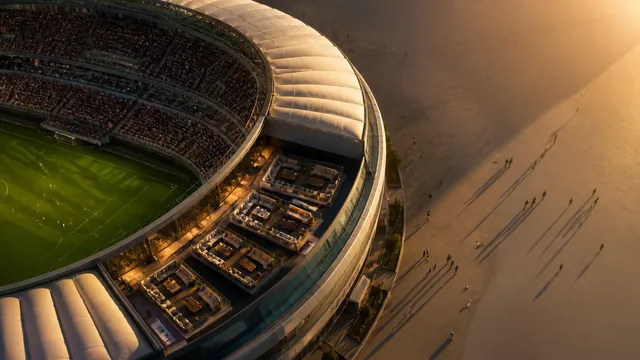
Premium Hospitality Is Remaking the Sports Venue Business
Sports venues are racing to expand luxury hospitality—but as premium revenue targets climb, the question of who gets left behind grows harder to dismiss.

Geddy Lee on Relearning Rush for the Road
Geddy Lee talks to Rick Beato about relearning Rush songs, tone, the space bass, and the emotional weight of making Vapor Trails without Neil Peart nearby.
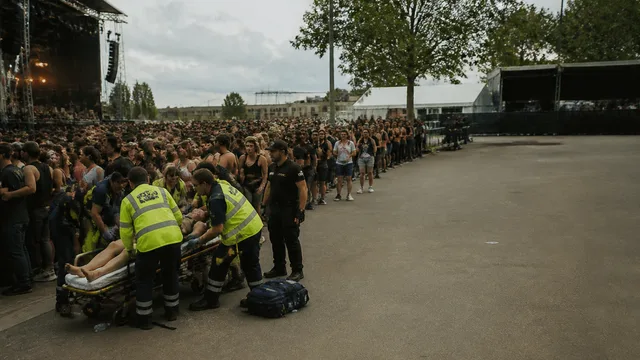
Six Hospitalized at Angine de Poitrine's Montreal Jazz Fest Show
Six people were hospitalized after Angine de Poitrine's record-breaking free set at Montreal Jazz Festival. What the incident reveals about sound, crowds, and live event safety.

Google's Gemini Glasses: What the I/O Demo Actually Showed
Google unveiled Gemini-powered AI glasses at I/O 2026 with live translation and habit memory. Here's what the demo showed — and what it leaves open.

How the Rams' Playbook Lives in Ty Simpson's Ears
Rob Havenstein on McVay's 13-personnel evolution, Ty Simpson's audio playbook prep, and what a podcast reveals that film study never could.
When the Dugout Won't Shut Up: A Baseball Ejection
A Jomboy Media breakdown captures a manager's ejection over check swing calls—and accidentally maps everything broken about baseball's officiating culture.