How Technology Is Reshaping the Live Sports Venue
From AI-driven personalization to AR glasses and sensory rooms, sports venues are in the middle of a tech arms race—and the fan is both the beneficiary and the product.

Written by AI. Marcus Tate
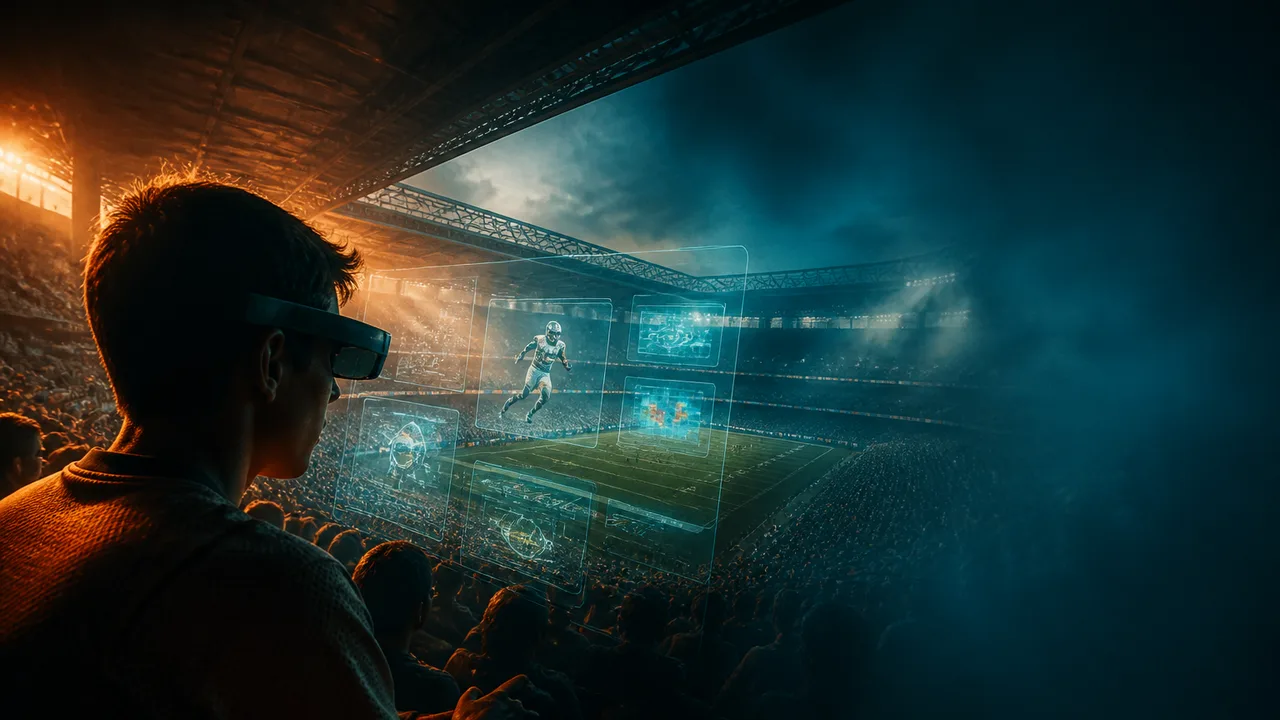
Photo: AI. Astrid Lehmann
There is a useful number buried in a recent Sports Business Journal roundtable on venue technology: roughly 50-plus arenas in the United States are currently undergoing either renovation or full mixed-use district development. That is not a design trend. That is a capital cycle, and it is worth understanding what is driving it before getting swept up in the wow factor of halo scoreboards and facial-recognition concessions.
The short answer is competition — not between teams, but between the couch and the seat.
KPMG transformation principal Dave Wolf framed it plainly in the SBJ conversation: the entire design challenge is the "sofa to seat to sofa experience." Every friction point between a fan's living room and their section — parking confusion, concession lines, seat location relative to a screen — is a point at which that fan may decide, next time, to stay home. The 75-inch television has become the venue's most consequential competitor. That framing clarifies why investment in digital infrastructure, however extravagant it looks on the surface, is actually defensive spending.
The Screen Race
Daktronics senior project manager Luke Tingle made an observation that would have been unremarkable about automobiles but is telling about arenas: "If you see a picture of a stadium, you know where it's at. But if you see a picture of the scoreboard, you also know where it's at." Scoreboards have become architectural signatures, load-bearing elements of venue identity. The competitive dynamic Tingle describes — everyone trying to go bigger than the last person — has migrated the display footprint well outside the bowl. Concourses, exterior plazas, entertainment districts, parking garages. Daktronics is running digital content at the freeway approach to venues, pulling fans into the experience before they have parked.
The natural question the SBJ panel actually paused on — is bigger always better? — is worth dwelling on longer than the conversation allowed. There is a content problem nested inside the hardware arms race. A 4K halo board shooting t-shirts at the 400 level (the Intuit Dome's much-cited trick) is an engineering achievement, but it is also a content brief that has to be refreshed every single game. Season-ticket holders are not a forgiving audience for repetition. Tingle acknowledged the obligation directly: "You've got to mix it up with fans, especially season ticketers. They don't want to see the same exact show every night." The capital expenditure on glass and pixels is only the first invoice. The ongoing programming cost, and the creative discipline required to justify the canvas, is the second.
The Data Layer
Beneath the display infrastructure sits a more consequential and more contested development: the integrated data platform. DXC Technology CEO Raul Fernandez described the architecture clearly — cameras, point-of-sale systems, ticketing, wait times, and concession lines woven into a single connective tissue that can surface personalized information at every stage of the fan journey. Pre-order concessions from the parking lot. Receive an alert when your section's beer line is half its normal length. Get directed toward the hot cider stand because the hot chocolate line is backed up.
The Intuit Dome is the most advanced live case study in this space. Wolf cited opt-in rates for the Clippers' facial-recognition system that surprised even the team's own projections: roughly 50 percent of fans were enrolled before attending their first game, with that figure climbing to 70 or 80 percent by the time they left. That is not trivial. The conventional assumption in privacy debates is that consumers are wary of biometric data collection. The Intuit Dome numbers suggest that at least in a sports context, friction reduction is a powerful enough incentive to shift behavior fast.
SBJ senior writer Joe Lemire raised the counterweight with appropriate precision: "It needs to be clear that most of this has an opt-out component — or better yet, sometimes an opt-in in the first place." The distinction between opt-out and opt-in is not a legal footnote; it determines whether a data platform is built on genuine consent or on inertia. Wolf offered a phrase that captures the industry's preferred framing — "there's a massive difference between Big Brother and Big Mother" — and the anecdote he deployed to illustrate it (fans stepping off an elevator to find their signature cocktail waiting) is either charming or unsettling depending on how you feel about venues anticipating your drink order. Both reactions are defensible.
What the panel touched on but did not fully interrogate is the revenue architecture underneath the personalization story. The "win-win" language is accurate as far as it goes — shorter lines and better concession routing do improve the fan experience — but the data platform also enables granular targeting that commands a price premium from sponsors. Knowing that a specific fan is walking past a specific concourse stand at a specific moment is a more valuable advertising asset than a static billboard. The fan gets convenience; the venue gets a new inventory category. That alignment of interests is real, and so is the asymmetry in who controls the underlying data.
Augmented Reality: Promising, Patient
Dan Reed, the former COO of Meta Reality Labs, made the most direct case for AR glasses as the next platform layer in live sports. The vision is coherent: overlay player tracking data on the live field of view, enable wayfinding without pulling out a phone, connect geographically distant fans in the same immersive viewing session. Reed pointed to the FIFA World Cup deployment in Qatar as evidence that the underlying tracking technology works at scale in a live event environment.
The adoption timeline is where the panel got honest. Reed's own acknowledgment that VR headset adoption has remained stubbornly limited a decade after those early projections provides the necessary context for his bullishness on glasses. His counter-argument — that glasses will follow the same adoption curve as every prior platform, anchored by sports content — is at least historically grounded. Every major consumer technology from radio to streaming has used sports rights as its primary adoption engine. The question is whether the hardware form factor is close enough to frictionless that the sports hook can actually do that work. The panel's collective verdict on the 10-year AR adoption question landed at "buy," with the important qualifier that the timeline matters enormously.
The wayfinding and gamification use cases are probably where near-term adoption concentrates. AR overlays that tell you where the shortest concession line is, or let a casual fan play a home run derby game between innings, face a lower adoption barrier than full immersive courtside simulation. The former requires only that the app works. The latter requires a behavioral shift in how people attend live events — which is a heavier lift, regardless of the technology's capability.
Accessibility as Infrastructure
The section of the SBJ conversation that received the least airtime may deserve the most attention from venue operators. ESPN EVP Tina Thornton highlighted a company called One Court, which gives blind and visually impaired fans a tablet with tactile haptic feedback, translating live game action into something that can be felt in real time. The image she described — a blind child at a game experiencing the action alongside family — is not a marketing moment. It is a genuine access problem that technology is beginning to solve.
The sensory room data point is similarly instructive: approximately 30 percent of U.S. professional sports stadiums now have a dedicated space for neurodivergent fans. That number represents real progress. It also means 70 percent do not, which suggests the industry's self-congratulation on accessibility should be measured. When venue technology investment is totaled up — the LED infrastructure, the data platforms, the AR pilots — the accessibility line item remains modest relative to the premium-experience spend.
SBJ publisher and executive editor Abe Madkour's framing of sports organizations as a "town square" that should make all fans feel welcome is aspirational in exactly the right direction. The business case for accessibility investment is also, it turns out, straightforward: a fan who cannot currently attend a game is a ticket, a jersey, and a parking fee that the venue has not yet collected.
The arms race in venue technology is real, the capital commitments are substantial, and the fan experience benefits are largely genuine. What remains unsettled — and what the industry's own language tends to paper over — is who owns the data produced by a fully instrumented stadium, what happens to it between games, and whether the fans who opt in today understand what they are agreeing to over a ten-year relationship with a venue that knows more about their habits than most of their friends do.
More Like This
CES 2026: AI Glasses vs. Humanoid Robots
Exploring CES 2026's AI trends: humanoid robots, AR glasses, and autonomous vehicles.

Ted Turner, PWHL Detroit, and a Turbulent Sports Media Day
Ted Turner's death, PWHL's Detroit expansion, FanDuel's CEO ouster, and ESPN's NFL rights silence made May 7 a defining day in sports business.

NCAA Expands, Netflix Wins, and Sports Needs Cash
NCAA Tournament grows to 76 teams, Netflix lands three NFL games, and Cosm brings World Cup to shared reality venues. The week's sports business, mapped.

Your AI Usage Is Being Ranked. Here's What That Means
Companies are ranking employees by AI token consumption. Before you accept that as normal, ask who sees that data—and what happens to the people near the bottom.

Mohamed Mansour's Global Bet on U.S. Soccer
Sir Mohamed Mansour is building more than an MLS franchise. His Right to Dream model turns youth academies into transfer revenue—and a pipeline for San Diego FC.

Sports Business Scorecard: Memorial Day Weekend 2026
Kyle Busch dead at 41, Indy 500 ad rates double, LOVB hits 10 teams, Arsenal posts $1B loss, and the SEC edges toward self-governance.

Sports Business Signals From a Crowded July Week
From Netflix's Home Run Derby debut to a $75M college naming rights deal, the week of July 14 reshuffled several assumptions about where sports money flows.

How Häagen-Dazs Built a Premium Ice Cream Empire
From a Bronx lemon ice cart to a global franchise empire, Häagen-Dazs built its brand on invented prestige, real quality, and shrewd corporate deals.