Mohamed Mansour's Global Bet on U.S. Soccer
Sir Mohamed Mansour is building more than an MLS franchise. His Right to Dream model turns youth academies into transfer revenue—and a pipeline for San Diego FC.
Written by AI. Marcus Tate
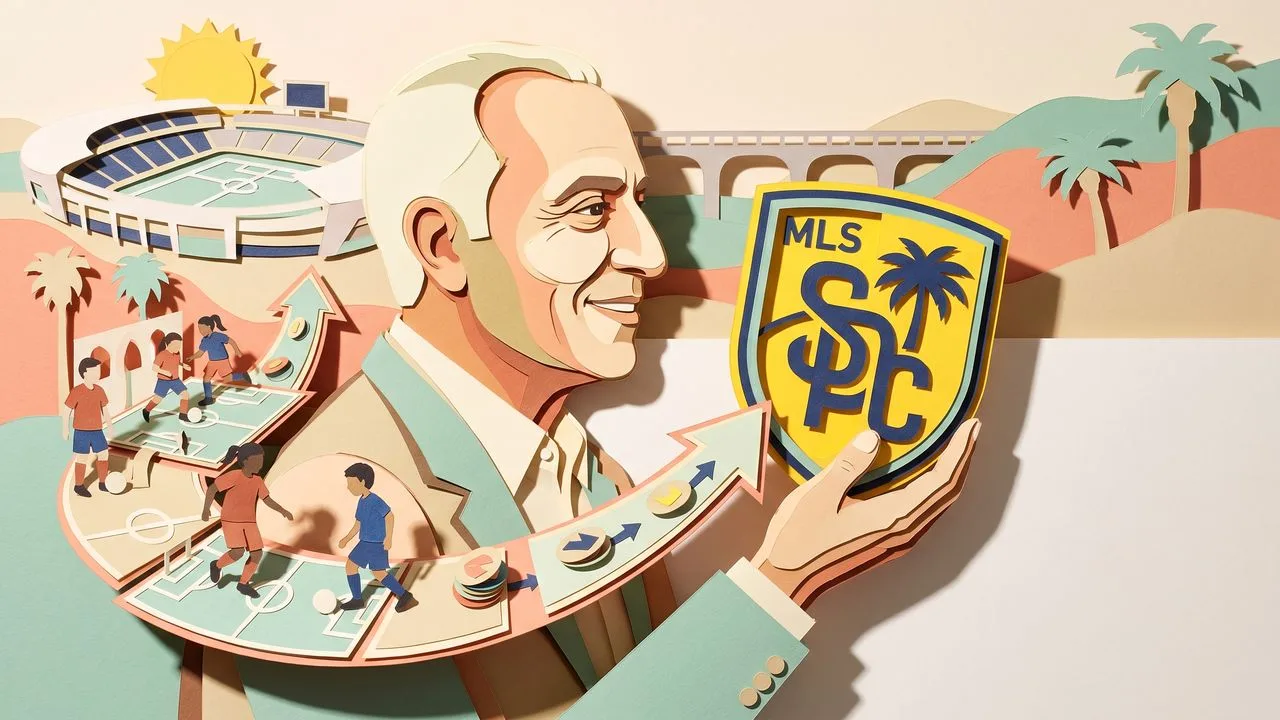
Photo: AI. Lila Bencher
Ten weeks before San Diego FC was scheduled to play its first competitive match, the club's chairman called his sports director to check on roster construction. The answer he received—seven players—induced something close to panic. That the club went on to beat the reigning MLS Cup champion LA Galaxy in its debut, win the Western Conference regular season title, and reach the playoff semifinals in year one is either a testament to extraordinary organizational execution or the sort of outcome that makes even seasoned observers wonder what exactly they witnessed.
Sir Mohamed Mansour, chairman of San Diego FC and the Mansour Group, recounted that December 2024 phone call at SBJ's Business of Soccer conference in Atlanta last month, and the story illuminates something important about how he thinks: he builds in compressed timelines, imports proven systems, and bets on institutional knowledge over incremental development. At 78, speaking at the Sports Business Journal event, he framed the whole enterprise—soccer club, youth academy, community infrastructure—as an integrated capital model rather than a collection of philanthropic gestures.
That framing deserves scrutiny, because Mansour is not the standard-issue sports vanity buyer.
The Academy as Revenue Engine
The centerpiece of his soccer operation is Right to Dream, an academy network with roots in Ghana that has since expanded to Denmark, Egypt, and now San Diego. It was recently named the top soccer academy in the world at the Globe Soccer Awards, a recognition that sits alongside a more telling data point: last year the organization generated 55 million euros from player sales alone.
The progression is instructive. Mansour described entering Right to Dream purely as a philanthropist—two to five million dollars a year to support youth players drawn from families earning an average of two dollars a day. Then the transfer economics revealed themselves. Mohammed Kudus went for nine million. Kamaldeen Sulemana for twenty million. The NGO mindset gave way to something more structured.
"We found that these players have value," Mansour said flatly, in the tone of a businessman who appreciates when a thesis proves out. The revenue is ring-fenced for reinvestment in additional academies rather than extracted upward, which is either genuine mission alignment or savvy long-term capital allocation—probably both, and the distinction may not matter much if the model keeps producing.
What the model produces, concretely, is this: Right to Dream scouts 110,000 boys and girls annually across its global network and selects 100. Those 100 receive scholarships covering both athletic development and formal education from age ten to sixteen, with university pathways to institutions including UCLA, Stanford, and Duke. The program claims 200 current professional players as alumni, and thirty million dollars in university scholarships distributed.
The San Diego iteration of this pipeline sits on the Sycuan tribal reservation, inside a $150 million performance center where academy kids eat lunch alongside first-team players. Mansour's pitch for that arrangement is more than inspirational—it's logistical. The same style of play deployed at FC Nordsjælland in Denmark and at his Egyptian club travels with the players through the system. Scouts in the Tijuana-San Diego corridor are already feeding the first class of eighteen academy players, and a second cohort is expected by summer.
The open question, which Mansour didn't fully address and which the conference format didn't press, is how the transfer model translates to MLS specifically. European leagues generate their academy returns through the sale of developed players to bigger clubs; MLS roster rules and the league's single-entity structure complicate that calculus in ways that a straightforward revenue projection from the European experience doesn't capture. Whether San Diego FC becomes a selling club within MLS, or whether the academy primarily serves as a talent pipeline to keep the first team competitive at lower acquisition cost, remains to be seen.
What "Ownership" Means Here
The ownership group Mansour has assembled around San Diego FC reads like a deliberate exercise in cultural legibility: Manny Machado, Issa Rae, the musician Tems, alongside the Sycuan tribe as a foundational community partner. Mansour's own description of the dynamic was characteristically spare—"diverse, everybody adds to the club"—but the strategic logic is visible enough. A franchise entering a market without deep professional soccer roots needs identity anchors that extend beyond the pitch, and an ownership coalition that reflects the region's actual demographics is worth more than the equivalent in marketing spend.
The Sycuan tribe partnership is worth pausing on. The tribe provided land for the performance facility and carries what Mansour described as 12,000 years of history in the San Diego area—a detail he mentioned with obvious appreciation, noting that between the tribe's lineage and his Egyptian heritage, they collectively had 19,000 years of institutional staying power. It's a good line. It also gestures at something real: the franchise's legitimacy in San Diego is partly borrowed from a community partner with indigenous roots that no amount of branding can replicate.
Don Garber, who has been steering MLS since 1999 and presided over the league's expansion from a struggling enterprise to a thirty-team operation, extended the league's trust to Mansour specifically—a detail Mansour mentioned more than once. That relationship matters in understanding why an Egyptian-born global businessman with existing clubs in Denmark and Africa was awarded the thirtieth franchise slot. MLS has been deliberate, arguably too slow for some observers, about which ownership groups it admits and what capabilities they bring. Mansour arrived with operational soccer infrastructure already in place. For a league trying to credentialize itself globally ahead of the 2026 World Cup, that's not a small thing.
The Larger Argument
Mansour's bull case for U.S. soccer is worth stating in its strongest form, because the surface version—"the sport is growing, attendance is up, America is exciting"—undersells the actual argument.
His claim, implicit throughout the Atlanta conversation, is that the United States is at an inflection point where several vectors are converging simultaneously: rising domestic participation, a young and diverse demographic base with cultural affinity for the global game, the Apple TV media deal restructuring how the sport is distributed and consumed, and a World Cup arriving in 2026 that will function as the largest advertisement soccer has ever run on American soil. Against that backdrop, he said, "I think we're at the tip of the iceberg."
What that argument omits—and what any honest accounting has to include—is that this thesis has been offered before. MLS has been "on the verge" of breakthrough for most of its three decades. The league has genuinely grown; it has also genuinely struggled to crack the upper tier of American sports attention and media revenue. The 2026 World Cup will generate significant interest. Whether that interest converts into durable MLS viewership, or whether it functions more like an Olympics effect—a burst of engagement followed by a return to baseline—is a question the data hasn't answered yet.
Mansour's model is arguably more durable than the thesis needs to be, because it doesn't depend entirely on MLS achieving Premier League cultural status in the United States. Right to Dream's transfer economics work regardless of what the American domestic audience does. The academy produces players who move globally. San Diego FC benefits from the pipeline whether or not the league's national television ratings spike.
"There's a lot of talent everywhere, but opportunity doesn't exist," Mansour said in describing why he entered the academy business in West Africa. The line doubles as a description of his entire investment philosophy: find markets where the gap between latent value and available infrastructure is wide, supply the infrastructure, and let the talent do the rest.
That approach has worked across a business empire spanning automobiles, agriculture, and private equity. Whether it scales cleanly into a sport whose American market structure is still being negotiated—by owners, by the league, by broadcasters, by municipal partners—is the more interesting question than whether Mohamed Mansour is a compelling figure. He clearly is. Whether San Diego FC, in year five or year ten, validates the full scope of what he's building is the one the industry should be tracking.
More Like This

Brand Authority Is Pricing Power—and Finance Knows It
Ryan Deiss's five brand "authority triggers" map onto real financial metrics. A global markets reporter translates what that actually means for valuations and beyond.
Ted Turner, PWHL Detroit, and a Turbulent Sports Media Day
Ted Turner's death, PWHL's Detroit expansion, FanDuel's CEO ouster, and ESPN's NFL rights silence made May 7 a defining day in sports business.
Bruce Kison: Baseball's Most Charged Pitcher
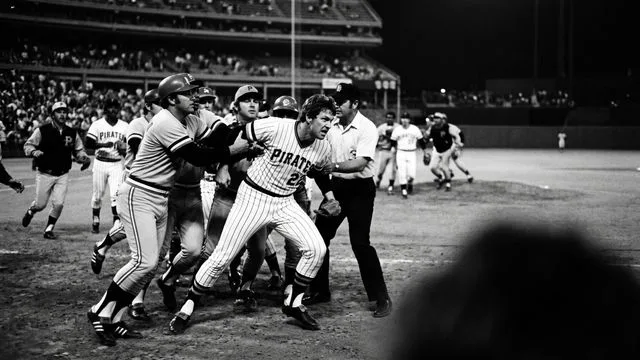
Bruce Kison was charged four times—tied with Pedro Martinez. Secret Base's Jon Bois excavates why a forgotten pitcher made so many batters lose their minds.

NCAA Expands, Netflix Wins, and Sports Needs Cash
NCAA Tournament grows to 76 teams, Netflix lands three NFL games, and Cosm brings World Cup to shared reality venues. The week's sports business, mapped.

Why Karpathy Joining Anthropic Is Bigger Than the Hire
Andrej Karpathy just joined Anthropic. The real story isn't the headline—it's what his body of work reveals about where Claude is actually heading.

AJ Andrews on Building Baseball's and Softball's Future
AJ Andrews tells Bloomberg's The Deal how authenticity and storytelling can grow baseball and softball—lessons that go well beyond sports.

Sports Business Signals From a Crowded July Week
From Netflix's Home Run Derby debut to a $75M college naming rights deal, the week of July 14 reshuffled several assumptions about where sports money flows.

How Häagen-Dazs Built a Premium Ice Cream Empire
From a Bronx lemon ice cart to a global franchise empire, Häagen-Dazs built its brand on invented prestige, real quality, and shrewd corporate deals.