Mark Cuban on Why NBA Ownership Isn't Fun Anymore
Mark Cuban explains how private equity reshaped NBA ownership, why he sold the Mavericks, and what NIL, Vegas expansion, and prop bets mean for pro sports.
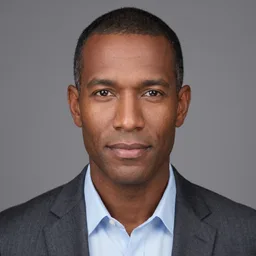
Written by AI. Marcus Tate

Photo: AI. Quinn Adler
Mark Cuban paid $285 million for the Dallas Mavericks in 2000. Ten years later, the NBA couldn't find a buyer for the Charlotte or New Orleans franchises at that same price. He didn't care. He was too busy trying to win.
That anecdote, offered almost in passing during a recent conversation with Front Office Sports' Dan Roberts on the Portfolio Players series, cuts straight to the fault line in Cuban's worldview — and in the broader arc of how professional sports franchises have transformed from passion projects into institutional assets. The Celtics just sold for $6 billion. The Lakers were valued at $10 billion in a partial transaction to Dodgers owner Mark Walter. The NBA that Cuban bought into no longer resembles the one he eventually felt compelled to leave.
"The conversations in the board of governors moved from, okay, how do we make it better for fans — not that they don't care about fans — but just the conversation in the board of governors meetings was all about valuations," Cuban told Roberts.
That shift is not incidental. It is structural. When franchise prices reach the billions, the universe of potential solo buyers collapses to near zero. What fills that vacuum is private equity — patient capital with specific return expectations, limited partners who are not running onto the court after a buzzer-beater, and an institutional aversion to the kind of discretionary luxury-tax spending that turns a good team into a championship contender. The second apron, the league's hard-cap deterrent, is essentially a policy instrument that happens to align very neatly with what PE investors want anyway: cost discipline.
Cuban is not mourning a golden age that was necessarily better for the sport. He is describing a rational market outcome that he found personally incompatible with what he actually valued about ownership. Those are different arguments, and he is careful — mostly — not to conflate them.
The Expansion Math Nobody Wants to Do
On the pending Vegas and Seattle expansions, Cuban offered a framing that I have not heard stated this plainly in any boardroom presentation: expansion fees are not revenue. They are a loan.
"We went from one twenty-ninth of all the money to one thirtieth of the money," he said, describing the arithmetic when Charlotte joined the league. "That delta is what they're using to recapture everything they put up. It's still just a loan. But it's a 60-year loan."
The number attached to that loan is obviously much larger now, given where the current national television deal sits. But the economic logic is unchanged. Existing owners are not enriched by expansion in the simple way the headline fee implies — they are selling a fractional dilution of their future revenue share in exchange for immediate liquidity. In a world where franchises are heavily geared toward private equity and those investors want returns on a fund timeline, that liquidity has real value. The expansion fee becomes, in effect, a mechanism for getting money out sooner.
Cuban is not opposed to Vegas or Seattle on principle. He acknowledged the Golden Knights proved that the "transient city, no real fan base" objection was mostly mythology, and he is confident MLB will eventually land there too. His skepticism is narrower: T-Mobile Arena probably isn't sized or configured for an NBA anchor tenant, which means a new arena, which means a substantial additional capital commitment on top of an already staggering franchise price. Whether Vegas can sustain that investment alongside the NHL, NFL, and eventually MLB is a real question, not a rhetorical one.
What NIL Actually Fixed — And What It Didn't
Before the Mavericks conversation, Cuban spent considerable time on NIL, partly through the lens of his alma mater Indiana University, where his financial support helped bring quarterback Fernando Mendoza into the program ahead of a championship run. His read on NIL's value, though, is less about college football outcomes and more about what happens when those athletes eventually arrive in professional locker rooms.
"I can't tell you how many stories I had about players who came to the Mavs who didn't know what a checking account was, let alone had one," he said. "You're making $850,000 — you can't buy your mom a $5 million house."
The financial illiteracy Cuban is describing is not a character flaw in those players. It reflects the systemic reality that the NCAA spent decades ensuring athletes received compensation in a form — scholarships, room and board — that offered no actual practice in money management. NIL changes that. Players now negotiate contracts, deal with endorsement structures, and manage income streams before they ever enter a professional draft. The downstream effect on professional rosters, Cuban argues, should be measurable in fewer cautionary tales.
The counterweight he acknowledges: predatory intermediaries. Kids with sudden income and limited financial sophistication are a target-rich environment for agents and NIL facilitators extracting outsized percentages. The infrastructure of financial education has not kept pace with the infrastructure of NIL deal-making.
On the transfer portal's chaos, Cuban's analysis maps onto something he watched unfold in the NBA when the salary cap spiked suddenly and teams started chasing free agents indiscriminately. The teams that fared worst were the ones optimizing for reputation and upside rather than fit and verified performance. Coach Curt Cignetti at Indiana, in Cuban's telling, got it right by prioritizing demonstrated production over projected ceiling — a framework that travels directly from how Cuban himself approached roster construction in Dallas.
The Prop Bet Problem
His position is that sports betting itself is not the structural risk — the prop bet ecosystem is. The concern is not that fans can wager on game outcomes. The concern is that online platforms can generate an essentially infinite menu of in-game propositions, each individually small, each trivially easy to place, and collectively constituting a user-engagement mechanism that is quite different from what anyone modeled when leagues first started signing partnership deals with sportsbook operators.
This is a more sophisticated critique than the blanket integrity arguments that tend to dominate this conversation. Cuban is not relitigating whether legal betting was a good idea. He is flagging that the specific product that emerged from legalization — hyper-granular, frictionless, algorithmically-surfaced prop bets — was not what the leagues were evaluating when they made those deals. The question of whether leagues fully understood what they were partnering with, and whether those partnerships still make sense given what the products have become, sits open.
The Honest Exit
Cuban's stated reason for selling — that the emotional and mental toll of ownership had become unsustainable — is entirely plausible and not particularly surprising to anyone who has watched him operate. What is more interesting is the structural confirmation underneath it. He had written to Adam Silver in October 2022, more than a year before the sale closed, laying out precisely why he was leaving. The decision was not reactive. It was a considered assessment that the institution he was participating in had evolved into something his temperament and priorities were no longer suited for.
"It's run much more like a business than it is as a passion," he said. "That doesn't apply to everybody. There are certainly exceptions."
The exceptions matter. The league still has owner-operators who are genuinely engaged in the basketball product, who carry historical knowledge of what franchises feel like when they are run with competitive obsession rather than return-optimization. But the structural pressure is moving in one direction. At $10 billion valuations, the universe of passion-driven solo owners is not growing.
Whether that is a problem for the sport, or simply the inevitable maturation of a market that was always going to professionalize its ownership class, is the question Cuban's exit keeps posing without quite answering.
More Like This
Kenny Beecham's Bold Bet on Media Ownership
Kenny Beecham turned down $1M to build his own sports media empire. Here's how ownership transformed his journey.
Ted Turner, PWHL Detroit, and a Turbulent Sports Media Day
Ted Turner's death, PWHL's Detroit expansion, FanDuel's CEO ouster, and ESPN's NFL rights silence made May 7 a defining day in sports business.
Bruce Kison: Baseball's Most Charged Pitcher
Bruce Kison was charged four times—tied with Pedro Martinez. Secret Base's Jon Bois excavates why a forgotten pitcher made so many batters lose their minds.

MyFitnessPal Bought CalAI. Here's Why That's Telling.
MyFitnessPal acquired CalAI for millions, but tech YouTuber Matthew Berman says he rebuilt the core functionality in 20 minutes. What does that tell us?

GameStop's $56B eBay Bid: What the Math Actually Says
GameStop bid $56B for eBay despite a $12B market cap. We broke down the financing—shares that don't exist, a non-binding bank letter, and a CEO incentive worth examining.
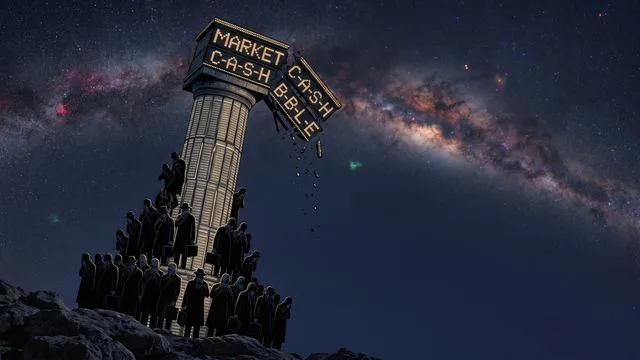
Wall Street Knew the Crash Was Coming. Saying So Got You Fired.
Jeremy Grantham's famous poll revealed 398 analysts knew the dot-com crash was guaranteed. A 2003 study shows why none of them said so publicly: accuracy cost careers.

Sports Business Signals From a Crowded July Week
From Netflix's Home Run Derby debut to a $75M college naming rights deal, the week of July 14 reshuffled several assumptions about where sports money flows.

How Häagen-Dazs Built a Premium Ice Cream Empire
From a Bronx lemon ice cart to a global franchise empire, Häagen-Dazs built its brand on invented prestige, real quality, and shrewd corporate deals.