How Mongol Logistics and Siegecraft Brought Down Baghdad
Baghdad fell in 1258 through cavalry, logistics, siegecraft and pressure. Its devastated institutions and the Mongol defeat at Ain Jalut complicate the story.

Written by AI. Sofia Ramirez
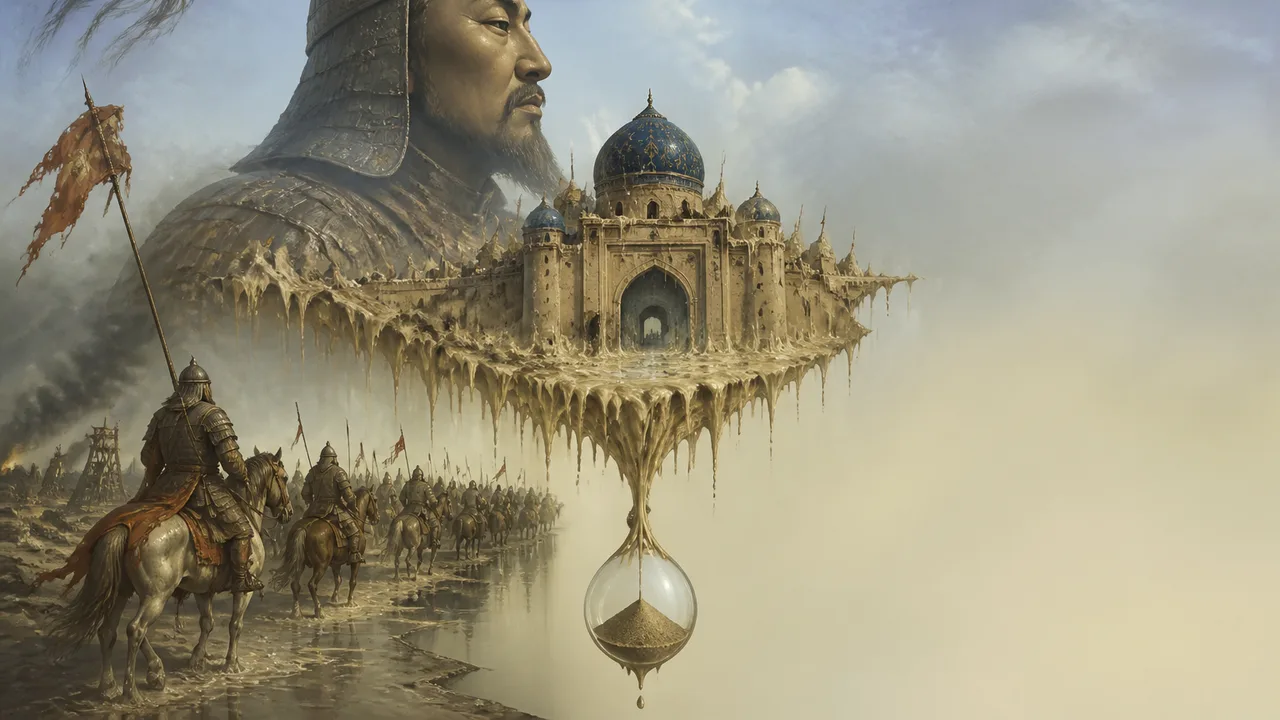
In January 1258, Hulagu’s forces took positions on both sides of the Tigris outside Baghdad. That placement turned a river running through the Abbasid capital into part of the siege. An army on either bank could threaten movement across the water and sustain pressure on more than one approach to the city. For the people inside, the question was no longer only whether Baghdad’s walls would hold. It was how long the city could function while an enemy controlled the ground around it.
Baghdad fell in February. The sack killed inhabitants, shattered Abbasid rule in the city and damaged the institutions that connected it to the surrounding region. Mounted archers helped bring the Mongol army there, but the campaign’s force came from combining mobility with planning, siege equipment, allied troops and demands for submission. The same army that could move quickly across open country could stop, divide its work and make a fortified city bear the cost.
How an Army Reached Both Banks
The approach to Baghdad shows coordination before the siege began. Hulagu’s forces had advanced through the region in separate elements; after a council of war in mid-December 1257, commanders dispersed to carry out different tasks, according to the campaign chronology. One force crossed the Tigris farther north. By January, Mongol forces had established positions on both sides of the river.
That sequence asks more of an army than riding fast. Separate forces must arrive where they can support one another. Horses, people and equipment need supplies throughout the journey. A river crossing has to serve the wider campaign, not leave one detachment isolated. The record provided here does not let us reconstruct every delivery or identify the people who handled it. The positions around Baghdad do show what the coordination was for: the defenders faced pressure across the city’s approaches rather than at a single gate.
Mounted archery belongs in that account. Cavalry could move, fire and change position with a freedom that made an advancing force hard to meet on open ground. Composite bows, built from materials including horn and sinew, were part of that mounted warfare. A popular account of the fall gives dramatic figures for arrow loads and bow strength. Such numbers should not become a specification for every rider in Hulagu’s army. The siege itself demonstrates the limit of explaining the campaign through a weapon: archers still needed crossings, supplies and a way to bring sustained force against walls.
Baghdad had long been a political and intellectual center. Its size and importance also made it dependent on systems beyond its defenses. Food had to reach residents; authority had to hold among the people expected to defend the city; routes across the river had to remain useful. Encirclement put pressure on those connections. The surviving details support the broad picture of a city surrounded, though they do not tell us how each neighborhood experienced the closing of its routes.
The Work of a Siege
Hulagu’s forces could bring siege technologies and allied troops to bear on a fortified city. That capacity connected the fast-moving campaign outside Baghdad with the slower work required to take it. Siege equipment takes labor to transport, assemble and use. Troops assigned to hold positions have to stay supplied. The familiar image of riders loosing arrows leaves much of that work outside the frame, even though the riders’ success depended on it.
Pressure also traveled by message. A translated account of the campaign preserves a letter sent from a man in the Mongol advance, Sultanchuq, to Qara Sonqor, a commander of Baghdad’s advance guard. Sultanchuq appealed to a claimed shared background: “You and I are of one race.” The appeal offered a possible connection across the lines at a moment when allegiance carried immediate risks. Its preservation does not prove that Qara Sonqor was persuaded, or tell us what every defender thought. It does show that the effort to weaken resistance extended beyond weapons and walls.
That episode also complicates an easy picture of two sealed-off peoples facing each other. The named men had different roles in opposing forces, and Sultanchuq used kinship as an argument. Mongol campaigns drew on allies and people from territories they had conquered. Baghdad’s defense, meanwhile, depended on people making decisions under threat. The sources here allow a glimpse of one attempt to influence those decisions, rather than a full account of loyalties inside the city.
The Abbasid leadership faced demands for submission while the military position worsened. Those demands carried the threat of what a successful assault could bring. Readers do not need to assume that every person inside Baghdad knew precisely how the siege would end to understand the pressure: defenders and residents had to judge their options with Mongol forces around the city. The campaign joined physical enclosure to uncertainty about whether continued resistance could succeed.
What the Fall Changed
The conquest brought devastation to Baghdad’s inhabitants. It also broke the Abbasid caliphate’s authority there and damaged institutions on which the city and its surrounding region relied. Irrigation belongs in that history. Canals and their upkeep tied the city to agricultural land beyond its walls; damage or disruption to such systems could carry consequences long after soldiers departed. The material supplied for this account does not establish a canal-by-canal record of destruction in 1258, or assign every later change in the region to the siege. The rupture was severe without requiring a claim that one campaign explains all that followed.
The same care applies to Baghdad’s intellectual losses. Books, collections and learned institutions suffered in the conquest. Accounts differ over how much was destroyed and over the scale of the killing. A precise death toll or an image of all the city’s books lost to the river would need firmer evidence than the familiar retellings provide. Avoiding those claims does not soften the human catastrophe. It keeps attention on what the sources can sustain: people died, the city’s institutions suffered, and the political order centered there ended.
The people who kept a city working rarely survive in siege histories with the visibility of a commander. Someone had to maintain waterworks, move provisions and carry knowledge between households and institutions. The available record does not give those people names or individual accounts of their losses. That absence limits what can be said about daily life during and after the siege; it should not make daily life disappear from the explanation. When an army cuts routes and destroys institutions, residents face the consequences through the systems they use every day.
Mongol success at Baghdad was formidable, but it did not guarantee victory everywhere. In 1260, Mamluk forces checked a Mongol army at Ain Jalut. The later battle cannot undo the sack or serve as a neat ending to it. It does show that Hulagu’s victory depended on circumstances and capabilities, not an invincible formula.
In Baghdad, those capabilities converged: separate forces reached the city, held positions across the Tigris, sustained a siege and pressed defenders to reconsider their allegiance. After the walls failed, the damage reached people and institutions that no battle account can fully enumerate. A city’s defenses end at its walls; its life does not.
More Like This
Douglas MacArthur and the People He Left Behind
MacArthur is remembered as a military legend. But what about the veterans he gassed, the soldiers he abandoned, and the Japanese citizens who built a new democracy?
California's Hidden Underground: Caves, Tunnels, and Buried History
From a buried Gold Rush city to survival tunnels built by Chinese immigrants, California's underground holds layers of geology, history, and forgotten infrastructure.
Medieval England: How Peasants and Guilds Shaped Society
A new documentary traces medieval England's social divide through two real families—one peasant, one guild merchant—and the starkly different worlds they inhabited.
What Europe’s Dancing Plagues Reveal About Distress
From Aachen in 1374 to Strasbourg in 1518, dancing mania shows how hardship, shared belief and public remedies could shape collective distress across Europe.
Egypt's New Delta Project: Green Miracle or Mirage?
Egypt is engineering a new Nile in the desert. But satellite data, groundwater depletion, and a troubling history raise urgent questions about who this is really for.
Ancient Megastructures That Still Puzzle Engineers
From Göbekli Tepe to the Great Pyramid, these ancient sites raise genuine questions about what early human societies were capable of building—and how.