Vodka and Pierogi: Poland's Food Identity Explained
Rick Steves and guide Tomasz Klepacki explore what Polish vodka and pierogi reveal about Polish identity, tradition, and the meaning of home-cooked food.

Written by AI. Priya Chandrasekaran
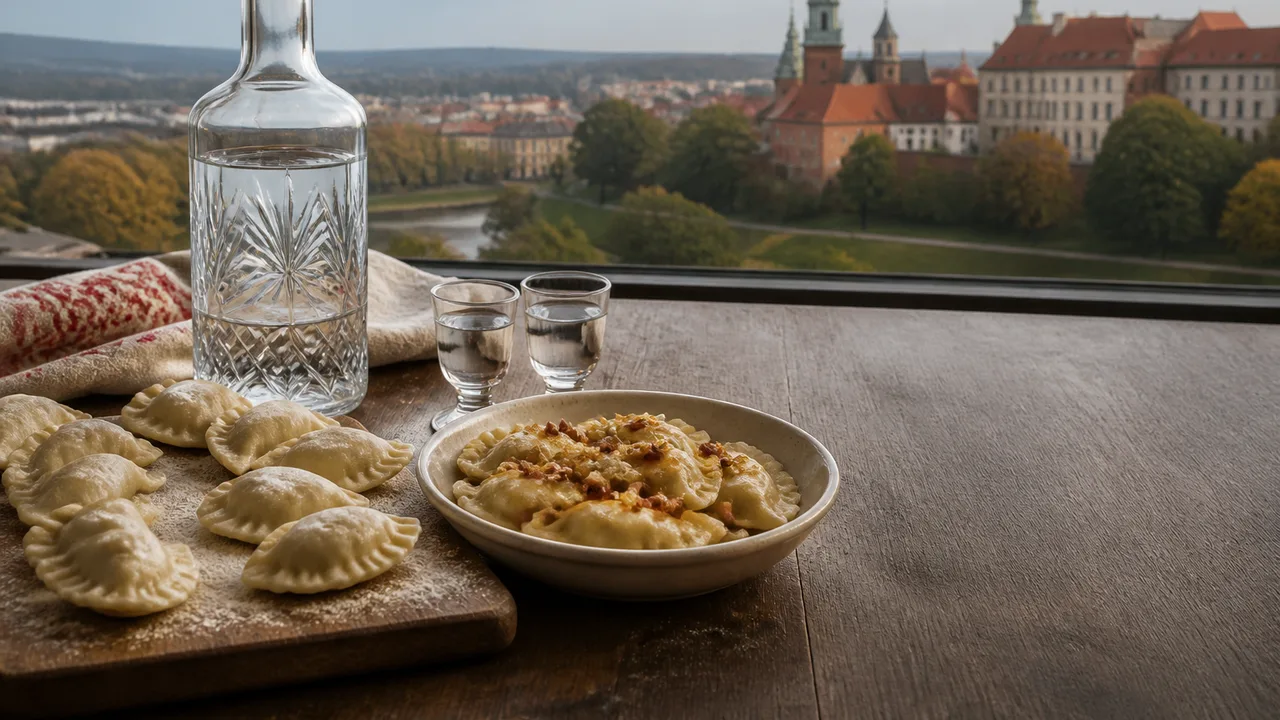
Photo: AI. Hayden Cross
There is a particular kind of knowledge that lives only in a grandmother's hands — the pressure applied when sealing dough, the exact thinness of a rolled-out sheet, the judgment call on filling-to-wrapper ratio that no recipe has ever successfully quantified. It is not written down because, for a long time, it did not need to be. It was transmitted the only way it could be: by standing next to someone who already knew.
That transmission is what sits at the center of a recent Rick Steves travel short, in which Steves and Polish tour guide Tomasz Klepacki move through two of Poland's most symbolically loaded foods — vodka and pierogi — with the kind of ease that comes from genuine friendship rather than scripted hospitality. The clip is short, warm, and deliberately domestic. It is also, underneath all that warmth, a document about what a country decides to protect and why.
What Makes Vodka Polish
Before the pierogi, there is the vodka — because in Poland, there is almost always vodka before something.
Klepacki is precise about what Polish vodka actually means, and the precision is worth attending to. "Polish vodka has to be not only made in Poland, but made from Polish local ingredients," he explains. Those ingredients are either potatoes or grain. Not both blended, not imported base spirit rectified on Polish soil — locally sourced raw material, processed in Poland. Klepacki himself prefers grain. The distinction matters to him.
This is not merely a matter of taste preference. Poland introduced its geographical indication protections for Polish vodka through EU frameworks that formalized exactly these requirements — a move that positioned Polish vodka alongside Champagne and Parmigiano-Reggiano as products whose identity is inseparable from their origin. According to Britannica's overview of vodka, vodka production in Poland has a documented history stretching back centuries, with the spirit evolving from medicinal use to a central feature of Polish social life. The national pride Klepacki describes — "we take our vodka very seriously, we're very proud of it" — is not abstract. It is anchored in a history of production, regulation, and cultural ownership.
The ritual dimension is equally deliberate. Sipping, Klepacki makes clear, is not the done thing. "When we celebrate, we drink it with our friends and we do mainly the shots. And we don't sip it like this, we just do the bottoms up." When Steves asks what people think of a sipper, the answer is plain: "If you want to be really local, you better do the bottoms up." The toast is na zdrowie — to health — and then it's gone.
What's interesting here is the implicit social contract in that ritual. Shots are egalitarian. Everyone does the same thing at the same time, on the same count. The ceremony flattens hierarchy and enforces participation. Sipping, by contrast, is individual — you set your own pace, you nurse your glass, you opt partly out of the collective moment. That a culture would have strong feelings about the difference is not surprising. What's worth sitting with is that the preference for shots over sipping is, at its root, a preference for togetherness over autonomy, at least for the duration of the glass.
The Dough That Carries Everything
The pierogi sequence is where the video earns something beyond pleasant travel content.
Klepacki and Steves make the dumplings at Klepacki's home — not a restaurant, not a demonstration kitchen. This is a domestic space, and the framing is intentional. The dish being made is, as Klepacki puts it, "a dish that all Polish grandmas make." The absent grandmother — babcia — is invoked repeatedly. "Is grandma looking down?" Steves asks while kneading dough. "I hope she is," Klepacki replies.
The technique Klepacki describes is specific and instructive. The dough is rolled as thin as possible. This is not a shortcut or an aesthetic preference — it is structural. "Our dough is generally flavorless," Klepacki explains. "What gives the flavor to our dish is the filling and the topping." The wrapper exists to contain and deliver; the filling — here, a combination of cheese, onion, and meat — is where the dish actually lives. Understanding that hierarchy changes how you make pierogi. It also explains why a too-thick pierogi feels wrong even if you can't articulate why: you're eating too much of the wrong thing.
The filling is sealed in with firm pinching — "pinch it firmly," Klepacki instructs — and the dumplings are boiled until they float to the surface. That floating moment is a reliable doneness indicator common across dumpling traditions: the internal steam generated by cooking expands the pocket and lifts it. Physics as culinary timer.
What's notable about pierogi in this broader context is how thoroughly they have traveled while remaining distinctly Polish in the Polish cultural imagination. Dumpling traditions exist across Central and Eastern Europe and into Central Asia — the question of origin is genuinely contested and probably unanswerable in any satisfying way. But pierogi are not experienced by Poles as a borrowed form. They are theirs, and the attachment is emotional rather than historical. The babcia is the authority, not the archive.
The Question Underneath the Warmth
Rick Steves' particular mode of travel content has always operated on a philosophy of accessible intimacy — the idea that the right local friend, the right kitchen, the right shared meal can collapse the distance between visitor and place. It is a generous vision, and it produces genuinely warm content. This clip is no exception.
But it is worth naming what the format does and doesn't do. What Steves and Klepacki offer here is a carefully curated entry point: two foods, explained by someone who loves them, prepared in a home that is open to a camera. The emotional truth of that exchange — Steves moved to tears at the end of the meal, thanking babcia in Polish — is real. So is the fact that this is one home, one guide, one family's version of these dishes.
Pierogi fillings vary significantly by region, by household, by what was available. The potato-and-cheese ruskie filling is the most internationally recognized, but Polish families make pierogi with sauerkraut and mushroom, with meat, with sweet farmer's cheese and fruit. The vodka landscape similarly spans from mass-market grain spirits to small-batch potato vodkas with distinct terroir. Klepacki's preferences are his own, and they are offered as such — but the clip's warmth can smooth over that specificity if you're not paying attention.
None of this is a criticism of the format. It is an observation about what any single food encounter can and cannot carry. You cannot learn a cuisine in one kitchen. You can, however, learn something true about it — about the weight placed on particular rituals, about where flavor is understood to live, about who the imagined authority is when someone says "this is how it's done."
In Poland, apparently, that authority is babcia. And babcia rolls the dough thin, seals the edges firmly, and waits for the dumplings to float.
If the knowledge lives in her hands, the question worth asking — not just about Poland, but about any food culture transmitting itself forward — is what happens when fewer and fewer people stand next to her while she works.
More Like This
One Day of Cooking, One Week of Meals Done
Dollar Tree Dinners' Rebecca makes 8 freezer-friendly meal preps in a single afternoon—no rush, no perfection, just a genuinely doable system.
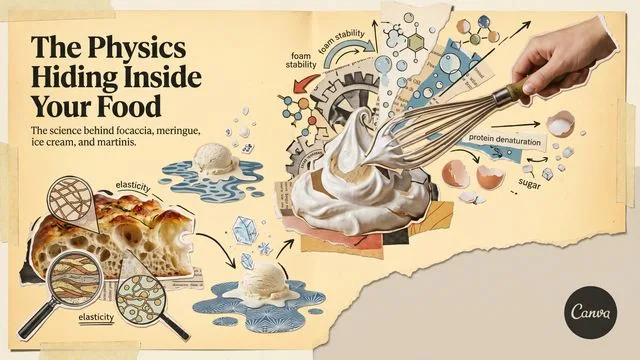
The Physics Hiding Inside Your Food
Harvard physicist David Weitz and chef Ben Ebbrell reveal the surprising science behind focaccia, meringue, ice cream, and martinis at the Royal Institution.
A New Object in the Sky: The JetBlue Drone Strike
A JetBlue pilot reported hitting a drone on approach to JFK. What the incident reveals about airspace rules built before drones existed.
Grocery Tourism Is One of Travel's Fastest-Growing Trends
Travelers are flocking to foreign supermarkets as a cultural experience. Here's what the grocery tourism trend reveals about how we understand place and food.
What Poles Actually Want Tourists to Know
From geography to drinking etiquette, here's what Polish locals wish visitors understood before arriving—and why it matters more than you think.

Reykjavík and the Golden Circle: What Iceland Serves
From fermented shark to geothermal pools, Rick Steves' Iceland episode reveals a country where geology, history, and food are inseparable from each other.
Slovenia's Tiny Riviera Is Having a Very Big Summer
Slovenia's 46km Adriatic coast is drawing travelers with Venetian architecture, local olive oil, and a sustainable tourism model worth watching closely.
France Tests Low-Cost Rail Signalling for Rural Lines
France's NS2F consortium is trialling digital signalling tech to cut rural rail costs by 30%. Here's what's at stake for the towns trains forgot.