Netflix Closes Night School Studio and Moonloot Games
Netflix is shutting down Oxenfree developer Night School Studio and Helsinki-based Moonloot, continuing a retreat from in-house game development that raises hard questions about what comes next.

Written by AI. Sarah O'Brien
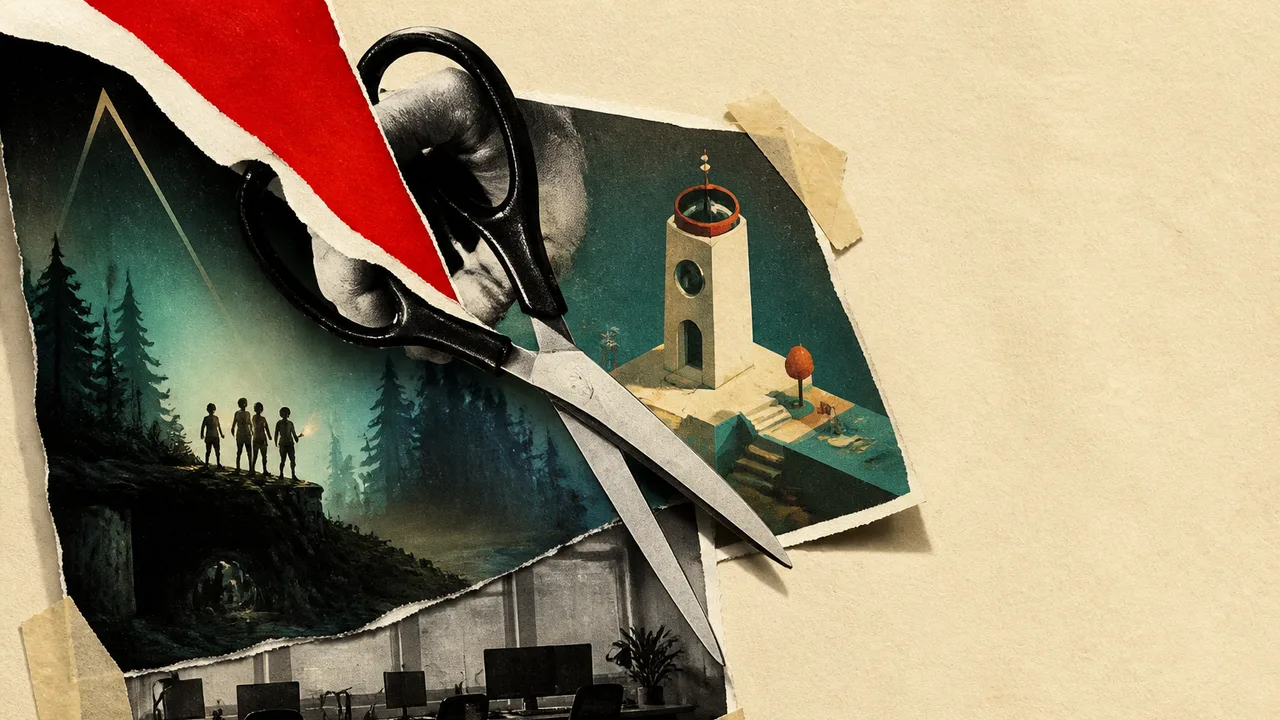
Night School Studio made Oxenfree in 2016 — a supernatural teen thriller with a radio mechanic that let you talk over the game's own dialogue, a structural idea so confident it still feels unusual a decade later. The studio followed it with Afterparty, a game about drinking the devil under the table to escape hell, which is exactly as entertaining as it sounds. These were not generic prestige-indie releases. They were distinctive artifacts with a specific sensibility.
Netflix acquired Night School in September 2021. Now, according to Polygon, it's shutting the studio down — along with Helsinki-based Moonloot, which Netflix founded in 2022 and which never shipped a game.
The closures are, by any honest accounting, a continuation of a pattern. As Game File reported, Netflix is continuing to shrink its internal game studio operation. This is not a surprise pivot. It is a slow dismantling, announced in increments.
The timing is the thing
What makes the Night School closure particularly hard to square is the timing. As PC Gamer noted, Netflix closed the studio roughly a month after publicly describing Night School's latest release as one of the company's "most successful cloud game debuts." That's not a quiet internal metric — that's a statement Netflix chose to put in front of people.
There are a few ways to read that sequence. Maybe the praise was genuine and the closure decision came separately, driven by overhead calculations that have nothing to do with individual title performance. Maybe the praise was a kind of institutional palliative — something to say while harder decisions were already being made. Maybe Netflix's definition of "most successful cloud game debut" operates on a scale so compressed that the accolade itself tells you more about the ambient failure of Netflix gaming than about Night School's achievement.
None of those readings is flattering. The most charitable interpretation is still one where a studio's best work isn't enough insulation against a parent company's structural rethink. Aftermath captured the absurdity plainly, noting that Netflix — now known primarily in gaming circles for closing studios — "took the hatchet to two more," even as it continues to publicly insist it sees "opportunity" in games.
What Netflix actually believed, and when
Netflix entered gaming in 2021 with a straightforward premise: games as a retention tool. If subscribers felt they were getting a library of games alongside their films and series, they'd be less likely to cancel. The company wasn't trying to become Activision. It was trying to reduce churn.
The logic was defensible. The execution proved harder. Making games that people actively seek out — rather than passively scroll past — requires a different kind of creative infrastructure than producing television. The feedback loops are longer, the metrics are murkier, and the skills that make a great showrunner don't transfer to a great studio head.
Game Developer quoted Netflix's official position: "We believe we can operate more strategically and efficiently within our Games business, and as a result are eliminating some additional Games roles." That sentence does a lot of work. "More strategically and efficiently" is corporate for "we're doing less of this," and "additional Games roles" obscures that those roles belong to the people who built Oxenfree.
Game Informer noted that Moonloot, the Helsinki studio, had yet to release anything — which makes its closure a different kind of story than Night School's. One studio was closed before it could prove itself. The other was closed after it already had.
The AI signal buried in the announcement
Here's the detail that changes the texture of this story: also according to PC Gamer, Netflix posted a job listing in October 2025 for a Director of Generative AI for Games, with a salary of up to $840,000 plus benefits. PC Gamer drew the parallel to Amazon's trajectory — another tech-adjacent giant that experimented with game studios and now appears to be betting on AI over human development infrastructure.
That salary figure is not background noise. $840,000 for a single AI director represents a significant investment signal, especially set against the cost of simply keeping Night School's existing staff employed to make more games in a style that already demonstrably resonated with players. The math being done here is not just about what's expensive — it's about what Netflix believes the future of game production looks like.
Whether that bet is correct is genuinely open. AI-assisted game development is real, and companies are finding legitimate uses for it in asset generation, localization, and QA. But there's a difference between AI as a tool in a developer's hands and AI as a replacement for the creative intelligence that decides what a game should feel like. Oxenfree didn't succeed because it was efficiently produced. It succeeded because someone decided a supernatural coming-of-age story needed a radio tuner mechanic and they were right.
What this means for the studios that got acquired
The Night School story is also a preservation-adjacent story, even if that framing isn't the dominant one right now. When a studio is acquired and then dissolved, what happens to its institutional knowledge — the design documents, the unreleased prototypes, the engine-specific work that exists only on internal servers? Night School's released catalog should be reasonably durable as long as Netflix maintains access. But the work that never shipped, the team's accumulated craft, the next Oxenfree that wasn't made — none of that has anywhere to go.
This is the part of studio acquisitions that doesn't make headlines until it's too late. The games that exist can be preserved, in theory, by anyone with the rights and the will to do it. The games that were in development when the doors closed are simply gone.
The broader question Netflix keeps deferring
Netflix's gaming retreat is, at this point, a documented series of events more than a single strategic announcement. Studios close. The company reaffirms its commitment to games. More studios close. The company reaffirms its commitment to games.
The honest version of Netflix's position may be that it still wants games in its ecosystem — just not games produced at the cost and risk that comes with running creative studios. Licensing deals, IP adaptations, partnerships with established publishers: these are lower-variance bets that don't require Netflix to be good at something it has shown it struggles to do.
Whether that's a reasonable pivot or a quiet admission of failure probably depends on what you think Netflix was actually trying to accomplish when it started acquiring studios in the first place. If the goal was subscriber retention through game availability, a licensing model gets there more cheaply. If the goal was to build an enduring creative gaming identity — to mean something in games the way HBO meant something in television — then what Netflix is describing as strategy looks more like a managed retreat.
The people at Night School who built Oxenfree and Afterparty knew which kind of company they thought they were joining. The answer Netflix just gave them is the one that matters.
More Like This
Minecraft's Amazon Mod and the Survival Overhaul Lineage
Eeel's Amazon Rainforest Minecraft map builds real ecological pressure—but also reveals what modding communities have preserved, lost, and reinvented over two decades.
Alpha Dog Games Re-emerges as Independent Studio
Alpha Dog Games, the Mighty Doom developer shut by Microsoft in 2024, has quietly re-emerged as an independent studio—the latest in a string of Xbox departures.
WoW GM Cheating Scandal Puts Blizzard Under Scrutiny
A Blizzard game master allegedly death-touched bosses for friends, tainting WoW's competitive record. What this scandal reveals about a 20-year compact between devs and players.
Minecraft 26.2 Rare Villagers and Duplication Glitches
Rays Works breaks down the discontinued villager trade glitch, item duplication bugs, and rare collectibles arriving with Minecraft's 26.2 update.
Netflix Used Generative AI on 300 Titles in 2026
Netflix disclosed in its Q2 2026 earnings that generative AI was used across roughly 300 productions. Here's what we know—and what's still murky.
Double Fine Lays Off 23 After Leaving Xbox Game Studios
Double Fine cut 23 staff just weeks after Xbox divested the studio. What the layoffs reveal about independence, infrastructure costs, and Xbox's shrinking empire.
Netflix Is Making a Live-Action Persona Series
Netflix is developing a live-action Persona series with Sega and Atlus. Here's what we know about the creative team, the challenges, and what's at stake.
July 2026 Game Releases: Remakes and New IP
Halo remade again, Black Flag re-engineered, and a packed July of new releases arriving in GTA 6's shadow. What this month reveals about how the industry treats its catalog.